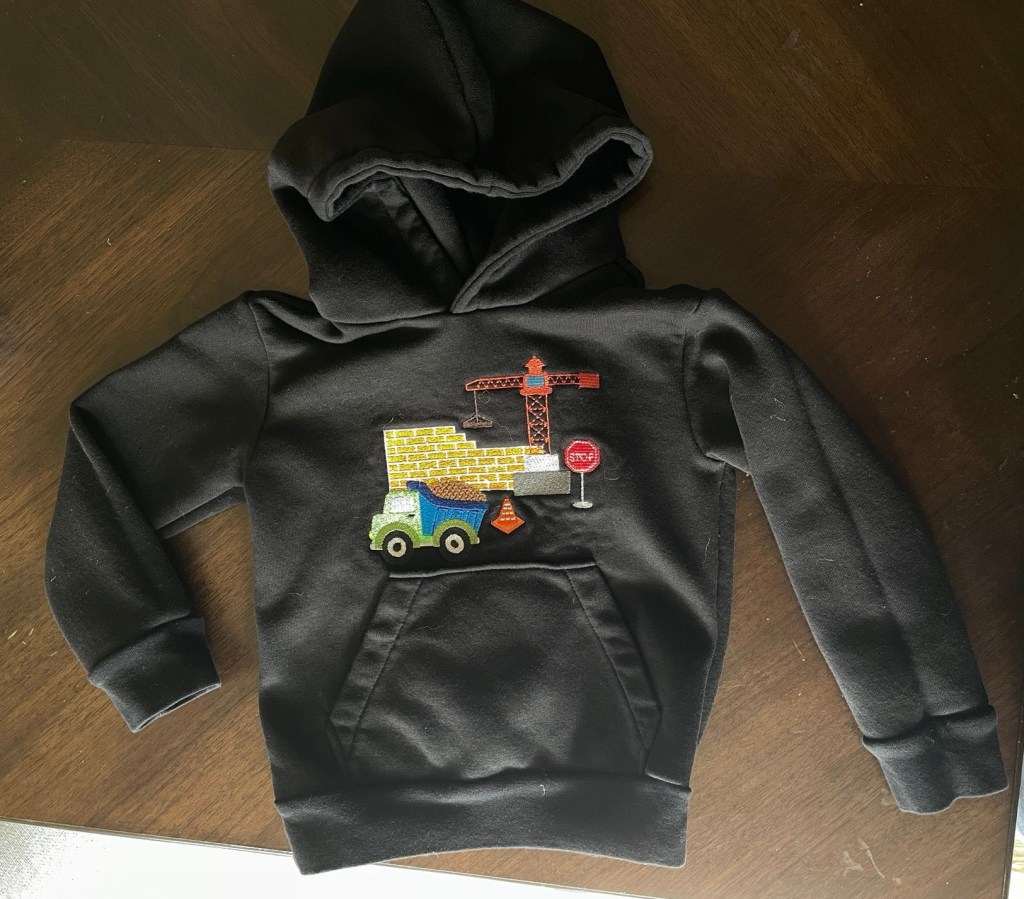
I topstitched all seams in place on my Juki TL-2010. I normally skip this step but I think it gives a more finished look to this finer fabric. Since this fabric is lighter weight I also self lined the hood instead of using a jersey.
Daypack in both children and adult sizes with grommets and drawstring opening, front pocket, hidden zip pocket under the front flap, and padded, adjustable straps.
Fabric and Notions
I used a polyester water repellent canvas, purchased almost exactly 10 years ago from Fabric Mart. I sewed the entire bag with matching Gutermann Mara 70 thread.
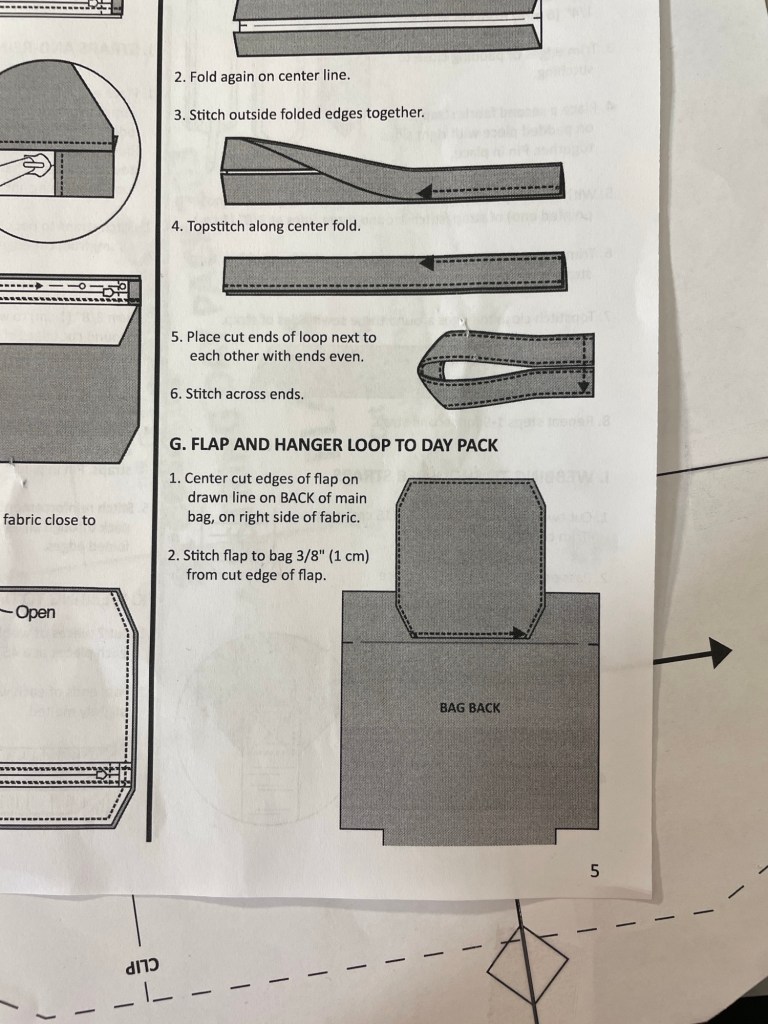
The instructions started off ok, but by the time I was starting to finish up the bag I realized there was a major error. Unfortunately there are no line drawings or sample photos of the back of this backpack, so I didn’t know what was happening until the very end when I went to turn under the top hem where the grommets are set it and realized I was going to be sewing it into the reinforced section with the straps and hanging loop. I had to figure out what went wrong, then unpick the entire section and try sewing it again. I was not happy.
Take note of the illustration under G. FLAP AND HANGER LOOP TO DAY PACK.
See how it has you place the flap with the cut edge on the line? That is wrong! If you sew it like that you’re going to have that issue of the entire strap and loop section being in the way when you go to sew the drawstring hem.
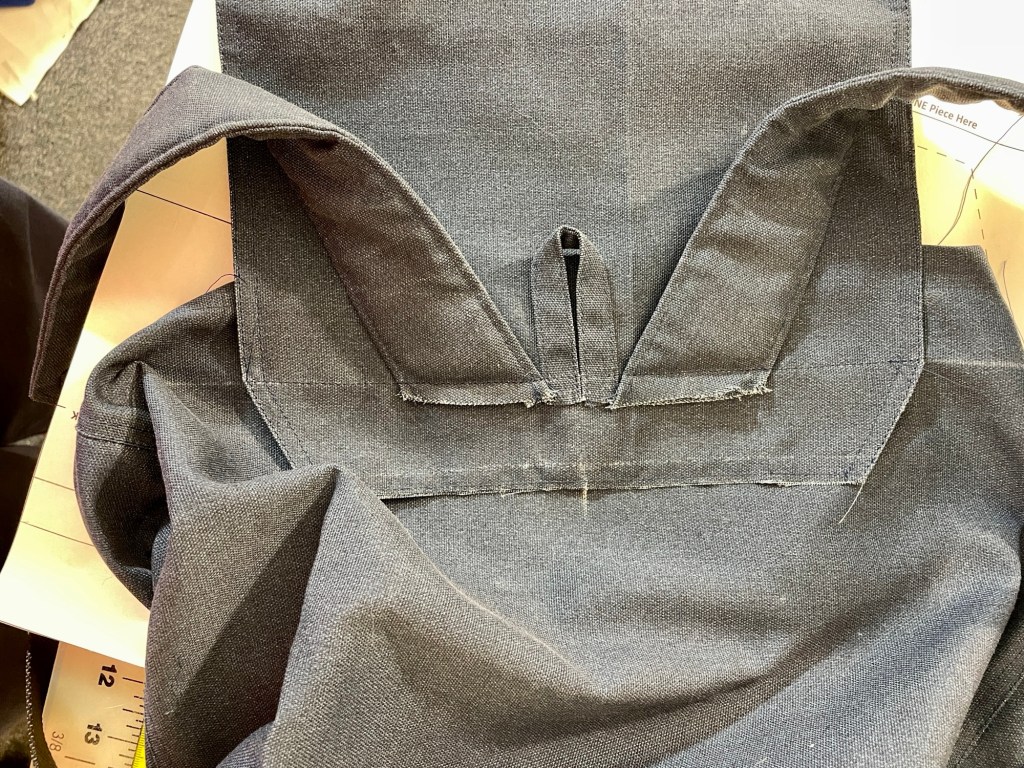
Instead, you want to place the angled part of the flap on top of the line and sew over that. Basically transfer that line which they tell you to use as a cutting line for the flap to the other aide as well, only don’t cut through it. Note in the photo below my chalked in white lines to the side of the flap and how my stitching line goes right at that angled part of the flap.
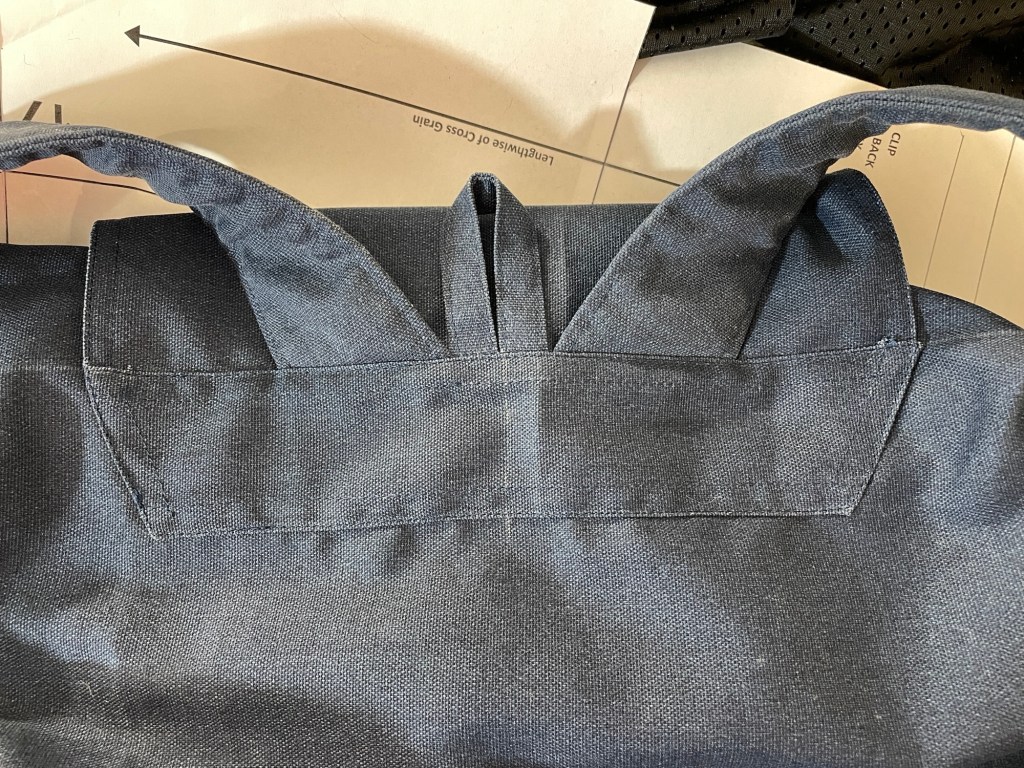
Here’s what it looks like when the reinforcement patch is finally sewn on.
The instructions also have you do 10 grommets, but I ended up doing only eight.
Conclusion
I will be honest, I don’t like this bag. I feel like it’s smaller than I expected, not just in size but like my frame is almost too big for it. You can see how the straps just barely fit me despite being nearly let out completely, and I’m not even wearing a coat, just a sweatshirt. I don’t have this issue with any of my purchased backpacks. It also feels like the bottom is caving in against my back instead of staying flat. The entire balance feels off.
I think another part of my dislike is how the poorly edited instructions caused me more time and work than it should have taken, which caused negative feeling about this project before it was even done. I ended up giving it to my son. It’s way too big for him but he loves filling it with his stuffed animals and dragging it all around the house!
Half zip style sweatshirt with collar and front kangaroo pocket. It comes in both cropped and longer hip lengths.
This sweatshirt has a roomy fit – about 8” through the bust – so you will want to pair it with something closer fitting on the bottom, especially if you make the longer length version. I wear mine with the Jalie 3022 yoga pants.
Fit and Alterations
I started with a size Y and made the following alterations:
Added a total of 4.5” to the hip.
Added a total of 6” to the hem band. As drafted there is almost 2.5” of negative ease through the bottom hem band and my alteration makes it closer to zero ease.
Lengthened the sleeves 1” which is a normal Jalie women’s pattern adjustment for me.
Added 3/4” length to the body. I actually added it at the hem instead instead of at the short/lengthen line because I wasn’t sure how I would feel about the length, so this would make it easier to chop off if I needed to. I ended up liking the length because it falls just below my widest part, so I’m going to keep the extra length. It does make the bottom of the kangaroo pocket taller this way.
At around 8” positive ease through the bust the Sophie is slightly larger than the Jalie Laurent, which has about 7” positive ease through the bust.
Materials
I used a rayon/nylon/lycra purchased from Fabric Mart five years ago. It has 30% stretch in both the width and length. Since it met the minimum stretch requirements I was able to use self fabric for the cuffs and hem band.
The zipper is a #5 nylon zipper from WAWAK which was also in my stash.
Since my knit has 4-way stretch I used two pieces of fusible knit interfacing, on layered on top of the other with the stretch perpendicular to each other, for the section where the zipper starts.
One thing I found a bit odd about this pattern is despite calling itself a sweatshirt, sweatshirt fleece is not one of the recommended fabrics! Instead they recommend ponte, sweater knit, or French terry. I think since it is a roomy fit they don’t want you getting “lost” in it, though at least the cropped version would be totally fine if made from a sweatshirt fleece.
Construction
Jalie categorizes this as a “quick” project on their website. I don’t really agree because the front zip requires taking your time to get right (I didn’t get it 100% perfect) and the collar requires hand stitching inside. But once you’re done with the front zip and collar the rest of it goes together quickly.
I recommend looking through the instructions once before actually sewing, at least for the collar and front zip. You sew part of the collar to part of the front neckline and then do the zipper, then sew the sleeves and back together before sewing the rest of the collar to the neckline.
Since ponte doesn’t roll or fray I only used the serger to finish the inside hem of the kangaroo pockets and otherwise constructed this on my regular sewing machine.
I made the hem band the same width as the body of the shirt. As drafted it is about 6” smaller. I have some Lands’ End sweatshirts where the hem band is the same measurement as the bottom of the shirt where it attaches and I feel they just look and feel better on me than when the hem band has negative ease. (I find Lands’ End clothing often has a lot of nice details that work well for me.)
Conclusion
The Sophia has some nice details. I like how they included a tiny piece to help cover the end of the zipper, it just gives a more finished look to me. Hoodies are definitely cozy but I find the hood gets in the way when wearing a winter coat that also has a hood, so I like having collared sweatshirts in my rotation as well.
I really like the zipper length. On me it zips down to just below my bust, which is where I often leave my regular full-zip hoodies unzipped to. Sometimes I find half zips can be a pain to get on and off, but since this zipper goes pretty far down I have no issues with that.
As I mentioned before I found their lack of sweatshirt fleece as a recommended fabric a bit odd, but I will say that the weight, drape, and structure of the RPL ponte I used gives a luxurious feel when worn. It definitely doesn’t feel like a sweatshirt. It also has PLENTY of room for layering. I’ve been wearing it with a slim fit t-shirt and merino wool base layer top under it during these cold fall mornings and it flows right over everything and feels totally comfortable.
In the photos below I’m wearing both of these sweatshirts with the Jalie Roxanne pants and layered over a Jalie Tina t-shirt.
The Jalie Laurent, which I made last night:
This is why photos are hard for me now 😂
Jalie 3355, which I made about a year ago (and is a bit rumpled from just coming off the clothesline). I don’t remember if I blogged this one or not.
Pattern Background
Jalie 4131 Laurent
Classic sweatshirt and t-shirt pattern. You can make a hoodie with a kangaroo pocket or a cropped length short sleeve crewneck t-shirt. Most of Jalie’s knit top patterns require 4-way stretch knits, but for this one you can use just about any knit that has a minimum of 15% two-way mechanical stretch. If your fabric has at least 30% stretch a separate piece for a self fabric neckband (which is longer and narrower) in addition to a ribbing neckband piece. Lots of options!
It starts at size 2T. The drafting is geared for men: longer lengths in both the torso and sleeves, roomier in the shoulders/upper chest, and narrower through the hips. However there’s no reason why you can’t make this for girls and women as well. Just adjust the length and add some width to the hip if you need it.
One of the best Jalie patterns ever, in my opinion! Classic styling and can be made for the whole family from toddler to big adults. I have made this countless times for my son and husband, and now once for myself.
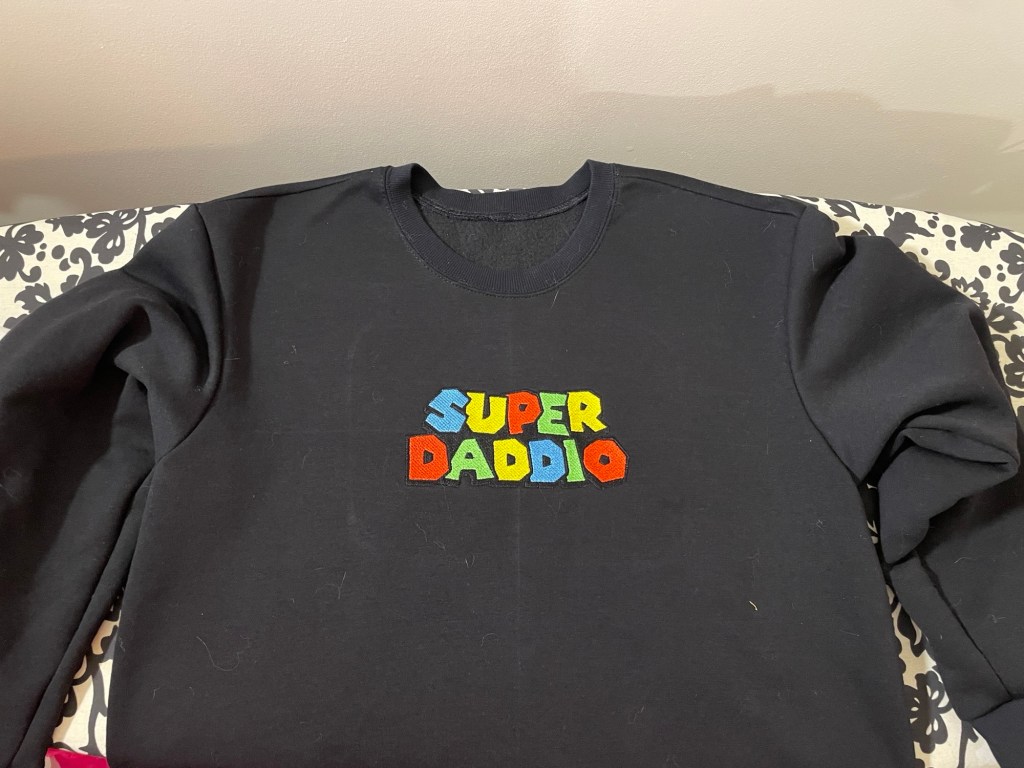
My son’s latest Laurent hoodie, embroidered by meJalie Laurent long sleeve t-shirt made from a cotton/lycra jersey Crewneck Laurent sweatshirt, freshly embroidered for my husband last New Year’s Eve
Jalie 3355
Crewneck or hoodie sweatshirt with sweatpants. The sweatshirt has the traditional little V applique at the center front neckline, which is a nice touch. The sweatpants are very simple and quick to make: elastic waist, curved side pockets done in a way that minimizes bulk, and elasticized hems.
This one is drafted more for women: shorter sleeve length, narrower through the upper chest and underarms, and wider assumed hip measurement. Shorter inseam for the sweatpants too. The Jalie Henri jogger pant, drafted for boys and men, assumes a 15” inseam for size 3T; 3355 assumes a 14.5” inseam for the same size 3T. But just like with the Laurent you can make this for men as well (which I have done before).
Materials
Jalie Laurent
I used a sweatshirt fleece from Fabric Mart I’ve had in my stash for about two years. The description says cotton/poly but it feels and drapes more like a 100% cotton sweatshirt fleece to me.
Instead of self fabric I used some rayon Lycra jersey I also had in my stash for the hood lining. It just so happened to be a perfect match for the fabric.
I used a bubblegum pink 220gsm weight rib knit from Nature’s Fabrics for the hem and cuffs.
Jalie 3355
I used a cotton/lycra sweatshirt fleece from Jumping June Textiles. Fantastic fabric that I wish I could use for all of my sweatshirts! I also purchased the coordinating 220gsm ribbing she had available at the time.
For the front neck detail I used machine embroidery thread.
Fit and Alterations
Jalie Laurent
I started with a size Y based on my bust measurement and made the following alterations:
Added about 4.25” total width to the hips and hem band
I wanted to note that the Jalie measurements given in the instructions/pattern sheet are incorrect, at least for my size:
35” for the center back to sleeve hem length. I measured 36”
29.5” for the center back length. It was closer to 28.25”
Jalie 3355
I also started with a size Y for this one.
Lengthened the sleeves 1″
Traced a CC for the hip, based on my own hip measurement
Added about 1″ width to the sleeves
Added about 5″ total width to the hips
The finished measurements for size Y per my measurements were:
27.5″ center back to hem
33.5″ center back neck to sleeve hem
Construction
Super easy! 1/4” seam allowances mean you can construct both of these almost entirely on your serger.
The Jalie does include that little V of ribbing you often see in RTW sweatshirts at the center front neck. I did this detail on my Janome using machine embroidery thread and one of the decorative Mode 2 stitches on my Janome 6500P.
Comparison
Both sweatshirts have approximately the same ease through the bust, waist, and hip. As drafted, both of them drop straight down from the underarm. There’s no waist shaping at all.
The sleeves on the Laurent are long. Normally I lengthen sleeves 1” and instead I had to shorted these 1”. I could probably shorten them another 1/2” but since I was shortening them after cutting and sewing the entire shirt it was less of a hassle to do just 1” and narrow the cuff.
The cuff on the Laurent runs large. I ended up taking it in almost 2”. Meanwhile the 3355 cuffs were perfect as drafted. They are both about the same height, the main difference is in how loosely they fit.
The Laurent has a more dramatic dropped shoulder and wider sleeves, which makes it sit lower in the underarm area. 3355 has a generally trimmer fit through the shoulder and upper chest.
3355 has slimmer sleeves than the Laurent. The underarm also fits higher (about 1/2” or so). Both layered fine but I think the Laurent would be easier layer in the winter.
The Laurent has a more pronounced dropped shoulder than the 3355.
Jalie 3355 is also about 1” shorter in center back length than the Laurent.
The kangaroo pocket is almost laughably small and IMO set too low for the 3355. Meanwhile I feel like the Laurent pocket is almost too large.
The hem band for 3355 is very tight. The hem band for size Y has a finished measurement of 31.75” for a 43” hip. Over 11” of negative ease! Even after adding about 6” more ease than what the pattern called for I still found it too snug, which made it ride up constantly on my pear shaped body. (Since I didn’t have enough ribbing to recut I actually ended up cropping the shirt in an attempt to minimize this issue, but then it felt too short.) It is cut as one piece on the fold with just one seam, which can make it difficult to fit on those smaller tubular rib knits if you try to add more width.
The Laurent has two pieces for the hem band (one for the front and one for the back). The ease in the Laurent hem band is much better, despite it technically being for a smaller hip circumference. It measures 42” for a 40” hip, making it 2” of positive ease. I was using a remnant of ribbing so I didn’t have quite enough to cut it as wide as I wanted (it was about 2-3” of negative ease instead of the zero ease than I wanted) but it stays in place much better. I don’t find myself tugging it down as much as the 3355.
The Laurent hood is lined. They suggest using self fabric but this can make for a bulky hood, depending on the weight of your fabric. I lined mine with a rayon jersey. Meanwhile the 3355 hood is unlined. I definitely prefer the lined hood.
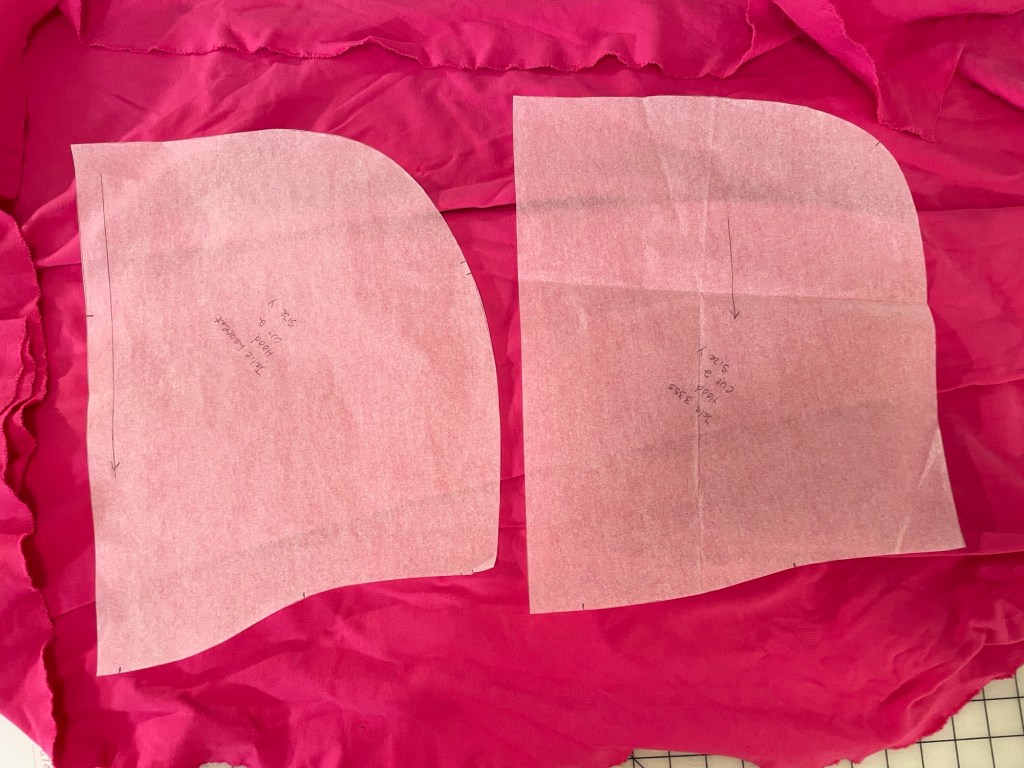
The 3355 hood is also shaped a bit different. They’re actually about the same size, but the 3355 is more square shaped where the back of your head would be, and the bottom edge where it attaches to the neck of the sweatshirt is less shaped than the Laurent. I felt like the Laurent hood fits me better.
Laurent on the left, 3355 on the right
Conclusion
I prefer the look of my Ottobre zip front hoodie to both 3355 and the Laurent, but due to the close fit that one doesn’t layer well with anything other than a short sleeve t-shirt. With living in an older house in the Northeast and heating oil over $6 a gallon right now, my focus is less on style and more about practicality, ease of layering, and comfort. 3355 has the advantage of an entire outfit in one pattern, but the Laurent has more options and IMO the drafting is a bit better. The Laurent fits a taller frame better (I am about 5’9” tall) and the looser fit around the armhole makes it a little easier for layering.
Styled here with a Jalie Laurent t-shirt, which I embroidered with this design.
Pattern Background
Classic straight leg jeans pattern for kids size 2-8. It can be made either as a pull-on pant or with a front fly.
Fit and Sizing
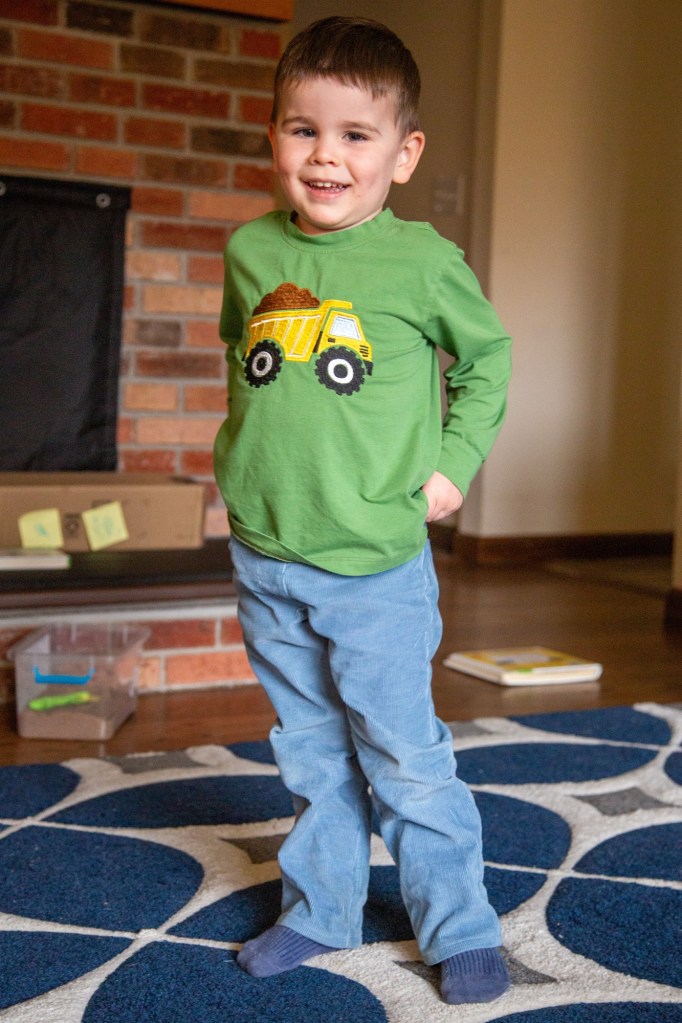
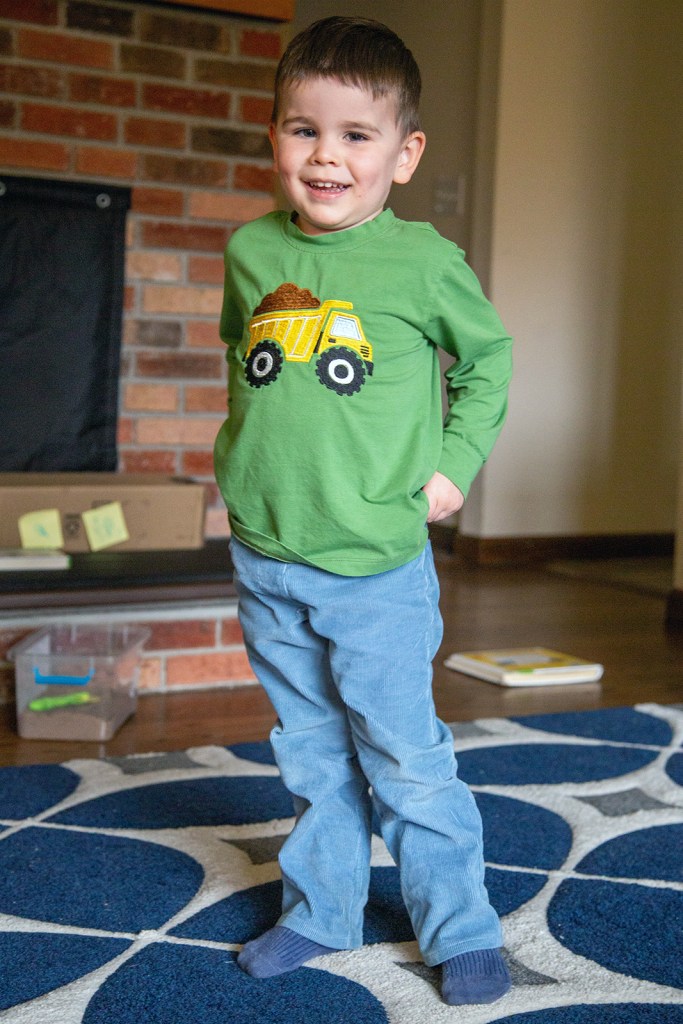
I made a size 3. My son measures closer to a 2 in width, but his height is a 3 right now. I figured since I was doing a pull-on style, using a non-stretch fabric, and want him to get some wear out of it that it was better to go bigger than smaller.
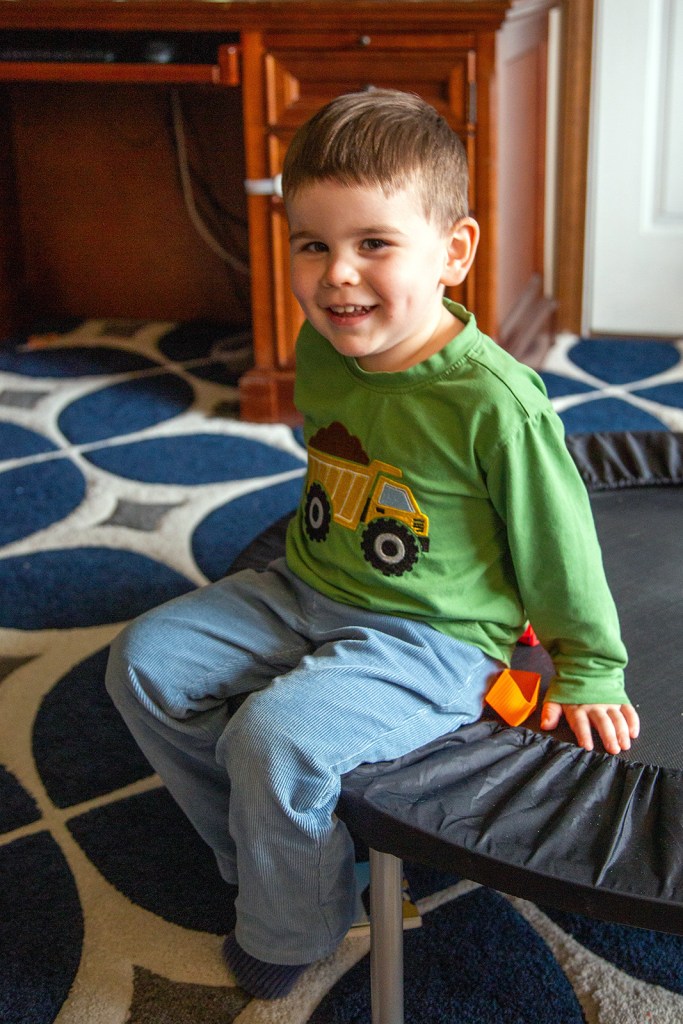
The only alteration I made was lengthening the legs 1/2″ to allow a little bit more room for growth. You can see when he’s sitting that they sit at a good height and don’t ride up too much.
Materials and Notions
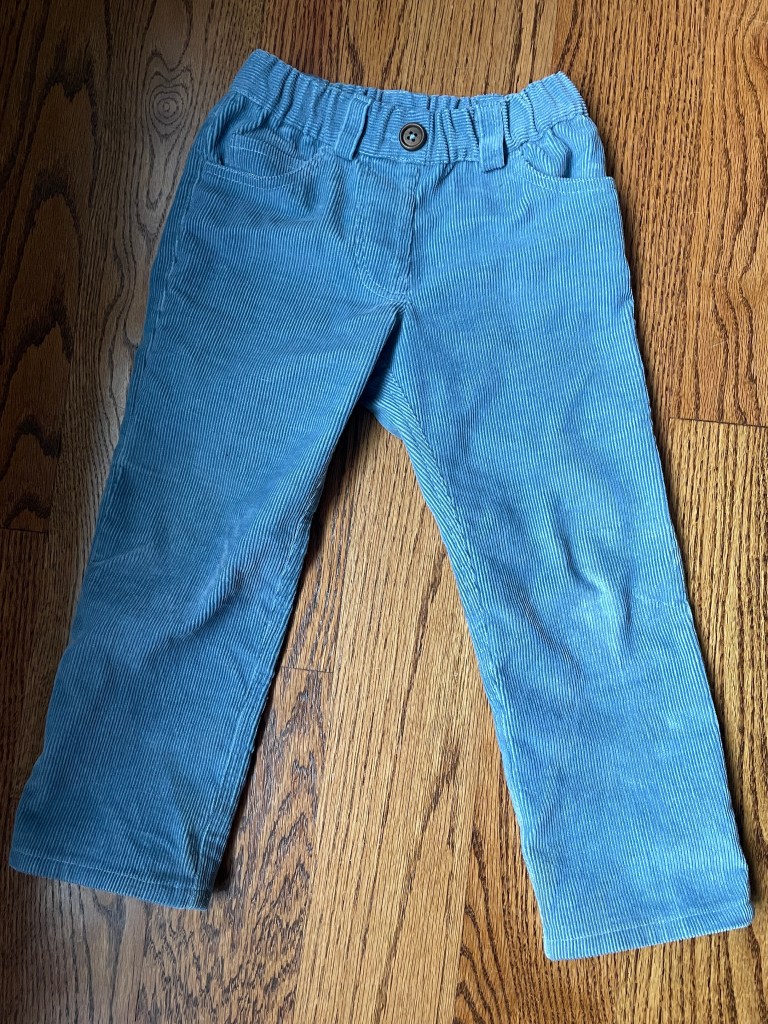
The fabric I used was a 100% corduroy my mom gifted me from her stash, purchased many years ago.
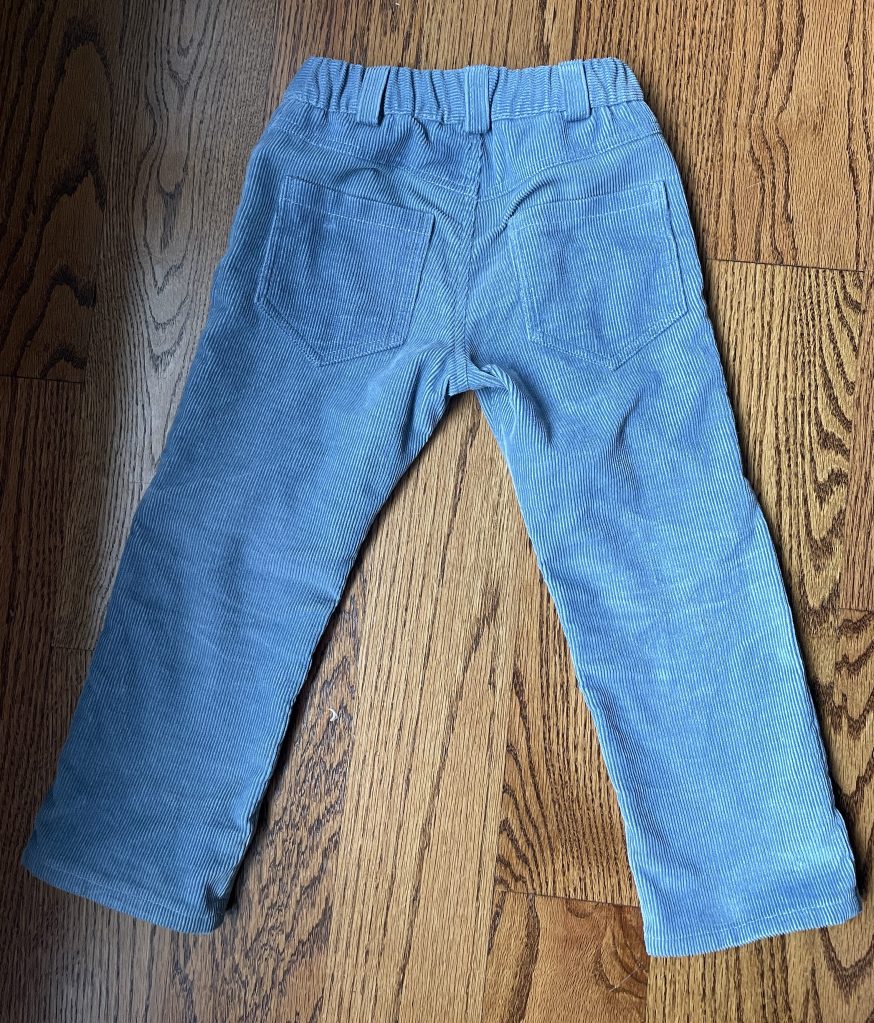
Instead of self fabric I used pants pocket lining from Wawak for the pocket.
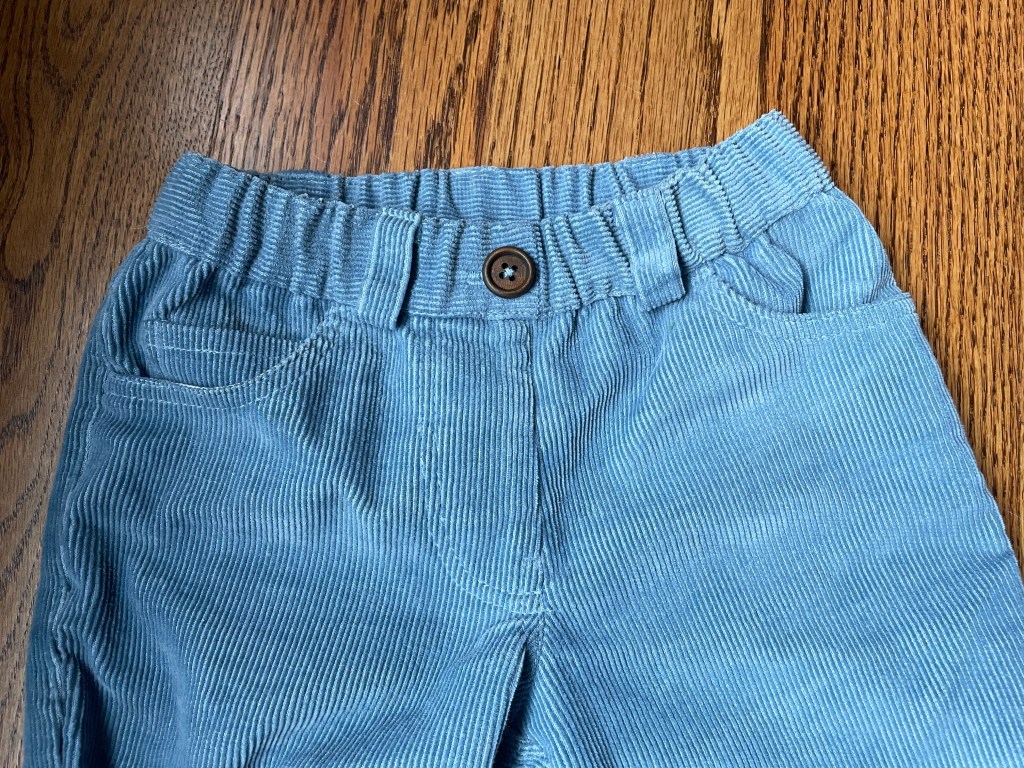
I didn’t use buttonhole elastic, instead I encased 1 1/4″ elastic inside the entire waistband.
I used Gutermann Mara 100 thread for all of the stitching.
Construction
I constructed these entirely on my Juki TL-2010Q, including the faux buttonhole (which was done with my Singer vintage buttonholer).
I did notice that certain pieces with this pattern (like the front fly piece) were cut the wrong side up if you were following a mens style pant with the fly facing the left instead of the right. Just something to think about when you’re cutting this out. I also noticed the pocket facing was 3/8″ too wide and needed to be trimmed at the side seam when sewing it to the pocket lining.
I chose to do a pull-on style. Just makes things easier for a newly potty trained three year old! When I sewed the two front pieces together at the center front I also enclosed the front fly piece inside, which acted as both a stabilizer and guide when topstitching the faux front fly detail.
Instead of the buttonhole elastic I chose to encase 1 1/4″ inside the entire waistband. It feels really secure. When I attached the waistband I did it Jalie 3243 style. After sewing the faux buttonhole in the front I pressed up the outer waistband, stitched the inside first (right side of the waistband to the wrong side of the pants), then flipped the outer waistband over and stitched it in place. While I stitched the outer waistband in place I carefully encased the elastic. (I tried doing a casing and then pulling the elastic through, but the stiff fabric was causing it to roll.) Before attaching the waistband I basted the belt loops in place to the upper edge of the pants so they ended up being sewn in place at the bottom while stitching the inner waistband in place. Once the outer part of the waistband was sewn in place I stitched the belt loops at the upper edge of the waistband. This helped keep the elastic tacked in place in a subtle way.
Conclusion
This is a great, versatile kids jeans pattern that can be remade over and over as they grow. The leg is a nice cut, neither slim nor wide, and you can easily customize the waist based on the child’s preference and/or developmental stage. He’s got enough pants for now but I will definitely will be making it again for him in the future!