I am using my Janome Coverpro 2000CPX more than ever. My little guy and I wear a lot of knits and I had been wanting to improve my skills, particularly when it comes to binding necklines. Bound necklines have always been the bane of my existence. I felt like I spent so much time trying to make precise, professional looking bound necklines, often having to rip it out and start all over again because I was unhappy with the quality of my work. I was getting super frustrated because I don’t have the time I used to for sewing, and wanted to spend it producing wearable finished garments, not ripping out stitching!
I decided to start off by buying the book Master the Coverstitch Machine: The Complete Coverstitch Sewing Guide. I saw a video by the author on her website and was impressed with her attention to detail and experience. I prefer sticking to books more than ever now. There’s too many videos on YouTube made by clueless people that clearly have no idea what they are doing. Some of these videos are of people doing these things for the first time! They have such poor technique and camerawork and try to cover it up with clever little quips and editing. They just look really dumb to me, putting it bluntly. I feel like people don’t want to put in the time anymore it takes to really master something before immediately jumping into being an influencer about it. Even the author of the book, who is clearly an experienced seamstress, said it took about it eight hours of practice before she really got the hang of using a binder.
Along with the book I bought some attachments for my machine. I had held off on buying a binder for my coverstitch machine for a long, long time because honestly, the price of the Janome ones are eye watering (like over $250 now). I also held off because I read posts here and there by people claiming that binders are clunky and don’t work well, especially the off brand ones. I kept reading though in my Ottobre pattern instructions about using binders though, so I decided to just go for it. I bought a 1/2” finished width double fold binder, along with a clear binder presser foot. I chose this size because the Ottobre children patterns often recommend a neckline binding finished width of 15mm, which is around 1/2”.
The video I saw on the author’s website suggested using cotton rib knit when you’re just starting out, as it is easy to work with. I have a ton of cotton rib knit in my stash, so that’s what I used. I cut the strips 1 5/8” for this particular binder (the width you need to cut is listed on the binder) using a clear ruler and rotary cutter. I then set up the binder on my machine. I ended up using the video on the Janome product page to help because the binder that I bought had absolutely no instructions. I then loaded the binder up with the rib knit, using an awl and tweezers just as the author suggested to feed it through. It took some fiddling to get it actually folded correctly under the presser foot, but once I got it going I was able to start perfecting the settings of the binder and my machine. The author recommends using a long stitch length (4mm) and playing with the differential length and presser foot pressure. I also had to loosen the screws and slide the binder around a bit in order to get the angle it fed the fabric under the presser foot correct. Once I was satisfied I started feeding some fabric into the binder, which involved more tweaking and testing. But it was completely worth it. I couldn’t believe what a perfect finish I got without having to estimate how long the strip would need to be, stand by the ironing table folding, etc. I tried a few different fabrics and while I needed to adjust some settings, I found that generally it gave a perfectly finished neckline without puckering or being too stretched out, and it had a ton of stretch – a lot more stretch than when I did it by hand with a serger/regular machine then topstitching with the coverstitch. I have no idea how the binder gets it so perfect despite the variety of fabrics I used, but it does it really, really well and saves me SO much time.
Here’s a tshirt I made my son recently, with one of those envelope style necklines, using a cotton rib knit for both the binding and the shirt. Perfectly placed stitching with plenty of recovery and no stretching or puckering. Making little boy shirts is SO much more fun now!
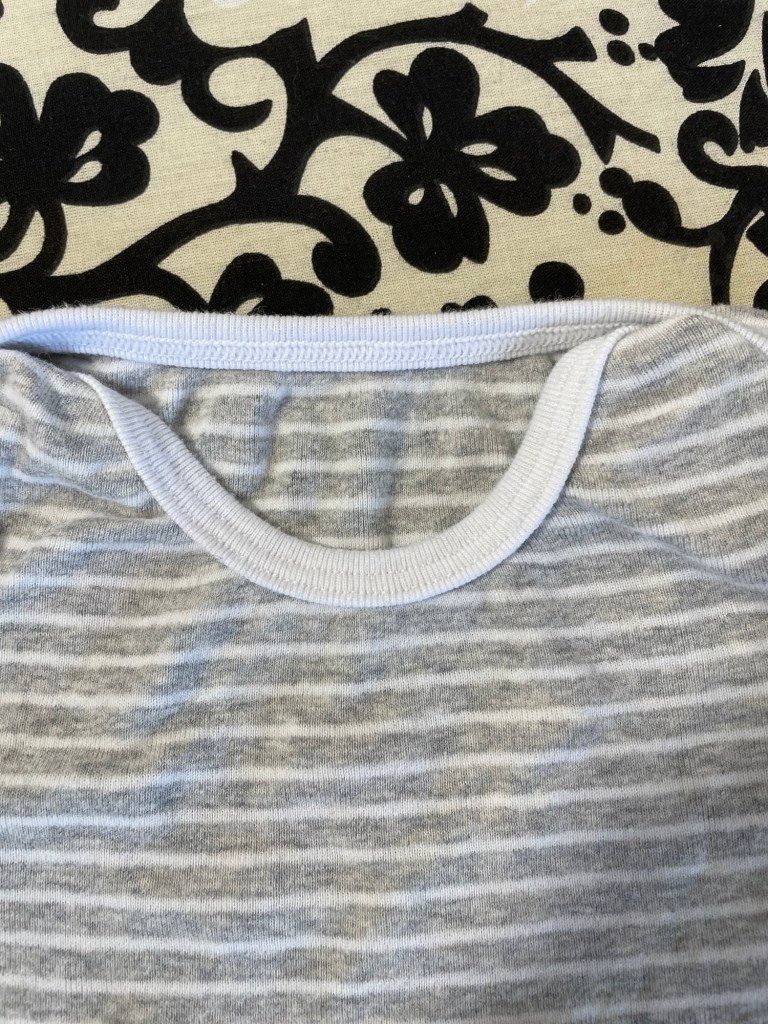
Now here is a light to medium cotton/lycra jersey tshirt I made for myself. For this one I used a smaller 3/8” finished width binder. I also chose to use a chain stitch instead of a two needle narrow coverstitch. Partially because I wanted a more subtle finish, but also because I wanted to experiment. The neckline lays perfectly flat when worn. Again, no having to measure and estimate what amount of length I would need. You just cut a strip of binding as long as you can, and the attachment/machine does the rest of the work for you.
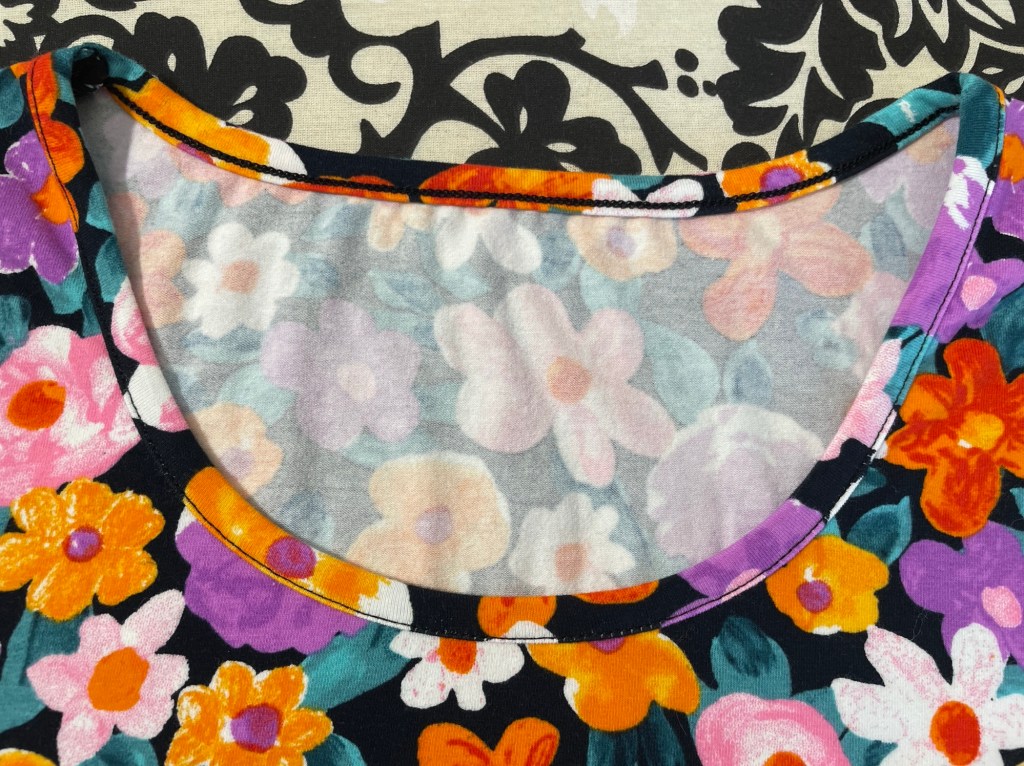
The author warns in her video that lightweight, stretchy knits like rayon/lycra jerseys are difficult to work with using a binder, and not really suitable. I don’t agree, it is definitely trickier but as you can see below I got pretty good results using the 3/8” finished binder on a scrap of lightweight, stretchy rayon/lycra jersey. It IS much harder to get it initially fed through the binder though, and you have less tolerance with the settings. Practice with a few scraps is essential!
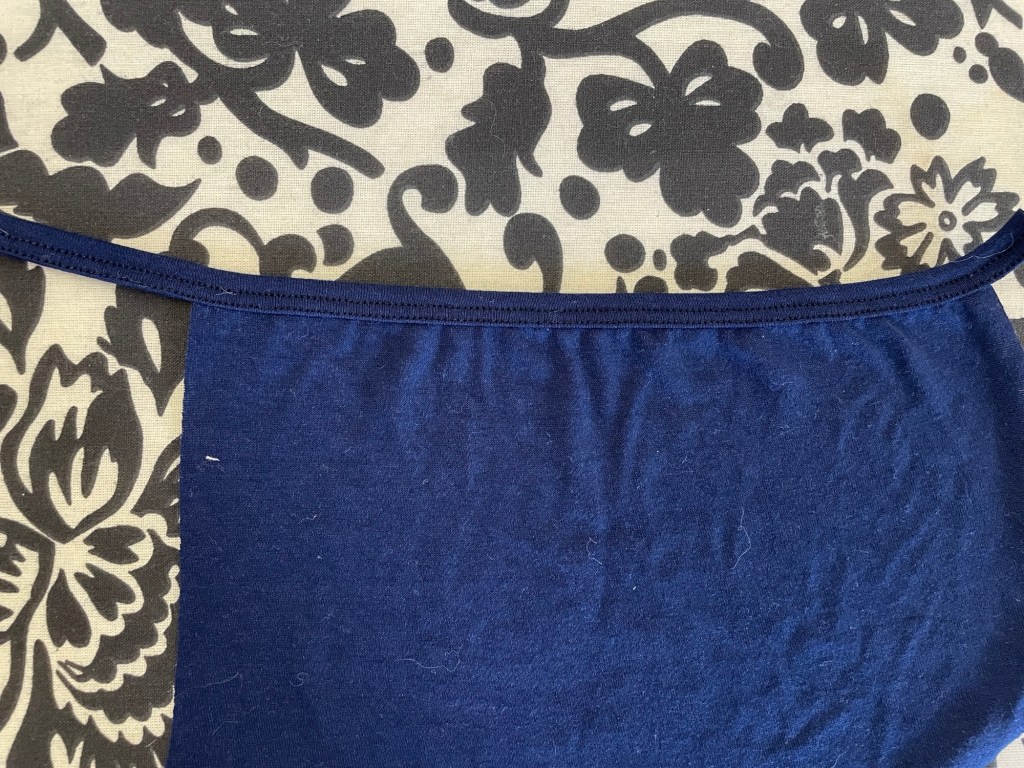
At least for my Janome Coverpro 2000CPX these off brand binders work just fine and are all less than $30 each. They all include the attachment plate. The 1/2” finished width Janome branded binder is currently around $267 and doesn’t even include the attachment plate (another $40!) I’m sure the Janome branded one has a better build quality but I’m just pointing out that you can make yourself an entire set with the most commonly used widths for a lot less than one Janome branded binder.
I did splurge for the Janome Coverpro tape stand. The book said you can use a paper towel roll holder, but I wanted the flexibility of the height adjustment and something that wouldn’t be so bulky. Much like the binders, it is stupidly expensive for what it is. However I have found that using a stand is essential for helping feed the binding into the binder, especially when you’re working with a flimsy rayon/lycra jersey that wants to fold over itself before you even get it fed into the binder. I did take the tip from the book to roll the cut binding into an empty toilet paper roll.
Something else I wanted to experiment with was reverse coverstitching. I think the industrial machines that do this call it flatlocking. A lot of Ottobre knit patterns call for this stitch. You sew the seam on a regular machine using a straight stitch and then open it up, press ur, and then and topstitch from the back using the coverstitch machine. The newer model Janome Coverpro 3000CPX has five threads and can do it from the top, not the bottom, but I can’t afford to upgrade my machine at this time. The book explains very well how to make do with a four thread coverstitch machine like I have though.
I found reverse coverstitching over a seam very easy with the help of the Janome clear guide foot. You can buy the branded Janome one for $62, but Amazon has a generic one for $27.
Coverstitching something like a pocket however was far more difficult, and I ended up having to redo my work so many times. Since you’re working from the back you’re sewing completely blind. I used the marking paper with a tracing wheel but even so I had a lot of mistakes that needed to be redone. For this reason alone I wish I could upgrade to the 3000CPX.
Below is a sample of the Ottobre zip sweatshirt hoodie I made lately. It is a cotton/polyester sweatshirt fleece so a fairly heavy fabric with a heavier rib knit for the trim. The hem band was sewn using the coverstitch over the attachment seam, and the pockets and their trim were sewn directly on top of the fabric. Even though I had to keep redoing it I love how flat the pockets came out!
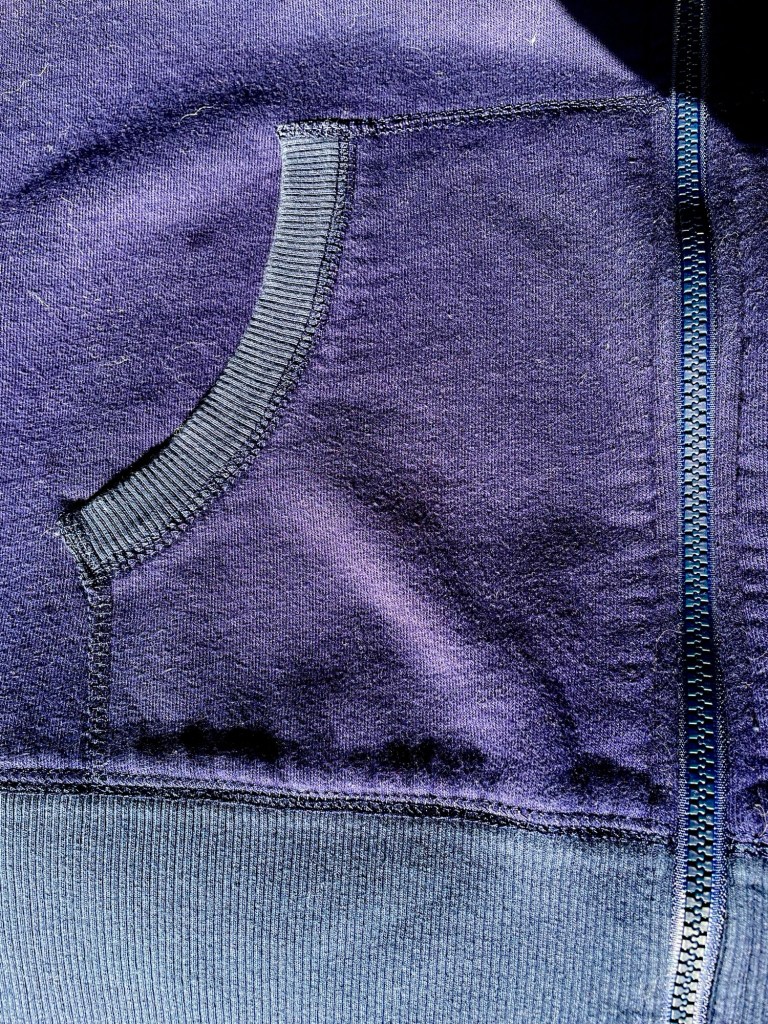
I did find I had an issue with skipped stitches where the rib knit meets the side seam, as the fabric is heavy and the seams very bulky (there’s an attachment seam where the front hem ribbing is sewn to the back hem ribbing, as well as the fleece side seam bulk). Despite my best efforts I couldn’t get it right, so I ended up just fudging it with some hand stitching.
Overall I highly recommend the Master the Coverstitch Machine book. It has great instructions, very clear and high quality photos, and the projects section shows in depth how to apply the techniques to your own projects. Pretty much anything you might want to do with a coverstitch is covered. As I mentioned before I also found the generic binders and feet from Amazon worked perfectly fine on my machine, so I highly recommend trying those out if you are hesitant to go all out and buy the official name brand binder.
 Clothing Engineer
I love Joanna’s books. I have all of them.
LikeLike
Agreed, her books have such a professional presentation. I’m thinking of getting the activewear one.
LikeLike
As always, you have written clear instructions, with pros and cons. Thank you!
In this case you listed just enough cons to persuade me to skip learning a whole new set of techniques, buying a coverstitch machine and knit fabrics. I will stick with sewing woven fabric and buy knit garments. 😅
LikeLike
Hey if you can find RTW knits that fit that’s the way to go! For me I have to make them, otherwise the back rise and pants lengths are too short, waist is too big, arms too short and tight etc.
LikeLike
Thank you so much!!! I have struggled with many of the same issues and your success inspired me to get back to it!!!
LikeLike
The right tools can make life so much easier! I’m still rather new at using binders so my work isn’t always accurate yet, but it is a lot better than when I was doing everything by hand. Practice makes perfect!
LikeLike
This is encouraging. I have vacillated about getting the book but I think I will now. I do a basic coverstitch but would like to use it more. I have her activewear book. I personally believe of all the books, Joanna’s samples and work is always professional looking. Always perfect and that is what inspires me.
LikeLike
Yes! She’s been sewing for over 30 years and it shows. I jumped to certain sections but am currently working on reading it from start to finish as I’m always open to learning better ways of doing even the most basic things. It is always a joy to learn from someone that knows their craft well.
LikeLike