Jalie 3675 is a simple unlined bomber jacket meant for stable knits or stretch wovens. It has a zip front opening, front welt pockets, and a little fabric tab where the hem band meets the zipper. It comes in sizes 2T (21″ chest, European 92) all the way to European size 52 (50″ bust). I was looking to make a fall jacket for my two year old son now that temperatures around here have officially left summer territory, and thought it was a perfect fit for the fabric I had recently purchased. Normally I love using Ottobre patterns for my son’s wardrobe, but with the tariff chaos they aren’t currently shipping to the US so I had to look elsewhere.
Materials
The main fabric is a quilted poly/cotton/lycra blend quilted knit from Jumping June Textiles. As soon as I saw this online I had to get it. It is definitely one of the most expensive fabrics I’ve purchased, but since toddler clothing has minimal yardage requirements it made the purchase less painful. I also have enough left over for a vest or colorblocked future jacket for him.
If you purchase this knit make sure to serge or bind the edges because it loves to shed.
The zipper is a navy blue #3 molded plastic zipper from WAWAK. I needed to shorten it to 12″ and didn’t have any #3 zipper stops in stock, so I borrowed a couple of stops from an old zipper in my stash.
The thread is Gutermann Mara 70. Normally I prefer Mara 100 or 120 weight for garments, but I couldn’t really find a good thread match for this fabric (it is like a saturated mustard color with orange/brown tones in it) and already had this in my stash, so I decided to just go with it. Luckily the thick knit was able to hold up to the heavier weight thread (and the topstitching does look nicer due to the loft of the fabric).
Fit/Alterations
My son is currently a size 92 in Ottobre. I hardly ever buy RTW clothes for him anymore, but when I do it seems right now he’s typically closer to a 3T than a 2T. Even though size 92 in Ottobre fits him pretty generously I decided to size up to the 3T in this pattern (Euro size 98) because I wanted him to be able to easily layer and hopefully get a year of use out of it. You can see it is a bit big on him right now but not overly so.
Since I wanted to easily layer this over some of his sweatshirts I removed some of the shaping from the sleeve, turning it into a straight line from the armpit to the hem instead of curving in around the elbow slightly as drafted. I’m not sure this was actually necessary but hey, the room is there if we need it. I also added a total of 2″ to the hem width because my son wears cloth diapers and that often means shirt hems too snug and tend to ride up.
Construction
This is one of the newer Jalie patterns. The instructions are very clear compared to some of their older patterns. I hadn’t done a single welt pocket in a while and had no problem following Jalie’s instructions (which include illustrations for each step as well as written instructions in both English and French). There’s also a video tutorial on the website. IMO Jalie has put a lot of effort into making their patterns more accessible in both expanded size offerings and more thorough instructions. I am not super dependent on instructions but as I spend most of my days sleep deprived and/or distracted by toddler antics I appreciate the extra hand holding.
I did use a narrow, dense zigzag stitch to reinforce the pocket openings. This wasn’t in the Jalie instructions but Ottobre often recommends it.
Conclusion
This is a great jacket pattern for the whole family. Instructions are clear and the drafting is well done. He wore it for the first time today when we went to see Grandma and Grandpa and refused to take it off the entire time we were there!
The Green Pepper 557 is a pattern for lined booties/slippers for babies, toddlers, and older children. 1/8” elastic shock cord and a spring cord lock ensure they stay snug on feet.
This will fit babies through children’s size 6 shoe. There’s a graphic within the pattern sheet you measure you child’s foot against. My son measured just above the largest infant size (approximately 18-24 months) but below the smallest toddler size. Due to the fabrics I used (a heavier corduroy and a heavy cotton sherpa fleece) I ended up sizing up to toddler size 7. If I had used a lightweight fleece and thin exterior fabric the largest infant size probably would have worked.
Materials
My goal with this pattern was to create a warm, washable indoor winter slipper of natural, breathable fabrics. It seems difficult to find slippers for little ones that don’t use polyester fleece. It was mandatory that they stay on securely, but I didn’t want a Velcro closure because I find it’s too easy for him to undo and gets messy over time. It was also important to that they have a very grippy sole because my son runs around full speed on hardwood and LVP floors.
For the main fabric I used a sturdy 100% corduroy from Fabric Mart.
For the soles I used Dritz anti-skid gripper fabric. (FYI – one package of this fabric is enough for three toddler size bootie soles.) I wanted to add some extra durability so I fused some low loft fusible fleece to the wrong side of the gripper fabric to help reinforce it and give a little more padding. I didn’t go with a higher loft because I felt like the thick fleece lining combined with a higher loft fleece might make things too unstable when he’s running at top speed.
I didn’t have any 1/2” grosgrain ribbon in stock to create the elastic casing, so I subbed in 5/8” satin ribbon from my stash.
The instructions included with the pattern are clear and straightforward, and include illustrations as well as text. You make this entirely on a sewing machine (no serger needed). My only struggle was sewing the Sherpa fleece lining because the bulk and loft of the pile made it difficult to see the edge of the fabric. If I had used a micro fleece as suggested in the instructions it would have been much easier, especially when it came time to attach the lining to the main fabric of the shoe.
I did find the elastic measurement for the bootie too long by about 3” or so. I think the instructions assume you will be using a cord lock with one hole, not two, so they have you loop off some and tie it into a knot. My cord stops have two holes so I didn’t need to do this.
Conclusion
My son was so excited when he saw his new slippers! (He always gets excited when he sees a new piece of clothing I’ve made for him, somehow he knows it’s made just for him so I guess it makes him feel very special.) He immediately insisted on wearing them and started running and stomping around the house with them. I’m pleased to report the gripper fabric works really well. He had no issues whatsoever with slipping despite all of his running around. Despite it being a warmer fall day he insisted on wearing them for hours! I plan on making another pair for him to keep in my diaper bag for when we go visiting other people’s homes in the winter.
This is a great pattern for baby showers and Christmas gifts because as I mentioned before, it seems like most commercial booties/slippers for babies and small children use polyester fleece for the lining. With this pattern you can make something much more special than what you would find in a store.
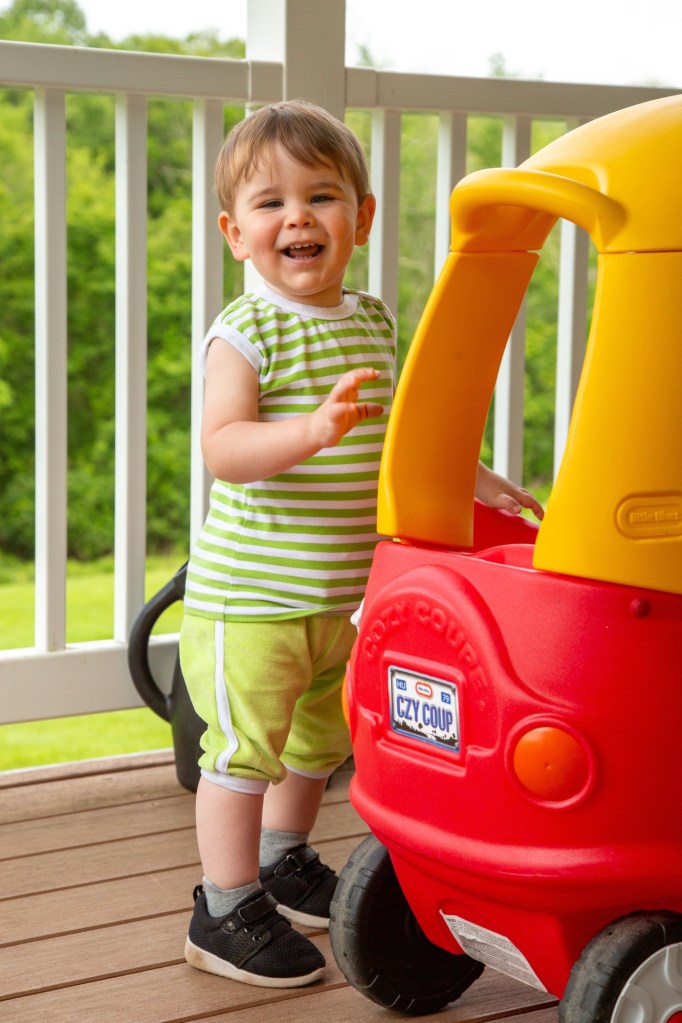
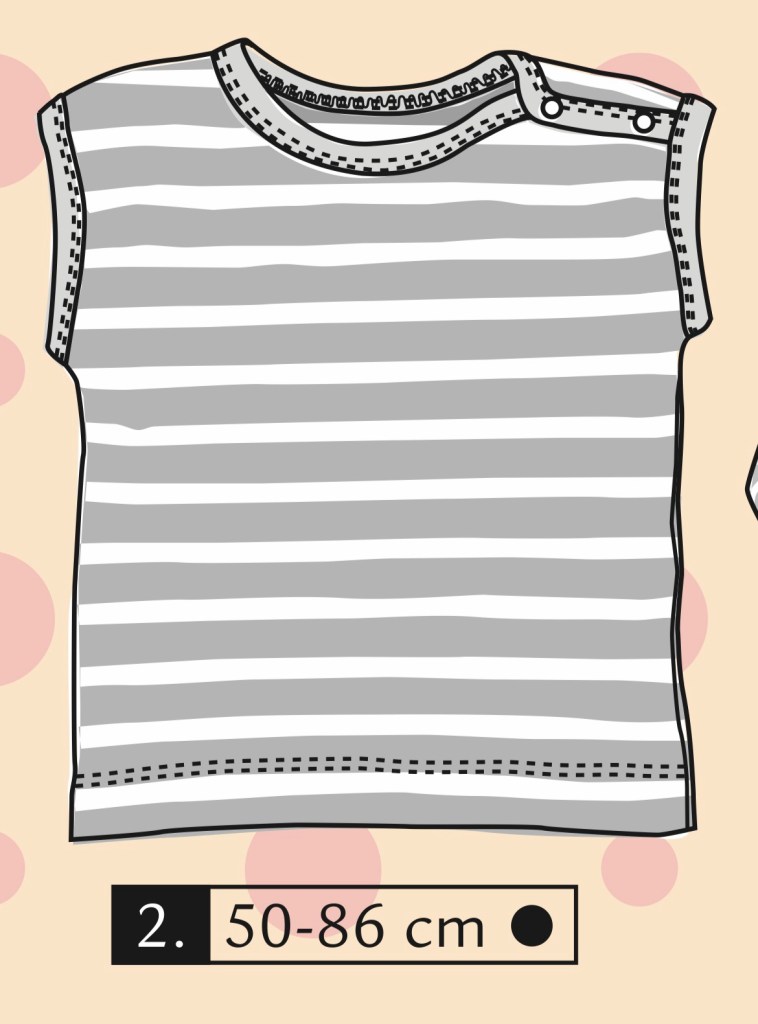
Ottobre 3/2012 #2 is a sleeveless knit shirt with a neckline and armholes finished with rib knit. Two snaps at the left shoulder help with dressing. It is drafted for sizes 50-86.
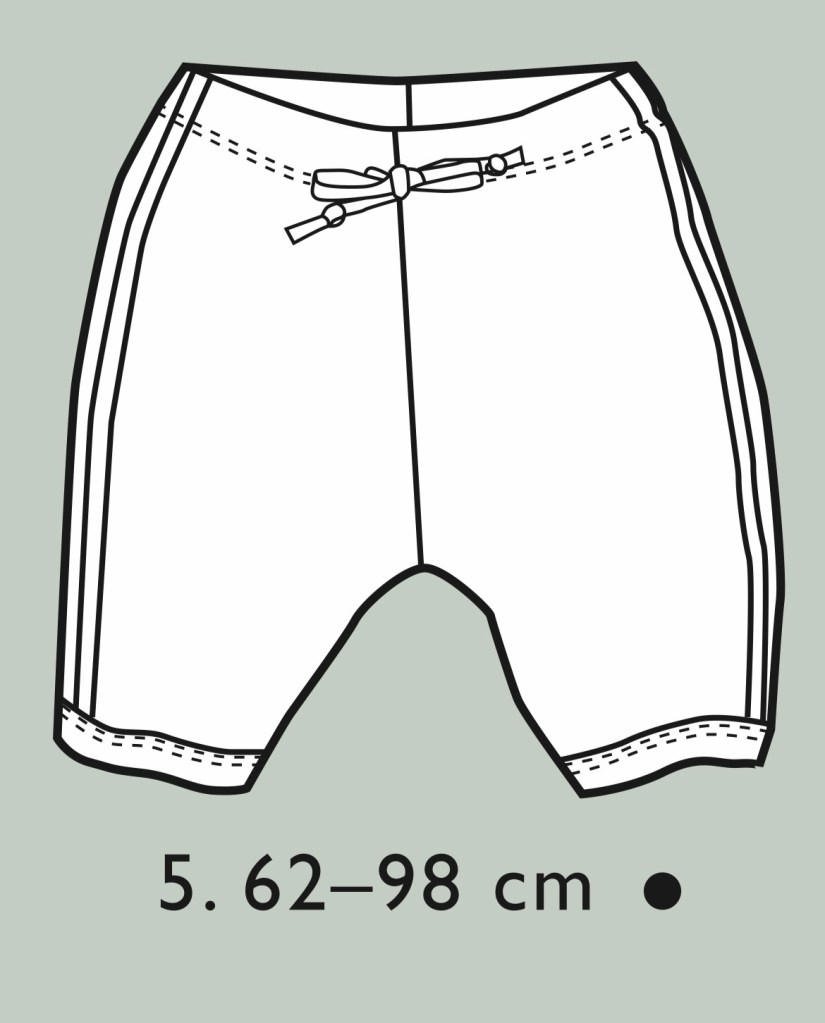
Ottobre 3/2023 #5 knit shorts are hemmed just below the knee, with a hem finished with rib knit. The side seam has a decorative stripe made out of rib knit. The waist is elastic, with a decorative drawstring at the center front. It is drafted for sizes 62-98.
Materials
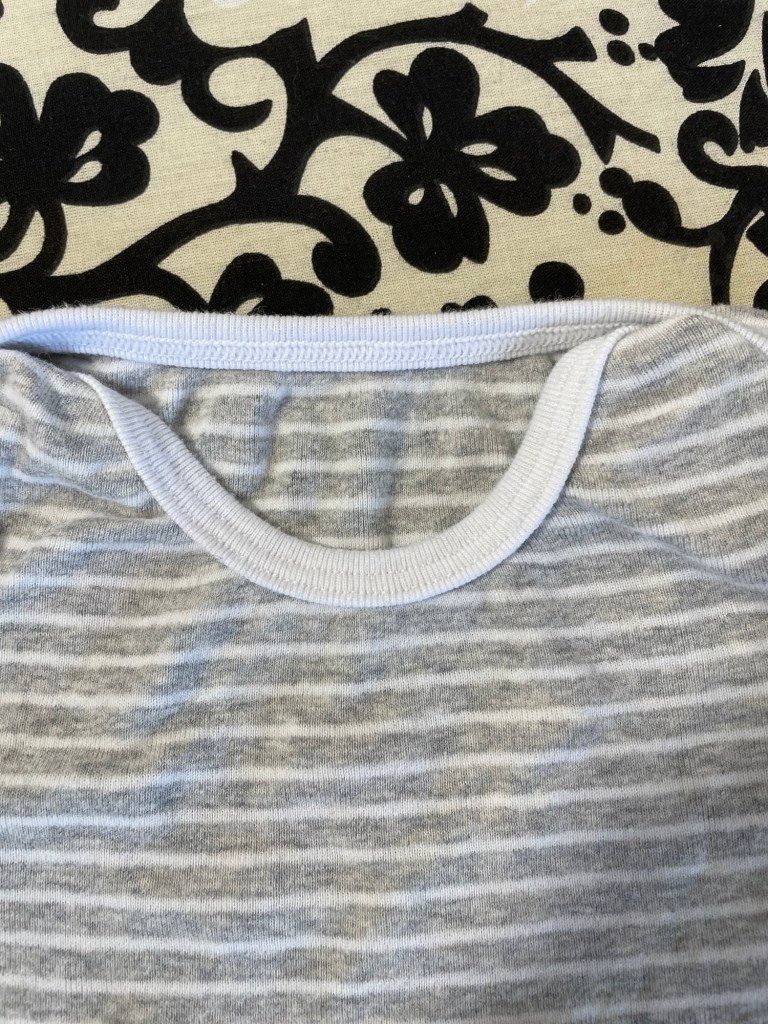
For the top I used a cotton/lycra jersey from Nature’s Fabrics. I had it leftover from another project and it was just enough to squeeze this shirt out of it.
The shorts were made out of a cotton velour, also from Nature’s Fabrics. I really liked using this fabric for his shorts. It is durable, soft, and washes well.
The snaps are from KAM Snaps. The rib knit is from Fabric Mart. The grommets for the drawstring (not shown) are #00 metal grommets from WAWAK. The 3/8” wide cotton drawstring tape is from Amazon. The 1” elastic for the shorts waist is also from Amazon.
Fit
I used a size 86 for both shirt and pants.
For the shirt I added about 2” width to the hem at the hip. My son wears cloth diapers and I find that adding some width helps it not ride up as much over the bulk.
For the shorts I added 1/2” height to the center back seam.
Construction
I found I needed to mark where the binding went at the bottom of the armholes of the shirt, because otherwise it is hard to see exactly where the bottom of the armhole is when you’re binding it and you may end up halfway down the side seam! Otherwise it was a straightforward process constructing the shirt.
For the shorts, a Clover bias tape maker to make the binding for the side seams made the process go much easier. No having to manually turn under the edges, just run it through the tape maker and then sew it onto the front before stitching the side seams together.
For both projects I used a 5/8” finished width single fold binder for my cover stitch machine to attach the ribbing to the fabric. I found the velour was too fussy when it came time to stitch the elastic casing for the waist with my cover stitch machine (so many skipped stitches) so I ended up using a zigzag stitch on my regular sewing machine for that.
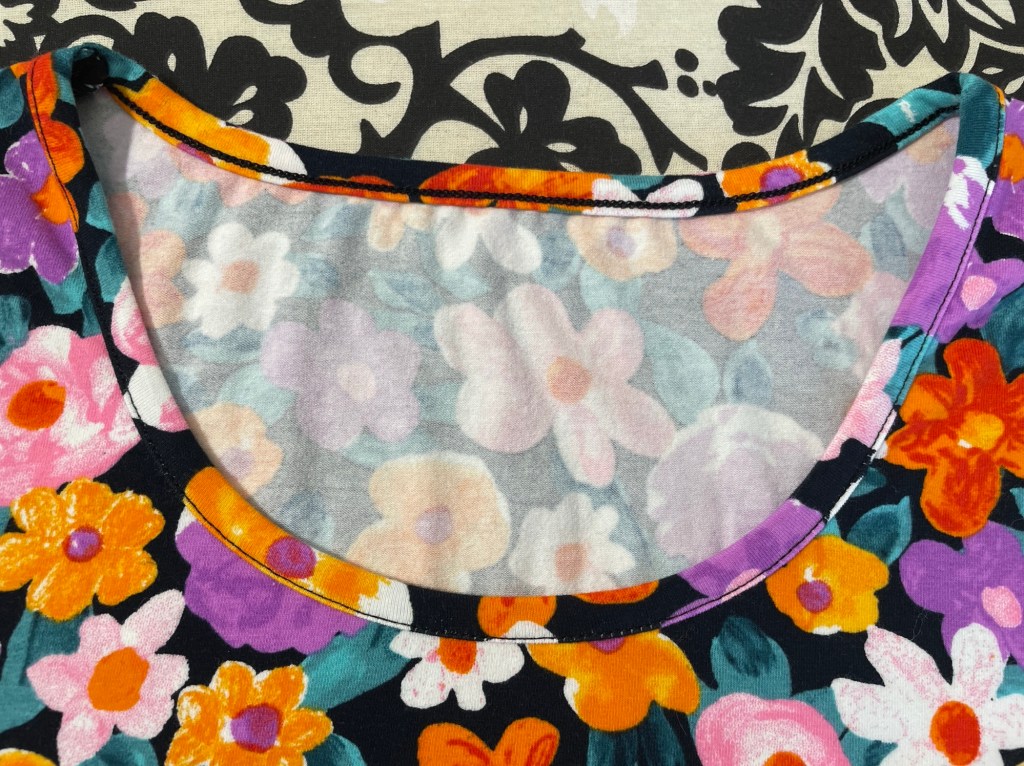
I am using my Janome Coverpro 2000CPX more than ever. My little guy and I wear a lot of knits and I had been wanting to improve my skills, particularly when it comes to binding necklines. Bound necklines have always been the bane of my existence. I felt like I spent so much time trying to make precise, professional looking bound necklines, often having to rip it out and start all over again because I was unhappy with the quality of my work. I was getting super frustrated because I don’t have the time I used to for sewing, and wanted to spend it producing wearable finished garments, not ripping out stitching!
I decided to start off by buying the book Master the Coverstitch Machine: The Complete Coverstitch Sewing Guide. I saw a video by the author on her website and was impressed with her attention to detail and experience. I prefer sticking to books more than ever now. There’s too many videos on YouTube made by clueless people that clearly have no idea what they are doing. Some of these videos are of people doing these things for the first time! They have such poor technique and camerawork and try to cover it up with clever little quips and editing. They just look really dumb to me, putting it bluntly. I feel like people don’t want to put in the time anymore it takes to really master something before immediately jumping into being an influencer about it. Even the author of the book, who is clearly an experienced seamstress, said it took about it eight hours of practice before she really got the hang of using a binder.
Along with the book I bought some attachments for my machine. I had held off on buying a binder for my coverstitch machine for a long, long time because honestly, the price of the Janome ones are eye watering (like over $250 now). I also held off because I read posts here and there by people claiming that binders are clunky and don’t work well, especially the off brand ones. I kept reading though in my Ottobre pattern instructions about using binders though, so I decided to just go for it. I bought a 1/2” finished width double fold binder, along with a clear binder presser foot. I chose this size because the Ottobre children patterns often recommend a neckline binding finished width of 15mm, which is around 1/2”.
The video I saw on the author’s website suggested using cotton rib knit when you’re just starting out, as it is easy to work with. I have a ton of cotton rib knit in my stash, so that’s what I used. I cut the strips 1 5/8” for this particular binder (the width you need to cut is listed on the binder) using a clear ruler and rotary cutter. I then set up the binder on my machine. I ended up using the video on the Janome product page to help because the binder that I bought had absolutely no instructions. I then loaded the binder up with the rib knit, using an awl and tweezers just as the author suggested to feed it through. It took some fiddling to get it actually folded correctly under the presser foot, but once I got it going I was able to start perfecting the settings of the binder and my machine. The author recommends using a long stitch length (4mm) and playing with the differential length and presser foot pressure. I also had to loosen the screws and slide the binder around a bit in order to get the angle it fed the fabric under the presser foot correct. Once I was satisfied I started feeding some fabric into the binder, which involved more tweaking and testing. But it was completely worth it. I couldn’t believe what a perfect finish I got without having to estimate how long the strip would need to be, stand by the ironing table folding, etc. I tried a few different fabrics and while I needed to adjust some settings, I found that generally it gave a perfectly finished neckline without puckering or being too stretched out, and it had a ton of stretch – a lot more stretch than when I did it by hand with a serger/regular machine then topstitching with the coverstitch. I have no idea how the binder gets it so perfect despite the variety of fabrics I used, but it does it really, really well and saves me SO much time.
Here’s a tshirt I made my son recently, with one of those envelope style necklines, using a cotton rib knit for both the binding and the shirt. Perfectly placed stitching with plenty of recovery and no stretching or puckering. Making little boy shirts is SO much more fun now!
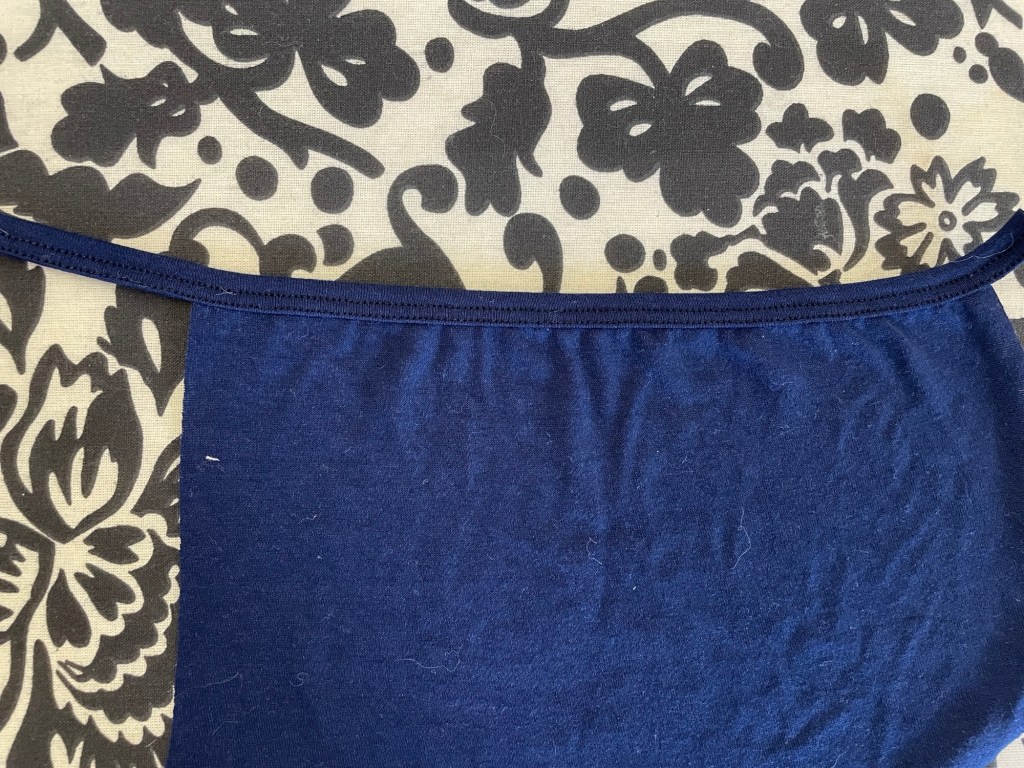
Now here is a light to medium cotton/lycra jersey tshirt I made for myself. For this one I used a smaller 3/8” finished width binder. I also chose to use a chain stitch instead of a two needle narrow coverstitch. Partially because I wanted a more subtle finish, but also because I wanted to experiment. The neckline lays perfectly flat when worn. Again, no having to measure and estimate what amount of length I would need. You just cut a strip of binding as long as you can, and the attachment/machine does the rest of the work for you.
The author warns in her video that lightweight, stretchy knits like rayon/lycra jerseys are difficult to work with using a binder, and not really suitable. I don’t agree, it is definitely trickier but as you can see below I got pretty good results using the 3/8” finished binder on a scrap of lightweight, stretchy rayon/lycra jersey. It IS much harder to get it initially fed through the binder though, and you have less tolerance with the settings. Practice with a few scraps is essential!
At least for my Janome Coverpro 2000CPX these off brand binders work just fine and are all less than $30 each. They all include the attachment plate. The 1/2” finished width Janome branded binder is currently around $267 and doesn’t even include the attachment plate (another $40!) I’m sure the Janome branded one has a better build quality but I’m just pointing out that you can make yourself an entire set with the most commonly used widths for a lot less than one Janome branded binder.
I did splurge for the Janome Coverpro tape stand. The book said you can use a paper towel roll holder, but I wanted the flexibility of the height adjustment and something that wouldn’t be so bulky. Much like the binders, it is stupidly expensive for what it is. However I have found that using a stand is essential for helping feed the binding into the binder, especially when you’re working with a flimsy rayon/lycra jersey that wants to fold over itself before you even get it fed into the binder. I did take the tip from the book to roll the cut binding into an empty toilet paper roll.
Something else I wanted to experiment with was reverse coverstitching. I think the industrial machines that do this call it flatlocking. A lot of Ottobre knit patterns call for this stitch. You sew the seam on a regular machine using a straight stitch and then open it up, press ur, and then and topstitch from the back using the coverstitch machine. The newer model Janome Coverpro 3000CPX has five threads and can do it from the top, not the bottom, but I can’t afford to upgrade my machine at this time. The book explains very well how to make do with a four thread coverstitch machine like I have though.
I found reverse coverstitching over a seam very easy with the help of the Janome clear guide foot. You can buy the branded Janome one for $62, but Amazon has a generic one for $27.
Coverstitching something like a pocket however was far more difficult, and I ended up having to redo my work so many times. Since you’re working from the back you’re sewing completely blind. I used the marking paper with a tracing wheel but even so I had a lot of mistakes that needed to be redone. For this reason alone I wish I could upgrade to the 3000CPX.
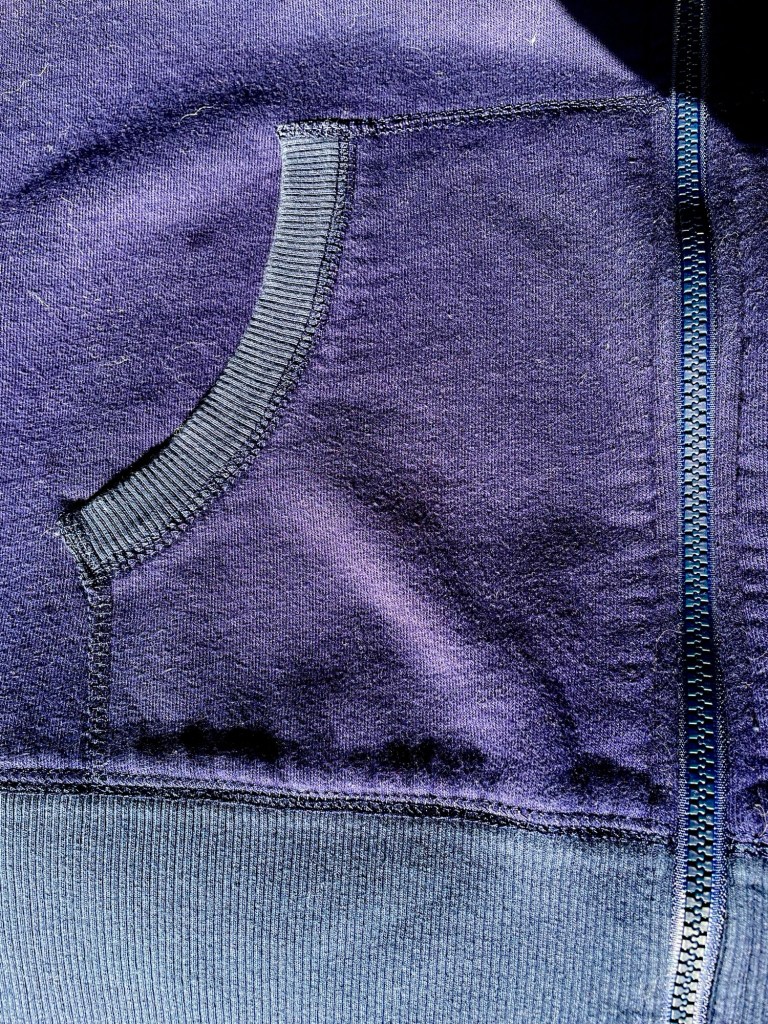
Below is a sample of the Ottobre zip sweatshirt hoodie I made lately. It is a cotton/polyester sweatshirt fleece so a fairly heavy fabric with a heavier rib knit for the trim. The hem band was sewn using the coverstitch over the attachment seam, and the pockets and their trim were sewn directly on top of the fabric. Even though I had to keep redoing it I love how flat the pockets came out!
I did find I had an issue with skipped stitches where the rib knit meets the side seam, as the fabric is heavy and the seams very bulky (there’s an attachment seam where the front hem ribbing is sewn to the back hem ribbing, as well as the fleece side seam bulk). Despite my best efforts I couldn’t get it right, so I ended up just fudging it with some hand stitching.
Overall I highly recommend the Master the Coverstitch Machine book. It has great instructions, very clear and high quality photos, and the projects section shows in depth how to apply the techniques to your own projects. Pretty much anything you might want to do with a coverstitch is covered. As I mentioned before I also found the generic binders and feet from Amazon worked perfectly fine on my machine, so I highly recommend trying those out if you are hesitant to go all out and buy the official name brand binder.
I have been using cloth diapers for over a year now. I wasn’t in a place to do any sewing when I first started (with having an infant and still trying to settle into our home and manage repairs and renovations after moving in a few months earlier) so I took the easy way out and bought a bunch of Alva Baby and Nora’s Nursery pocket diapers. They were working fine for a long time, with the help of changing out the included microfiber inserts for pad folded birdseye flats, then the flats placed on top of the microfiber inserts, followed by various combos of layering the flats over cotton/bamboo fleece and hemp/bamboo soaker inserts as he grew bigger. Lately he’s been soaking through even that. For nighttime I just put a lanolinized wool cover over a heavily boosted pocket diaper. It works fantastic and I haven’t had a single leak since using the wool cover. But since the wool is a bit bulky and can have that unpleasant wet wool smell if it gets a little wet I wanted something else for the daytime. I’ve heard that as babies grow and need more absorbency that pockets sometimes don’t work as well, so I was looking into using fitted diapers with a cover.
Disposables are certainly simpler, more convenient, and way less work. When my husband is in charge of changing him he uses disposables because despite my best efforts he still can’t manage the snaps. But the vast majority of the time I’m in charge and I hands down prefer cloth. No worrying about running out, or having to constantly dispose of dirty diapers. We don’t have curbside trash pickup in my town (unless you contract with a private hauler) so I need to drive our garbage to the local transfer station. (My mom used cloth diapers for all of us and has often commented about how many mountains of trash in the landfills must be from just disposable diapers.) I also felt like he was less prone to diaper rash with the cloth diapers. The PUL covers make them way cuter too!
Jalie 2907
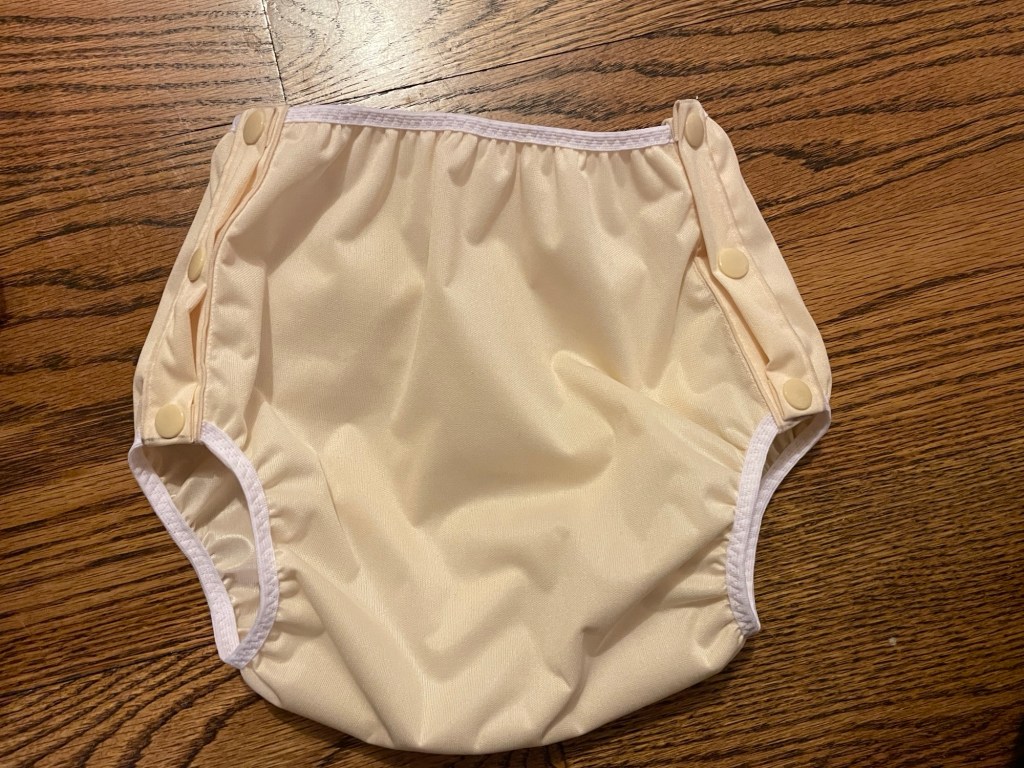
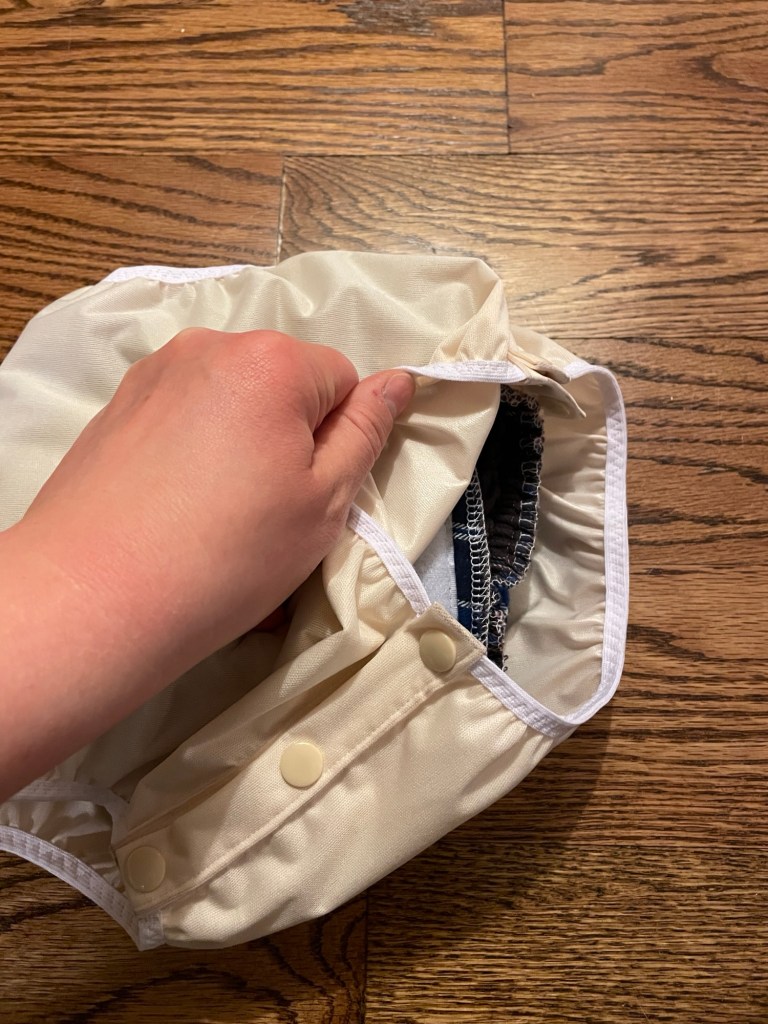
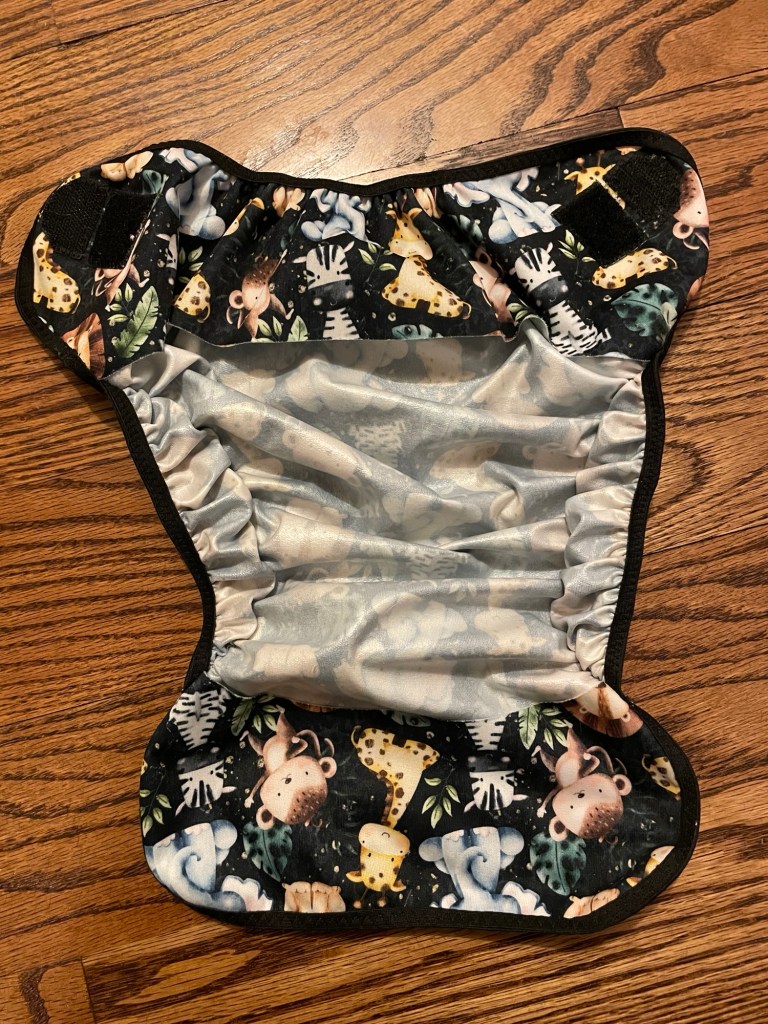
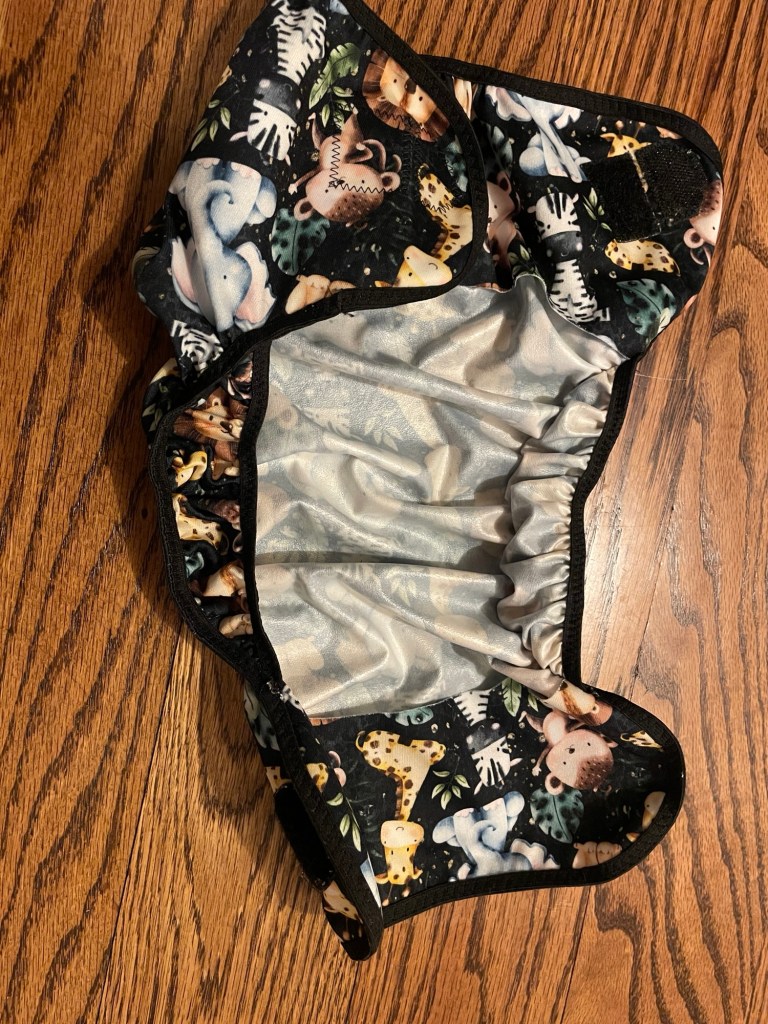
Fitted diaper inside cover. Notice how much higher the cover is than the diaper. About an inch for both front and back.
Pattern Background
This pattern includes a pocket and all in one version along with a fitted diaper and diaper cover.
I made the fitted diaper along with the cover.
Materials
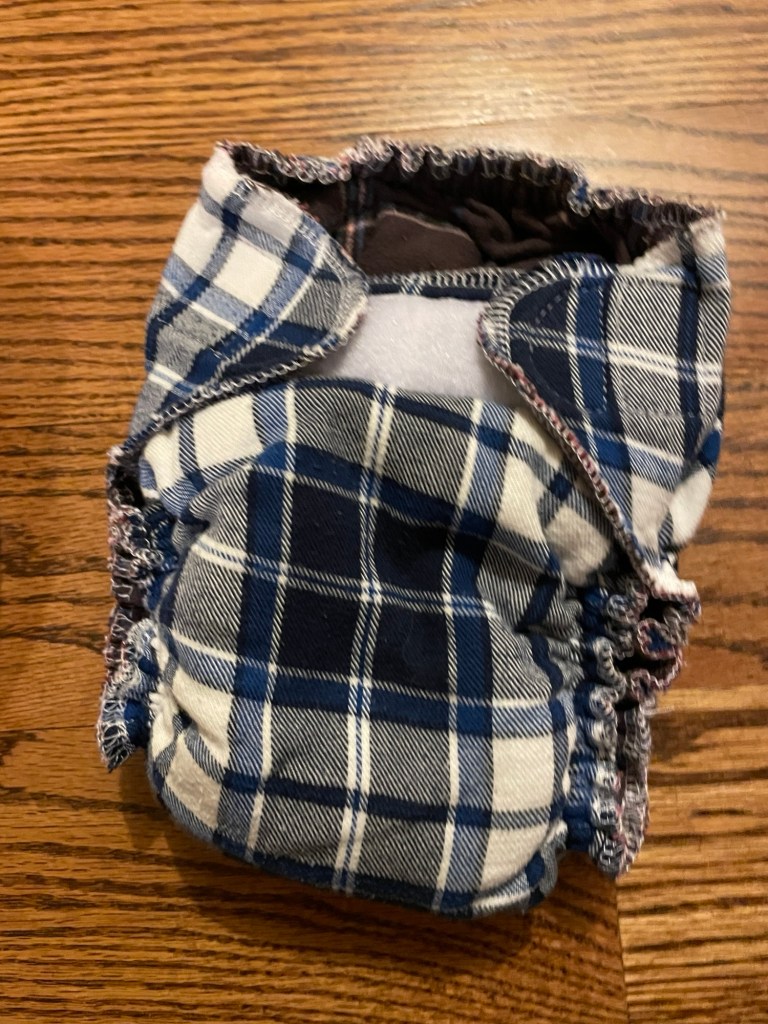
You can use anything absorbent for this pattern – cotton velour, terry, flannel, etc. Jalie warns the fit will be slightly different for wovens vs knits (meaning a child will likely outgrow the woven version first). For the fitted diaper layers I cut up a few old cotton flannel shirts. For the built-in soaker I used an old towel for two layers and cotton flannel for the third.
For the cover standard diaper PUL is recommended and that’s what I used (also from Nature’s Fabrics). For those that aren’t familiar with PUL it is a thin laminated polyester with a tiny amount of stretch. I would consider it more water resistant than waterproof, because if your absorbent layers get saturated enough it will soak through.
Alterations and Fit
My son is currently almost 20 months and around 26-27 pounds. He has a very muscular, wiry build and is longer in the torso and shorter in the legs so I’ve always had to size up in disposables sooner rather than later. For this reason I chose size 24 months.
For the diaper cover I used fold over elastic instead of the recommended 1/4” braided elastic for one of my attempts.
Construction
The Jalie sewing instructions as usual are great. I did find they were not as good quality for the cover. However this pattern goes right easily and quickly.
Issues
While the instructions are great, the fit and design of this pattern was…not good. Jalie is usually a winner so this was a big disappointment. I really don’t recommend this pattern. If you do try it, do a muslin. Do not use your good diaper fabrics for the first run!
First of all, you have three layers of the diaper plus four layers of soaker fabric. They’re all sewn together. It is very bulky and makes sewing a royal pain, especially around the legs. I use a sprayer that attaches to the toilet for rinsing off soiled diapers, and with all these layers it is more unwieldy. The bigger issue is that all these layers make for a diaper that takes forever to dry, especially if you use bamboo or hemp in some of the soaker layers. Seriously, I had to run it in the dryer in high heat for 1.5 hours and then let it air dry overnight in order to get it completely dry. My normal preference is air drying, with a normal dryer cycle on damp days. For the times I air dry I sometimes use a 15 minute quick cycle to soften them up.
Both the cover and fitted diaper waist and especially leg openings are too tightly drafted. Jalie has you do the elastic length 50% of the measurement of the leg openings and waist respectively. The fitted diaper was passable because the heft of the flannel kept it from being too binding, but the leg openings of the cover are absolutely tiny. I couldn’t even snap it shut on the first column of snaps, and my son has very average size legs. Muscular, but neither skinny nor chunky. I tried again a few times playing with the elastic length of the cover. I found 65% was a more reasonable length.
The cover is very oddly drafted. It is like the wings of the diaper cover are way too short and the legs are cut too low and small. This causes it to be too long at the sides, and then bunches up when he moves around. At this point I decided to just give up on the pattern. I had wasted a few pieces of PUL and flannel and soaker fabrics and I was done trying to make it work. I really wanted to make this pattern work because the cover is so simple and easy to make, but I decided after a few tries to cut my losses.
The one thing I did really like is Jalie had an extra piece included for creating a “laundry tab” for the fitted diaper. It is just a small piece cut from the loop part of the Velcro and sewn next to the hook part so the hook part of the Velcro can be folded over and not catch anything in the laundry.
Rocket Bottoms One Size Fitted and In A Snap Cover
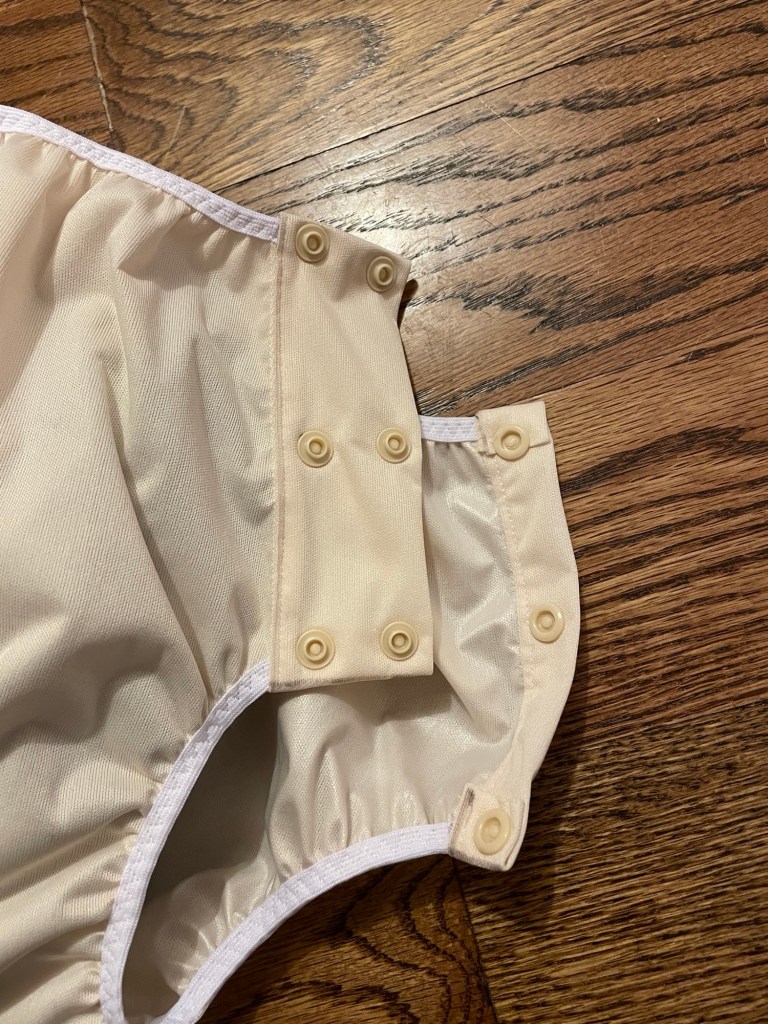
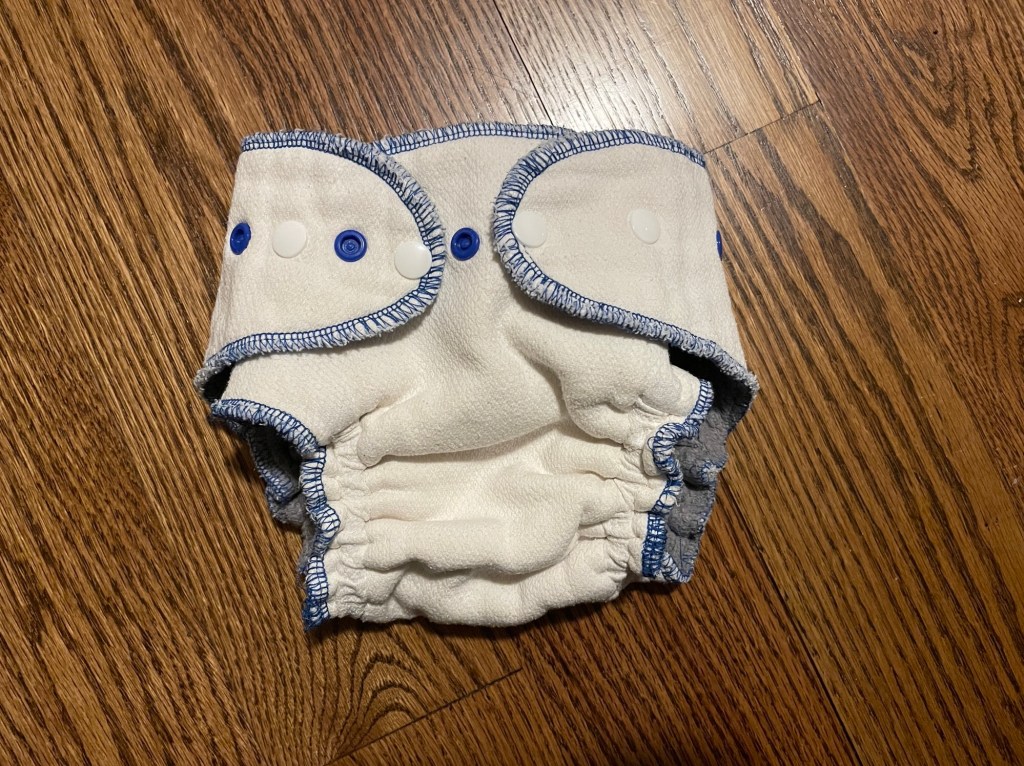
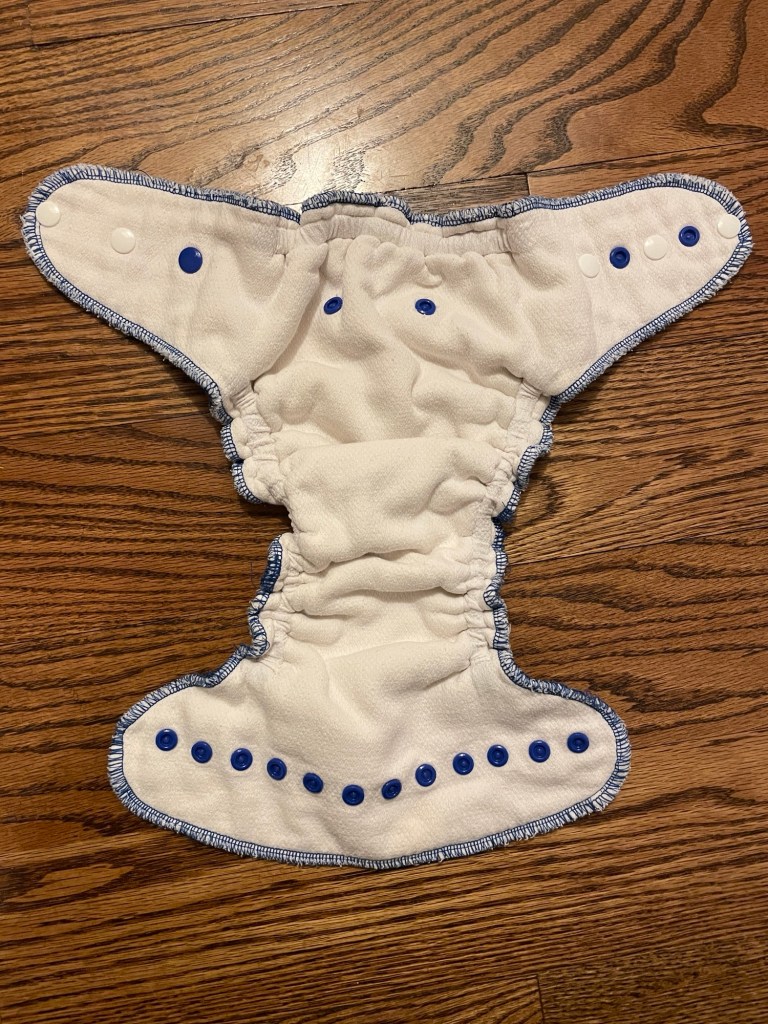
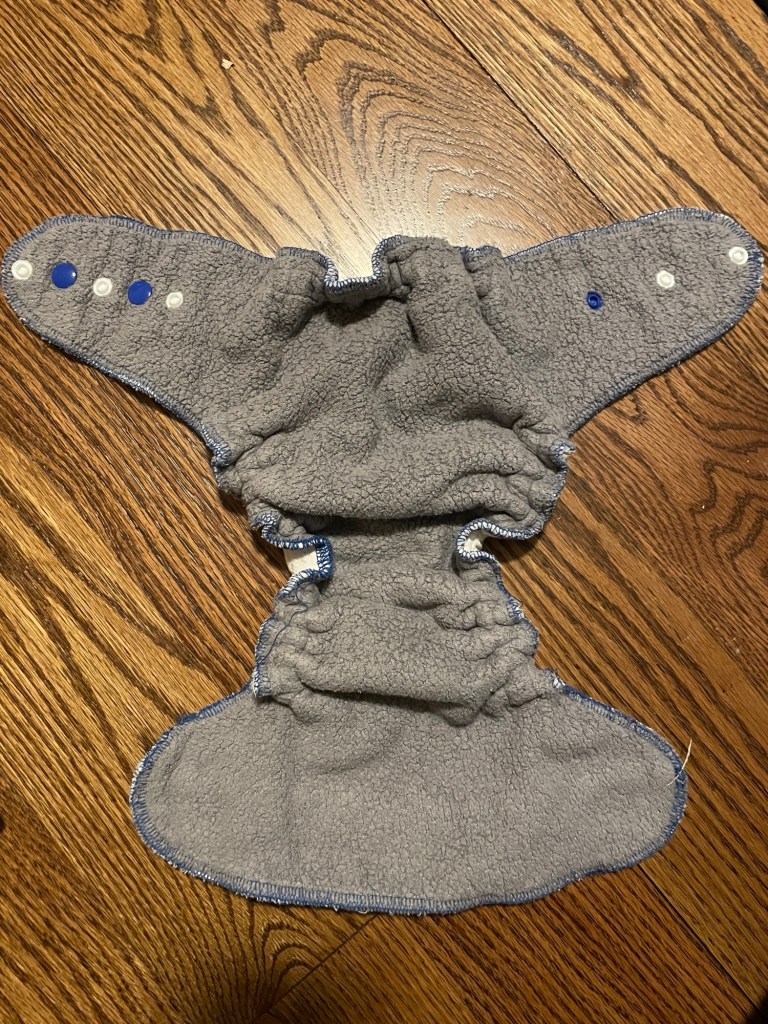
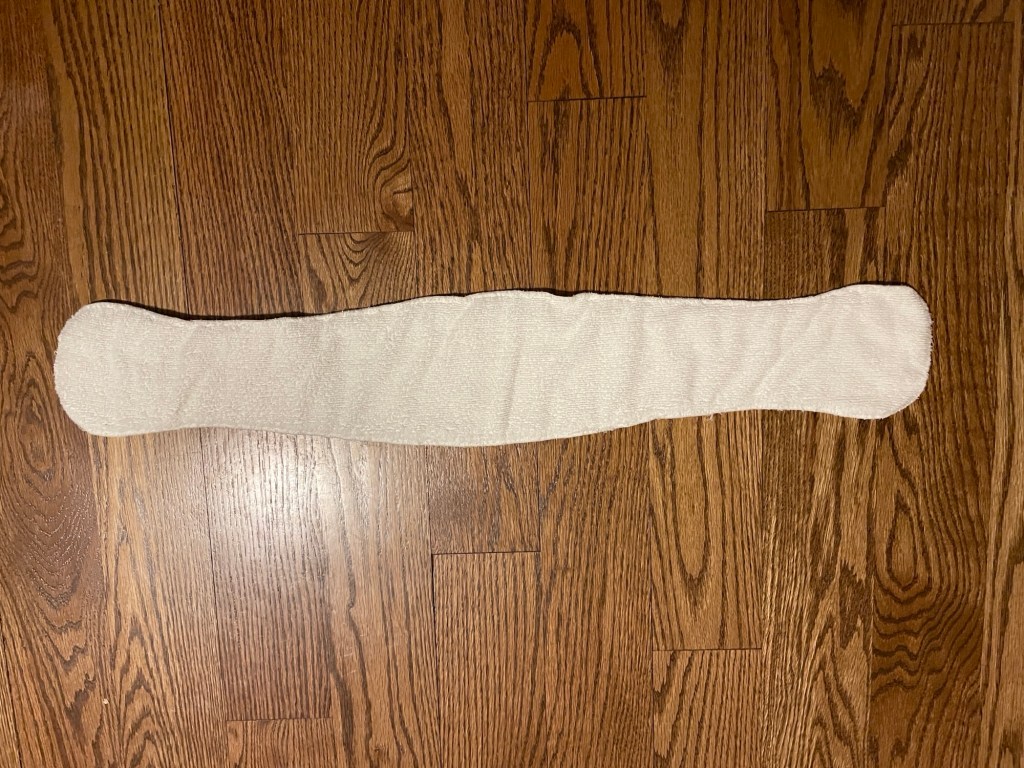
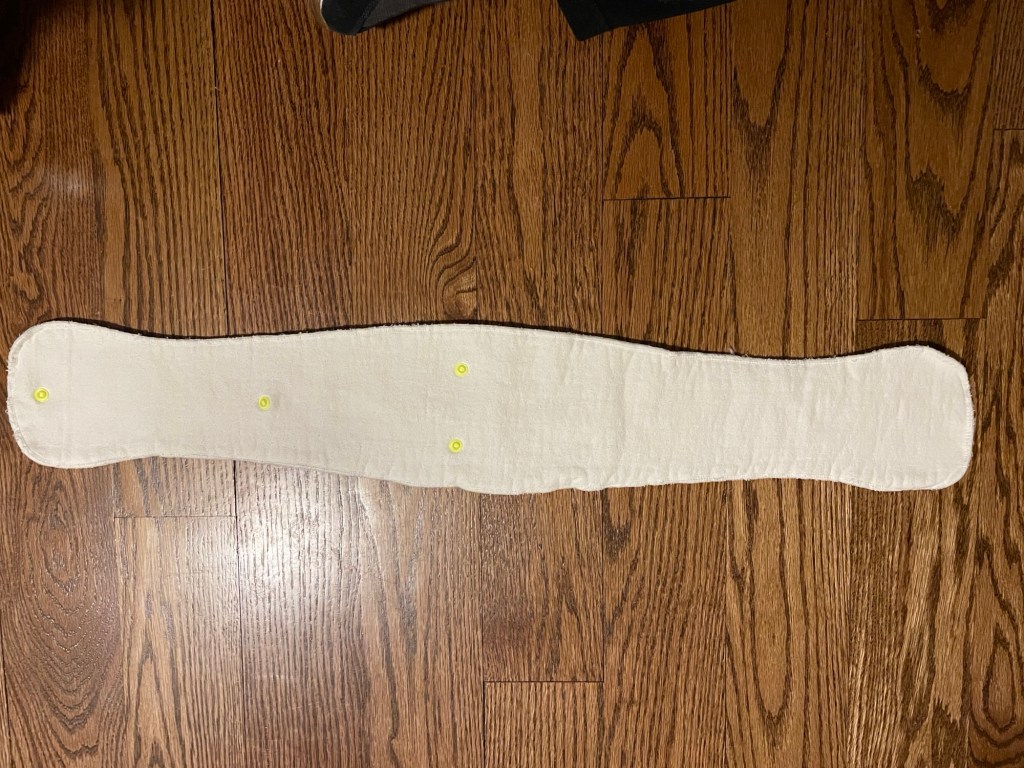
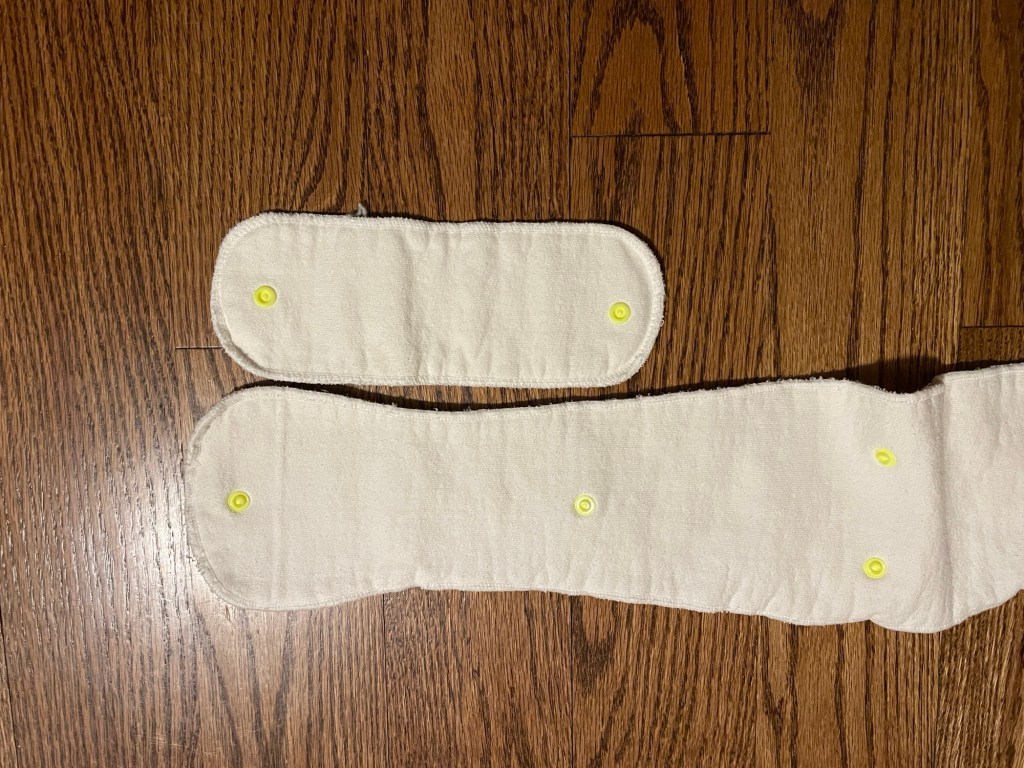
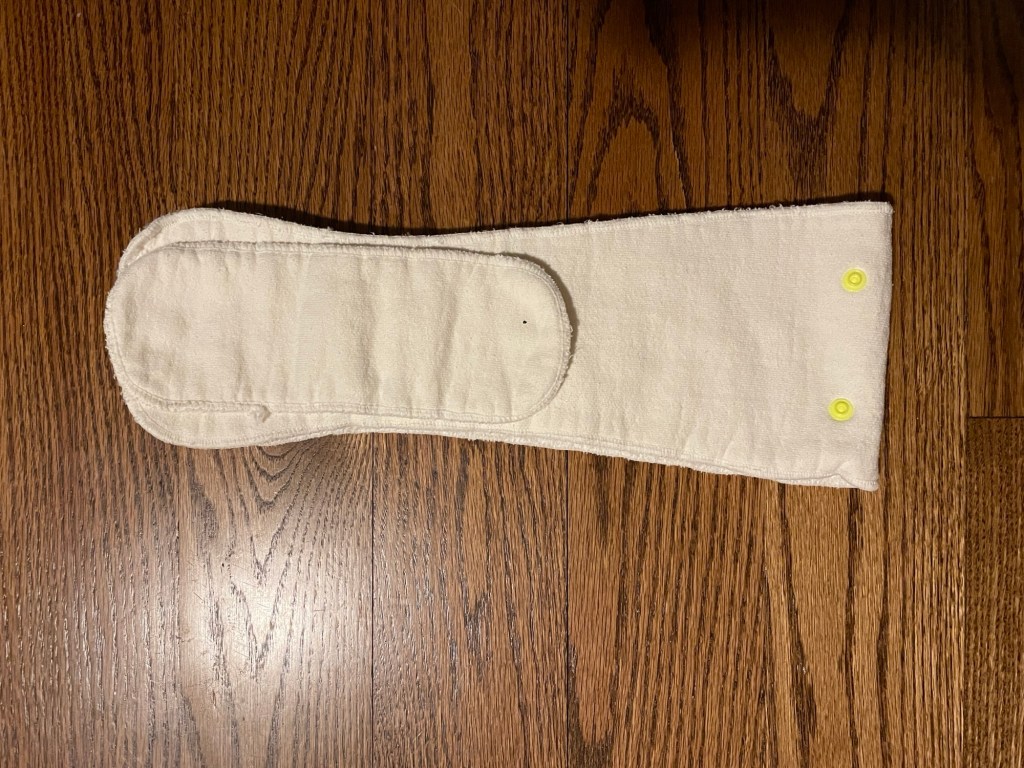
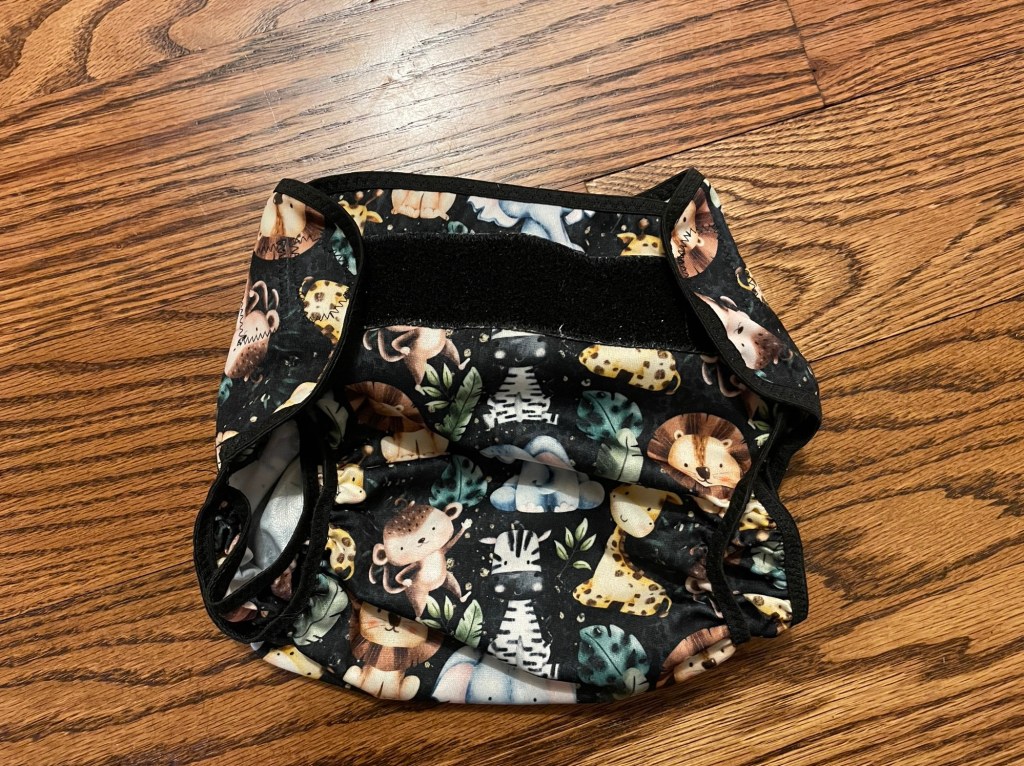
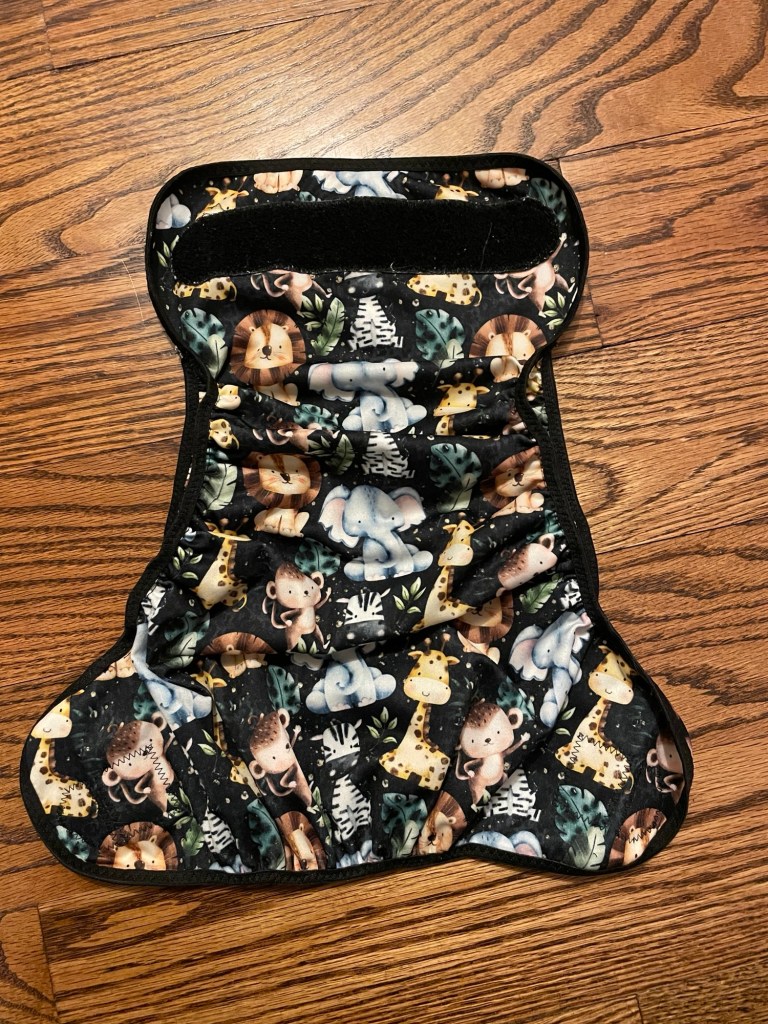
One size fitted diaperOutsideInside fleece layerSandwich soaker, unfolded (bamboo terry side)Other side of sandwich soaker (hemp/cotton fleece)Booster next to sandwich soaker. See how the booster is designed to snap into place. Sandwich soaker folded in half, with booster added. The snaps can snap into a cover or against the outer layer of the fitted diaper. In A Snap cover outside“Tuck it in” bottom and front facings Gussets
Pattern Background
The fitted diaper consists of three layers, an inner, outer, and inside layer. There’s tons of snaps for both rise and width adjustments. There’s fitted diaper includes pattern pieces for a soaker, booster, and sandwich style soaker. It is designed for infants and toddlers in the 10-35+ pound range. There’s just one size, with the rise snaps allowing for adjustment as they grow. The diaper can be constructed with serged edges, bound edges, or turned and topstitched.
The In A Snap cover is also designed for infants and toddlers in the 8-35 pound range. Theres actually newborn through large and then a one size pattern. The one size is slightly larger than the large size. What attracted me to this cover is it includes side gussets as well as “tuck it in” facings at the front and back. This is designed for being able to just throw in an insert and be on your way! (IMO this works better with younger babies.) The pattern includes markings for snaps, but you can also use Velcro.
Materials
For my first version of the fitted diaper (not pictured) I used three layers of thick, double napped cotton flannel I had leftover from making my husband and myself matching pajama pants.
For my second version I repurposed some birdseye cotton flats (two layers for the outside, two layers for the inner). The lining/inside layer is a cotton/modal sweatshirt fleece from Fabric Matt I had leftover from making my husband sweatpants this winter. The snaps are size 20 KAM snaps. I had an issue with some of the snaps coming apart due to the thickness of the fleece layer, so I repaired them with the long length size 20 snaps. (This is why some are blue and some are white.)
The elastic for both is 1/4” StretchRite elastic. It has good strength and recovery for this application.
The booster is two layers of the hemp/cotton fleece from Nature’s Fabrics.
The cover is a PUL print from Nature’s Fabrics. I used Velcro from an Amazon seller. The fold over elastic is 5/8” matte fold over elastic from WAWAK.
Fit and Alterations
For both of these I made the one size version.
After making them I think the fitted diaper wings are too long. For his Nora’s Nursery pocket diapers he starts at the third snap from each side. For this diaper I am close to having the wings touch in the middle. Now, the snaps are designed so that you can overlap if necessary but considering he’s at the upper end of the size range I think they would be way too long for an infant. I do like the rise though, they are a bit longer than the pocket diapers and fit his longer torso well.
I found the opposite issue with the cover. IMO the wings are too short. I also found that adding a little bit of height (1/2” at the front and back) ensured an easier time getting the cover completely over the diaper.
I left off the rise snaps because he’s already fitting into the full rise.
For the cover I added a piece of the loop side of the Velcro next to the hook side when attaching Velcro to the back wings. When I’m about to throw it into the laundry I attach the hook piece to the loop piece next to it to prevent the Velcro from sticking to everything. It works really well as a laundry tab. I took this idea from the Jalie pattern.
Construction
The instructions and pattern markings are where IMO Rocket Bottoms is really weak, especially for the fitted diaper.
There’s no technical drawings or illustrations, just some poor quality low res photos to go along with the written instructions. I found them workable but poorly organized and not clear and concise. They’re very vague about the design and usage of the diaper. No technical drawings of the overall diaper design either, nor explanations of how the diaper is supposed to work. There’s vague terms like fold down rise vs snap down rise, and fold over flap, along with hybrid diaper version. It would have been helpful to have technical drawings or even just a clear photo of each one, but instead you get an artistic photo of a toddler from the side in a diaper holding an umbrella. One of the fabrics listed is “MFT” and I still have no idea what that is. I’m a pretty experienced sewer – I’ve made Marfy patterns which include no instructions at all – but this one left me scratching my head.
The Jalie pattern instructions are written for people that sew that happen to be building a stash of cloth diapers; Rocket Bottoms seems to be more for people who are experts in cloth diapers that just so happen to want to sew some. For example, I know I messed up the sandwich soaker because some of the snaps go on one layer and some on the other. The pattern offers very little guidance. It would have made sense for example to have two separate pattern pieces for the sandwich soaker instead of telling you to print the same piece twice and tape it together in the middle. Same thing with the diaper, some of the snaps need to be placed facing down or facing up and there’s no guidance. The way they are marked sucks; I used a hole punch to cut out the holes to make it easier to mark the snap placement (I like using Frixon markers for this sort of thing). Problem is that the pattern uses either small open or shaded in circles to indicate stud vs socket, so by using a hole punch I lost that indicator. So I had to print off another pattern and use that as a key. All in all, you’re best off referencing either an already made diaper in person or diaper photos online from different brands to see how it is supposed to go together. I think next time I will make it even easier and just use Velcro for the closure. (You can also not put any closure and use pins or a Snappi.)
I found the cover a little more organized – at least there’s a clear photo – but again, a technical drawing showing front and back would have made things easier. There’s a reference to a facing for the front, but no indication of what that means in the instructions. Is it another PUL layer?
I think a large part of the problem is that the creator originally had a website and facebook group to help support the patterns, but she gave up the pattern business about a decade ago so those are now long gone.
Overall I found the Rocket Bottoms fit and design very well done. It’s just that the pattern markings and instructions suck. There’s far more detail for how to print the PDF than there is for actually sewing and understanding what each version looks like and does.
Performance
The Rocket Bottoms set is my go-to for when we are out and about. I did have an issue once with leakage at the waist because I didn’t have the cover pulled high enough one time and he completely saturated the diaper, but otherwise there’s been zero issues with the legs leaking (which was my bigger problem). The gussets really work! With fitted diapers you have way more absorbent fabric all around (especially with the leg ruffles) so it gets quickly absorbed instead of leaking out the side like a pocket.
I’m not a fan of the sandwich soaker and will likely use the regular doubler insert with a booster snapped in instead in the future. it’s a great design for quicker drying laundry but I find it cumbersome to keep it folded together when I’m maneuvering a diaper change with a very active toddler.
I have found that I prefer to snap the soaker to the cover vs to the diaper. Future covers will include snaps at the back for this purpose. It just gets too unwieldy with trying to place the diaper and get it closed with a floppy folded soaker in the way. Way easier to prep the cover with the soaker tucked into the facings and put the fitted on as a completely separate layer. Plus if there’s a poop diaper I find it easier to get the cover and soaker out of the way then deal with the fitted vs having to remove a fitted with a soaker attached while trying to make sure I don’t accidentally drop the poop out of it!
As for laundry, I find the Rocket Bottoms diaper is fantastic. The diaper itself is only three flat layers so it is easy to rinse off any solids, and drying won’t take forever. The sandwich soaker unfolds so you’re only drying 2-3 layers at once instead of 4-6. Same for the booster. I love using cotton for diapers because it doesn’t hold smells unlike some synthetics, and it can take the abuse of bleach, high dryer heat, etc. With a separate cover you can wash the cover more gently and be way more aggressive with the fitted and soaker layers. My subsequent versions of this diaper will be three layers of cotton flannel, or two layers of cotton flannel with a cotton or bamboo fleece/terry inside.
I find the hemp/cotton fleece is super absorbent so will likely make the soakers and boosters out of that. Since the booster is so small I can get away with remaking some of his current pocket inserts into boosters.
Diapers aren’t my favorite thing to sew, and I’m finding it daunting thinking of just how many I still need to make. (Plus covers, but you can generally get away with way less of those since they are easy to wipe down between changes.) But I really like how I can use higher quality fabrics than what is offered in a lot of store bought diaper systems and customize them to whatever I need them to be for my son’s needs.