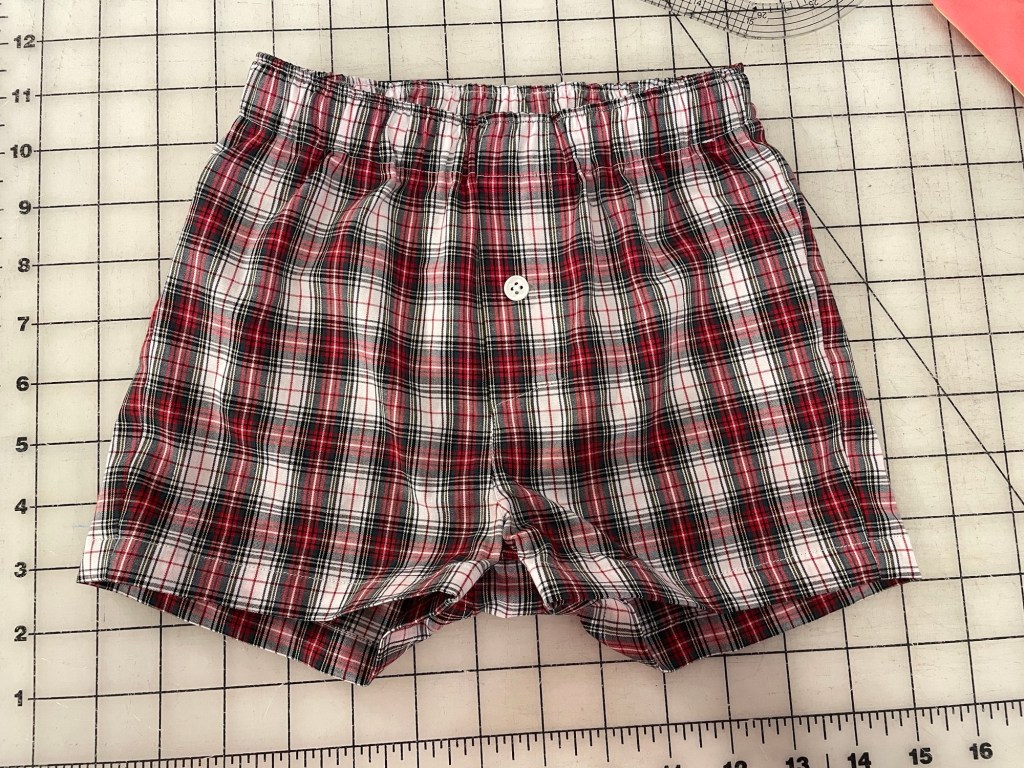
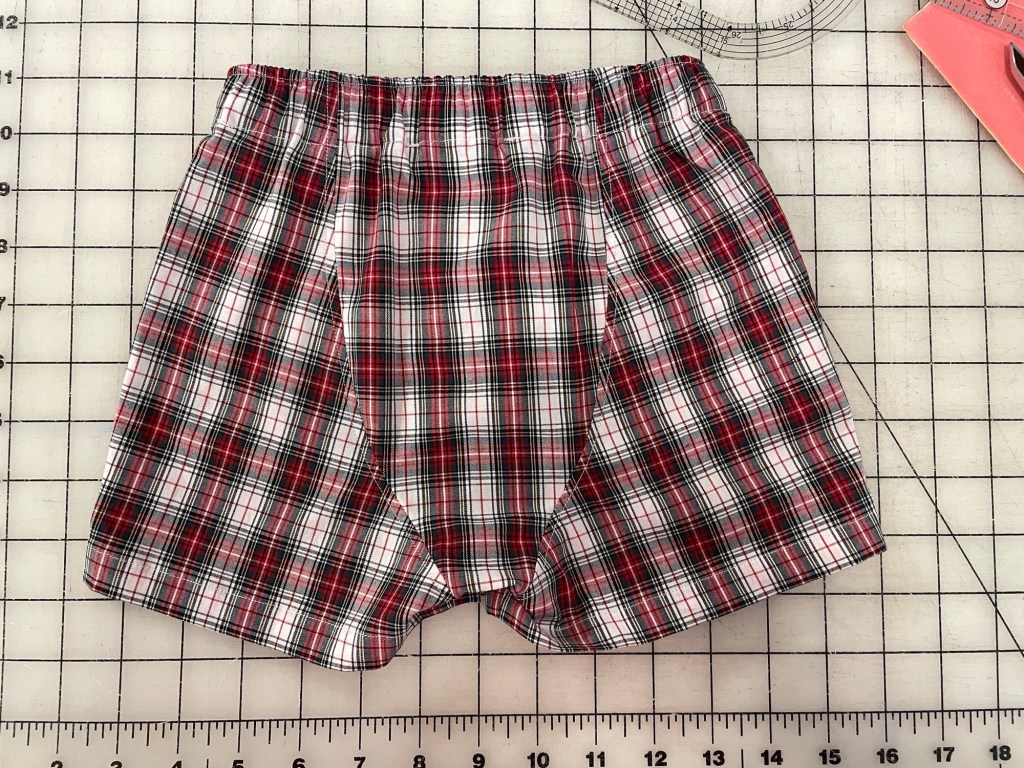
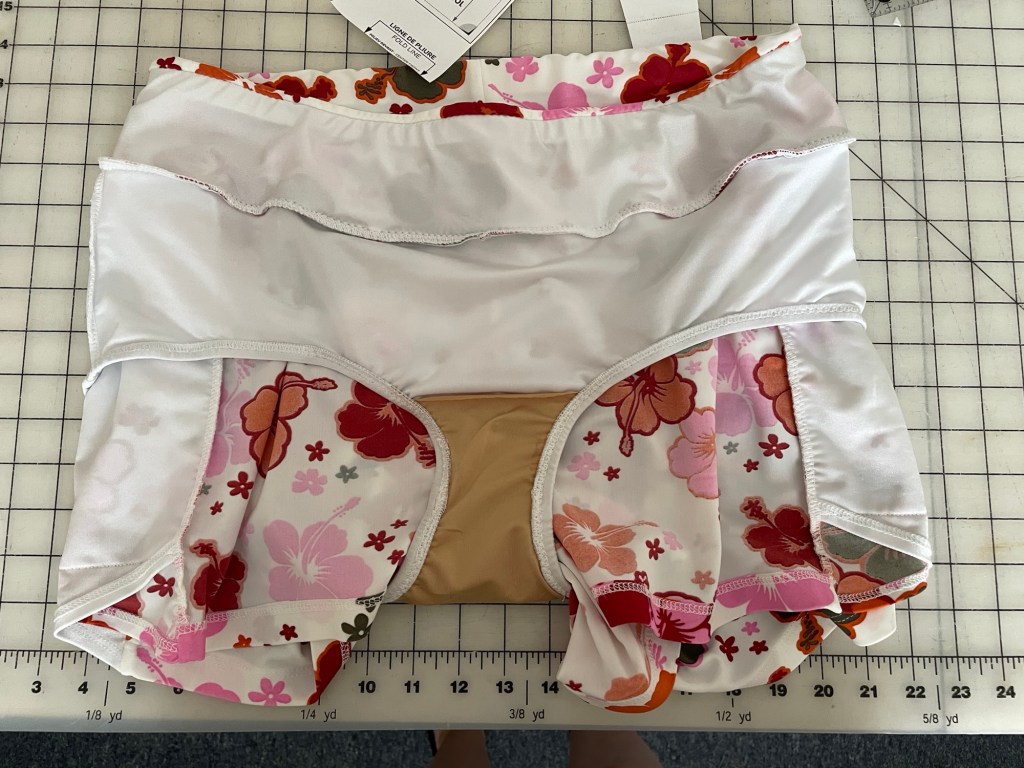
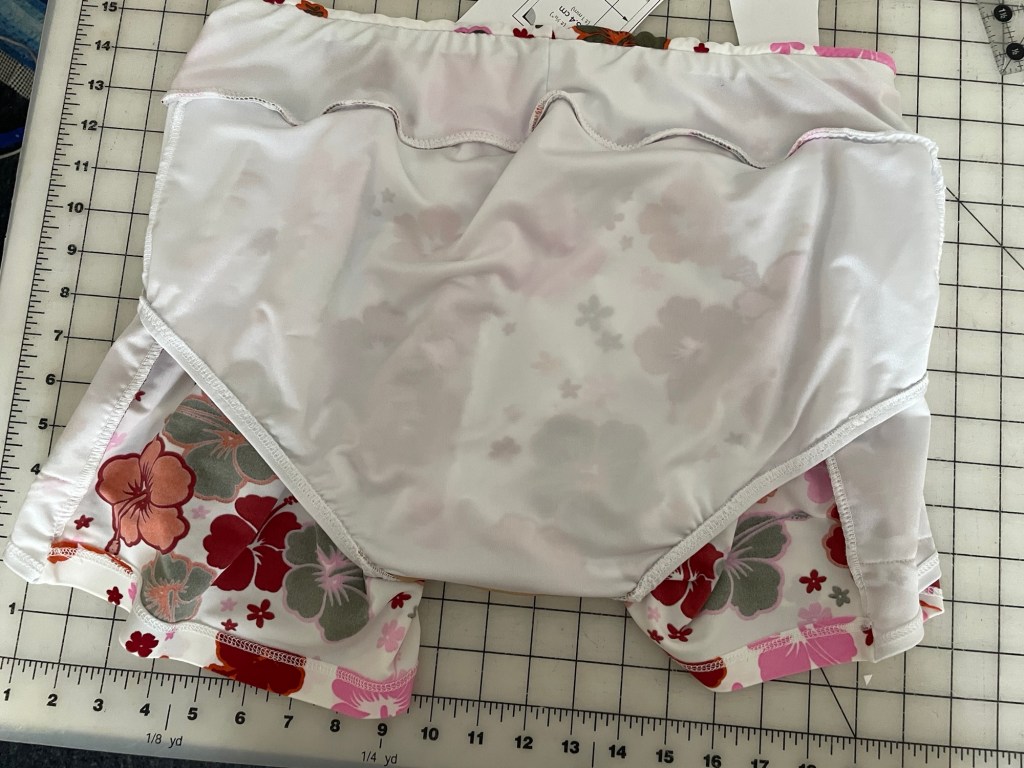
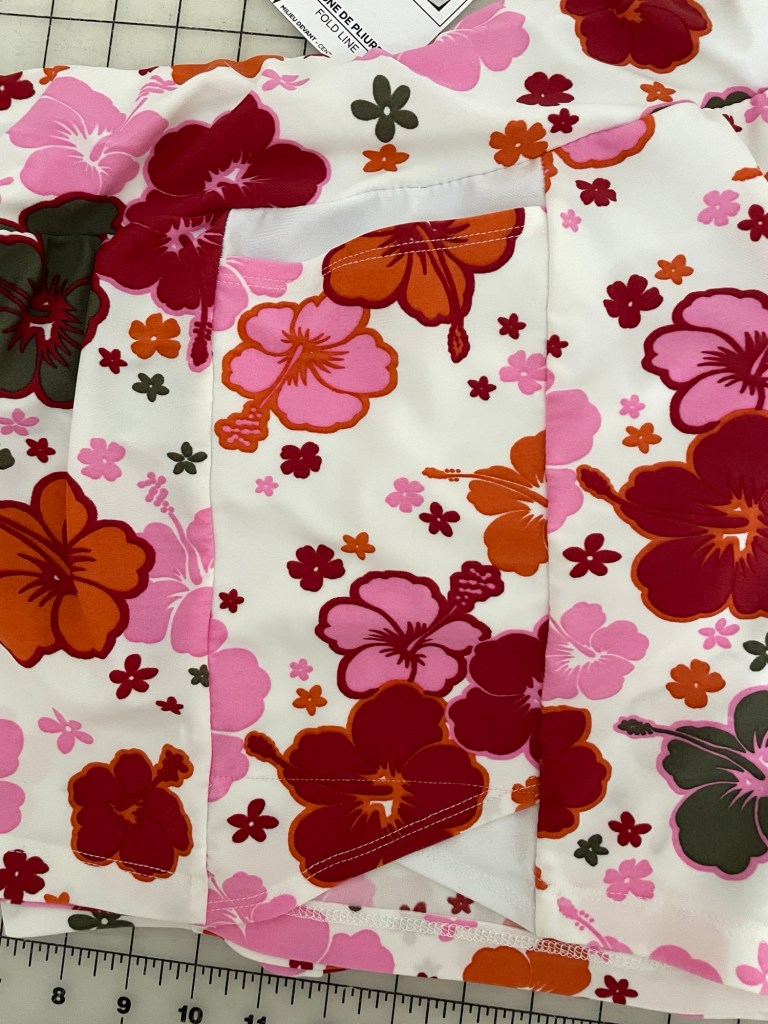
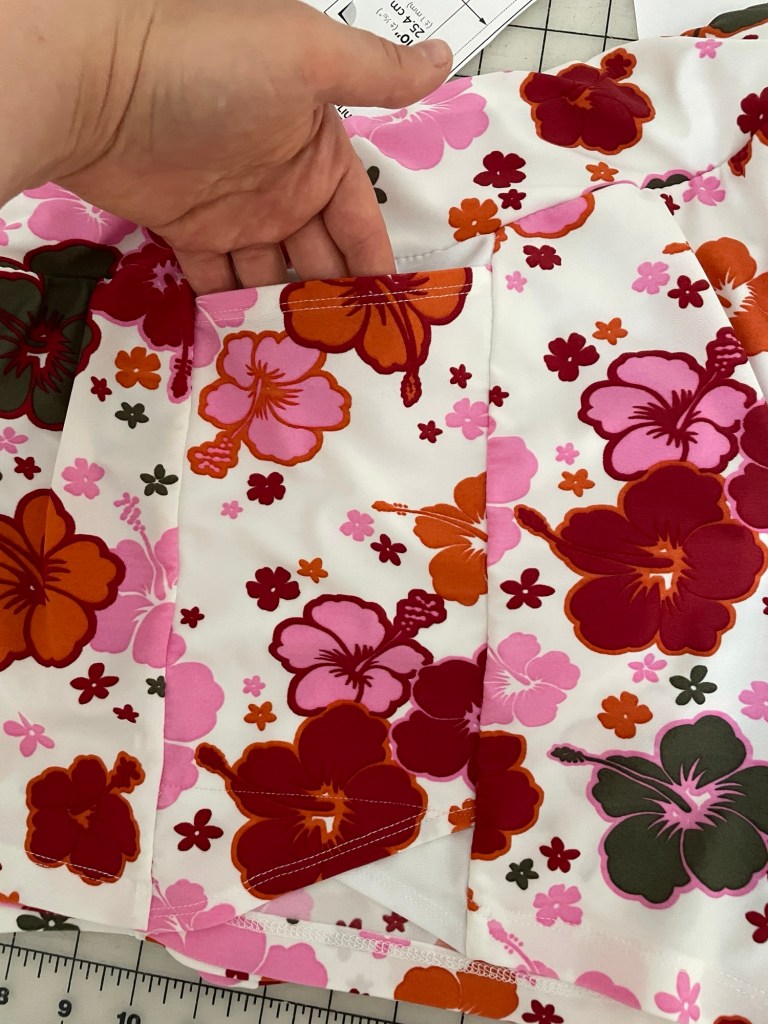
The Jalie Martin pattern is for men’s loungewear pants and boxer shorts. It is drafted for wovens and features a faux fly with an optional decorative button, elastic waist, and a back panel instead of a center back seam. There’s also an optional back patch pocket.
Size and Alterations
The size range goes from 2T all the way to 2X. If you pay a little bit extra you can get up to a 5X for the PDF version.
I cut a size F, which is equivalent to a 2T. The only alteration I made was adding 1/2” height to the center back. It turns out it wasn’t necessary.
The fit ended up being very similar to that shown on the Jalie models.
Fabric and Materials
I used a very lightweight 100% Robert Kaufman shirting purchased from Fabric Matt a few months ago. The elastic was from Mandala Crafts on Amazon. The button
Construction
The instructions are pretty good. This really does go together quickly and easily. I think it would be a nice project for someone who wants to try something more complex than your average pull on pants, without having to deal with zippers or pockets (aside from the optional back pocket.
I did find that I needed to snug up the waist elastic another inch.
Conclusion
I made these for my son, who is turning three years old in a few weeks. We’ve been working on potty training the past year. He’s pretty flawless when commando but struggles when he’s wearing briefs (probably because they feel too much like a diaper). These allow him to wear actual underwear without feeling snug, and as a result he’s much better at letting me know when he needs to go. He has also started trying to dress/undress himself. As a result I consider this pattern a worthy investment, especially since it seems like regular cotton woven boxer shorts for toddlers aren’t easy to find. I have no idea what his preferences will be when he’s older, but for now he seems pretty happy with these!
He’s worn these under the Jalie 3243 pull-on shorts and Jalie Henri shorts, and they fit fine under them, with no peeking out at the hem.
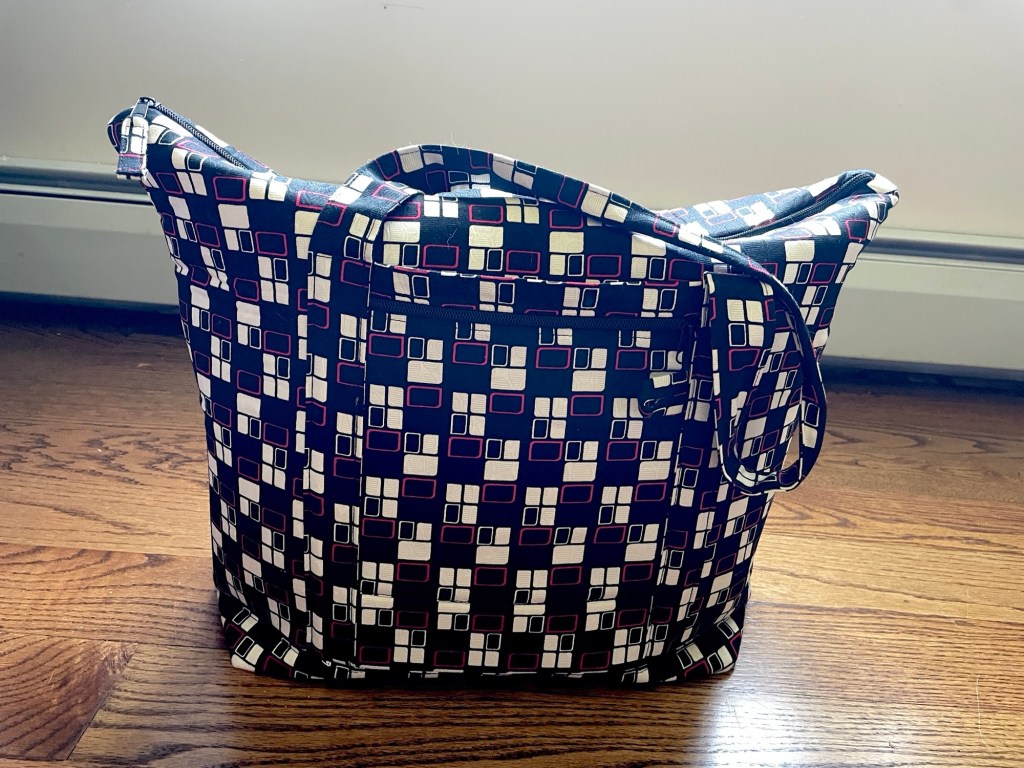
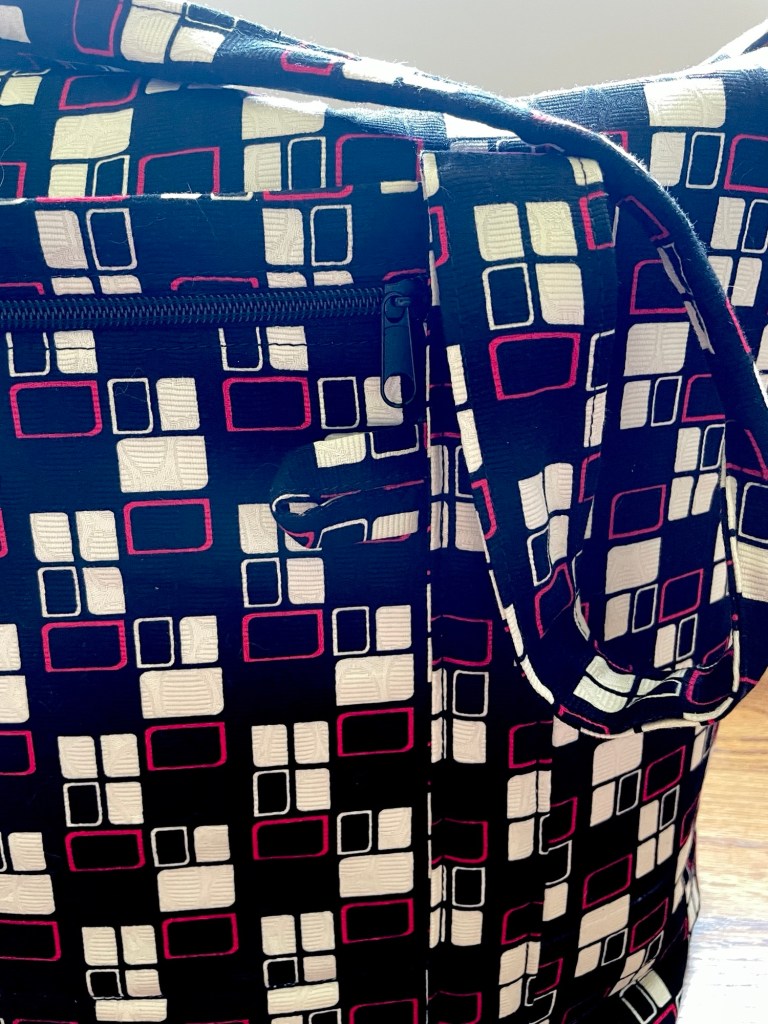
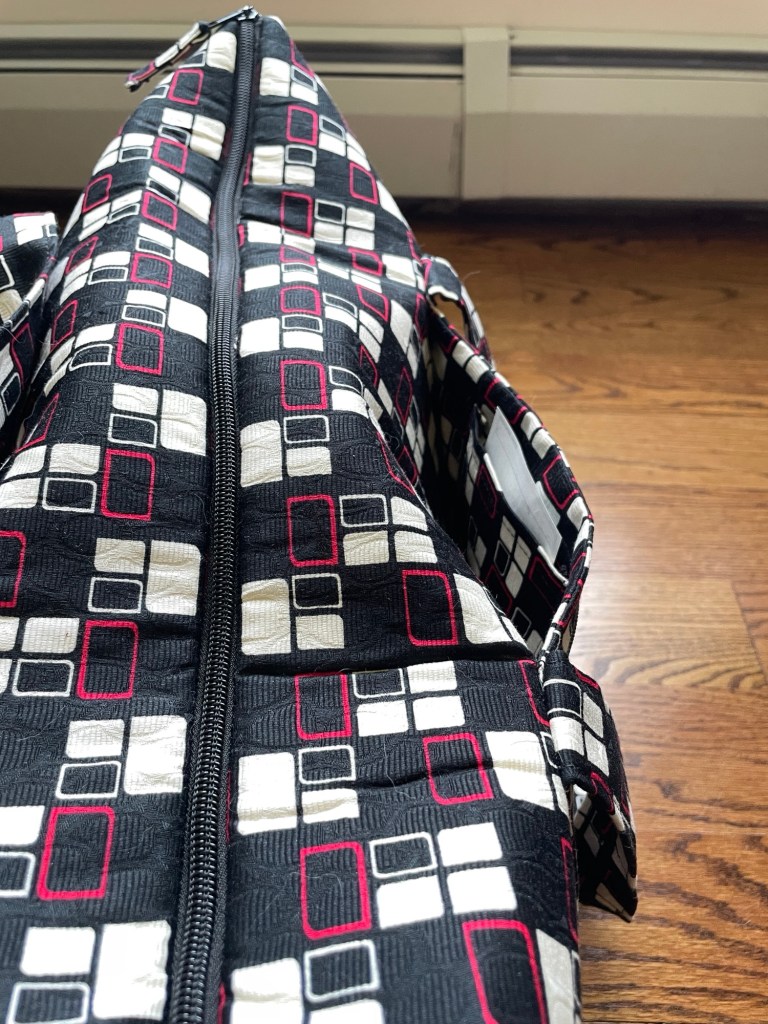
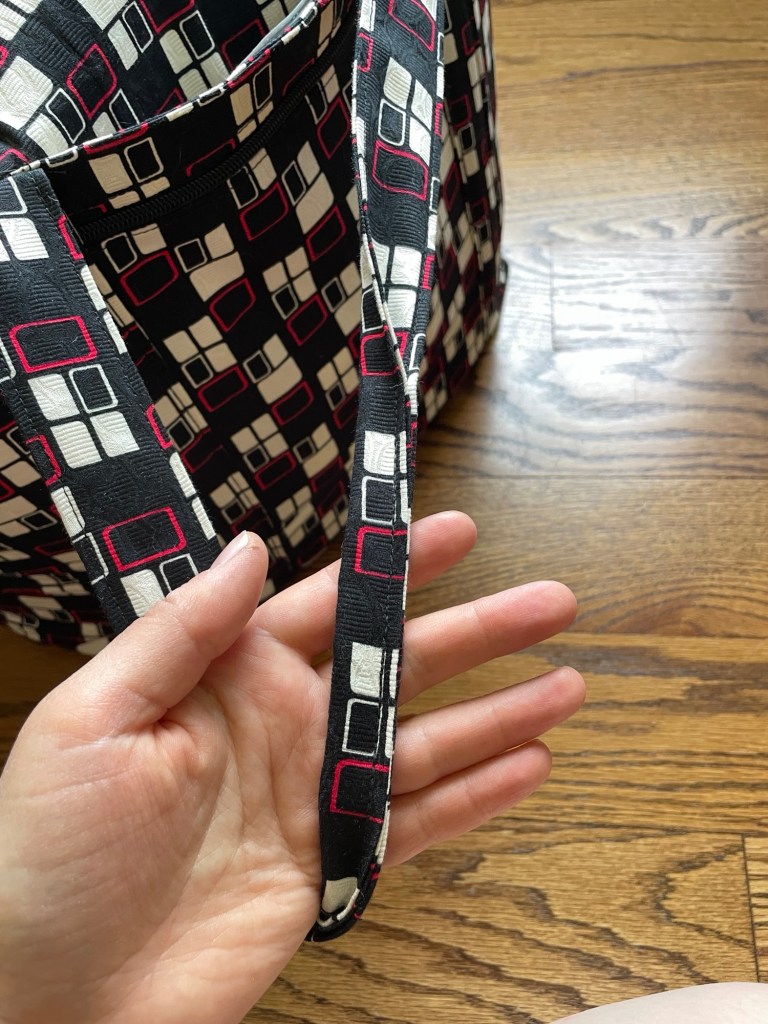
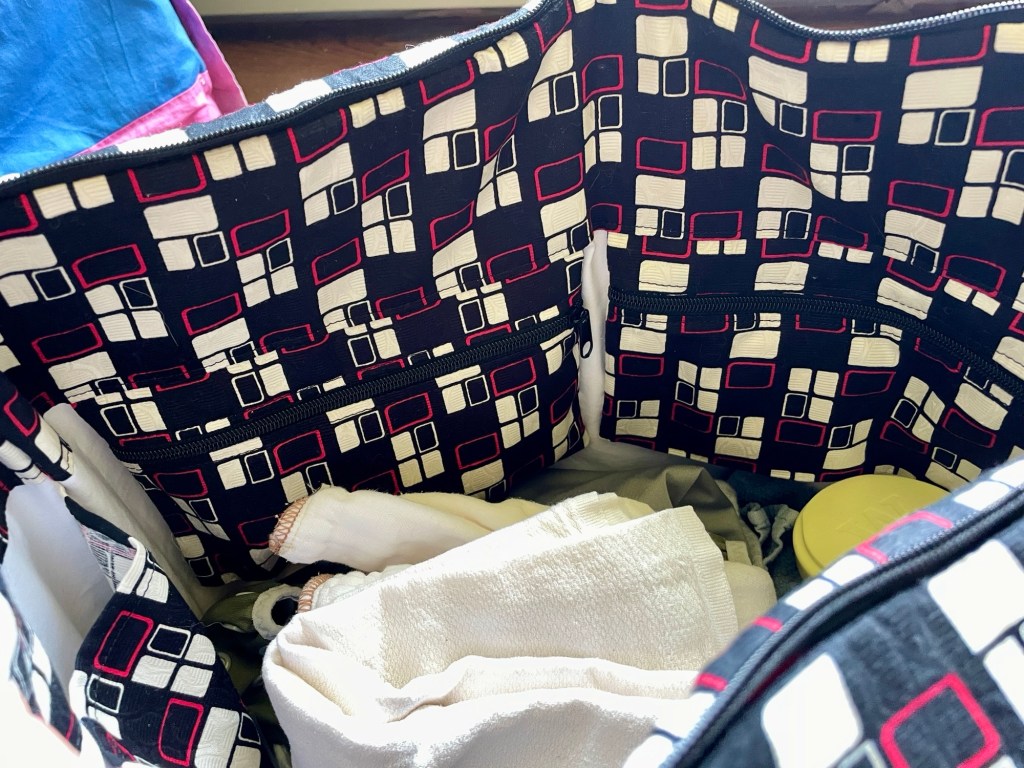
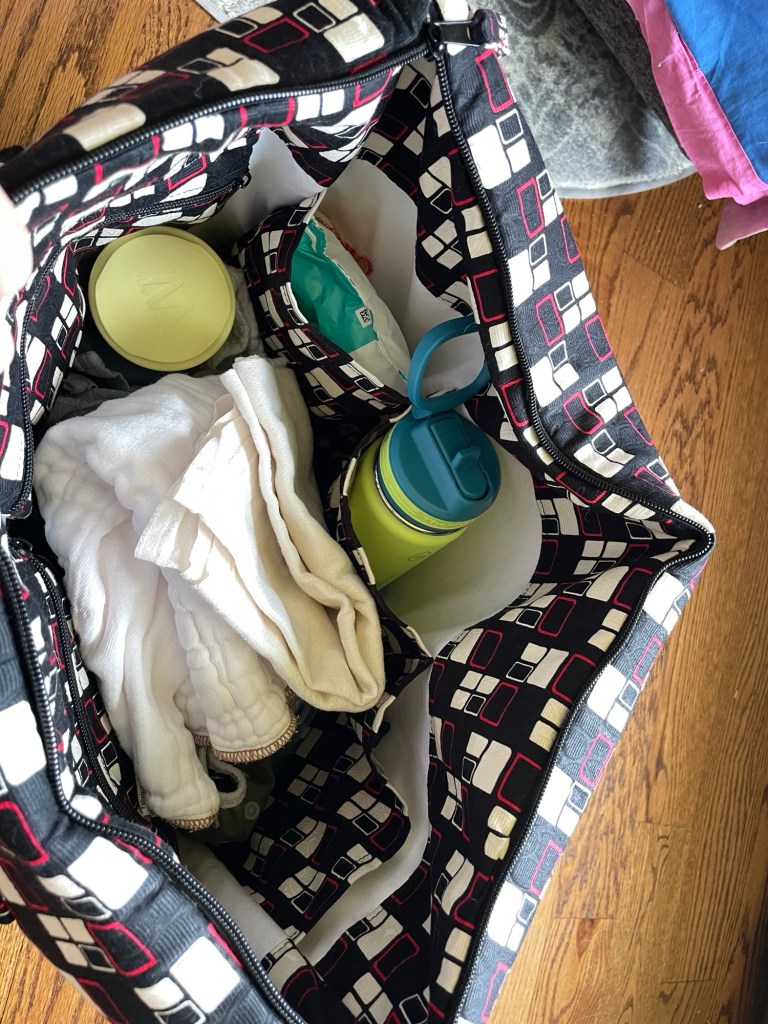
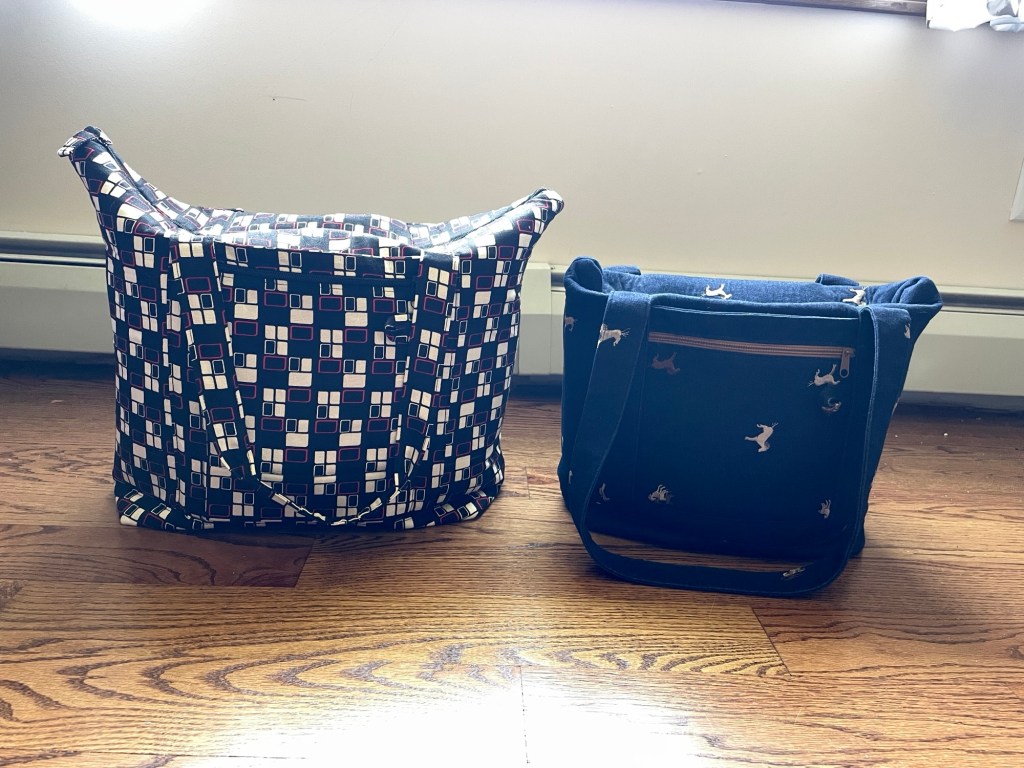
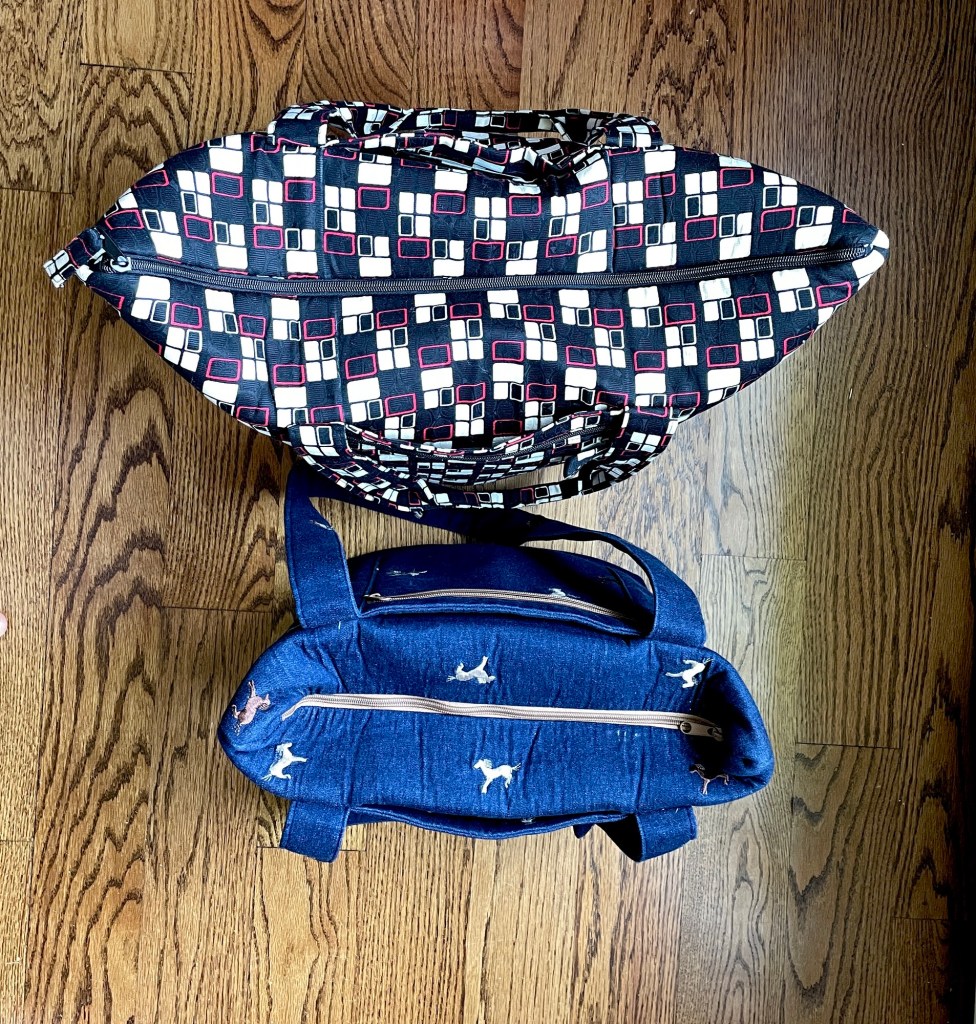
Outside key loopOutside hidden pocket Folded over handle section Inside zippered pocketsInside card pocket, hidden inside the inner zippered pockets. Inside organizer pockets. Easily holds a 16 oz Thermoflask bottle along with a full package of baby wipes. Large vs small Jalie 2019 totes
I really like my original Jalie 2019 bag, but during regular use I’ve found that it is just too small for my current lifestyle. I often had to leave the top unzipped because after adding a water bottle, snacks for my son, extra clothes and cloth diapers, etc I just didn’t have enough room. So this time I decided to make the larger size.
Materials
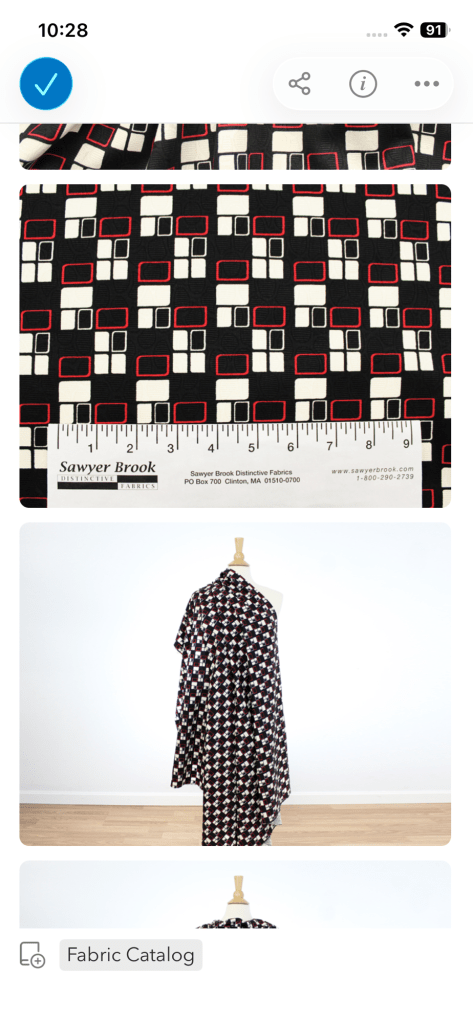
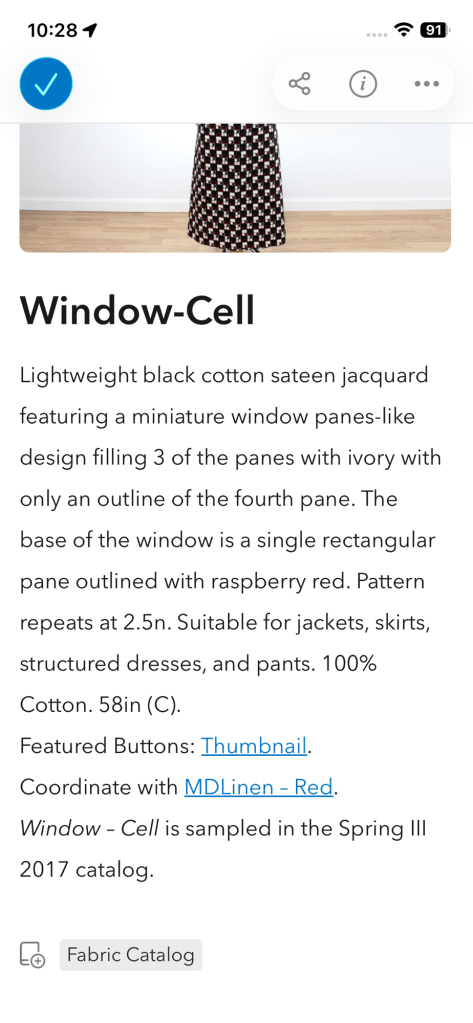
I used a 100% cotton sateen jacquard I had in my stash, purchased about eight years ago from Sawyer Brook. I had no idea at the time that this would eventually be used for a bag!
I used a white Robert Kaufman 100% cotton shirting fabric purchased a month or two ago from Fabric Mart for the lining.
Because I wanted this bag to have more structure I interfaced the bottom with Boscal single sided fusible foam and the sides with the Pellon single sided fusible foam. The only reason why I used two brands is because I didn’t have enough of the Bosal to cut the entire amount I needed for this bag. After working with both I prefer the Boscal. It is slightly firmer and in my opinion the fusing is better.
Thread was Gutermann Mara 70 from WAWAK. The zippers were from Amazon, as was the keychain leash snap.
Construction
This was constructed entirely on my Juki TL-2010Q. I did use my Janome MyLock 204D serger to finish the inside edges of the pockets because this fabric likes to fray.
Since I already made this bag before construction was a lot easier. I added the inside hidden pockets to both inside and outside pockets. I think the instructions have you do just one outside hidden pocket but it doesn’t take much longer to do both. I also made sure to pay attention to the photos so that this time all the zippers (minus the top main zipper) all face in the same direction. Since this fabric was thinner and more flexible than my interfaced denim I also found it possible this time to do the fabric zipper pull and fold over the top part of the handles in the final step.
This time I left a huge opening at the bottom of the lining this time for turning out the bag. I think I only sewed the first inch or so for each side. As a result I had no issues at all turning out the bag, despite the foam interfacing. It was easy to turn under the seam allowances and sew it shut on my machine instead of slip-stitching by hand.
Conclusion
This size, while pretty enormous for everyday use, fits my lifestyle much better. It is easier to find stuff inside. I also LOVE the keychain leash. I feel like I’m constantly misplacing my keys (because my son loves playing with them so I feel the need to always hide them) and this one feature has made my life soooo much easier.
I will say my one complaint is that the handles could be longer. I think they’re the same length for both sizes and because this bag comes up higher due to its bigger size, it is harder to sling it over my shoulder when I’m out and about.
This pattern can be used for either running or swim shorts. It has a wide waistband, side panel pockets, and built in briefs.
Per Jalie, the waistband hits around the navel for kids, a few inches below the navel for teen and smaller adult sizes, and got up around the navel again for the larger adult sizes.
The size range goes from F (2T) all the way to FF (women’s size 22/ euro 52).
This pattern is out of print now so it is only available as a PDF.
Jalie 4136
This fully lined bikini pattern has both a scoop neck and crossover versions for the top. The bikini bottoms include both a lower rise version and higher waisted versions, one of which has a self fabric tie detail.
Size range goes from 2T to 2X. Like with a lot of the newer Jalie pattern releases there’s also a PDF only version that goes from 2T to 5X, and a plus size version for 1X-5X.
Fit and Alterations
Jalie 3351 Shorts
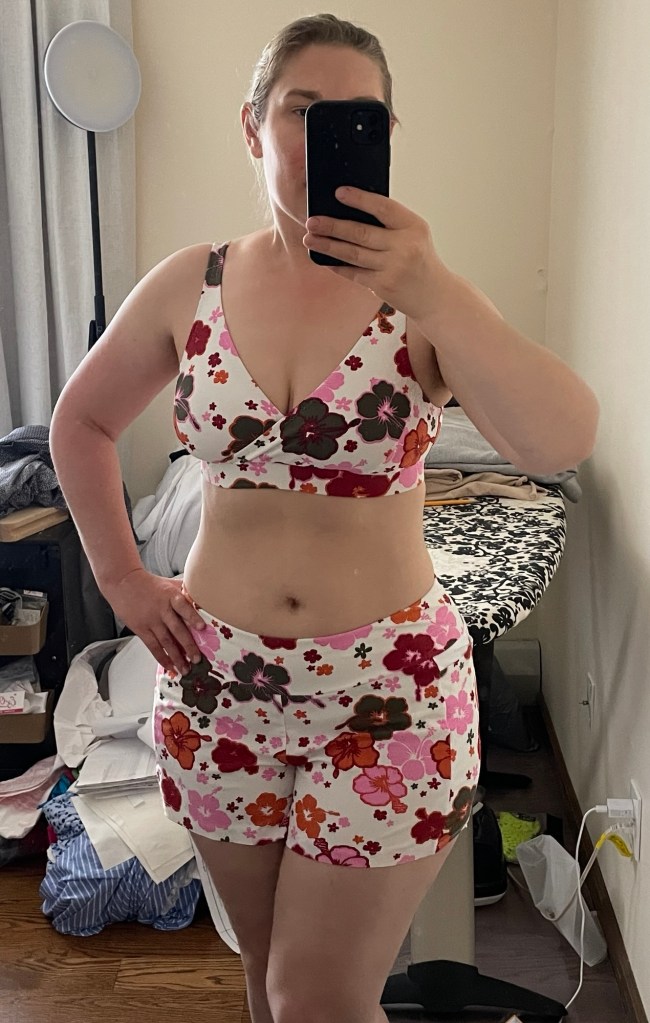
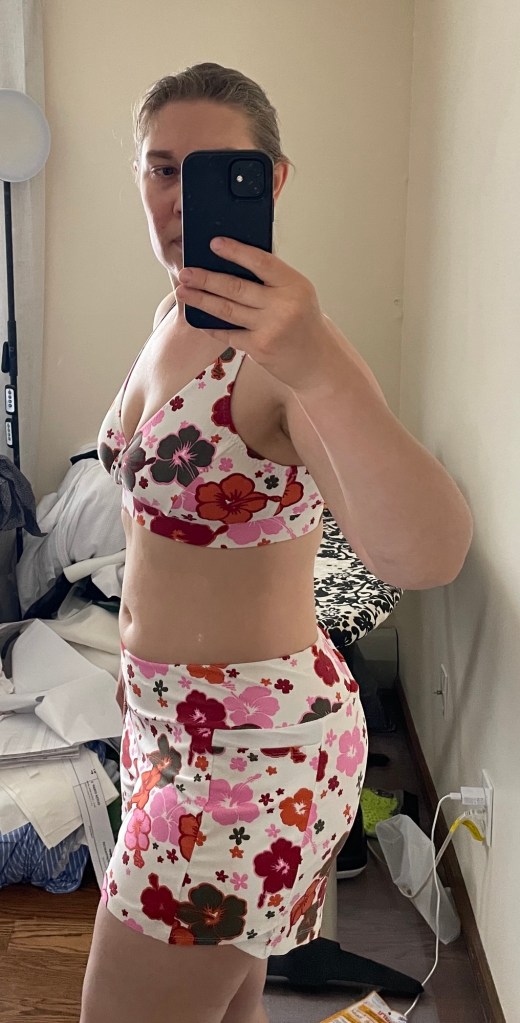
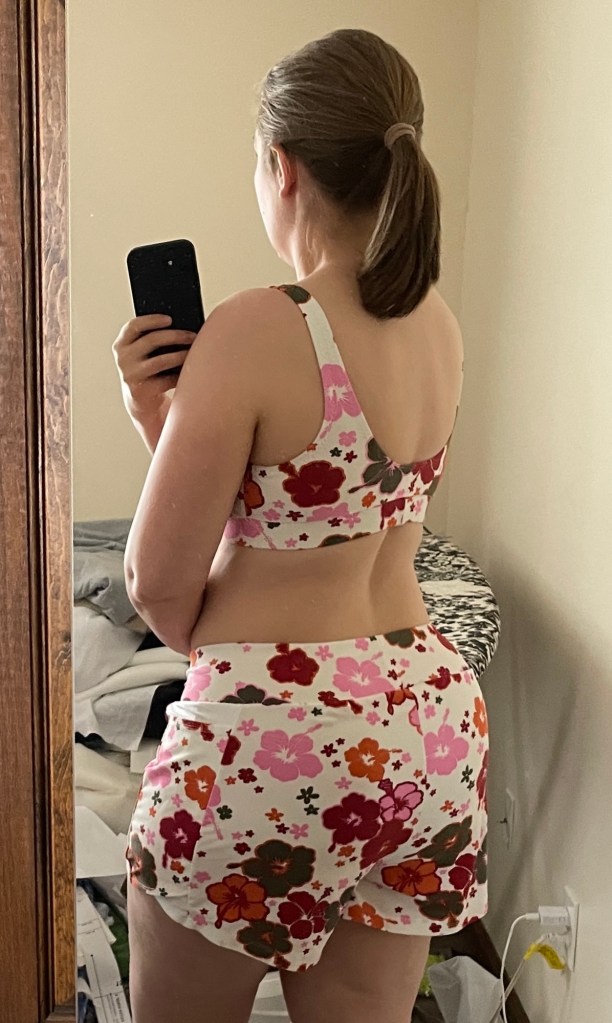
Per my hip measurement I made a size CC. The ease was perfect.
I added 2.5” of height to the center back seam, tapering to nothing at the center front. I also added 3/8” width to the front inseam for my fuller thighs. When I was adding the elastic I sized down a couple of sizes per the elastic cutting length chart. They feel snug and secure without digging in.
After making a test version I lowered the rise 1”. They sat at the navel and just seemed too big and matronly when worn with a bikini top. They would have been fine if worn with a rashguard top or tshirt.
Jalie 4136 Bikini Top
I made a size Y. I sized down to a W for the band. I compared my underbust measurement to the size chart and W was the closest matching measurement, so that’s what I cut.
Fabric and Materials
I used a Lycra purchase from the Elingeria sometime back in 2012 (yes it has been sitting in my stash all this time). I didn’t have quite enough (these were scraps from another project from long ago) so I cut the side panel, waistband facing, and brief from a white swimwear fabric I found on Amazon. I should have read the description better because it’s kind of shimmery and I prefer matte fabrics for swimwear, but so little of it peeks out that it doesn’t really matter.
The lining for the crotch was a swimwear lining recently purchased on sale from Emma One Sock.
The 3/8” braided elastic was from the Amazon seller Mandala Crafts.
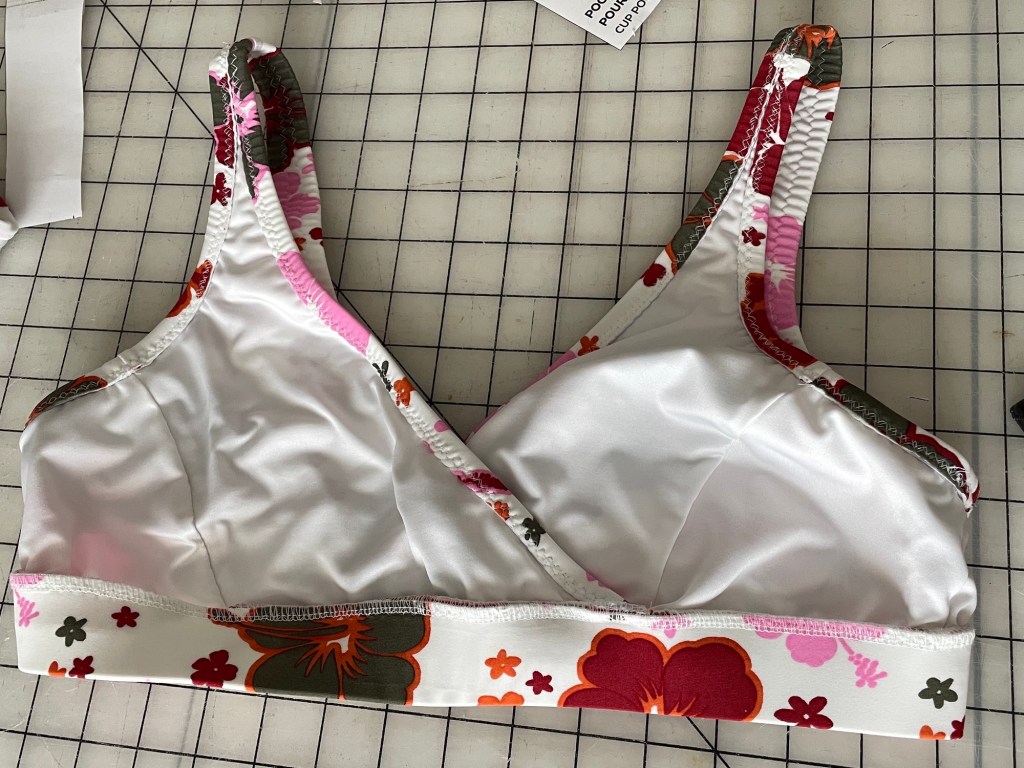
For the bikini top I used a swimwear lining fabric from Payless Fabrics on Amazon.
Construction
Jalie 3351 Shorts
The instructions are excellent and I had no issues. I really like how the waistband is constructed. The facing is cut shorter than the outside waistband, which causes the seam where the elastic, outer waistband, and waistband facing meet to be folded entirely to the inside. This completely eliminates bulk at the upper edge of the waistband, and if you’re using a different fabric for the waistband facing it won’t show through at all.
I will say that my life was made significantly easier when turning up those hems for the pockets and hems by using Design One fusible stay tape. This tape is exactly 3/8” wide so if you apply it directly along the edge you get a nice guide for folding the hem before removing the paper. I just doubled it up to make it 3/4” wide for the front and back shorts hem. It not only made turning up the hem far easier on this slippery synthetic fabric, but also made cover stitching way easier. The final result still maintained its stretch. 10/10 recommend!
Jalie 4136 Bikini Top
Like with the shorts, the instructions were excellent. I particularly liked the band construction. You zigzag the elastic to one edge, fold the other edge of the fabric up around the elastic snugly, zigzag again, trim, and then sew it directly to the rest of the top. Very neat and completely eliminates the elastic rolling inside during wear or laundering.
Conclusion
I’m extremely happy with the shorts. They fit and feel great! I wanted something I could confidently wear to the beach while playing with my little boy and these are perfect for that. Unlike with a skirt they won’t ride up in the water, and you get plenty of coverage if you’re self conscious about your lower half (which I definitely am post baby). The brief is full coverage and stays in place really well.
The bikini top feels secure and comfortable to wear. I think I am a 36C now (not sure since I haven’t worn a proper underwired bra in years now) and I feel like it gives good support. I have plans to make it as a bra top as well, because my toddler still nurses on occasion and the crossover styling makes that very convenient. (Jalie actually has a post on converting this pattern to an unlined bra top, though I would likely do a lined version for extra support.)
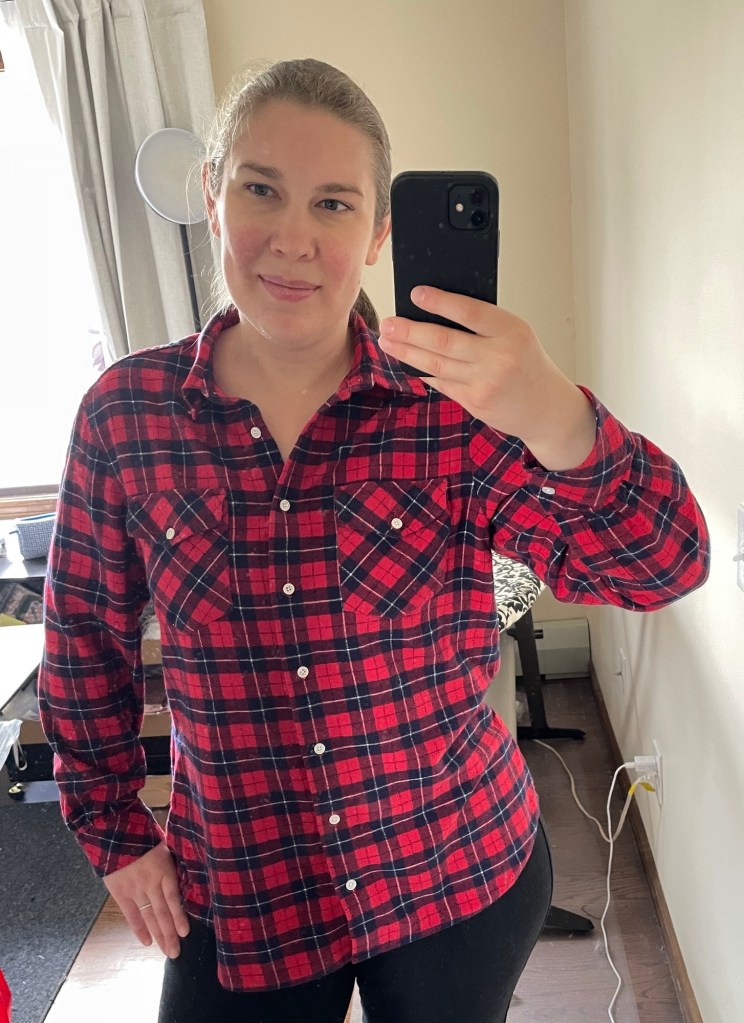
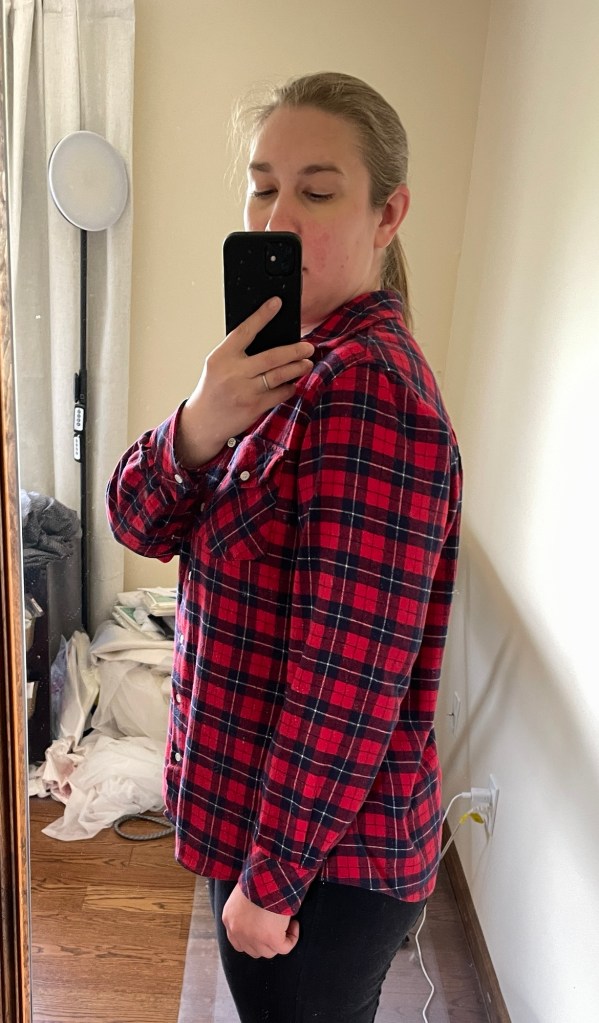
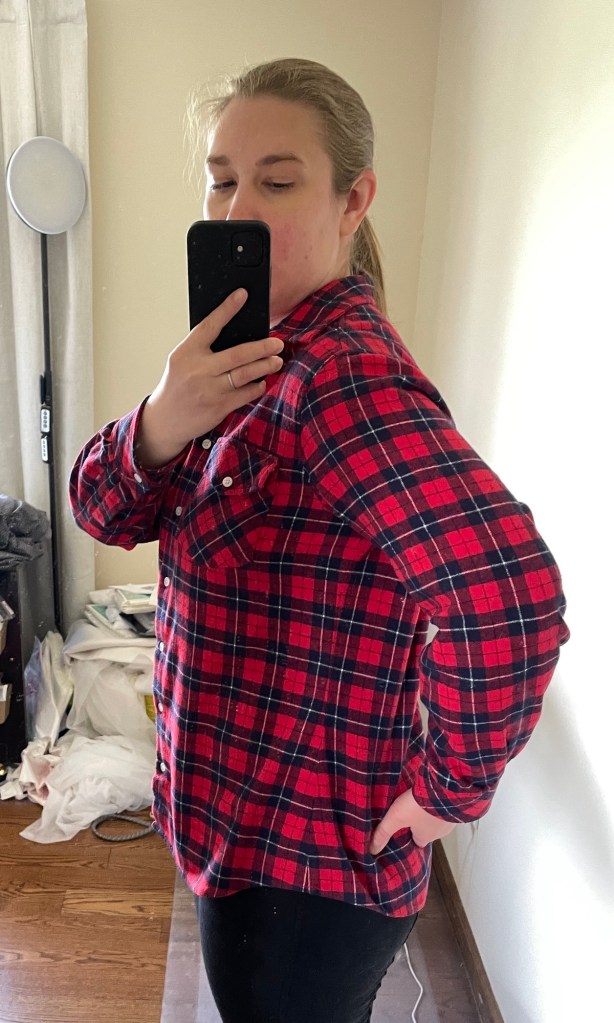
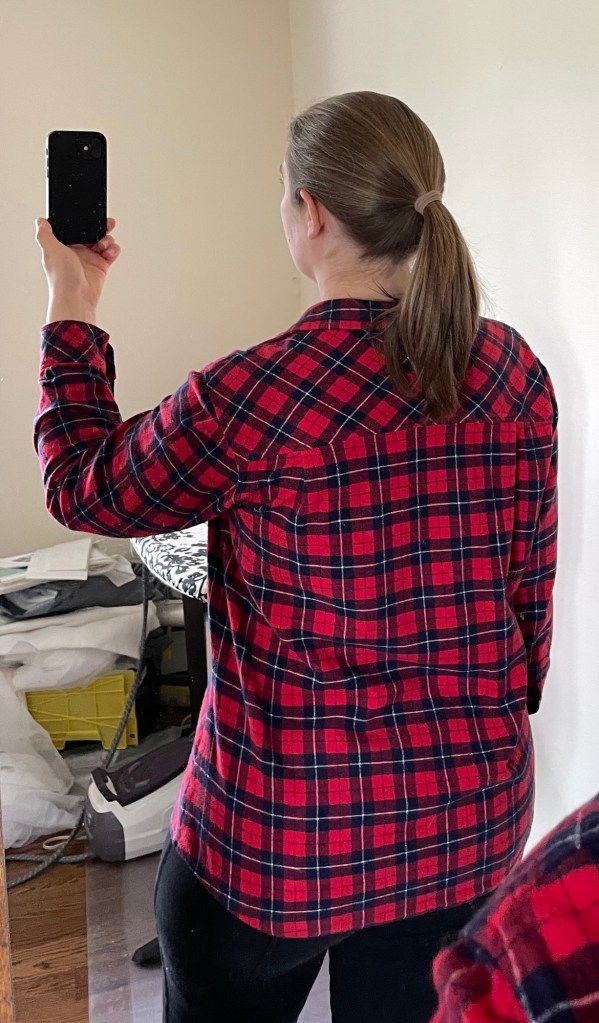
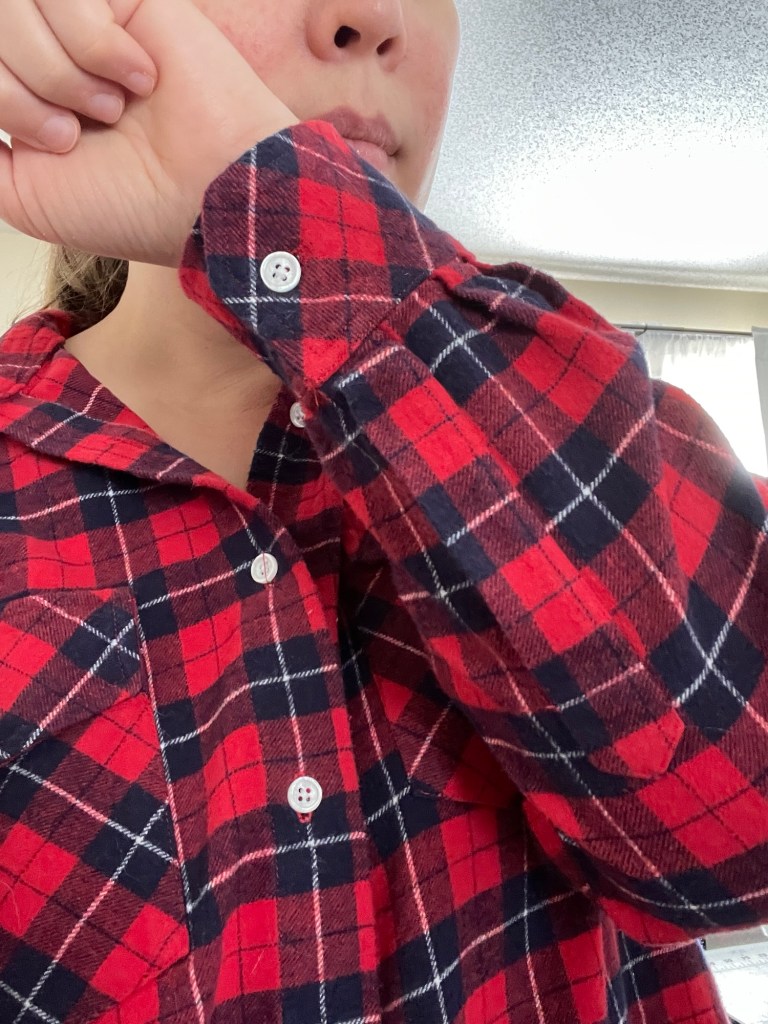
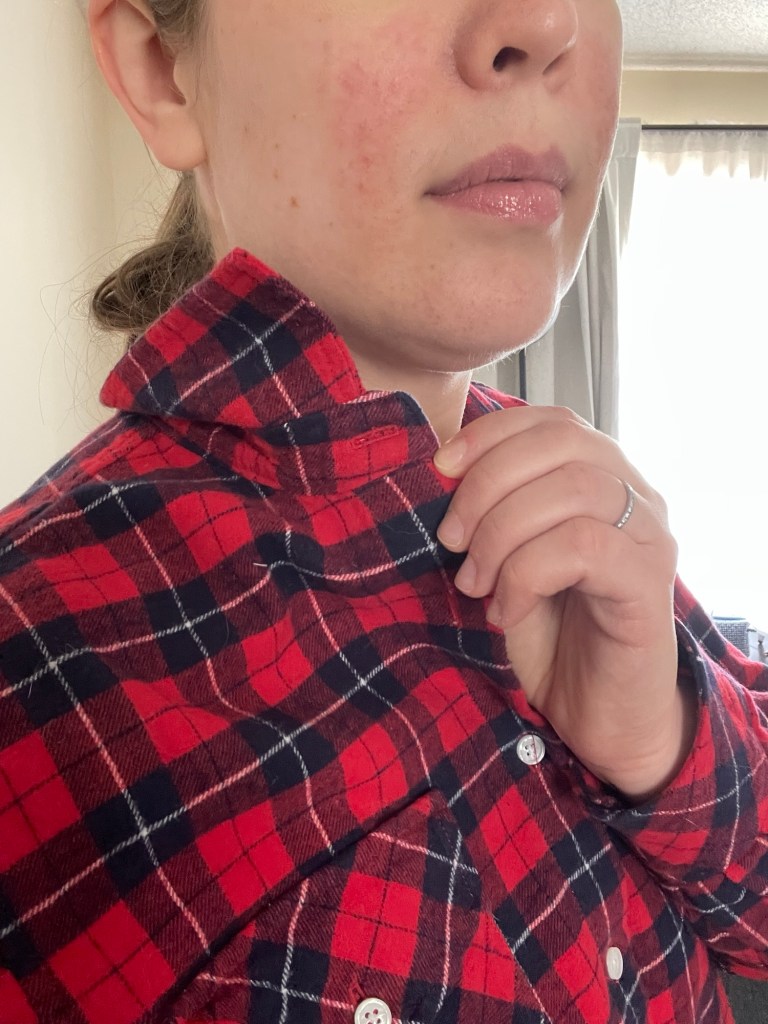
Jalie 4451 is a long sleeve shirt with a back yoke, two back tucks, and standard sleeve placket. The cuffs and collar band are angled off instead of rounded at the corners. You can also make this in shirtdress length with a shaped hem and self fabric tie belt.
The pockets and flaps for the shirt are pointed shape. The shirtdress pockets and flaps are square shaped, with larger square patch pockets at hip level.
Fabric and Materials
I used a single napped cotton flannel recently purchased from Fabric Mart. Sometimes flannel thickens up a lot after washing/drying which can change the drape, but this maintained a very soft hand.
I used fusible knit interfacing for the front placket/pocket reinforcement/pocket flaps/sleeve placket. Not a huge fan of the plasticky feel of the backing, but it works for soft stabilization. For the collar, collar band, and cuffs I used a lightweight woven interfacing. I’m not sure but I think it was Pellon SF-101 Shape Flex.
The buttons are from WAWAK. I find they are the best value, you can get 144 for less than $7 and it’s not such a gamble on quality like buying from Amazon.
Size/Alterations
Based on my measurements I cut a size Y for the best/shoulders/sleeves, a W for the waist, and BB for the hips and hem length. From there I added 1” length to the sleeves. I probably only needed 1/2-3/4” extra length but I always go long with flannel because I feel like no matter how much you prewash/dry on hot, it still ends up slowly shrinking over time. I also added 3/4” width to the sleeves at the bicep and elbow, tapering to nothing at the cuff. I’m not sure the extra width was necessary but RTW shirt sleeves are usually too tight so I always err on the side of adding more room. It can always be trimmed off if necessary.
Construction
Cutting took me quite a lot in both time and extra fabric due to trying my best to pattern match the plaid.
When it comes to shirts I find there often a few different ways of accomplishing the same thing, so while I give the instructions a glance I often depend on instructions from a variety of resources.
For the collar and collar band pieces I trimmed all seam allowances down to 1/4”, with the exception of the seam where the collar band attaches to the shirt neck. I just find it’s easy to manage both seam allowance accuracy and bulk with 1/4” instead of 3/8” seam allowances.
I use the thread method for collars now. It involves some precision getting the thread and your needle in the right position but once you turn out the corner it comes out so much sharper than if you trim and then push it out like most sewing instructions have you do. I use this same method for cuffs and really anything else where you need to turn out a sharp corner.
I used Pam Erny’s tutorial for shirt sleeve plackets. Her tutorial is probably the best out there. Something about splitting the placket piece into two where the slit is instead and keeping the folded edge squared off instead of angled helps me get a more professional end result.
I sewed all the buttons on using my new button sewing foot. It certainly makes the process much quicker, but I prefer the function of a hand sewn button as you can add a shank when sewing to make things sit smoother, especially when it’s a thicker fabric like this.
Conclusion
I’m pretty happy with this shirt and plan on making the shirtdress length version in the future as well. I just wish Jalie included short sleeve length as well as full length sleeves with the pattern, since it seems like it would make such a nice summer dress.
A few different things about this one from my first one.
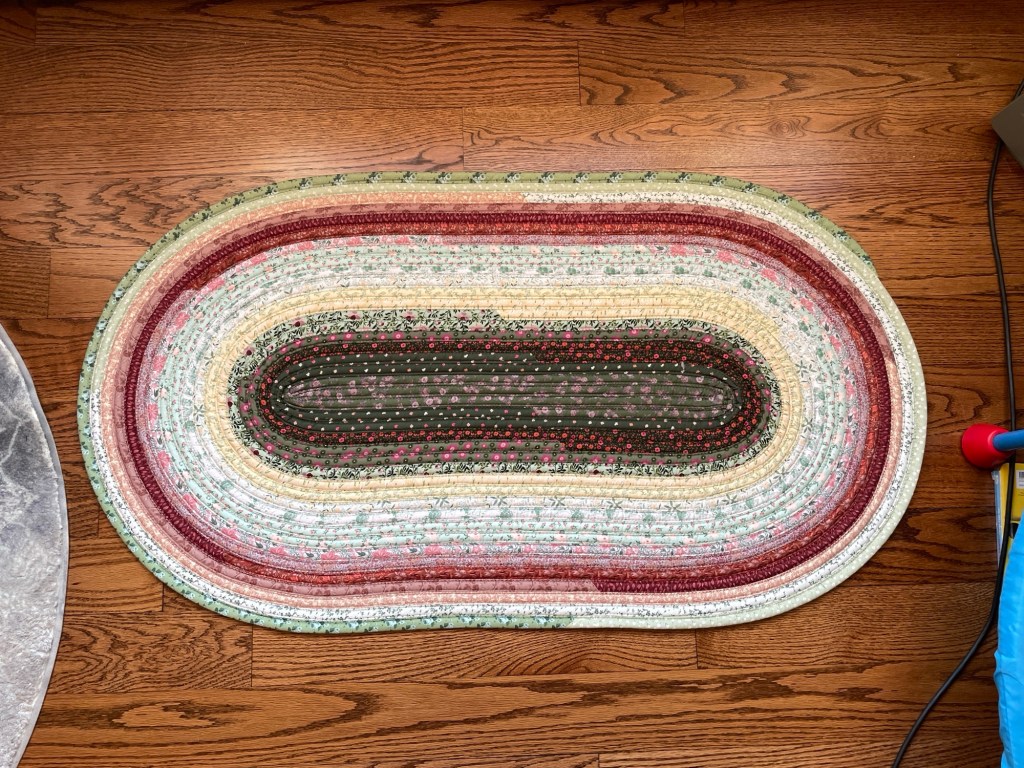
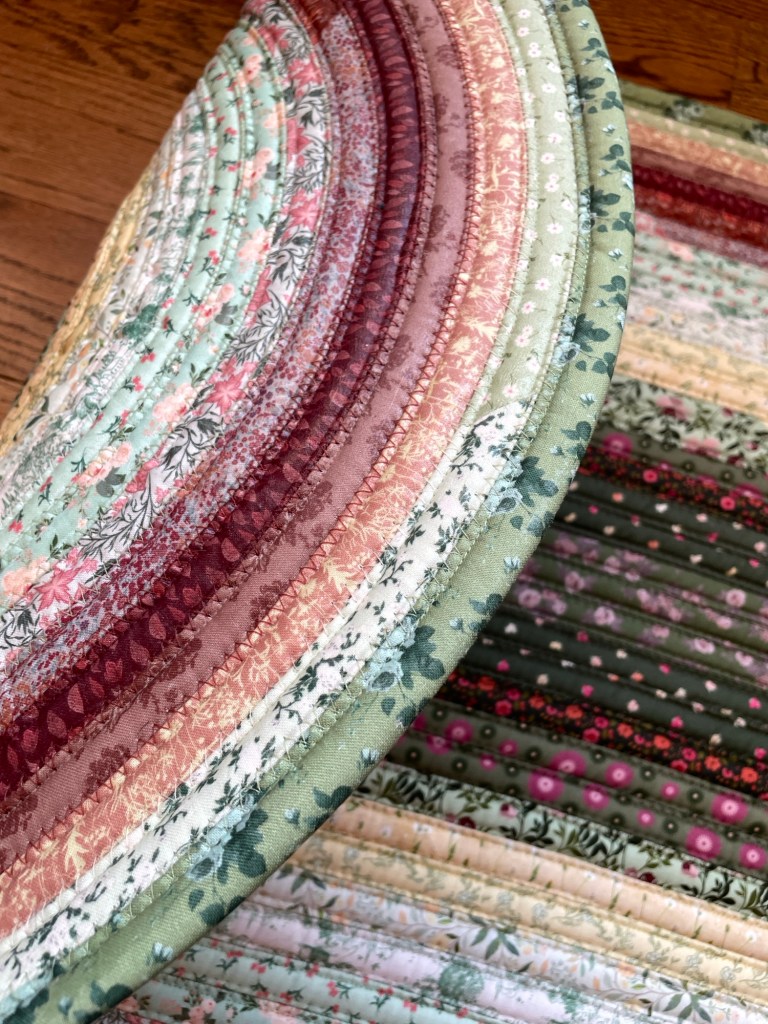
I finally bought replacement legs for my Janome’s extension table, so I had that properly set up this time instead of it being balanced on some books. I also worked on my dining room table when it came time to zigzag the edges together. As the rug grew I was careful to push away anything that could bump up against it, like the chairs opposite from me. What a difference it made! It was much easier getting a flat rug this time.
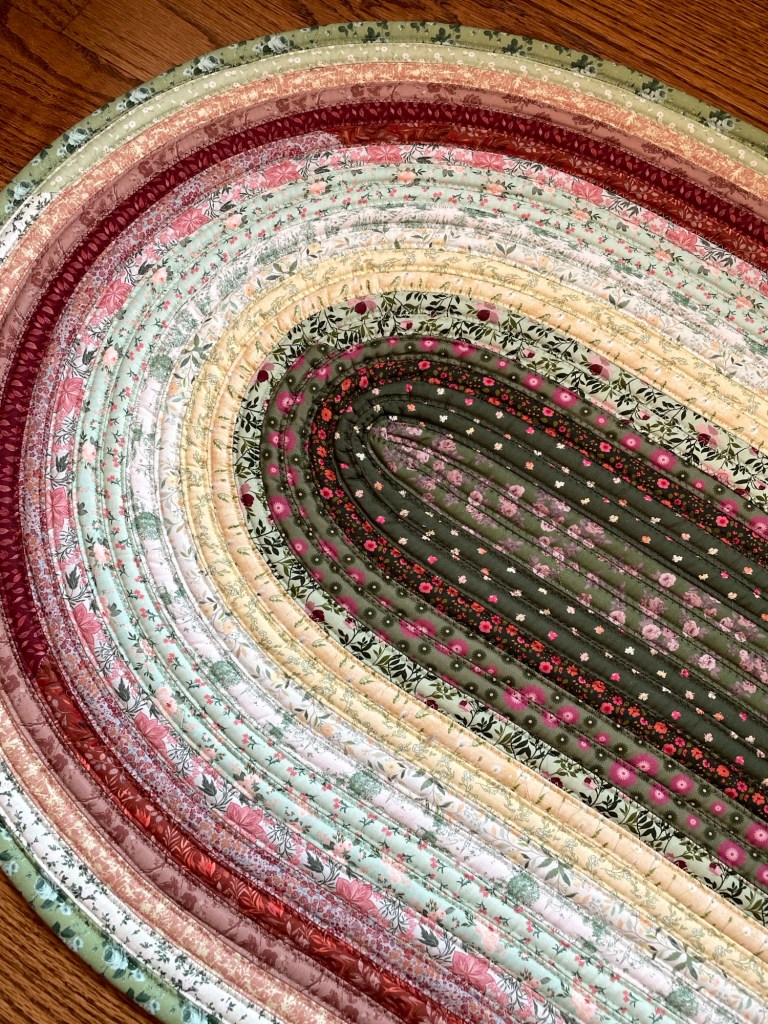
I decided to try to blend the thread colors with the fabric instead of using one color like I did for my first one. I like the more subtle look.
I also applied Gotta Grip-It rug fixative to the bottom after sewing. I have mostly hardwood floors in my house, which is downright dangerous when paired with a jelly roll rug. For my first rug I bought a rug pad to put underneath but didn’t like how it kept sliding out, so I decided to try something more permanent. With Gotta Grip-It you just paint on a thin layer and let it dry. It paints on white but dries clear, and once it’s finished drying it creates a tacky finish on the bottom of the rug. Aside from texture, the only indication Gotta Grip-It is there is a slight sheen.
After trying it on this rug, I am in love. It really keeps the rug in place! No rug pad sliding out, and the rug can still be washed.
With this particular rug I didn’t do a great job rounding the first few corners, and as a result they’re kind of squished. I was working with my toddler playing around me and wasn’t able to press as I went, so I just did my best with my fingers. I do think in the future it is worth taking the time to press as you round the first few corners.