Ottobre Spring/Summer 2/2013, #19: Twist Neckline Dress

Overview

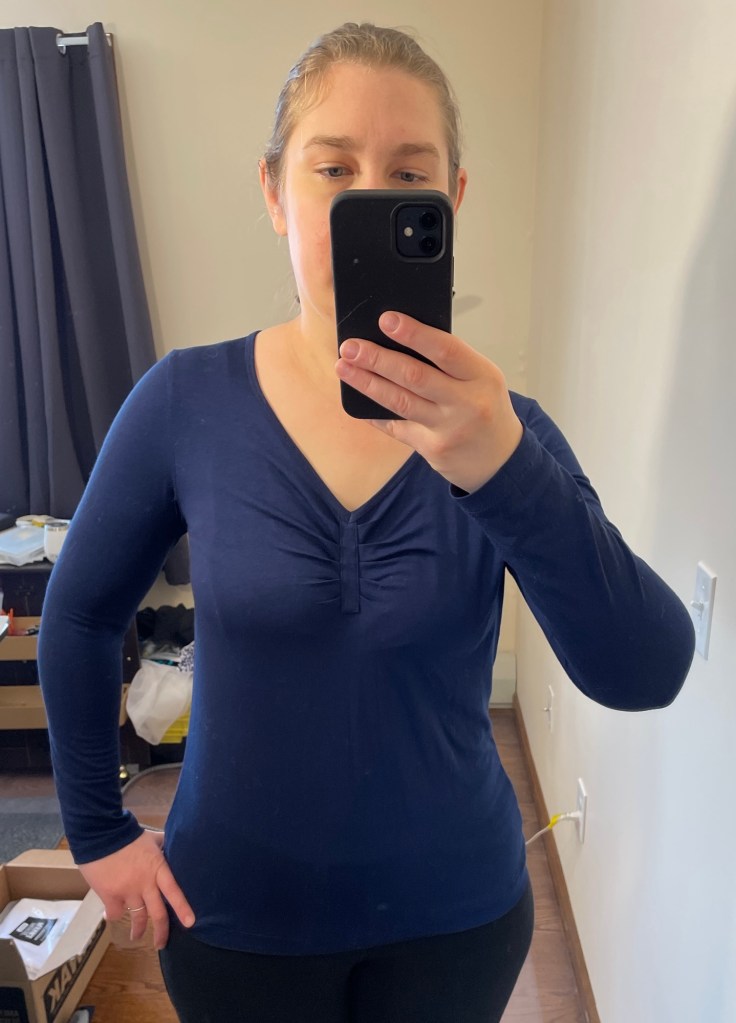
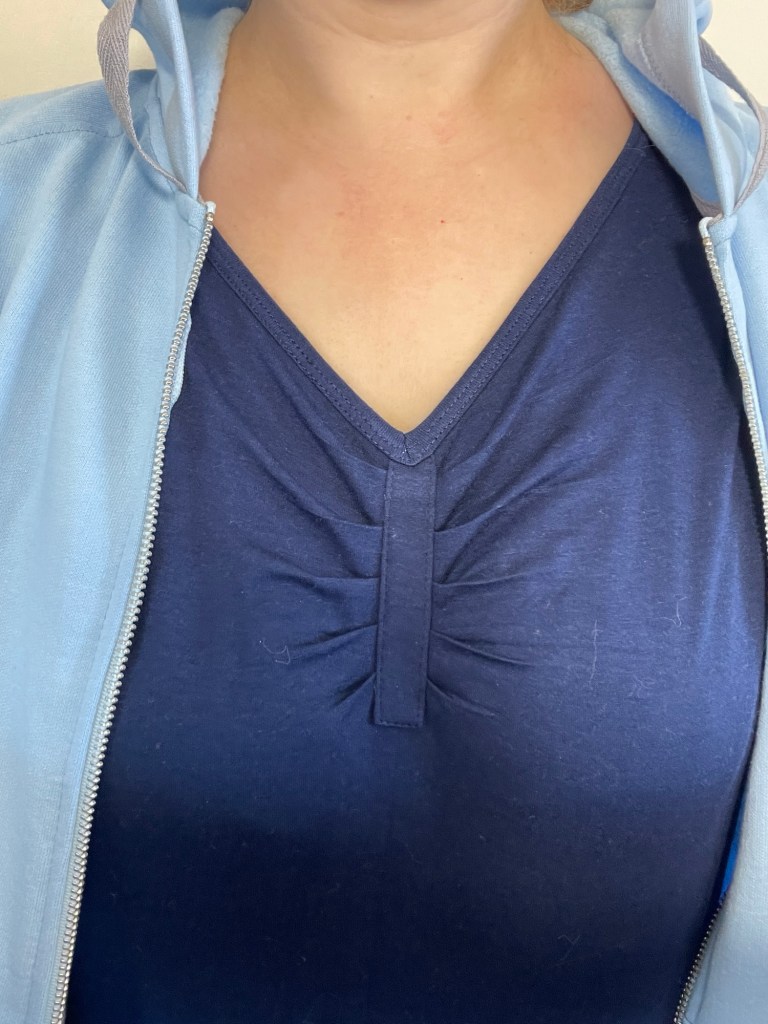
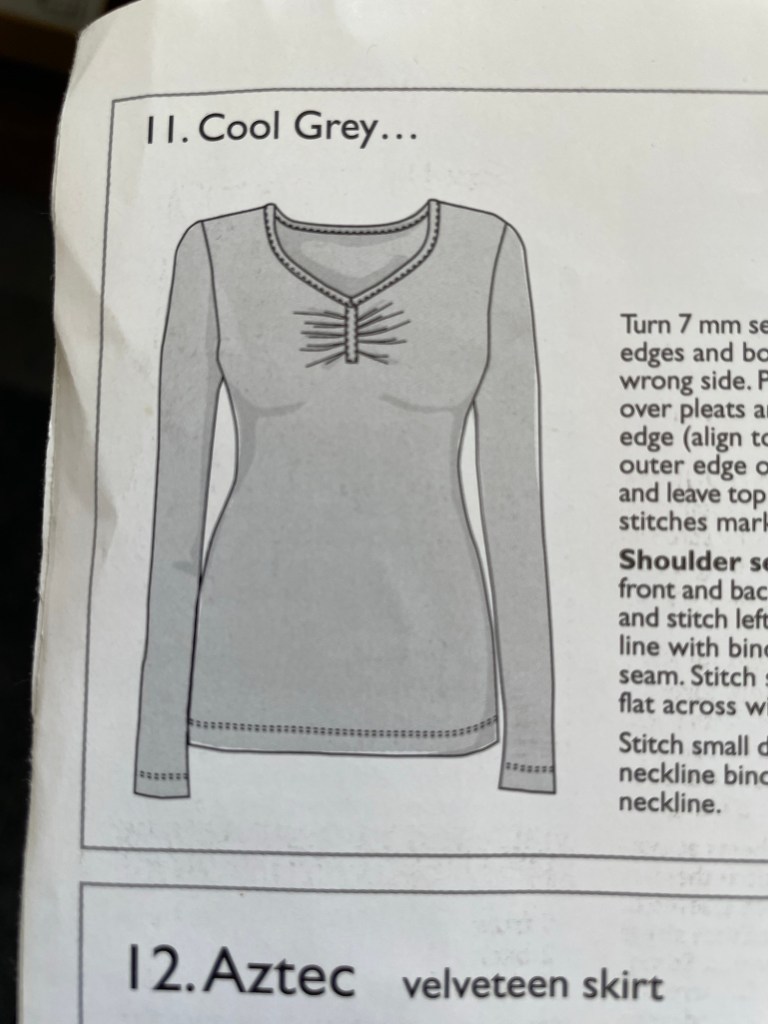
Ottobre 2/2013 #19 is a V-neck knee length knit dress with a twist front, three-quarters slim sleeves, pleats directly below the bust, A-line skirt, and gathered waistband overlay. The front bodice is self lined.

Ottobre also offers this dress as a tunic-length top.

For those of you who aren’t familiar with Ottobre, they are an independent pattern company based out of Finland. They primarily publish pattern magazines for women and children, though in past years have also had the occasional “family” issue with patterns for men as well.

Ottobre specializes in a Scandinavian sort of style – simple, minimalist, functional basics that are comfortable to wear. Sexy, extravagent Marfy they are not! They often feature a wide range of sizes and use ordinary people as their models rather than professional fashion models as they are adamant that they want to represent the average person sewing their patterns, rather than a fashion world ideal. I once saw someone online scoff at Ottobre as “clothing for housewives.” Well, I’m going to be a housewife/stay-at-home mom soon enough, so that works for me!

Alterations

I started from a size 42 and made the following alterations:

  • 3/8″ sloped shoulder alteration
  • 3/8″ forward shoulder alteration
  • Added a total of 5″ to the hips
  • Removed 1″ from the back waist and transferred 1″ to the front waist

I probably could have cinched in the side seams a little more directly below the bust, but I decided to leave it alone. I went from a 32/34 bra band pre-pregnancy to a solid 36 band, and there’s a good chance my ribcage (along with everything else!) will continue to increase as my pregnancy gets further along. (I’m about six months along at this point). I’m trying to make my clothes last as long as possible these days so I’m all about stretchy fabrics and a slightly looser fit. I am apparently not one of those lucky women that just gets a cute little bump and more or less stays the same everywhere else!

Materials

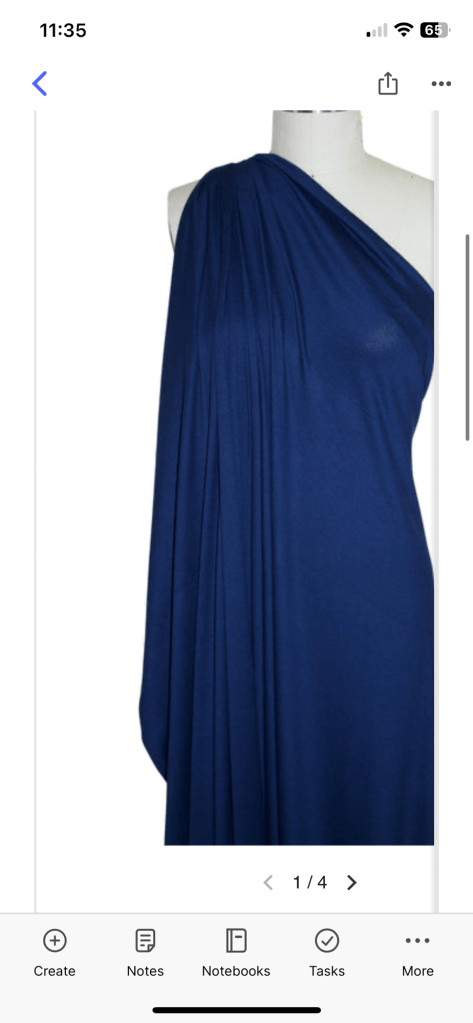
The fabric I used was a stretchy purple knit from Gorgeous Fabrics (still some in stock). I believe it is mismarked as while the description says rayon/lycra jersey, the dry hand and slightly stiffer drape feels more like a cotton/lycra jersey.

I used 3/8″ clear elastic to gather the skirt pieces at the center front and center back, and superfine Design Plus fusible stay tape to stabilize the shoulder seams and neckline.

Notes

This is a great second trimester dress, especially for the pear shaped. The skirt and gathering provide so much room during a time when regular clothes are getting harder to fit but full-on maternity tops and dresses are still too roomy in the belly. It would also be great for that awkward time earlier in pregnancy where you’re more bloat than baby. It is really, really comfortable! I also like the deep V neckline, which helps a lot with feeling less frumpy. So many RTW maternity clothes are rather modest at the neckline, which doesn’t make sense to me because this is the first time for a lot of us where we actually have a bust!

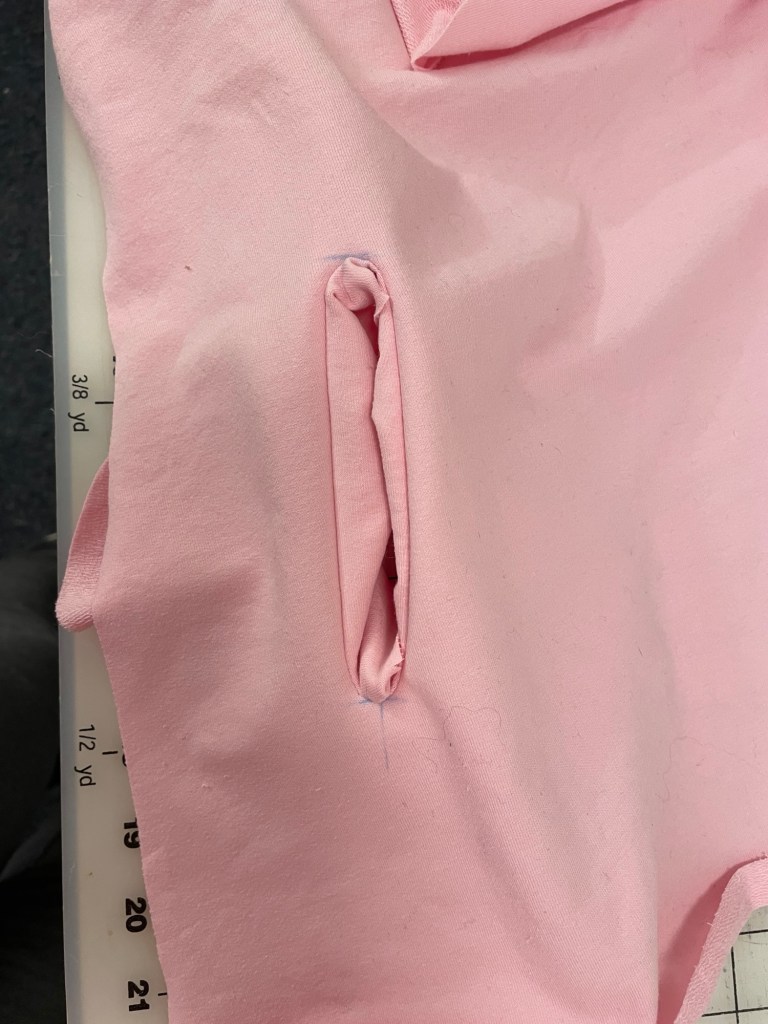
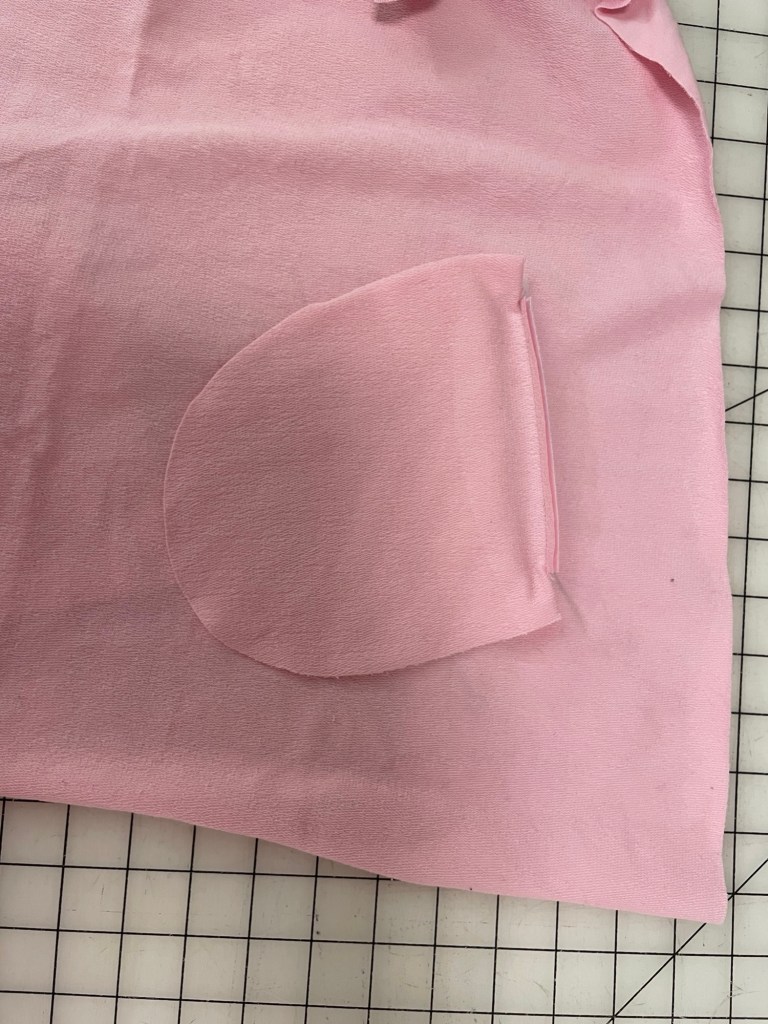
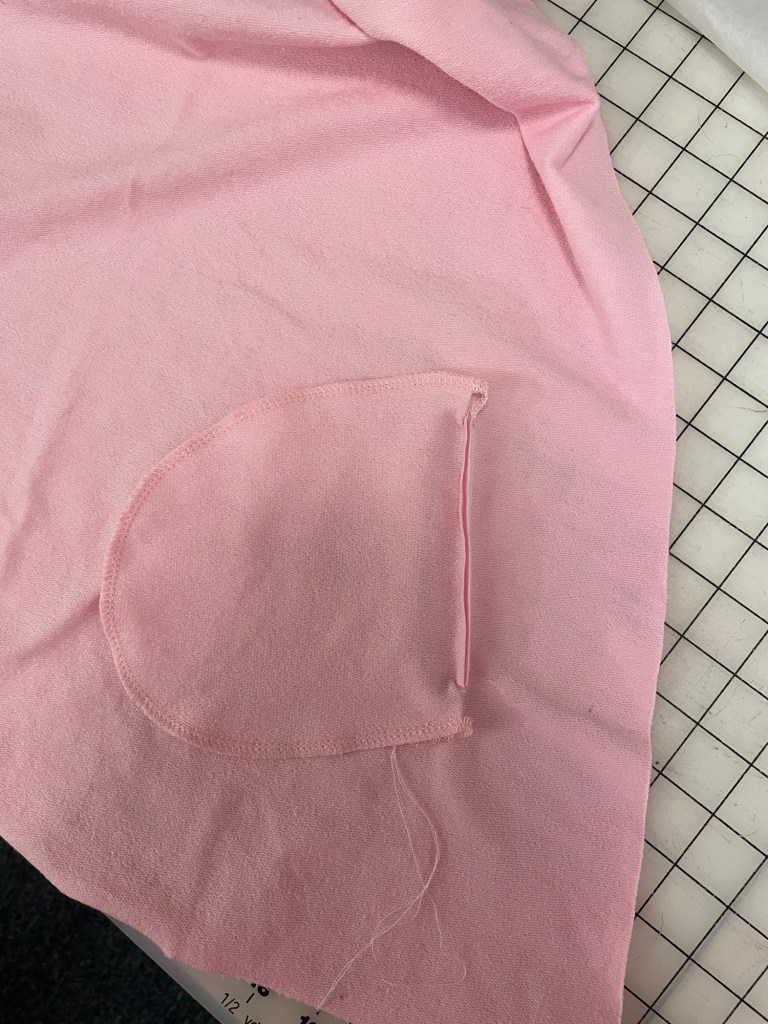
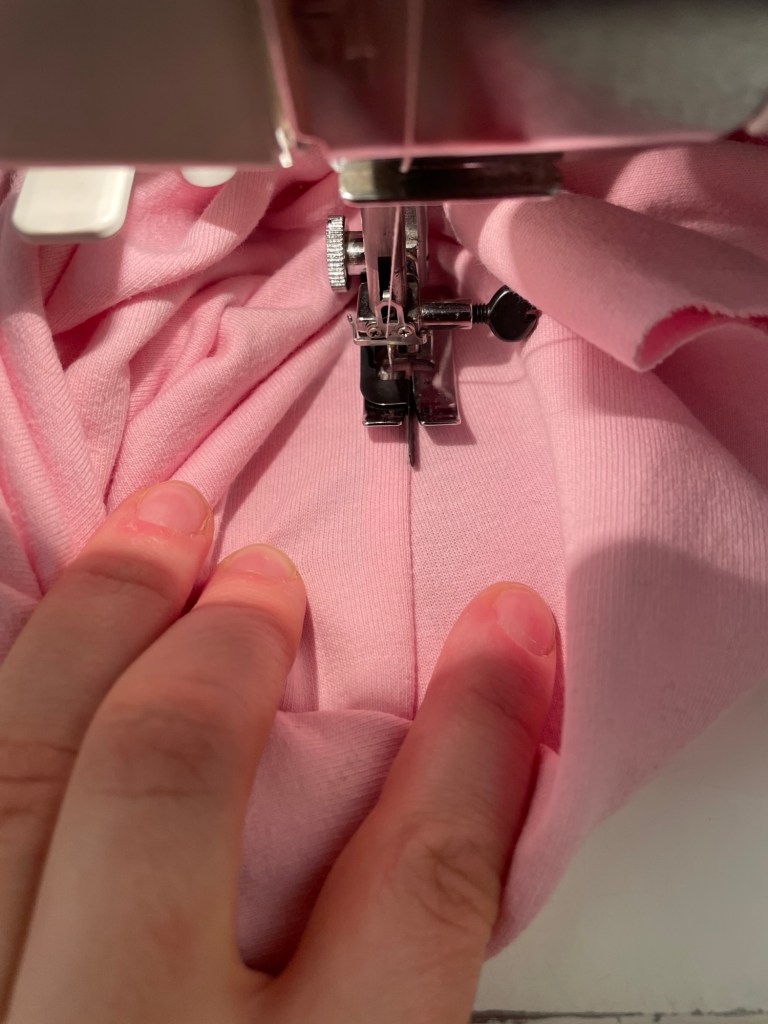
I found the front twist detail rather maddening, both to understand and sew. I was struggling with some lingering fatigue from my bout of Covid in mid March, and it took me a while to figure out what certain parts of the instructions meant when making the insert at the center front where the twist detail is. Then, I found it just as maddening and fussy to actually sew the front twist detail at the center front, as you are working around a lot of bulk with the twist detail and a small seam allowance. I ended up sewing this section on my sewing machine using a zigzag stitch because it was simply too tight and bulky for my serger presser foot. But once I got that part figured out the dress went together very easily, and I had it done in time to wear for Easter a few weeks ago.

Jalie 3896: Émilie Top

A few quick photos before it snows again!

Background

Jalie 3896 is a square shaped funnel neck top with fitted sleeves. This is a free pattern, available for download from the Jalie website. This is a very quick and technically simple project – with minimal distractions you can download, print, assemble, cut, sew, and finish this top all in one evening!

Jalie patterns include a very wide range of sizes, with a lot of the patterns going from children to plus size. This pattern is also set up with the sizes as layers, so when you print it out you can print ONLY the size(s) you want. I love this feature! You just go to the left sidebar, click on the Layers icon, and then click on the eyes of all the sizes you don’t need. I wish every pattern download had this feature.

For many years now I favored more streamlined looks, with a lot of waist emphasis. I loved knee-length wrap and A-line dresses, bootcut pants with fitted tops that hit just below mid hip length, fitted jackets, etc. After 35 I gained a small amount of weight, but still kept my small waist and flat belly and only had to make minor adjustments in woven clothing styles (basically tracing halfway between my original size and the next size up). In fact I hardly sewed for several years because I was perfectly happy with my wardrobe and saw no need to change things. When you sew your own clothes they last a long time! But right now with pregnancy rapidly changing my body I have to start going in a different direction. My flat belly, defined waist, and modest bust are pretty much gone at this point and out of sheer necessity (rather than personal preference) I’m looking towards slim leg pants and the oversized/boxy shirts, dresses, and jackets that are so popular right now…you know, stuff that is comfortable and will still fit in a month. It feels very strange. I haven’t had to do a wardrobe change this significant since I was about 22 and going from college student to working a full-time white collar professional job.

That being said, while it is fine for casual loungewear I don’t love this look and won’t make it again. I think this would work better on someone smaller busted (never thought I’d say those words) and has a more straight up and down figure. There’s a reason why they picked kids and a very slim woman for their pattern envelope models! But it was very quick to make and in the meantime provides me something to wear for when I go for afternoon walks with my husband (which I am finally physically capable of again, yay!)

Fit

I started with a size W, which corresponds to my current 38″ bust measurement. From here I:

  • Added 4″ width to the hip. Even though this is a very roomy style, my thin, clingy knit made me want to err on the side of caution.
  • Lengthened 1.5″ at the hem
  • Added 1/2″ length to the sleeves. After making it up I saw it wasn’t necessary. The sleeves as drafted are definitely on the long side! Plus I’m still used to sewing my old size where everything was drafted shorter, plus this fabric is stretchier than what the pattern was drafted for so that alone adds some extra length.

I would say if you make this, consider sizing down, especially if you use a stretchier knit.

Materials

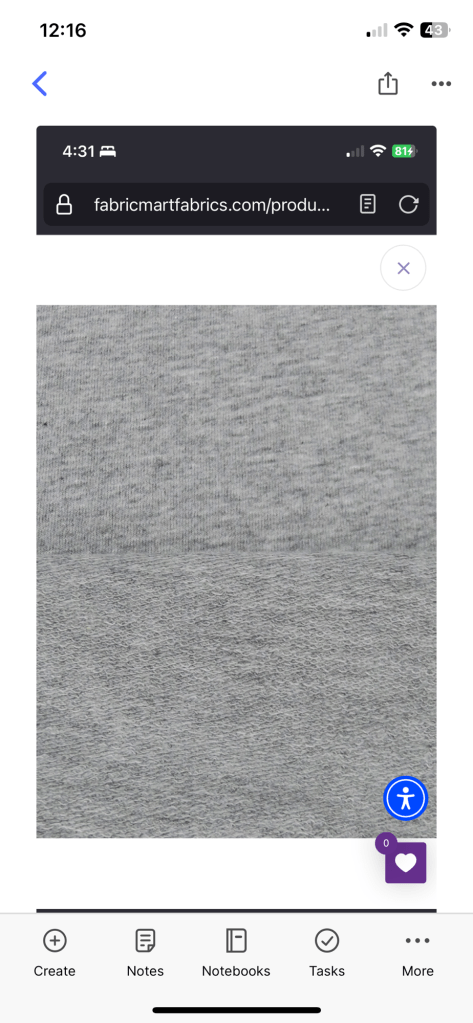
The fabric I used was a very lightweight poly sweater knit I purchased back in late 2020 from Fabric Mart Fabrics. I believe I originally bought this to make a wrap dress, but when I got it I felt like it was too lightweight and stretchy for this project. I set it aside, figuring I would eventually find a suitable project. Despite being polyester it is soft and isn’t prone to static (my two major complaints about a lot of polyester knits). It is also surprisingly cozy considering how thin it is.

Construction

I made this entirely on my serger, then followed up with hemming on my coverstitch machine. Everything went together smoothly! Jalie has technical drawings as well as written instructions to guide you along. This is a great project for a beginner.

Style Arc Andy Maternity Pants

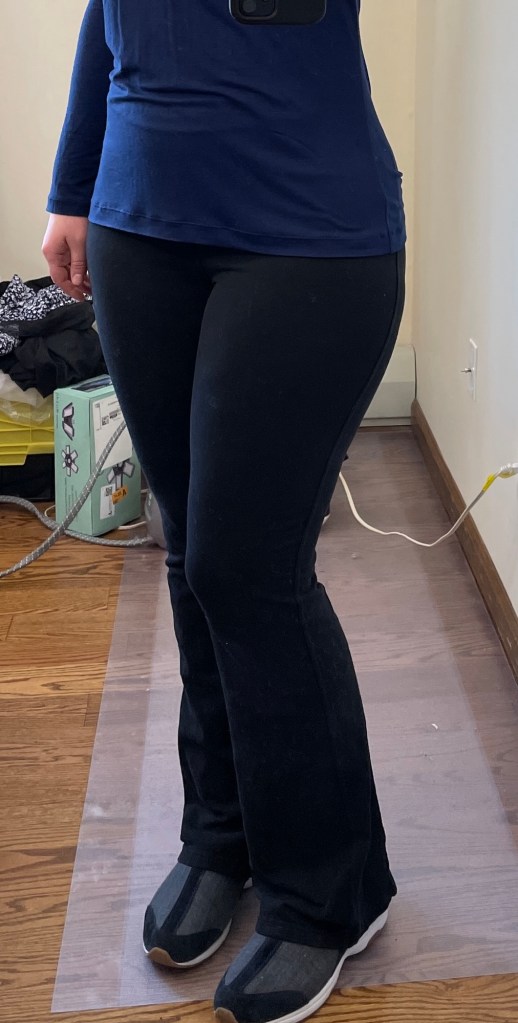
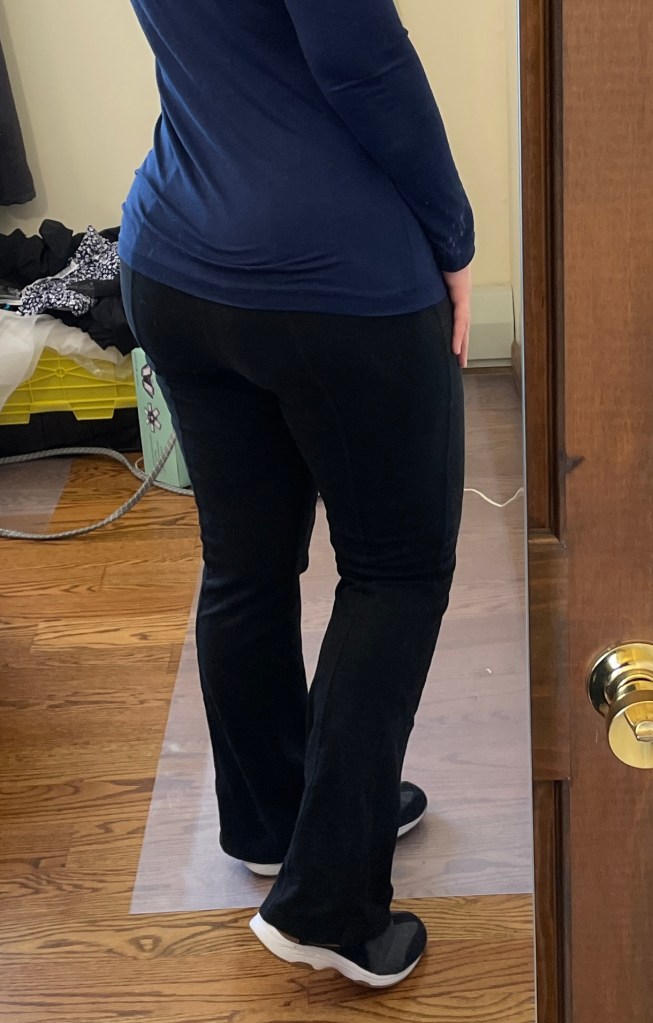
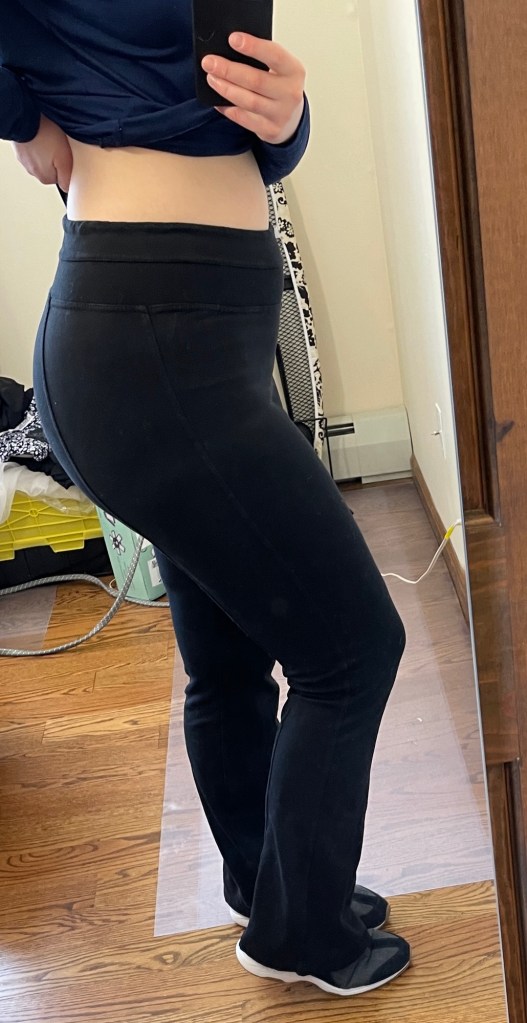
Yup…I’m pregnant! My husband and I are expecting a little boy, due two days before our first wedding anniversary in August! Since I’m tall, long in the waist, and its my first pregnancy I don’t have much of a bump at this point (my doctor said not to expect much of one until around 23-26 weeks), but my waist has thickened quite a bit (3-4″ larger than before I got pregnant) and while they are still big on me, maternity pants feel far more comfortable right now.

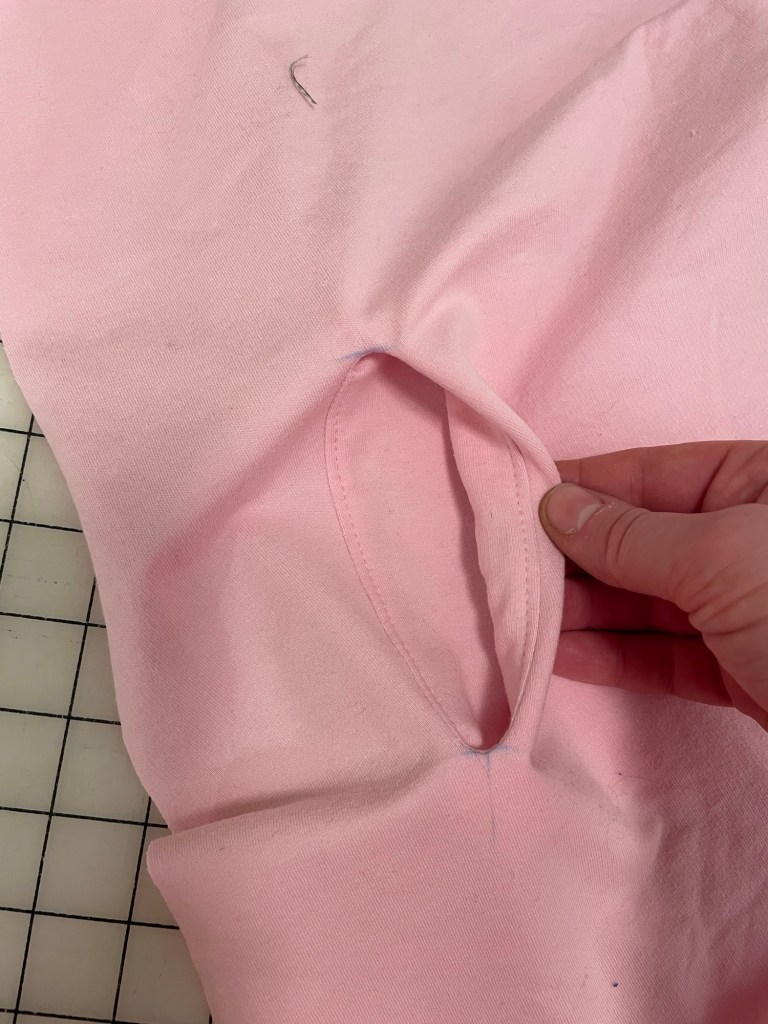
Faux front fly detail and stretchy waistband panel
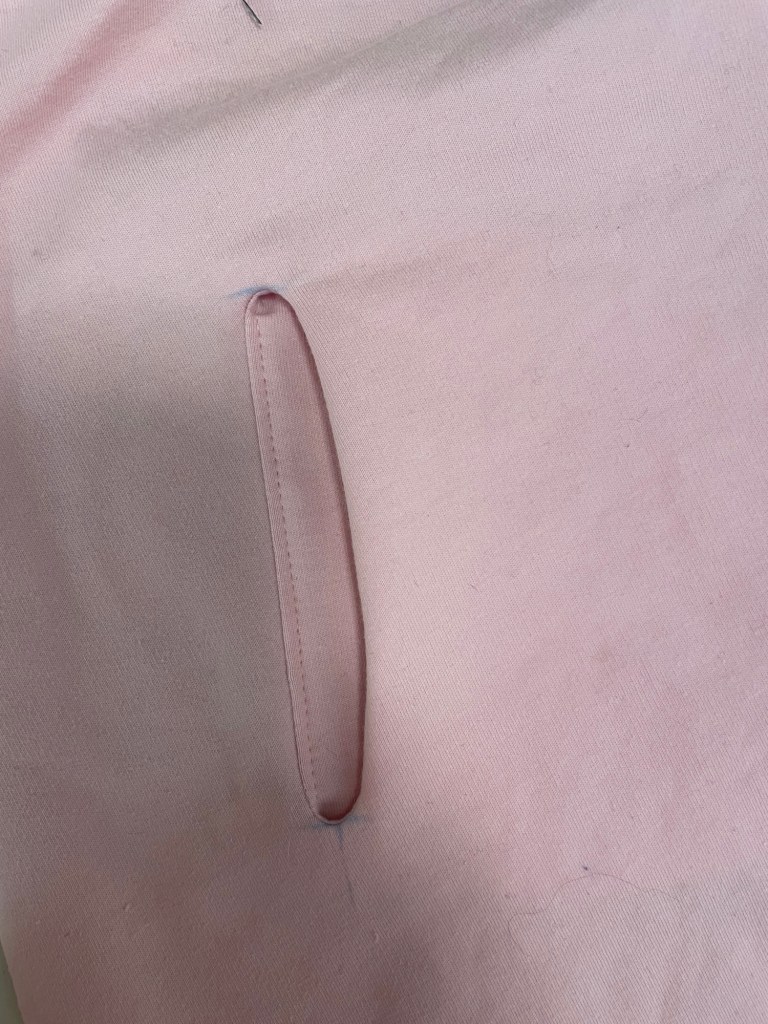
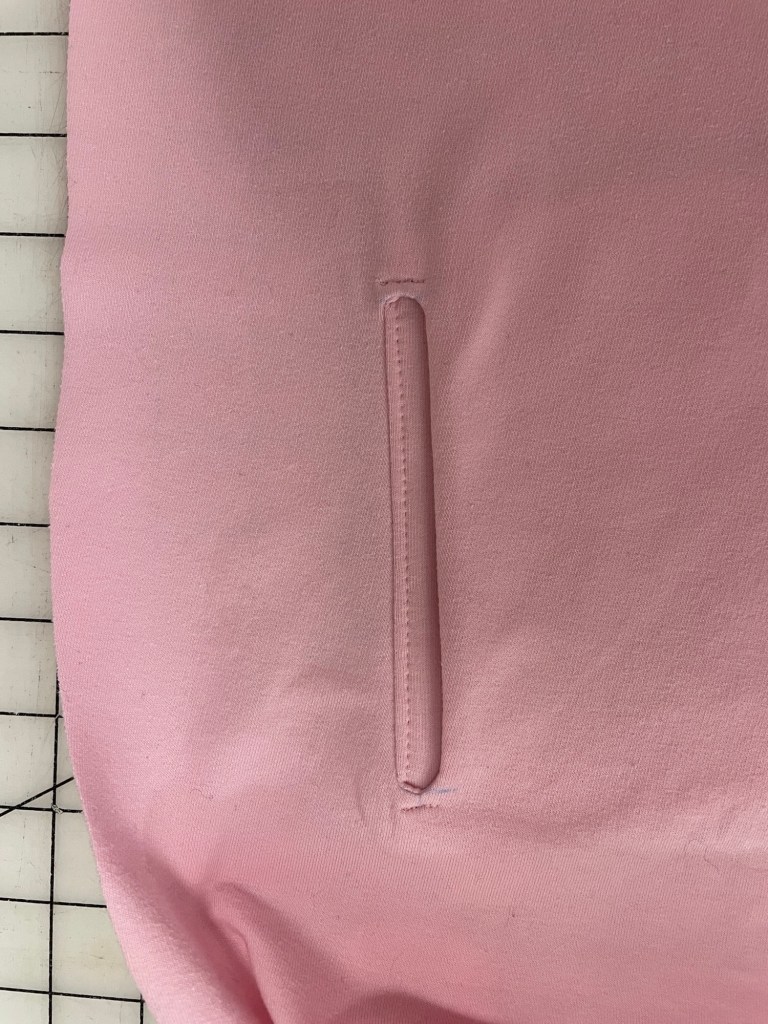
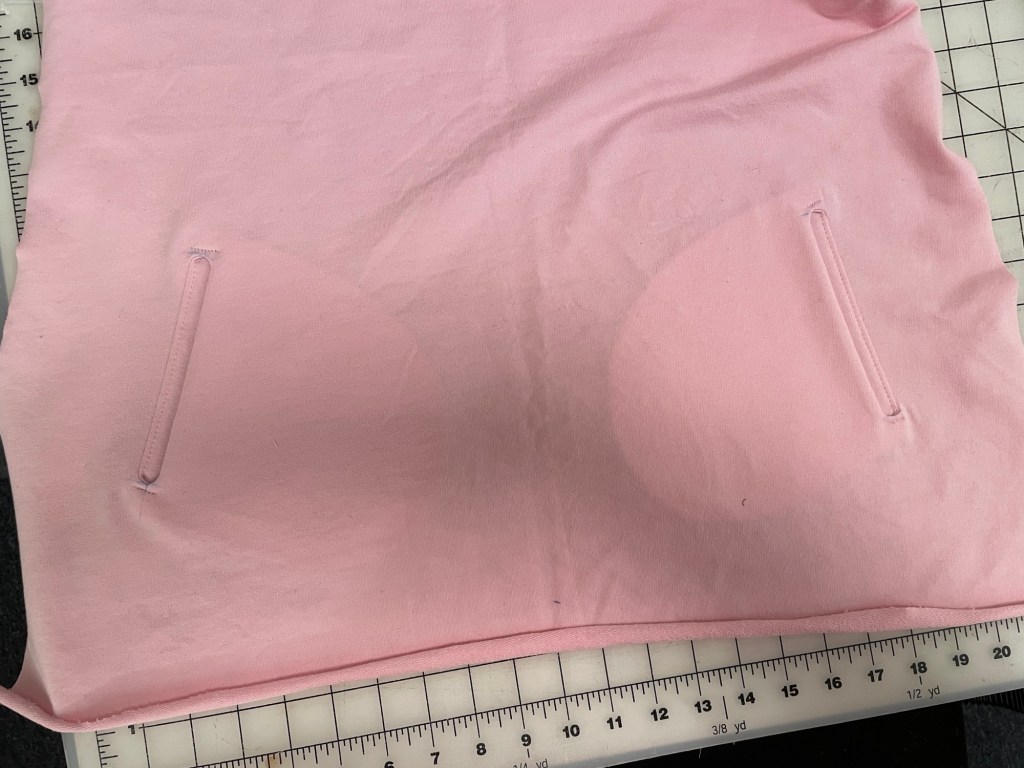
Topstitched back yoke and outer side seams
Adjustable waist, with buttonhole elastic

Background

The Style Arc Andy is a slim leg maternity pants pattern…basically the maternity version of the Style Arc Elle. They are the type of maternity pants that go over the belly and have a stretchy waistband panel. Almost like a built-in belly band.

I struggled a lot during my first trimester, and all I could do was focus on basic survival. I spent sooo much time in bed feeling awful. If I didn’t know I was pregnant I would be convinced that I was terminally ill. Some women seem to love pregnancy and just breeze right through it. I am not one of those women. You could not pay me enough to be a surrogate. Unisom + B6 helped a lot with the motion sickness and nausea, but I still felt terrible. I have no idea how some women successfully hide it from everyone for months, because I looked and felt like such a wreck I had to disclose to a few people at my job very early on. Of course numerous older women in my life would take one look at me and accurately guess right away what was going on!

Due to the hormones, inactivity from feeling so exhausted/weak/dizzy, and eating way too many carbs every 2-3 hours because of food aversions and nausea, I gained 10-15 pounds during my first trimester. (I never realized just how active I was before!) Very little of my original wardrobe was suitable at this point. I have never had an easy time buying RTW pants but I was so exhausted and bloated and needed something to wear to work and out in public. I ended up buying and then returning a ton of RTW because most of what I bought fit really badly, making me feel even more frumpy and awkward. It seems that 99% of pregnancy-friendly “pants” are just leggings and sweatpants, and I really wanted pants that looked like regular pants. Once I was in my second trimester and starting having some almost-normal days again I started working on getting back my strength and making plans for sewing again! I still haven’t gotten that second trimester “burst of energy” they talk about, but life is definitely starting to feel a bit easier and more “normal” again. I feel fortunate that I was able to easily conceive and everything looks good so far (despite being considered high risk due to “advanced maternal age” and “elderly primigravida”). He’s bouncing around in there like a happy little puppy, completely oblivious to all the chaos he’s causing!

Materials

The fabric I used for the pants was a navy viscose double knit/ponte from Gorgeous Fabrics that’s been sitting in my stash since 2016. The pattern description says it is for stretch wovens, but ponte is structured enough to work as well. In my opinion the slight vertical stretch makes it work even better.

For the waistband I used a nylon/lycra activewear knit from Fabric Mart, purchased way back in 2015.

These pants are extremely wash and wear friendly. One of the best things about making your own clothing is you can treat the fabric thoroughly before sewing with it. I washed on warm and dried on high to get rid of as much shrinkage as possible, and the fabric is no worse for the wear. SO much of my RTW ends up shrinking despite carefully following the care instructions…one pair of pants from Amazon seemed to fit ok, then shrunk 2-3″ in the length after being washed on cold! I’ve found this problem has gotten significantly worse since the pandemic. Maybe manufacturers are taking more shortcuts now.

For the waistband elastic I used a 5/8″ wide black buttonhole elastic from Cleaner’s Supply, along with a 3/8″ navy button.

My husband noticed that the fabrics don’t match in color (the waistband is lighter than the pants) but this seems very common in RTW maternity pants. These maternity pants are over $200 and they have a very different color waistband. My shirts will cover it anyway. I’m just thrilled to have something that is machine washable, long enough, good quality, and will still fit in a couple of months…and they cost me only $26 to make. The only $30 and under maternity pants I’ve found online are either polyester or leggings, and none of them come in tall sizes either.

Fit

Fitting adjustments were as follows:

  • I used a size 14 for the waist/back yoke, then tapered out to a size 16 at the hip/thigh/leg
  • Removed 3/8″ length from the upper part of the front crotch curve
  • Added 1/2″ to the upper back crotch curve
  • Added 2″ width to the leg opening, making these more of a slim straight leg rather than a true slim leg
  • Added 1.5″ to the length. Due to the vertical as well as horizontal stretch of my fabric, I ended up removing 1.25″ after hemming and left them a tiny bit on the long side just in case if there’s any future shrinkage. Yet when I compared them to the paper pants pattern after sewing, they were still a bit longer. I think the fabric relaxed a bit during construction.

You probably noticed from the photos that waistband is rather loose at this point, and the back waist is definitely a bit baggy, but I’m reluctant to mess with it as I am sure I will be filling it out in the not so distant future.

Construction

I made this entirely on my sewing machine, and then hemmed them using my coverstitch machine.

I chose to go with the buttonhole elastic option for the waistband. I am not entirely happy with it as it is soft so it tends to roll when taking the pants on and off, but at the same time I like how it is going to allow for plenty of adjustment as my body continues to grow. When I sewed the buttonholes in the inner back waistband I used a lightweight cut-away stabilizer on the wrong side of the fabric and trimmed it away afterward. It worked out great! When making the waistband elastic casing I traced a line 5/8″ away from the folded edge of the fabric with chalk, then used a 3.5mm length and 2.5mm width zigzag stitch to create the casing, making sure the edge of the zigzag stitch just hit the chalk marking. I went with a zigzag instead of a cover stitch because despite my waist getting much thicker I’m still pear shaped and wanted the extra stretch for getting over my hips and thighs. A cover stitch stretches, but a zigzag gives more durability and stretchiness.

I found there’s one mistake with this pattern. The front crotch curve has only a 1/4″ seam allowance, but every other seam allowance on this pattern is 3/8″. Not a big deal to fix, but just something to be aware of.

This pattern has a faux fly. I did a double line of topstitching for the fly, and then a single line of topstitching 1/8″ away from the edge for the front and back crotch curve. I topstitched 1/4″ away from the edge for both the upper edge of the yoke and the outer side seams. (I pushed the seam allowance towards the front when I topstitched the outer side seams, instead of to the back. This helped with some of the bulk created by the back yoke). The topstitching at the outer side seam helped make sure those side seams stay very flat and in place.

When I attached the waistband to the pants I used a 4.0mm length and 2.5mm width zigzag stitch. I pushed the seam allowance up towards the lycra and topstitched in place fairly close to the seam line, again using a 4.0mm length and 2.5mm width zigzag stitch. Then I trimmed the seam allowance after stitching.

Conclusion

I LOVE THESE PANTS. I’ve got two more pairs in black ponte cut out and ready to sew. They’re a cinch to make and I feel so much better having them to wear. They’re slim without being tight and pair well with looser fitting untucked dress shirts (my go-to work style right now). There’s so few modern maternity pants patterns on the market, and I am so grateful to Style Arc for offering this pattern. Highly recommend it to the other pregnant ladies out there!

The Wedding Dress

As you’ve probably noticed, I’m not into blogging anymore. The world has gotten too weird and crazy since Covid, and in addition to not being keen on putting myself out there anymore I’m very busy doing other things. I made an exception this time though, because…

I got married!

We got formally engaged in June, and married 2.5 months later in August.

I did not want the standard 1-2 year engagement. Covid and everything that happened in the meantime had caused enough delays! I’m 37, he’s 43, and on top of dating for several years I’ve known him as a friend since I was 20. I had no doubts about his character or suitability as a husband. As soon as I had that ring on my finger I got to work planning the wedding!

There was a church:

flowers and candles:

My bridal bouquet
Reception centerpieces
Decorations behind the sweetheart table

and a cake!

Of course I made my dress.

With such a tight timeline I had to be extremely organized and deliberate in how I worked…and not too picky. We had a LOT going on in those 2.5 months. Some of that was directly related to the wedding, like Pre-Cana and wedding planning. But a lot of it was not at all related to the wedding, like dealing with the unending nightmare that is managing and settling his parents’ estate. (PSA: actually talk to your heirs about your wishes and expectations, both with regard to your estate and any potential health crisis. Make sure you make use of “payable upon death” and keep your beneficiaries updated. Consolidate accounts and make sure all of your documents are in order. As you get older and/or your health starts declining, try to de-clutter your home and keep it maintained. And if you have a child that is special needs, make sure there is an actual plan in place for them after you pass. No one likes to think about their eventual death and estates tend to bring out bad behavior in people, but doing this will make the process much less stressful for your executor(s) and/or successor trustee(s). As soon as my husband and I got married we made sure to update our beneficiaries, as this experience has taught us that it never hurts to be prepared.)

We had less than 30 people (including us) at our wedding and while the small size helped, it still takes time and effort to pull these things together. There wasn’t much time to second-guess and be picky. I had to make up my mind and work quickly to coordinate everything. I used Pinterest sparingly (helps with keeping costs down and expectations reasonable) and did not micromanage. I gave my vendors a general idea of what I wanted and what I was going for, then stepped back and trusted them to do their thing. I was not the least bit disappointed. Vendors have been there, done that, and know what works and what doesn’t work. Listen to them; they know what they are doing and want your event to be successful.

The Dress

Planning Stage

I actually didn’t already have a dress in mind, so I made a few muslins of various patterns to see how they looked.

At first I was going to make this dress, Burda 4/2017 #105:

During the muslin process I discovered a possible error in the pattern with the back waistband. I found all the gathering was getting annoying and would complicate fitting. Rather than spend my limited time trying to work it out, I decided to abandon it and try something else.

The next one up was Burda 3/2017 #110:

My mom urged me to try this one because of the elegant lines and feminine sweetheart neckline. While I loved the bodice, I wasn’t crazy about the skirt. It tapered too much and I didn’t like the back godet. I wanted less of a fishtail and more of a trumpet shape.

Next I tried Vogue V1616:

I liked the skirt on this one, especially with the little sweep train, but I found the bodice fit was pretty bad. It also lacked the feminine sweetness of the Burda pattern, so I didn’t have the patience to keep trying to make it work.

So for my final dress, I combined the bodice of Burda 3/2017 #110 with the skirt from Vogue V1616.

Fitting

I didn’t do a great job this time recording all of my adjustments because there was so much tweaking and this was a one-time project.

I started with a size 40 for the Burda bodice.

  • I moved the front princess seam inward 1/2″ on each side.
  • Lengthened the bodice 3/4″
  • Took in the back princess seams at the waist, I think around 1/2″ each
  • I found the straps very short as drafted, and they dug into my armpits and made the shaping of the princess seams too high. I had to lengthen the front and back bodice straps about 1″ each.
  • I found the back straps set very wide apart. They said that you can wear a normal bra with this bodice; I found that was not the case, at least not out of the envelope. I ended up taking in the middle back panels and widening the side back panels by the same amount (around 1/2″?) in order to get the strap to not be so wide-set. On my wedding day I wore a strapless bra with clear straps, and my husband dutifully applied double-sided tape in the back to ensure that my bra straps would not be visible and the top of the bra back would not peek out from under the dress.
  • I found the entire upper back was too wide, and had to take it in probably an inch or so.

I started with a 14 for the Vogue skirt. (14 in Vogue is like a 40 in Burda.)

  • I added some width to the hips, basically traced out to a size 18. I took in the upper back of the back princess seams the same amount as the bodice, and then tweaked the shape of the curve to match my lower back.
  • I found there was too much extra fabric in the front skirt, and it was too curved and didn’t hang right. I took in in the front princess seams to make them straighter, I think about 1/2″ each.
  • I had to lengthen the skirt much more than I thought I would, I think about 2-3″

I did a bunch of nips and tucks along the way, then took apart the muslin and transferred the adjustments to my pattern pieces before cutting out the dress.

Materials

For the fashion fabric I used the heavy crepe de chine from Dharma Trading. This is basically 4-ply silk crepe. This was the most economical source of four-ply silk crepe that I could find. The fabric requirements for this dress are on the more modest side so I could afford to splurge for a luxurious fabric. The nice thing about undyed silk is that the color is this very flattering color that isn’t bright white but not quite ivory. (I think they call it diamond white.)

I used Pro-Sheer Elegance Medium for the bodice and straps. The entire bodice and the straps are fully interfaced.

Per the book Bridal Couture by Susan Khalje, I underlined the bodice and skirt. To keep the character of the 4-ply silk crepe as unchanged as possible I used a silk crepe de chine I found in my stash, also from Dharma Trading. This made the dress nearly opaque, though it was maddening attaching everything by hand. Plus no matter how careful I was there was some shifting. With less of a time crunch I would have soaked the silk in gelatin to help stabilize it, but I didn’t want to have to prewash, soak, press, sew, then wash AGAIN to rinse out the gelatin and do all that pressing again.

The lining was a white superfine bemberg from Cleaner’s Supply. It was great for the skirt, but it had a tendency to stick to my skin during the heat and humidity. On the day of the wedding I dusted my torso with some translucent face powder before slipping into my dress, which helped a lot.

The zipper was an ordinary YKK invisible zip, also from Cleaner’s Supply. I was going to use a bridal weight zipper, but it was way too heavy duty for this style. Those are designed for bodices that are more structured, beaded, etc.

To finish the hem I used bridal tulle from Bodikian Textiles.

All my stitching was done with a lightweight silk thread.

Construction

Working with four-ply silk crepe is a dream. It has a thick, buttery feel and is much easier than other silks when it comes to pressing and sewing. I used a silk organza press cloth when working on the face of the fabric. When it came time to press the straps and neckline edge of the bodice I used a wooden clapper to make sure the edges would be nice and crisp.

I still had to adjust the fit once the dress was put together. I found that letting out the side seams for a total of 1″ more room made it not quite as form-fitting, but it was much more comfortable to sit in and flowed a bit nicer. Plus I didn’t have to worry about my side seams suddenly ripping apart in the middle of the ceremony. The downside is that despite my fine thread and needles the silk had tiny holes in the side seam from removing the stitching. I steamed it, I lightly misted it, I gently rubbed the holes with my fingers, but I still couldn’t make them entirely disappear. No one noticed though since you had to be very close and looking at the side seam in bright light.

When it came time to hem there was one section that was higher than the rest and as a result I had to hem my dress a good 3/4″ shorter than I had wanted. I had no choice but to shrug and let it go. It was actually it was a blessing in disguise because it was much easier to walk in, especially when we did our photos outside. I had a giant bouquet (2.5 pounds of flowers!) so I literally had my hands full much of the time and was glad to not be fussing with my dress anytime I needed to walk up a little hill or on uneven ground.

To do the hem I used the technique recommended by Kenneth King for 4-ply silk crepe. Since I had the underlining I was able to stitch the tulle to the underlining only, for a completely invisible hem.

I made my lining stop at the front hem length, rather than go all the way back to the train. I’m not sure if this is the proper way to do it or not, as I have zero experience with trains and I’m almost certain the Vogue pattern had you cut the lining the same length as the train, but at least I knew my lining would stay hidden the entire time. Since I had just a little sweep train I didn’t bustle it. It was easy enough to manage when I went around talking to our guests during the reception dinner.

After the muslin stage the entire process took me around a week, from start to finish. I remember I took a couple of days to cut it out and then spent an entire day constructing on the sewing machine, with another evening or two spent finishing up the lining, sewing the straps to the inside by hand, and pressing. I needed help with marking the hem so hemming was done separately a few weeks later, with another couple of evenings dedicated to sewing the hem in place by hand and doing final pressing.

To make things less chaotic the morning of the wedding we stayed at the reception venue the night before. I took along my steam generator iron and and pressing ham and gave my dress a blast of steam the night before hanging it up overnight. The morning of the wedding, while I was waiting for my hairdresser to arrive, I took my pressing ham and carefully pressed and steamed out any wrinkles I had missed the night before.

The Big Day

A lot of people, even random strangers, came over to say “I love your dress!” I was surprised as it was so simple compared to the usual bridal gown, with none of the usual beading and tulle and elaborate tucks and draping and sparkly trims. I felt like it was the right choice though for our daytime micro-wedding.

With such a simple dress I wanted a big cascading bouquet. My florist certainly delivered!

Originally I was going to use a beaded bridal belt, but I felt like it was too bulky and formal and just not the look I was going for. Instead I accessorized it with a simple ribbon and flower sash I found on Etsy. It fit perfectly within the front princess seams.

After the Wedding

The day went better than I thought it would. Everyone rallied around us! The children we had invited were so well-behaved that you wouldn’t have even known there were kids there. It was 90+ degrees and very humid but the church and reception venue were air conditioned. By the time we did our couple photos after the reception it was early evening and just starting to cool off a bit.
When I finally took my dress off at the end of the day it was in quite a state. Somehow bits of twigs and grass made their way between the tulle in the hem and the underlining, not to mention the hem was pretty frayed and dirty in some areas. Some of the hand stitching had come out from the tulle too. I decided to take a chance and washed it by hand. Despite being very gentle it shrunk quite a bit. I was not surprised or overly upset, as I didn’t prewash/preshrink the fabric and knew this had a high likelihood of happening. My work was captured in many photos and wedding dresses are not something you wear more than once. And as my husband pointed out: “I didn’t get to keep my tux!” I know people sometimes like to save dresses thinking that a possible future daughter might like to wear it, but I feel like if I had a daughter she would probably want to choose her own dress. I would happily make her a dress of her own choosing and she could always wear my earrings, hair clip, and/or sash. If she really wanted to have the same dress I still have the pattern.
People keep asking me how married life is. It is great, better than I thought I would be! Neither one of us has been married before so it has been an enormous life change, but adjusting to living together and operating as a new family unit has gone more smoothly than I anticipated. We’ve had a lot of support, and everyone has been super happy and excited for us.

Credits