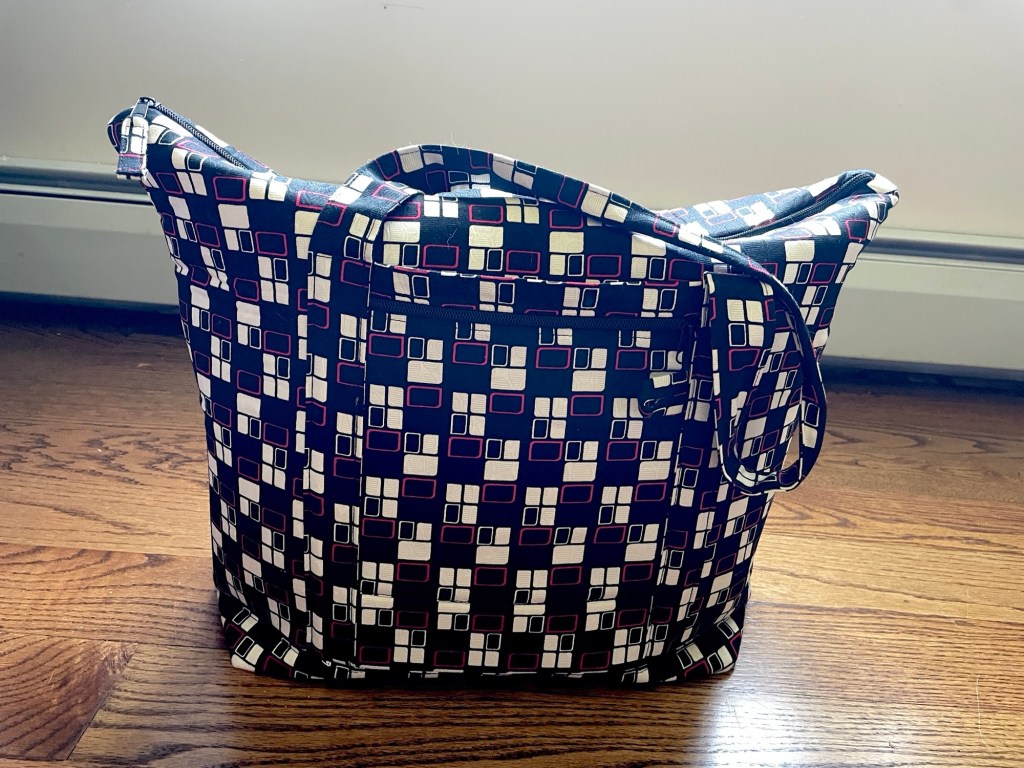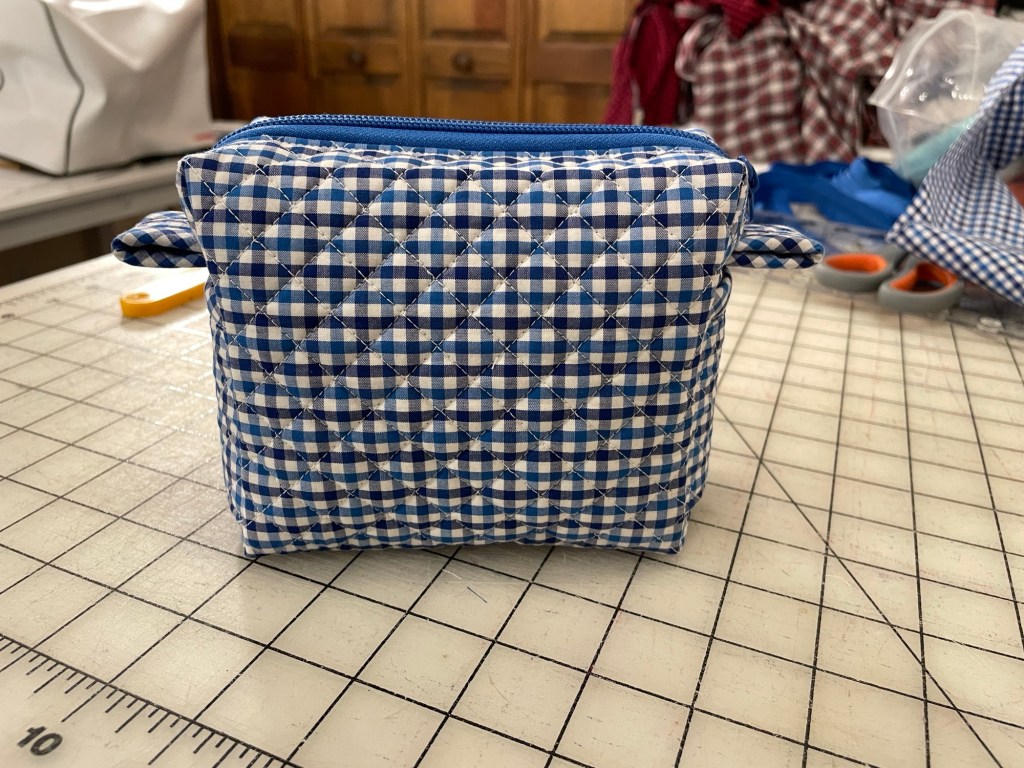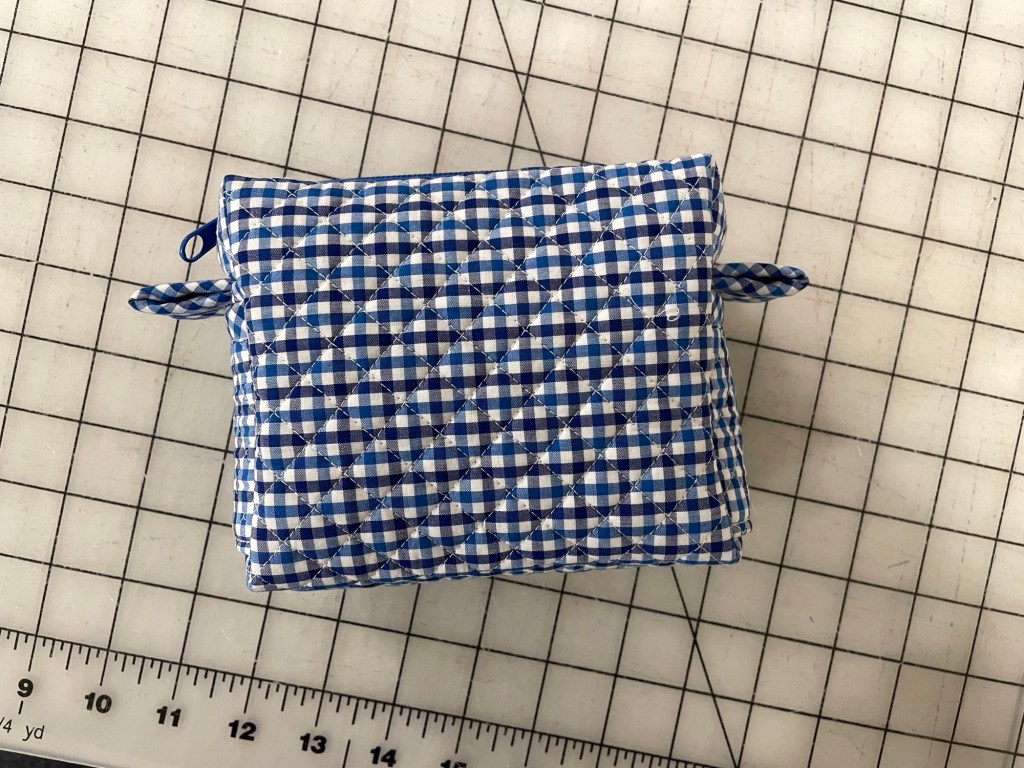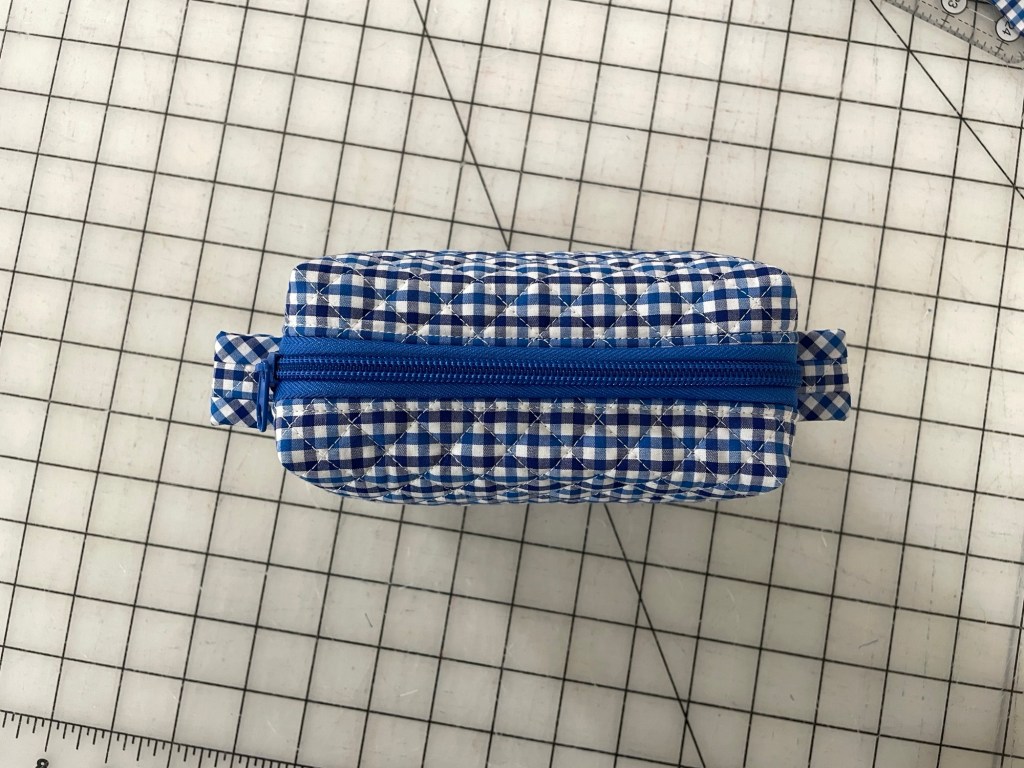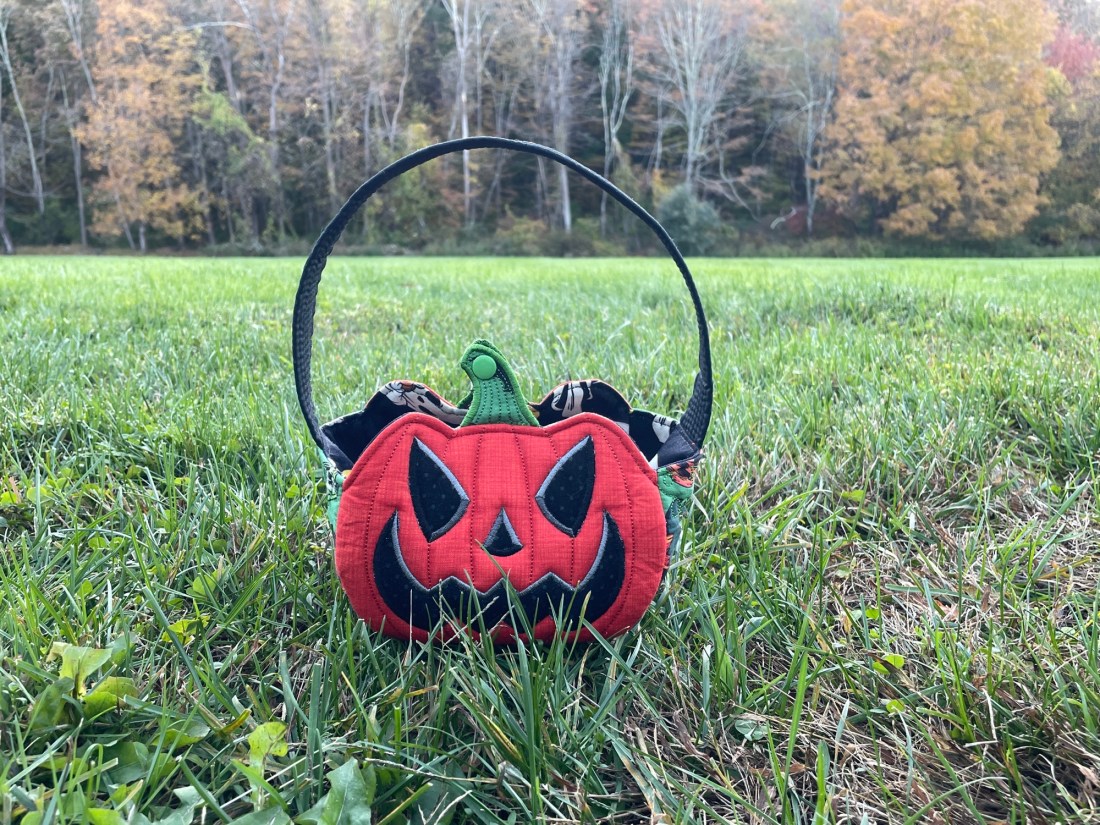
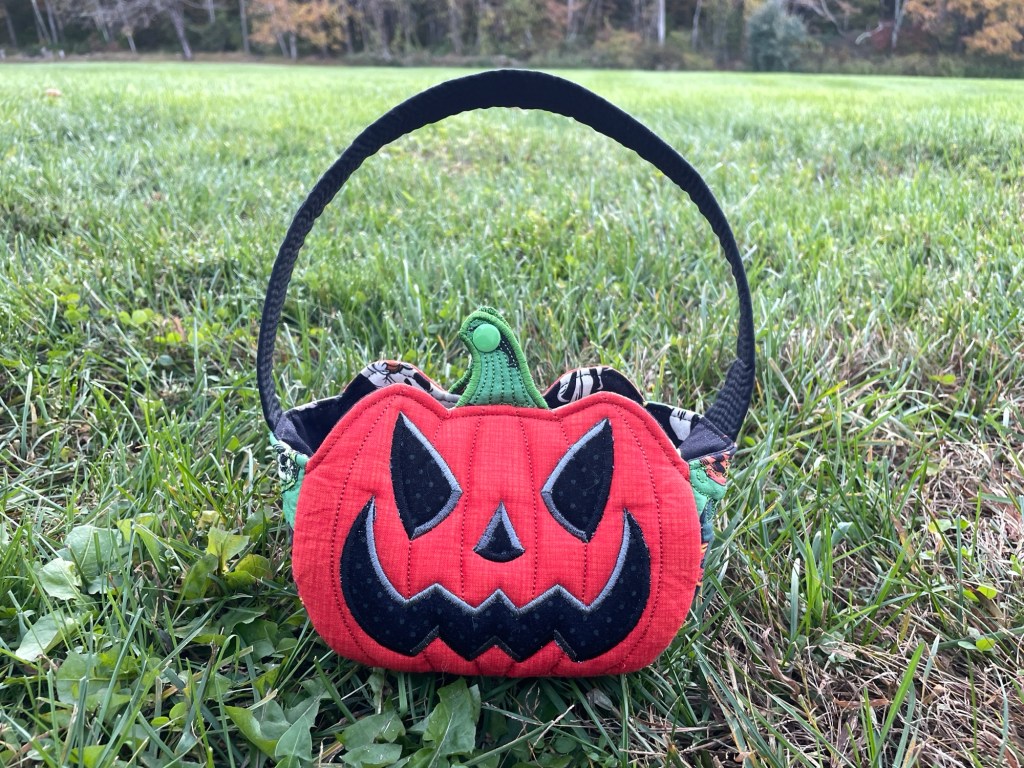
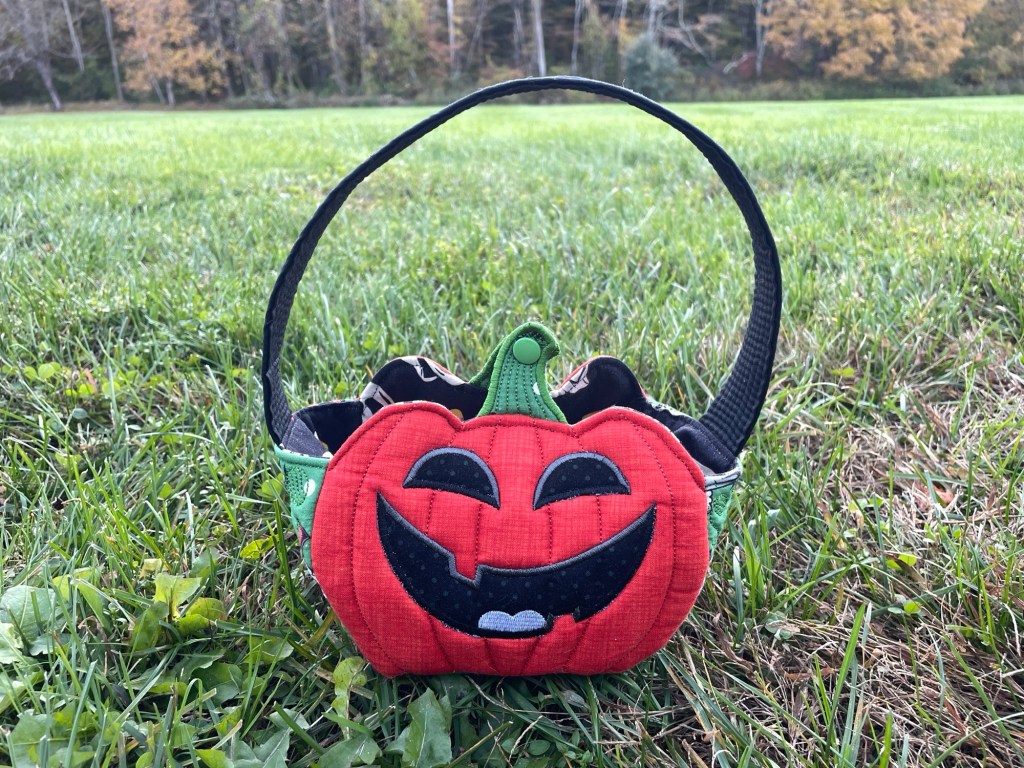
Sew Can She Boxy Zipper Pouch

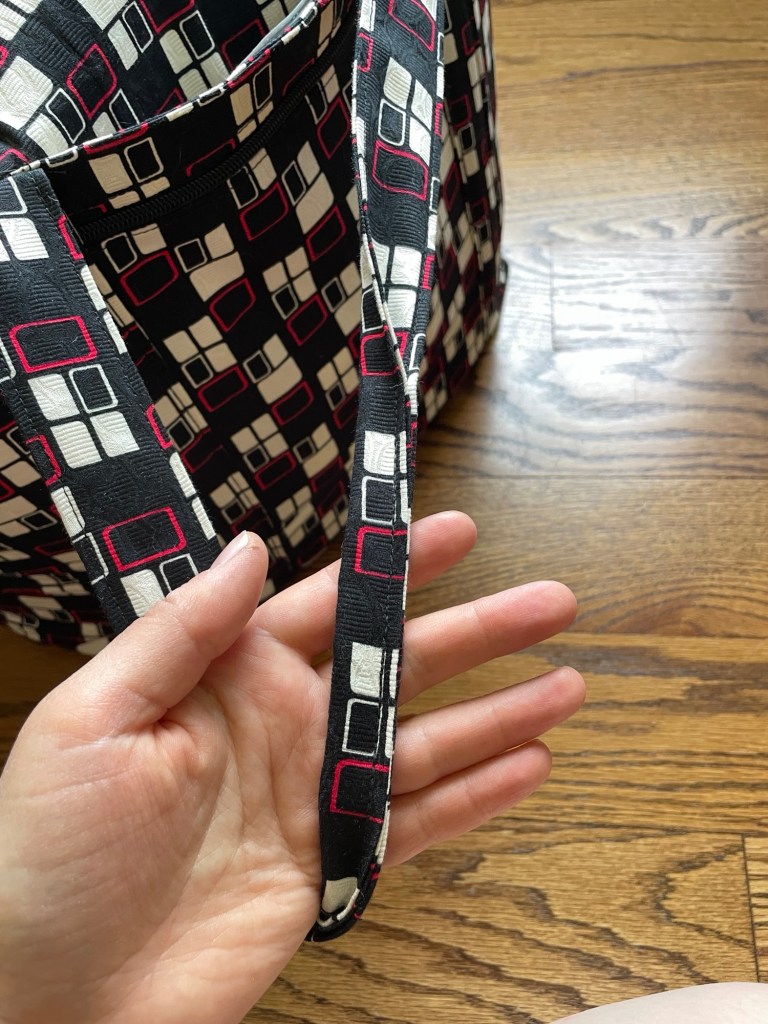
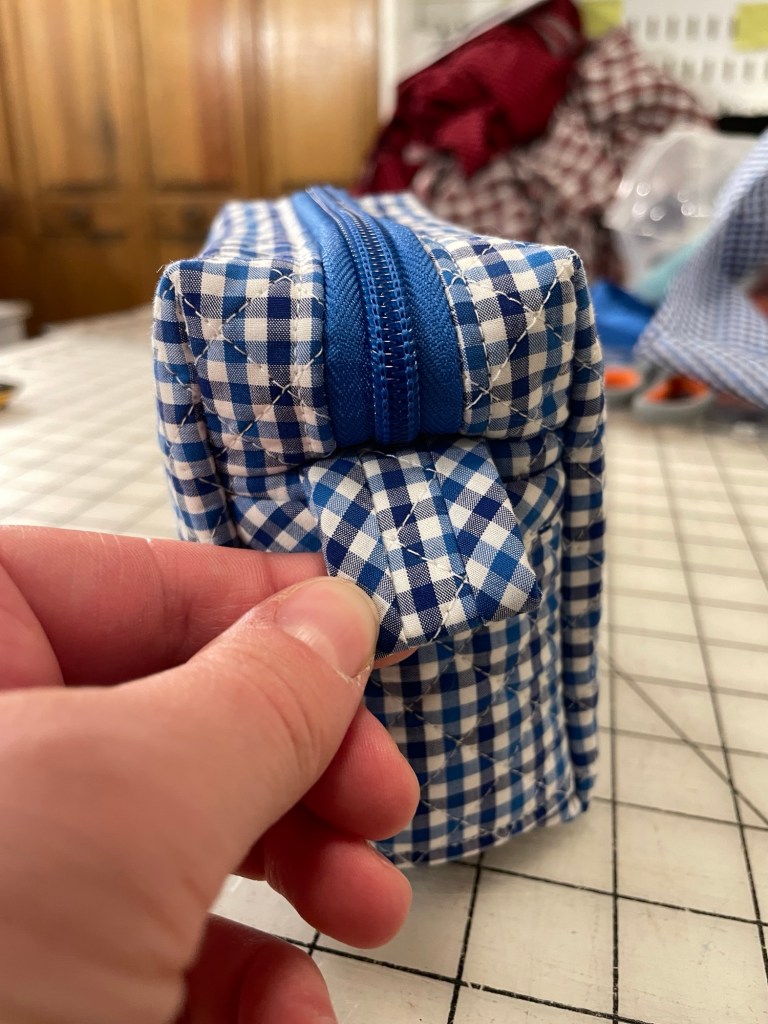
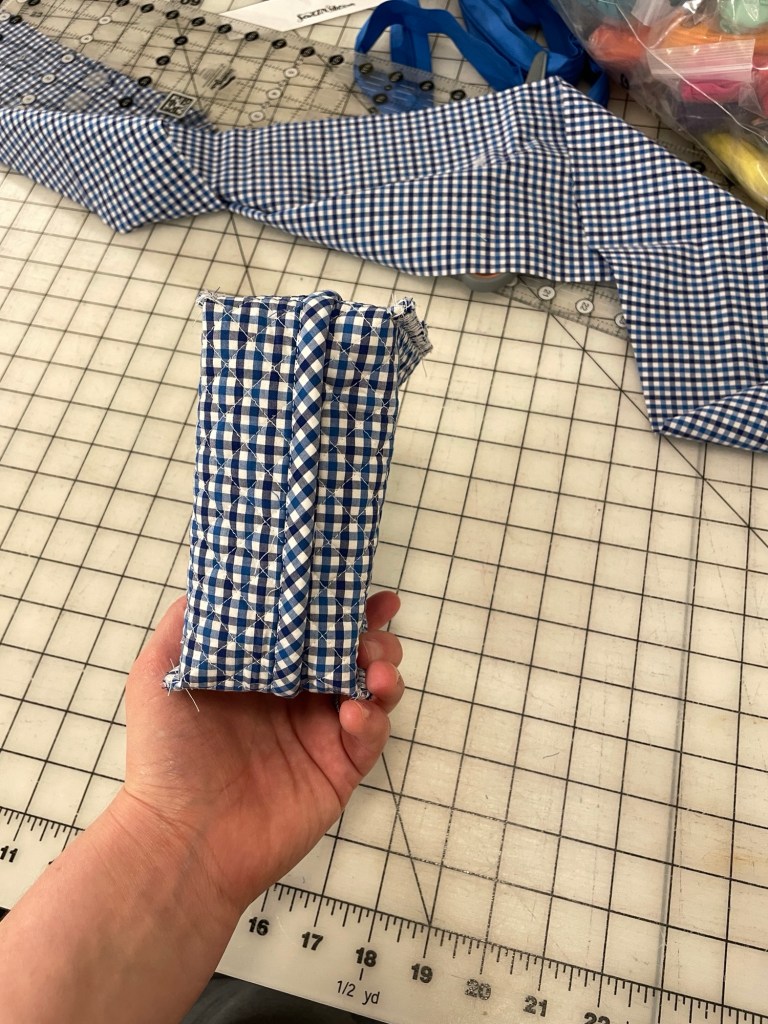
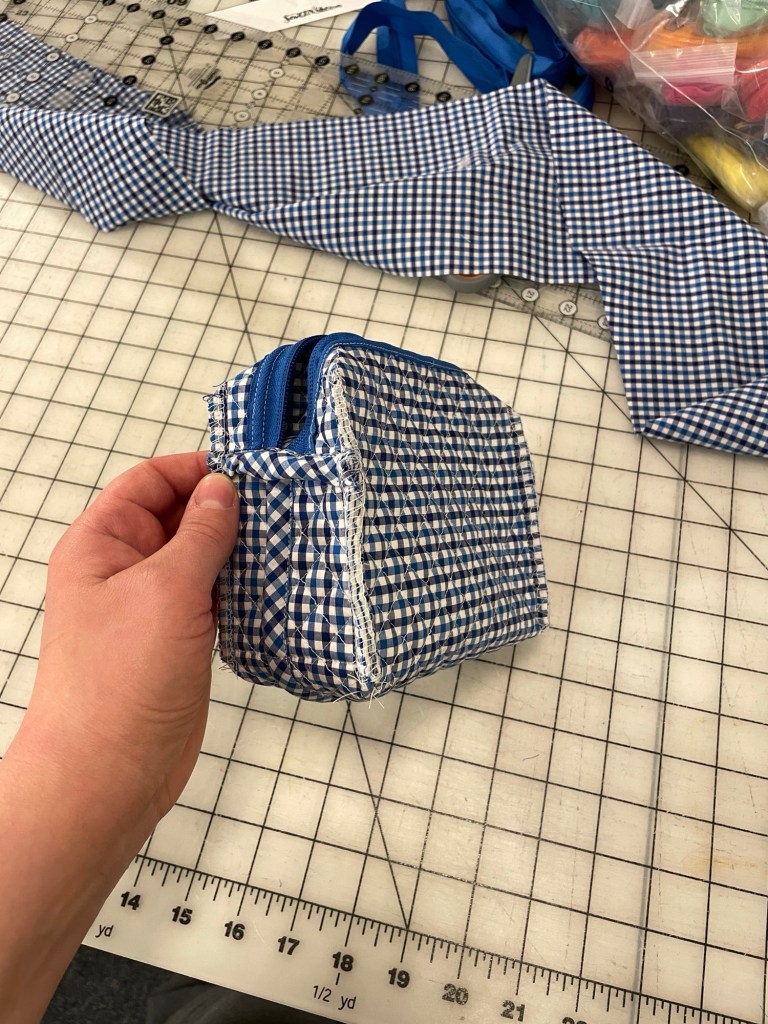
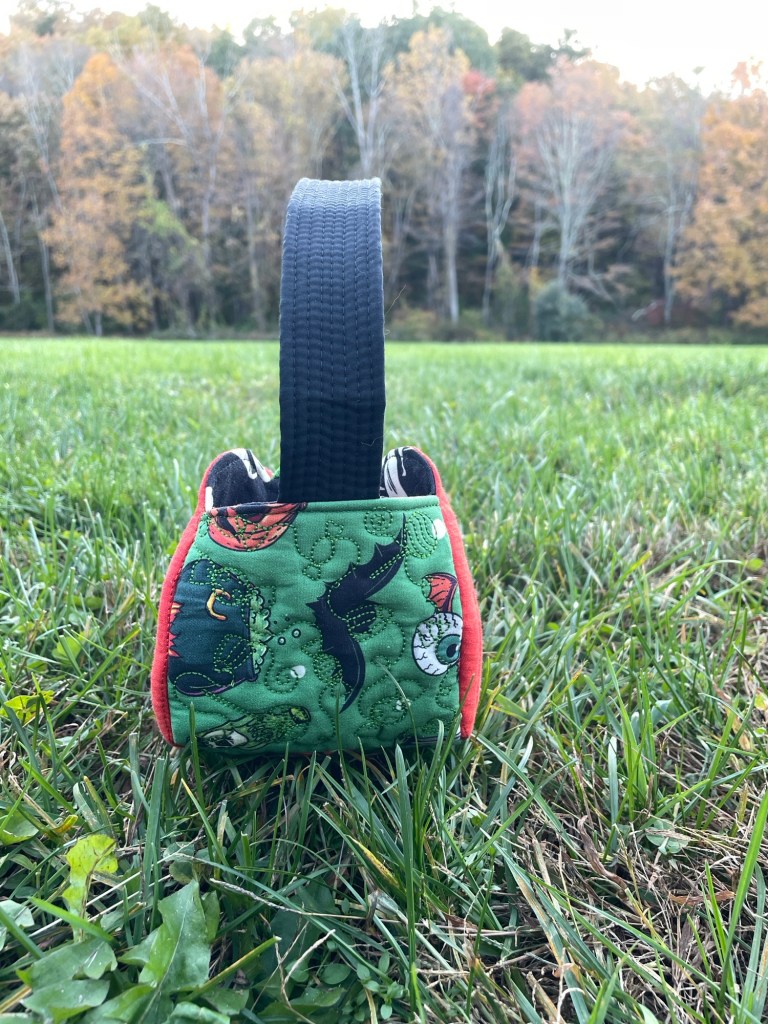
Side tab
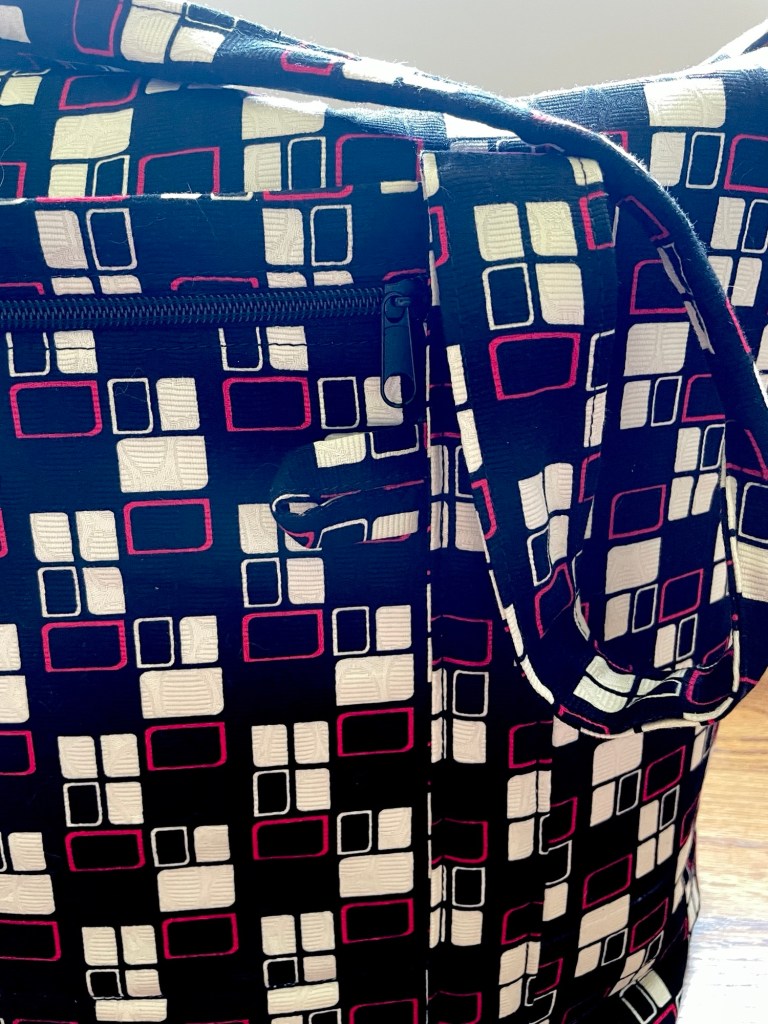
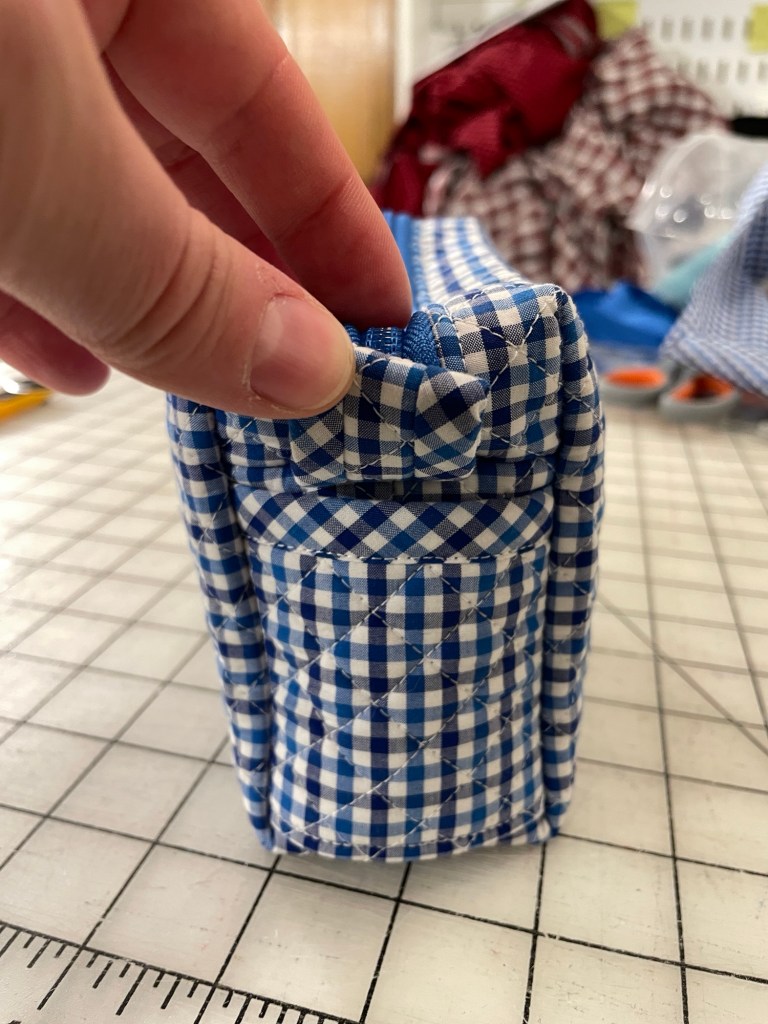
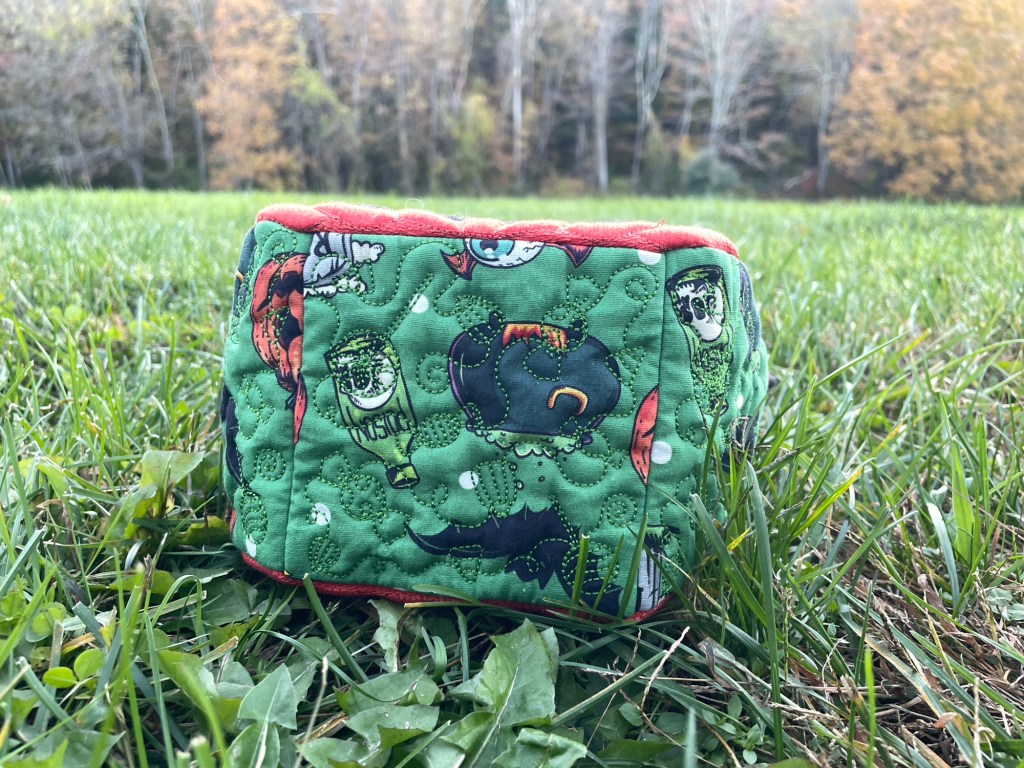
Side pocket
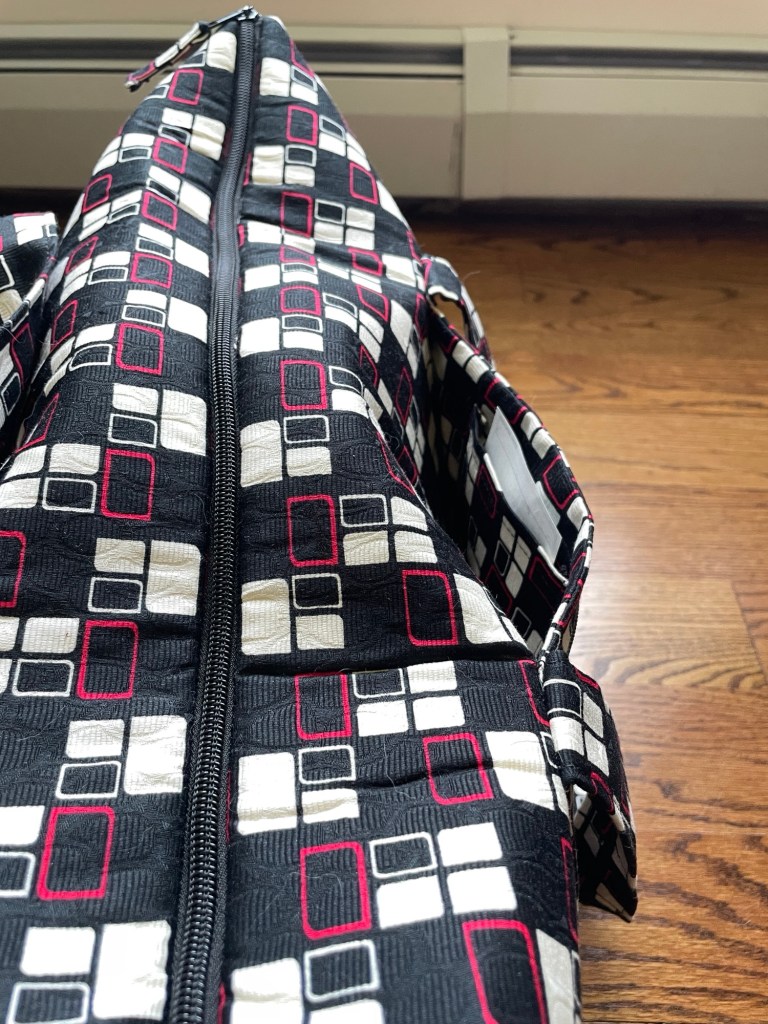
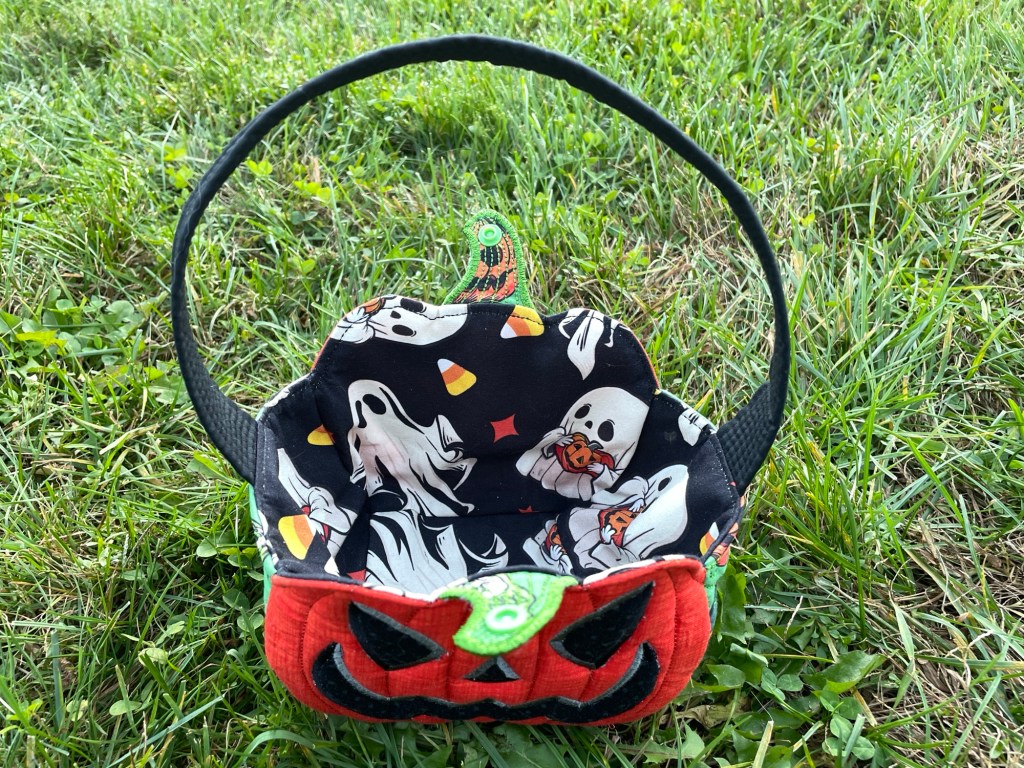
Inside view
Inside bottom of pouch
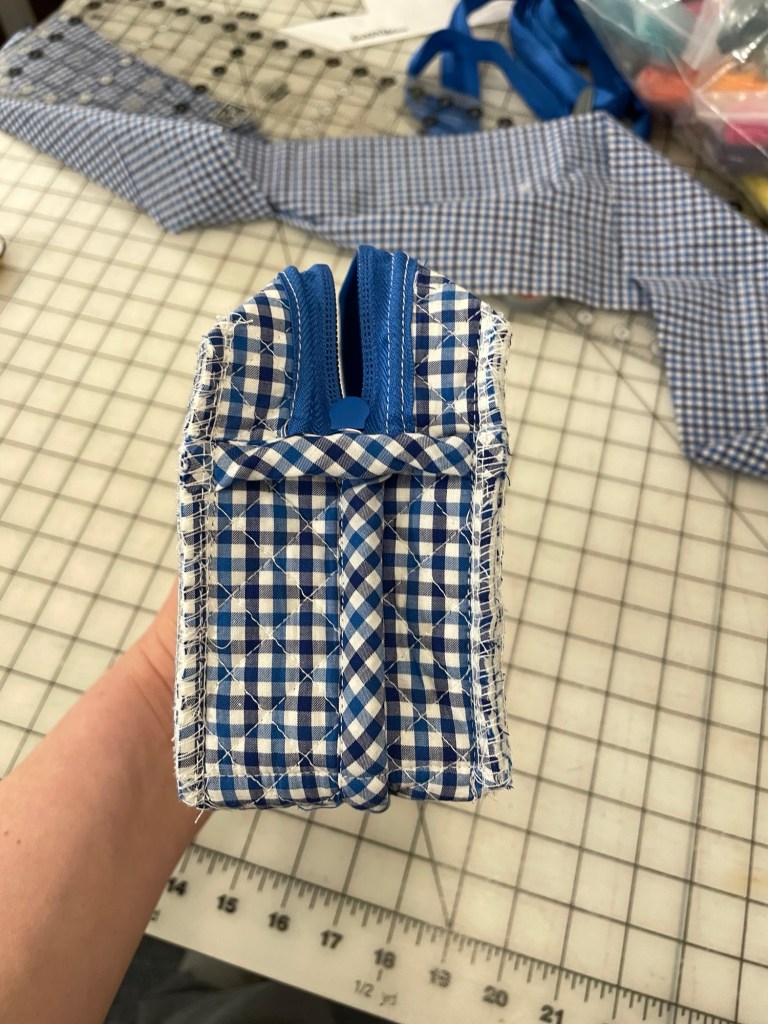
Inside side seams finished on my serger

Pattern Background

The Boxy Zipper Pouch, available for free from Sew Can She, is a small zippered structured pouch with optional side tabs and side pockets. All but the side seams are finished with self fabric binding. Approximate finished dimensions are 6” x 4.5” x 3”.

Materials

Suggested fabric for the exterior and interior is quilting cotton. I used a 100% cotton shirting from Fabric Mart which was left over from making my son a shirt a few weeks ago.

Suggested materials for the interfacing are foam stabilizer, quilt batting, or fusible fleece. I used Bosal In-R-Foam Plus single sided foam stabilizer from WAWAK.

The zipper was part of a #4.5 handbag zipper assortment from Amazon.

Construction

I never quilted anything before and felt like this was a low risk project to start with. I started off by fusing my foam to the lining, and then sprayed the other side of the foam with quilt basting spray and laid the fabric on top of it. Then I quilted it on my Juki TL-2010Q, choosing to do a 1/2″ diamond pattern.

Sew Can She has a pattern piece available for download, but also gives guidance on how to draw the pattern directly onto your fabric using a ruler. I chose to take her advice and drew lines directly onto the fabric after quilting it. I’m not sure if the binding was supposed to be on the bias or not, but I always cut my binding on the bias so that’s what I did here too. Rather than cut to the lengths specified I just cut strips and then trimmed them down to the correct length after stitching.

While you have to scroll through a zillion ads, the pattern is free and there’s plenty of photos showing step by step how to construct this pouch. By the time you’re done you get a nice little bag with a clean finish inside. However when it came to adding the binding by the zipper and tab my Juki started to struggle with all the layers where the zipper tape and teeth were, and I had to slow way, way down and baby it through this part. If your machine isn’t the most powerful I would recommend skipping the side tabs to reduce bulk in this area.

Sew Can She recommends either zigzagging the raw edges after sewing the side seams or binding them. I had just run out of bobbin thread so instead of doing binding I finished them on my serger.

After I was done, I found I had to fold the bag by the corners and give it a little press with my iron to help guide it into a true box shape.

Conclusion

While I find the tabs handy for zipping and unzipping, I don’t find the side pockets terribly useful. However they are cut from the scraps of the main bag, so it is no big deal to cut them out and add them on.

My intention for this bag is to make several of them to contain things like sewing machine needles, clips, etc. As a result, I really like the structure the foam adds to the bag. It gives such a sturdy, solid feel while still staying lightweight. I do think in the future I will stick to sew-in foam though. The fusible is convenient but I find it just doesn’t give as nice of a look as the non-fusible side.

I recommend checking out the Sew She Can website if you have any interest in making bags, quilts, home organization items, crafts, etc. There’s a ton of free patterns with good tutorials there for all sorts of stuff.

Jalie 2019 Supernova Tote

I made the small version.

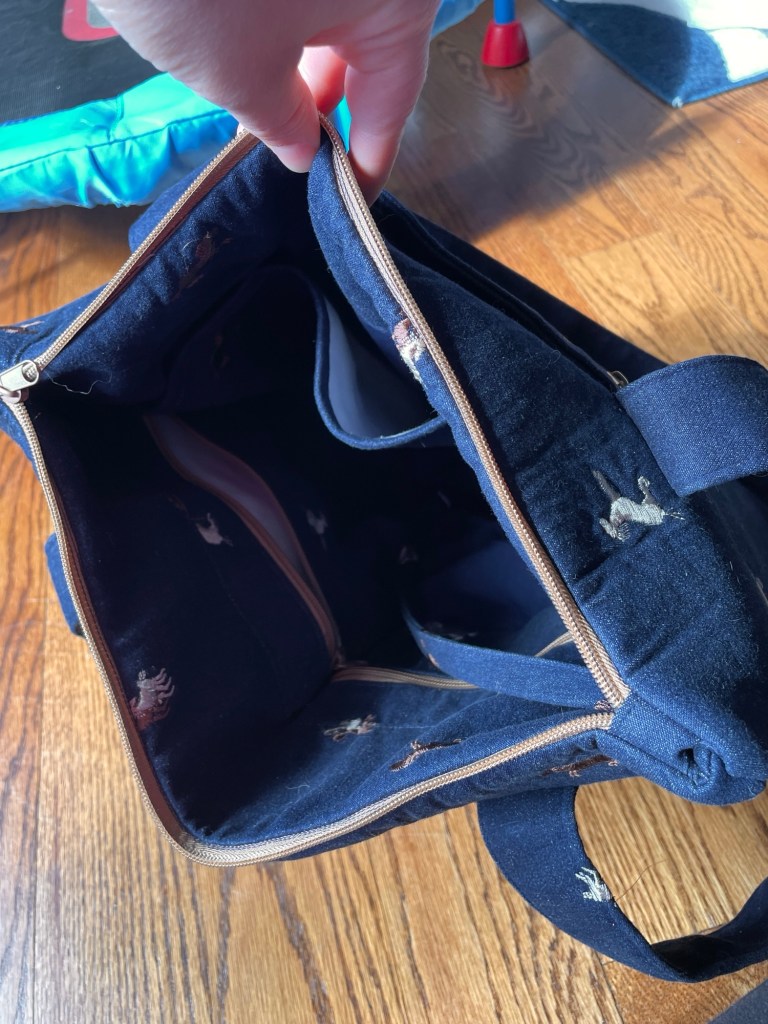
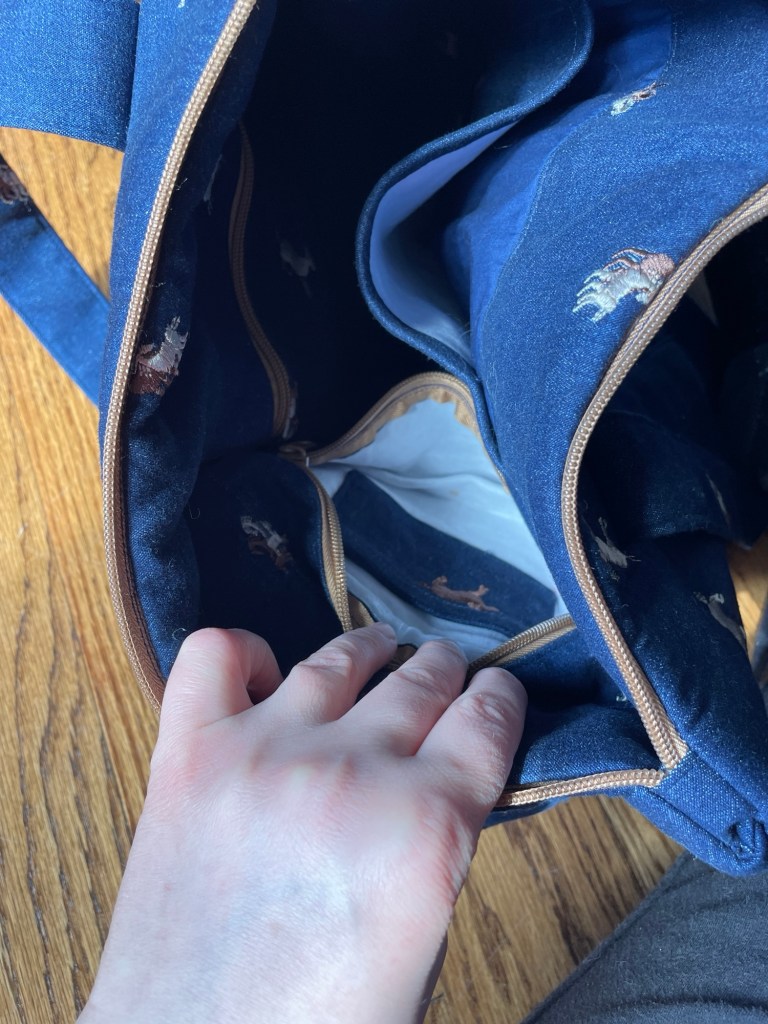
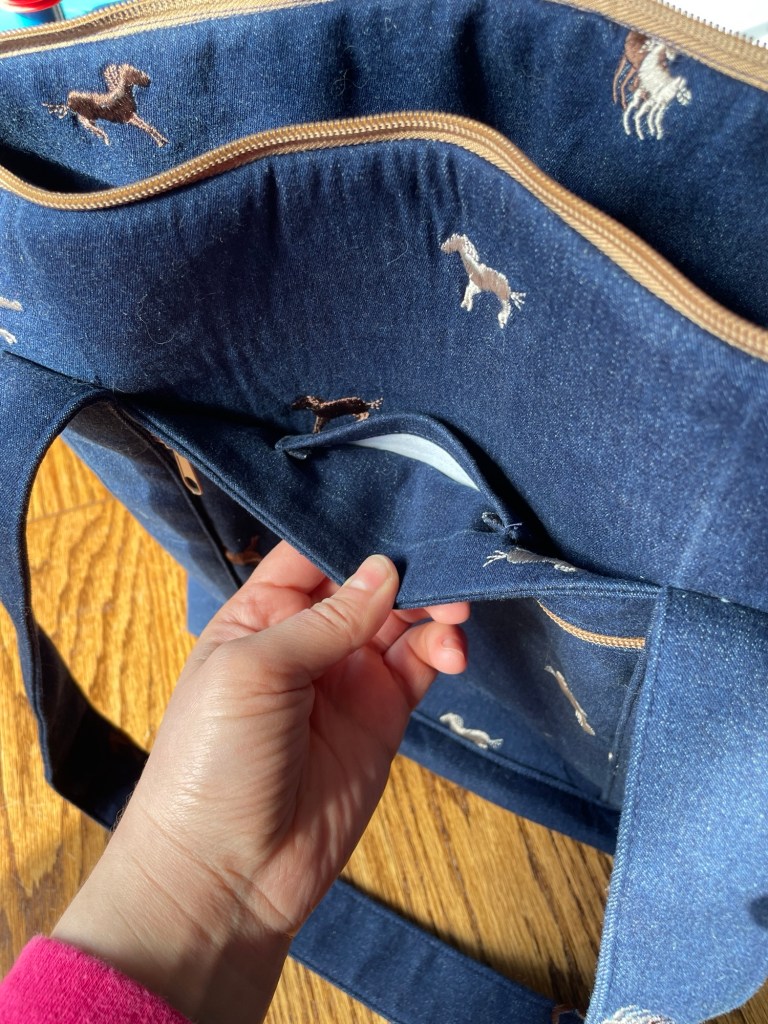
Plenty of inside pockets
Hidden card pocket inside one of the interior zippered pouches
Two zippered interior pouches
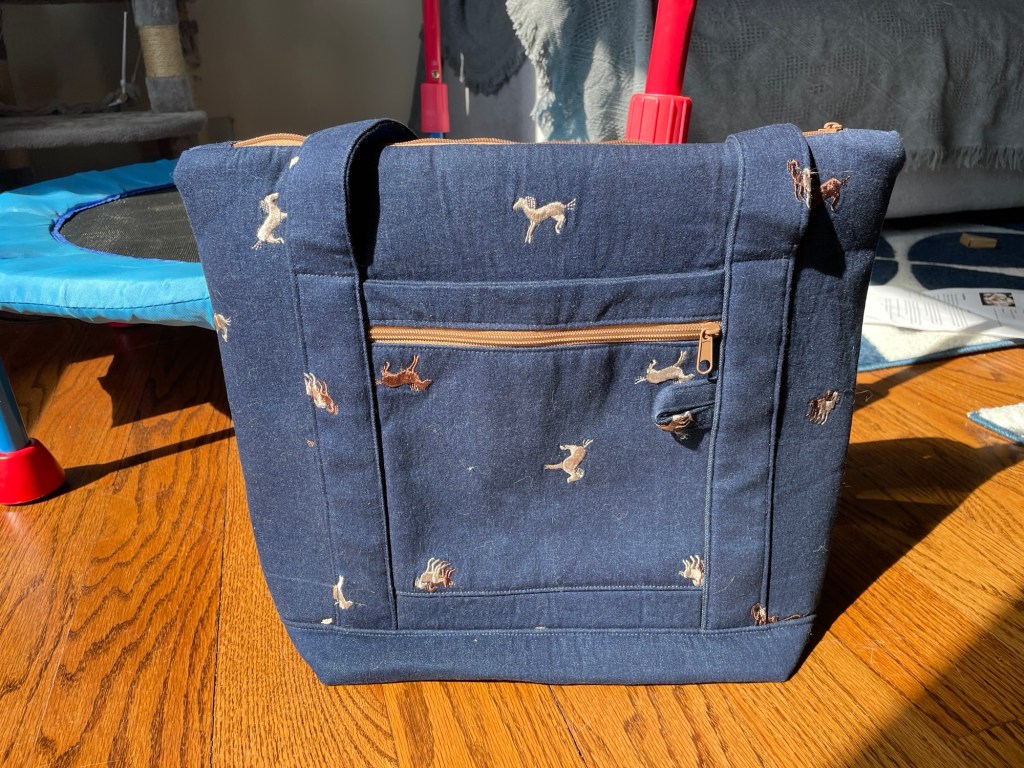
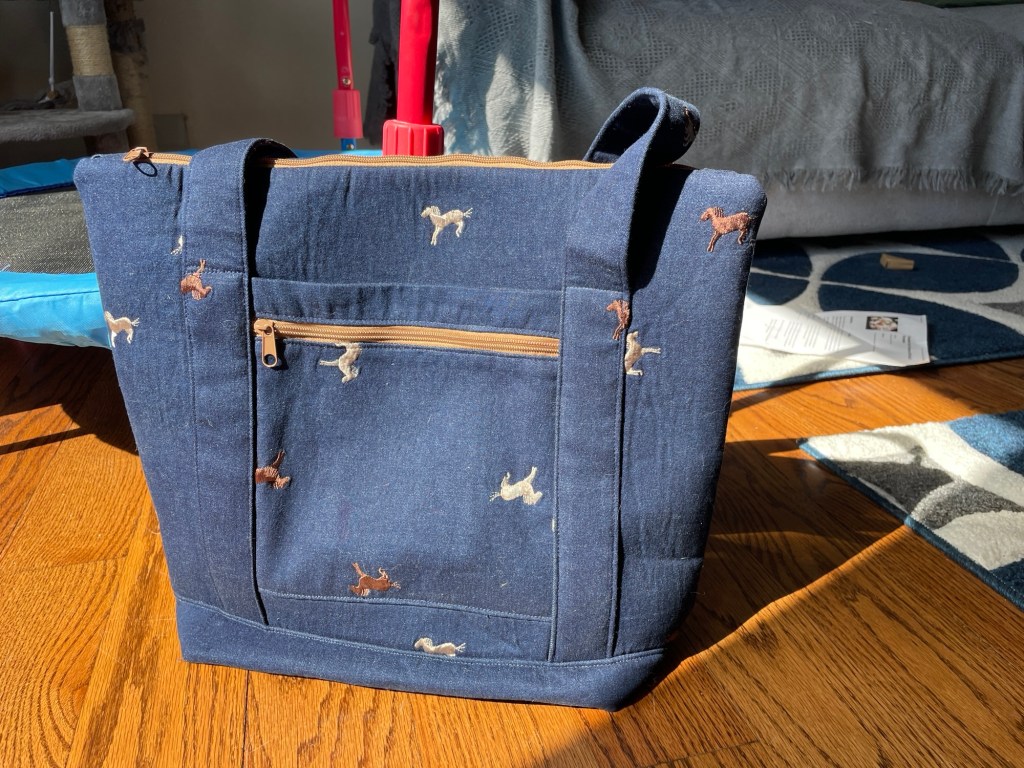
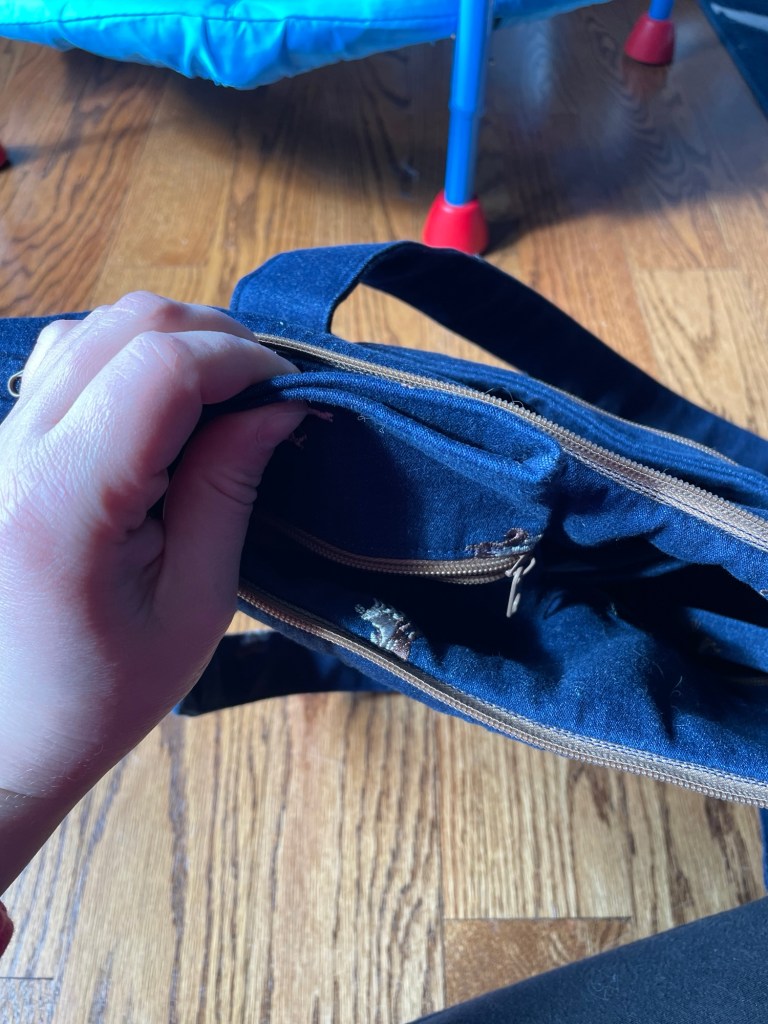
Hidden pocket inside one of the exterior zippered pockets

Pattern Background

Jalie 2919 is a travel collection pattern. There’s two sizes of totes, bag organizers, and a passport/travel pouch. This is part of Jalie’s Galaxie collection, which are PDF only patterns for bags, kitchen accessories, etc. The fully lined totes have a zippered top and are well designed with lots of zippered pouches/pockets, some hidden pockets, a small outside loop, and a keychain leash.

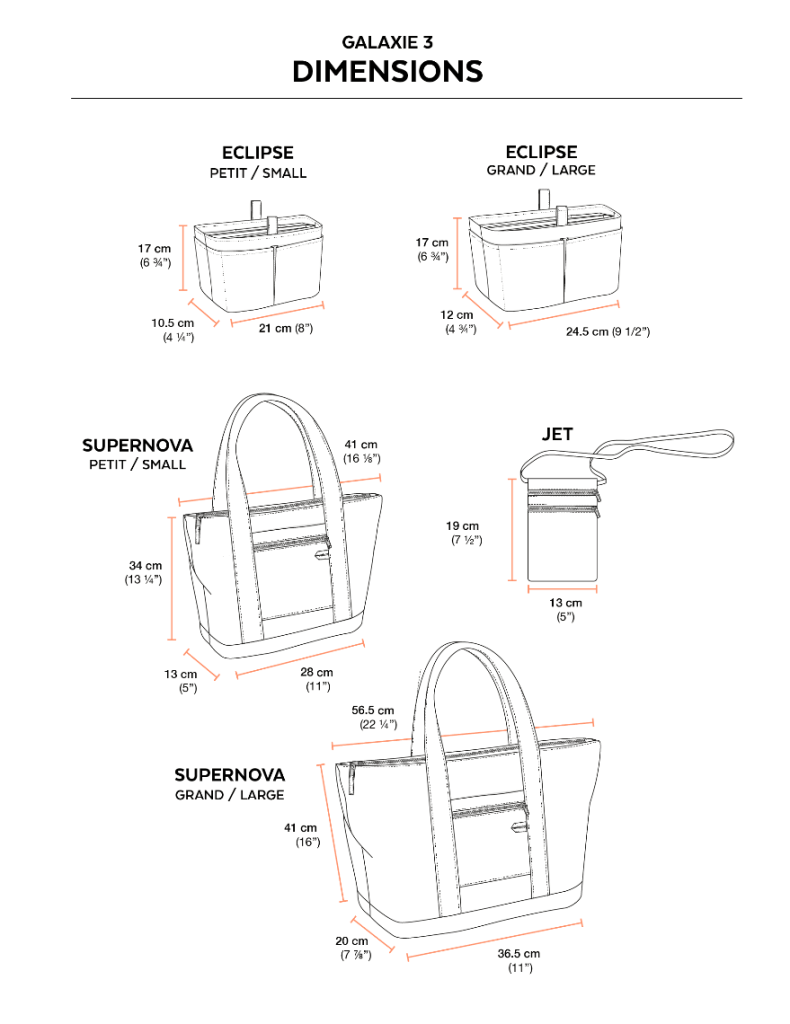
I didn’t see the dimensions listed on the Jalie website so I sent them an email and they replied back with this handy graphic. (Note that there’s an error for the large tote and the length should be 14.25”, not 11”.)

Materials

I wanted a bag with structure so I went way heavier on the interfacing than what is recommended by the pattern.

I used a midweight embroidered stretch denim I purchased almost 20 years ago from Joann’s. It was less than two yards and only 50” wide so I had barely enough fabric to cut out the small size tote. The fabric selvedge for the straps is hidden within the fold.

Since this fabric stretches and I wanted a lot of structure I interfaced everything but the bag sides and bottom with a lighter weight woven interfacing from WAWAK. For the sides and bottom I used single sided fusible Bosal In-R-Foam from WAWAK. This is my first time ever using a foam like this for bagmaking. If I could do it all over again I would have used a sew in and not fusible because it caused some puckering on this fabric.

I used a #5 nylon coil zipper from Amazon. This was my first time using one of those zipper by the roll kits. I struggled to get the zipper pull on the tape, but this video helped a lot. The keychain clip is also from Amazon.

The lining is a lightweight Pima Tex cotton shirting from Fabric Mart.

The bag was mostly sewn with Gutermann Mara 70 thread, with Gutermann Mara 100 used for finishing the lining.

Construction

I found the instructions pretty closely. I’m not experienced with bags and need the extra hand holding. I found them adequate. Better than earlier versions of Jalie patterns but not quite as good as recent releases. Jalie has made great improvements with their instructions in recent years!

I constructed everything but the seams of the lining on my compound walking foot industrial machine. It handled the heavily interfaced denim and foam with complete ease. I don’t use this machine a lot and haven’t swapped out the original clutch motor for the Kinedyne HM 750SL servo motor yet so I didn’t always have the best control. (Clutch motors are notoriously difficult to control, especially at lower speeds, and generally suck so much that I don’t think they even sell machines with them anymore.) I also keep this machine in my basement right now so my work lighting sucks. As a result some of my stitching isn’t as accurate as it would have been on the Juki TL-2010Q. But this machine is built like a tank and had zero hesitation sewing over tough areas, like where the strap is sewn over the zippered outside pocket with the loop (which works out to 10 layers of interfaced embroidered denim plus one layer of denim fused with foam). With my Juki TL-2010Q it might go, but you would notice some complaining from the motor. (This is why I don’t agree that the Juki TL series “sews through anything” because IMO they don’t, at least not in a way that doesn’t make me slightly concerned when listening to the strain on the motor.) I will say that while my Seiko STH8-BLD-3 had no problem, it was getting fatiguing on my arms and hands at the very end when I was trying to manage all the fabric while sewing the lining to the bag and doing the seaming at the bottom of the bag.

I did the lining seams on my Janome 6500 simply because I had a few leftover bobbins in thread that matched closely enough. (Something light and thin like this will pucker if sewn on my industrial.)

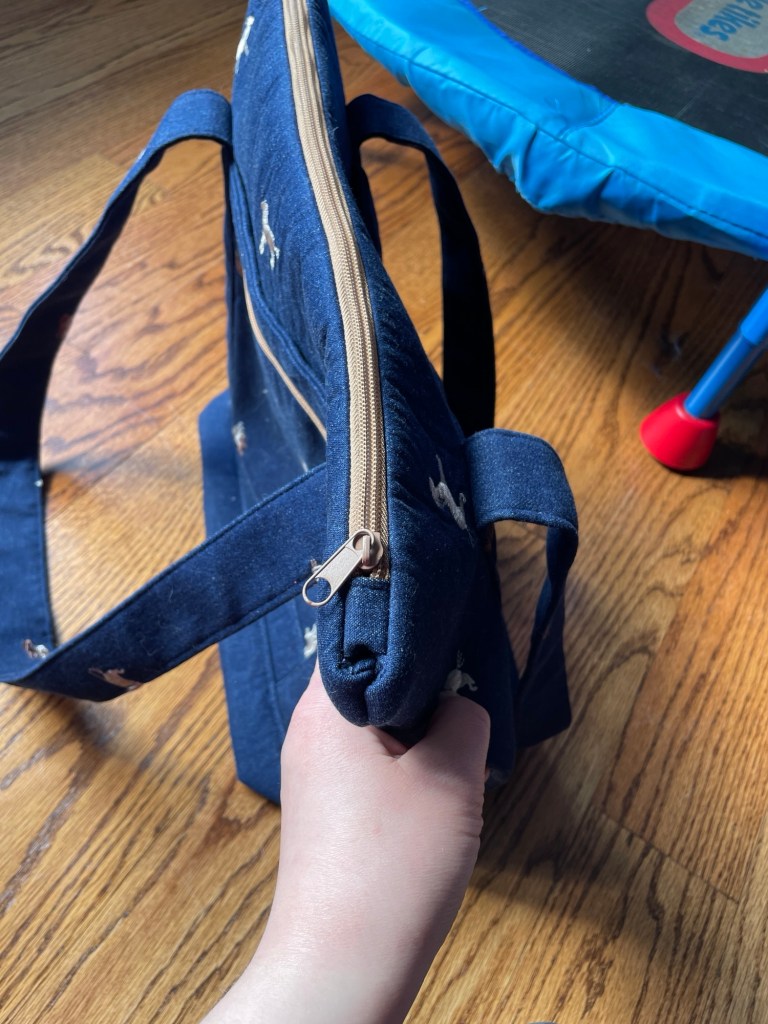
After turning out the bag (which resulted in having to do a repair to the lining because the hole to turn it out wasn’t large enough for the foam interfaced pieces) I noticed the upper corners by the zipper looked rather bulky and “homemade.” I’m sure this is entirely my fault for having such a thick layer of foam there but I’d like to figure out how to do a better job in the future with this section.

I sewed the bottom of both exterior pockets down rather than leaving one open because I wasn’t interested in having a luggage sleeve. I don’t really travel at this point in my life and knew there was a high likelihood I would forgot it was a sleeve and not a pocket and accidentally put something into it.

Conclusion

This is a fantastic bag pattern, and I ended up liking it more than I anticipated. You can get so many different looks depending on fabric choice and what sort of structure you choose. I didn’t realize how well designed the storage was until I was actually sewing it. I was surprised at how much room was in the smaller version. I think either version would make a great diaper bag for a baby shower gift (especially if you made a separate insulated baby bottle holder). As designed the smaller bag will easily hold three 1/2 liter water bottle in the organizer pockets. The only downside is that this takes a decent amount of fabric but you can economize by using a contrast fabric for the straps, bag bottom, and hidden/interior pockets, or by using webbing for the straps.

My version is not perfect but it was good practice and a nice way to expand my sewing skillset. My son loves putting matchbox cars, stuffed animals, etc into it and then carrying it around the house.

The Green Pepper 533: Rugged Tote and Portfolio

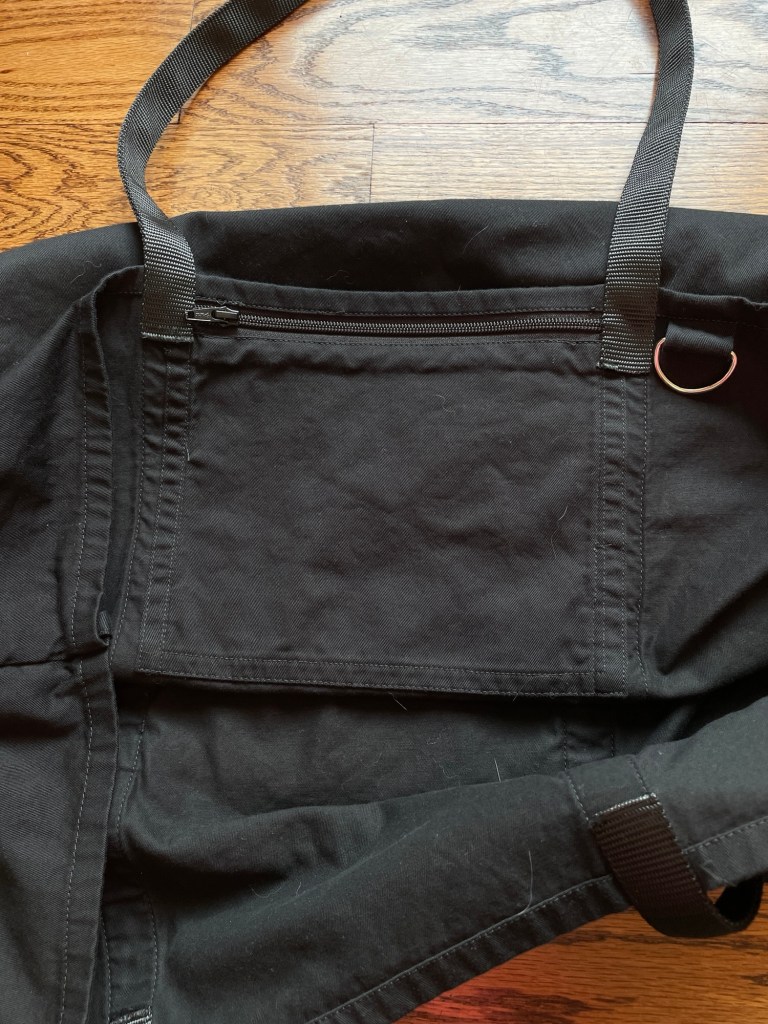
Inside pocket with D-ring
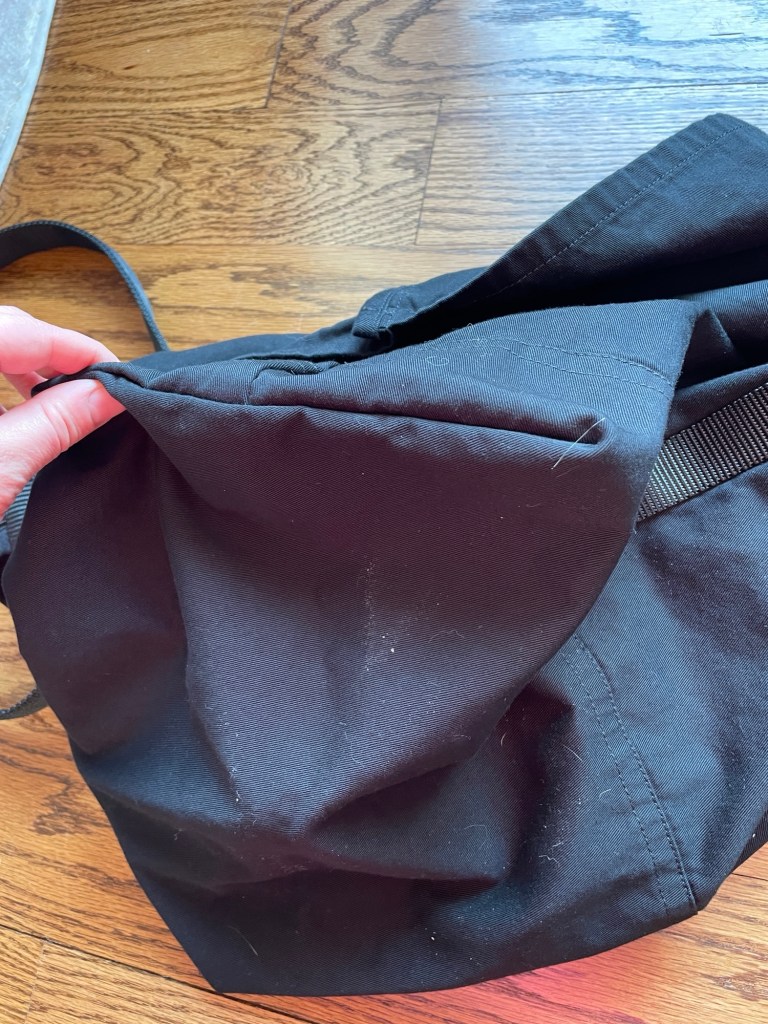
Outside constructed corner of tote
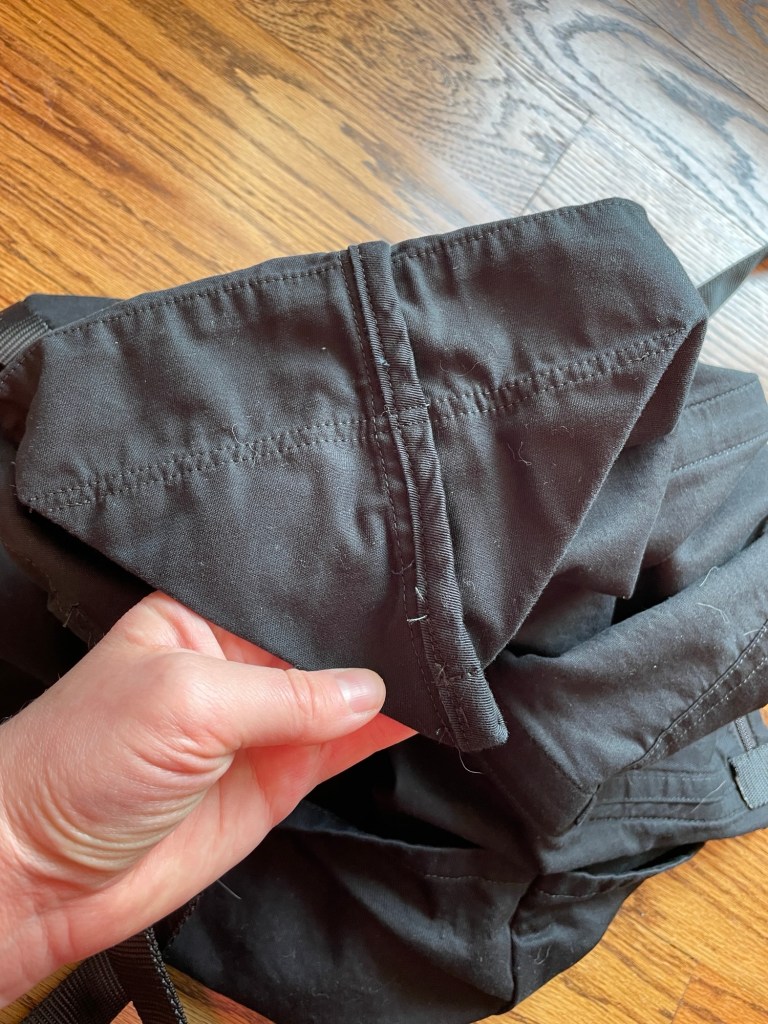
Inside constructed corner of tote
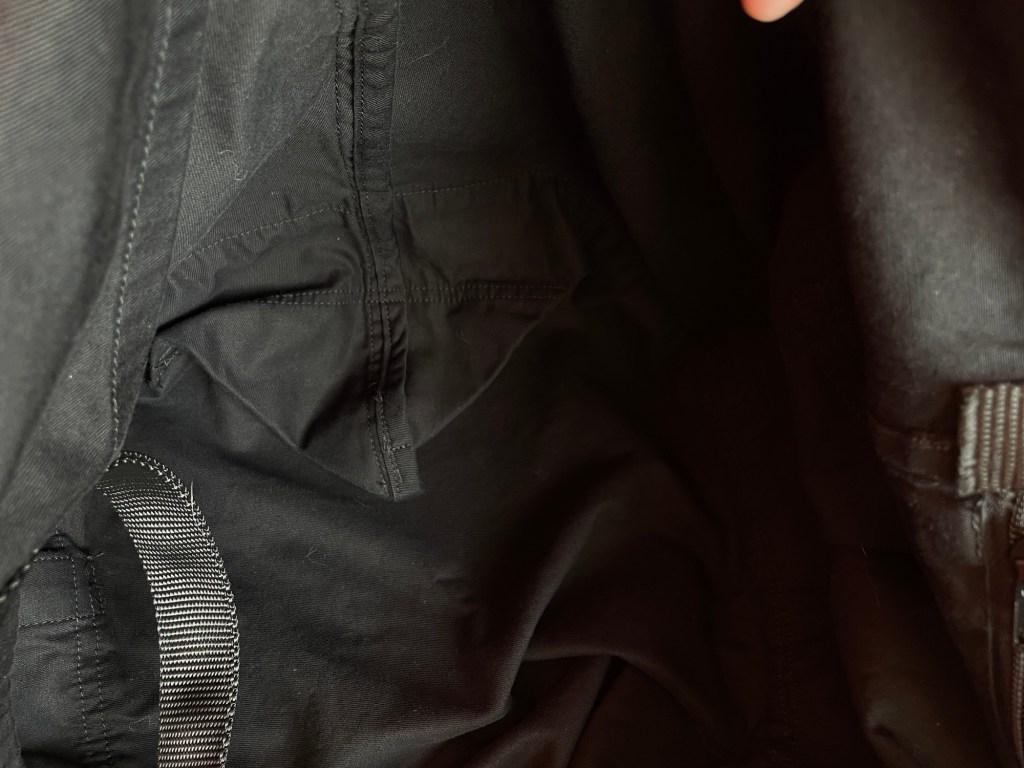
Tote corner tucked inside

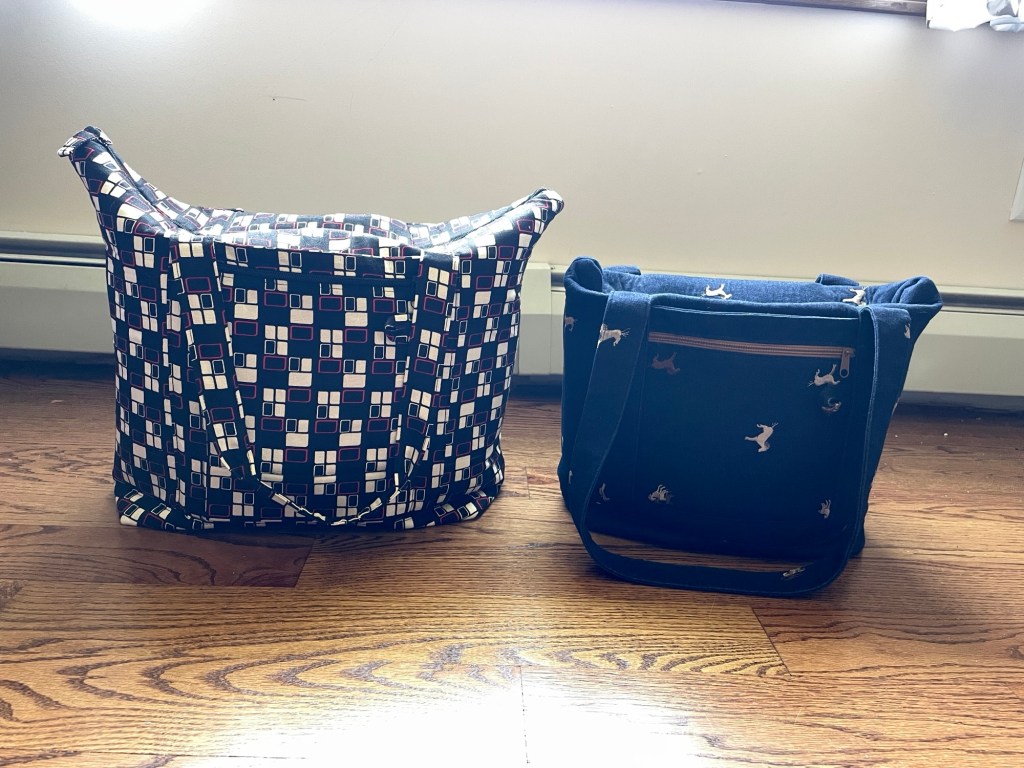
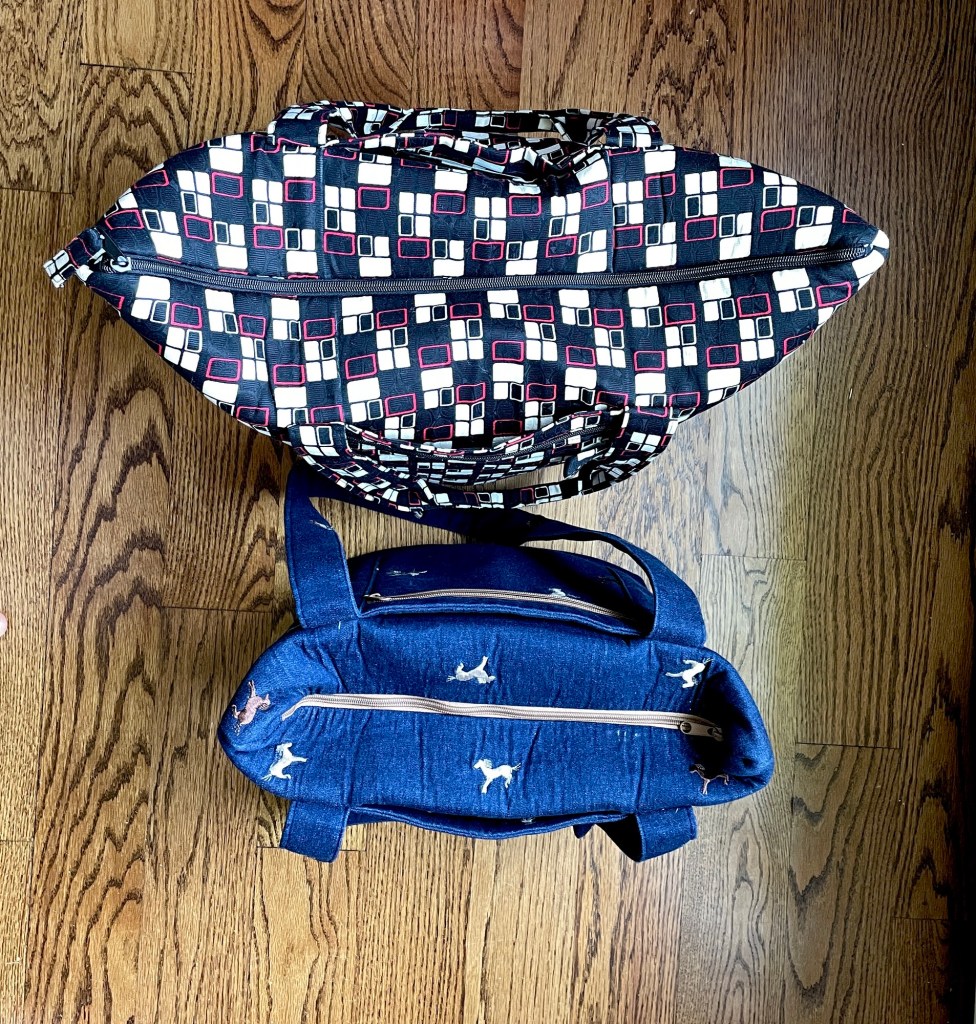
This was kind of a spur of the moment project for me. I wanted to do something a little different from garment sewing and decided to venture into bagmaking. My toddler has been maxing out his diaper bag lately between potty training but still using diapers, bigger clothes, snacks, etc. I’ve been keeping a backpack in the car with the lesser used stuff and a medium size LL Bean tote for his more frequently used stuff and have been wanting to consolidate into one bag because I also tend to keep some of my own stuff in his diaper bag. This pattern was attractive to me because it is simple and uses minimal speciality materials.

Background

The Rugged Tote and Portfolio from The Green Pepper is an unlined tote bag with optional exterior pockets, a zipped interior pocket, and D-ring for keys. You can use either webbing or self fabric for the straps, which come in regular and long lengths. The bottom of the bag is actually a double layer of fabric, as a separate bag bottom is sewn onto the main body of the tote. If you made it out of 25 oz canvas it would be very similar to the LL Bean Boat and Tote.

The tote and portfolio styles use the same pattern pieces. The only difference is that you sew the corners of the bag into a triangle at the end to make the tote version.

There are four tote sizes, listed below as height x width x depth:

  • Small: 11.75” x 9.5” x 5”
  • Medium: 13.25” x 13” x 6”
  • Large: 15” x 16.5” x 7.5”
  • Extra-large: 16” x 19” x 8.5”

These roughly correspond to the size of the LL Bean Boat and Tote bags.

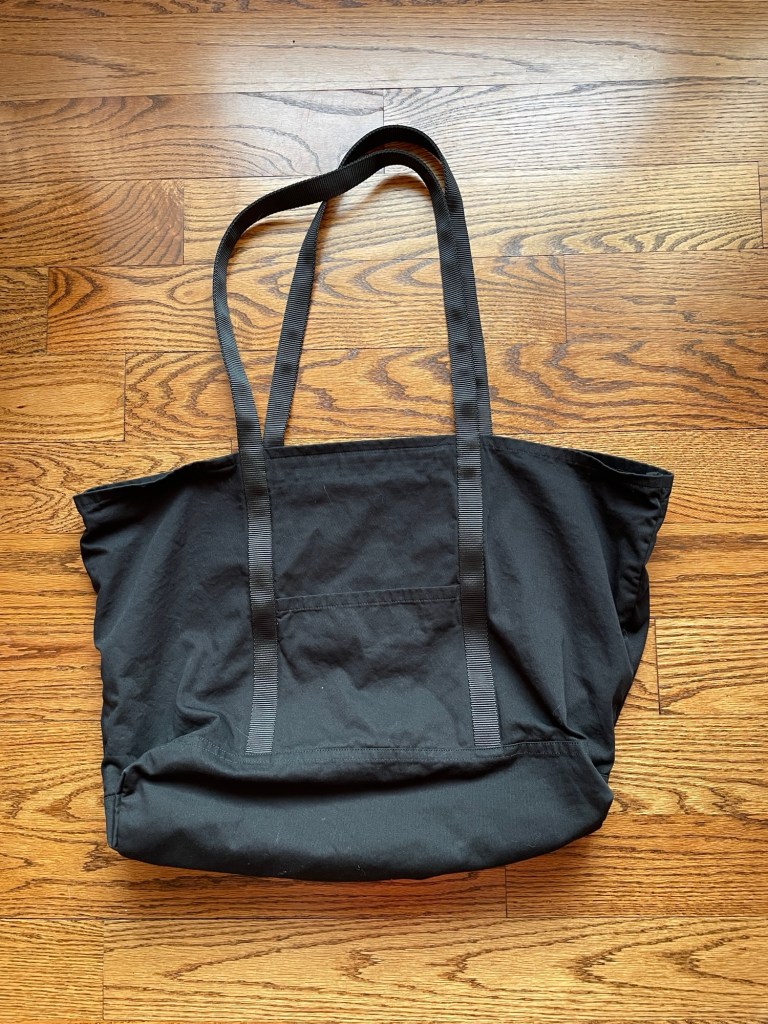
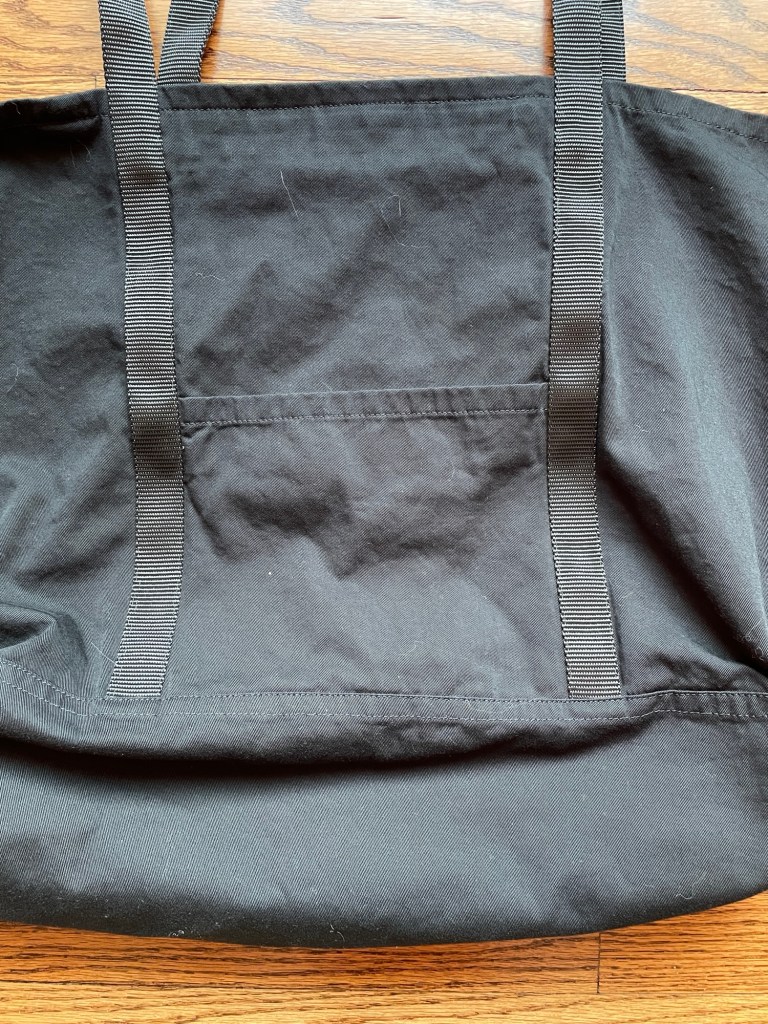
I made the extra large tote with the long straps and all of the optional pockets and D-ring.

Materials

Recommended fabrics are sturdy midweight to heavyweight fabrics like denim, canvas, and Cordura.

I used a midweight black 100% cotton twill I had in my stash for over ten years. For the straps I used nylon webbing. The zipper is a #5 nylon coil zipper from Wawak that was also in my stash. I used Gutermann Mara 70 thread for all construction.

The keyring was a 1.25” D-ring I’ve had in my stash forever from Bagmakers Supply.

Construction

I thought the included instructions were pretty good. I just was working very late at night and got confused about the zipper and how the ends of it were secured close until I went further along and realized that the inside strap actually covers it.