Pattern Background
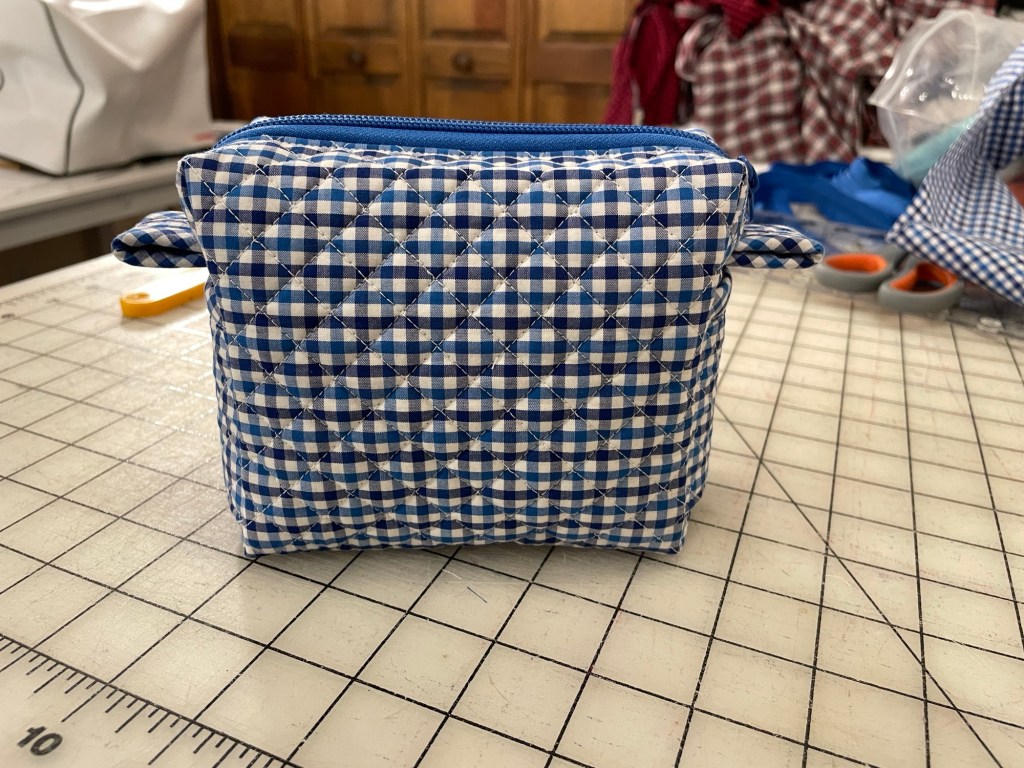
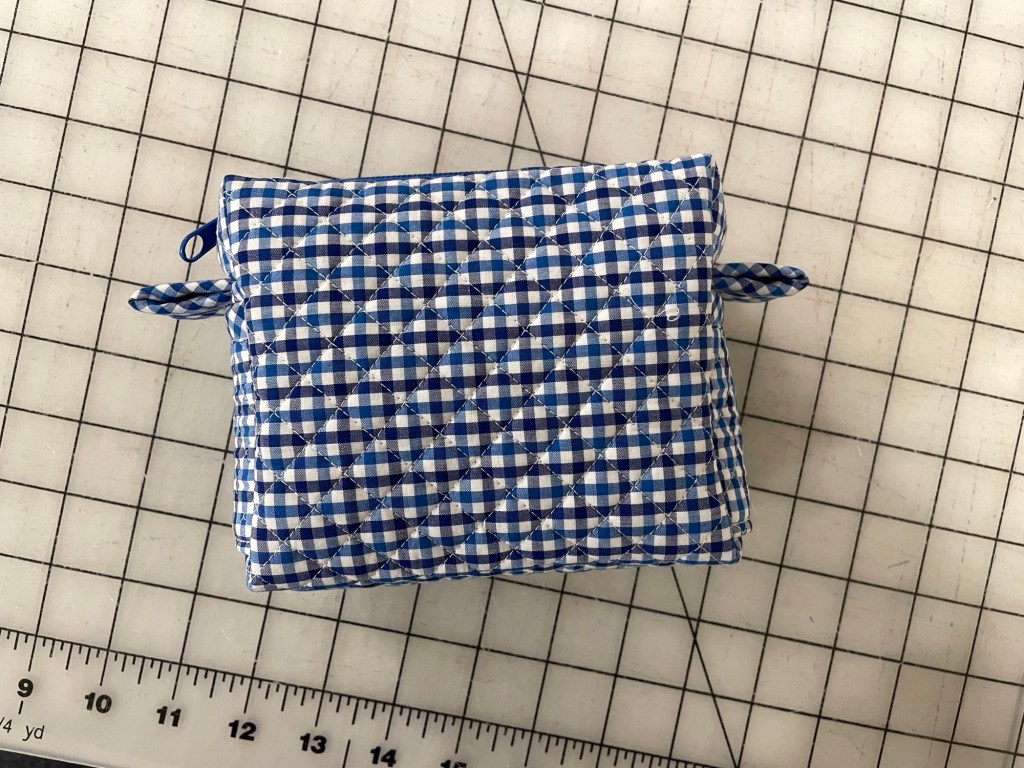
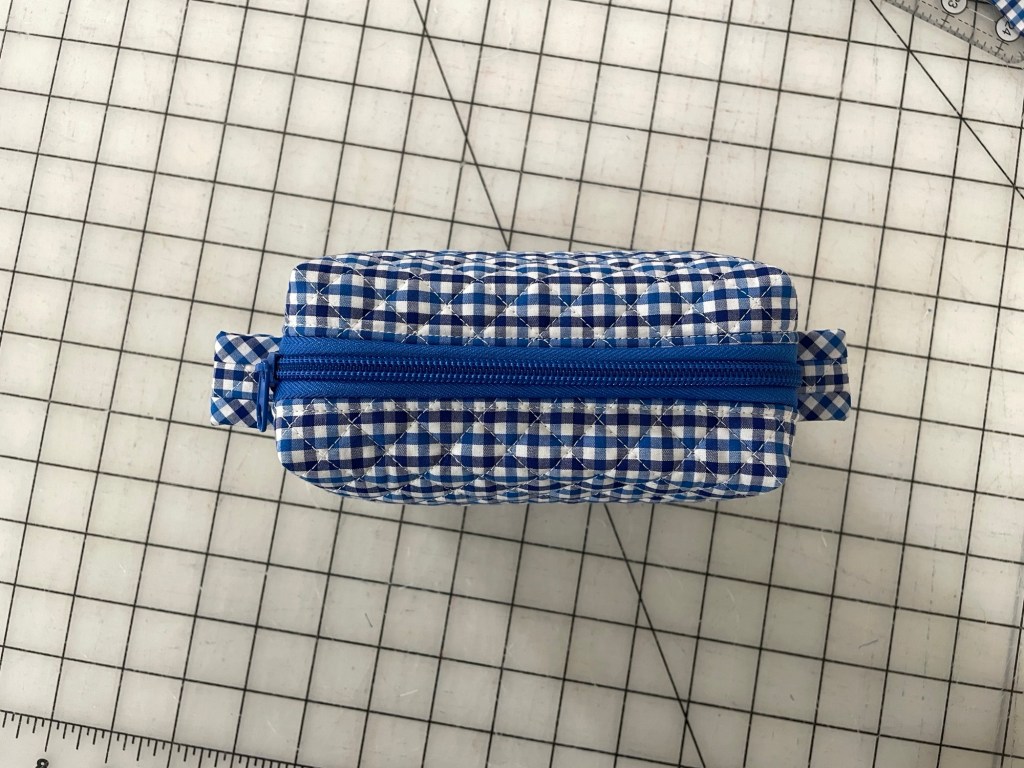
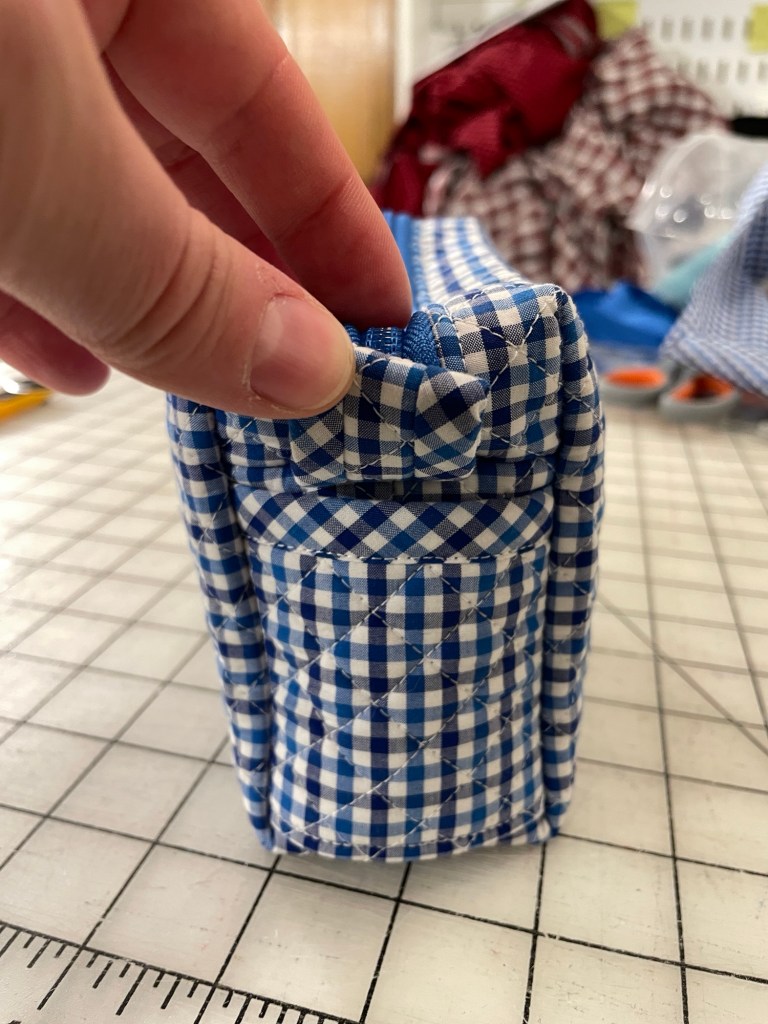
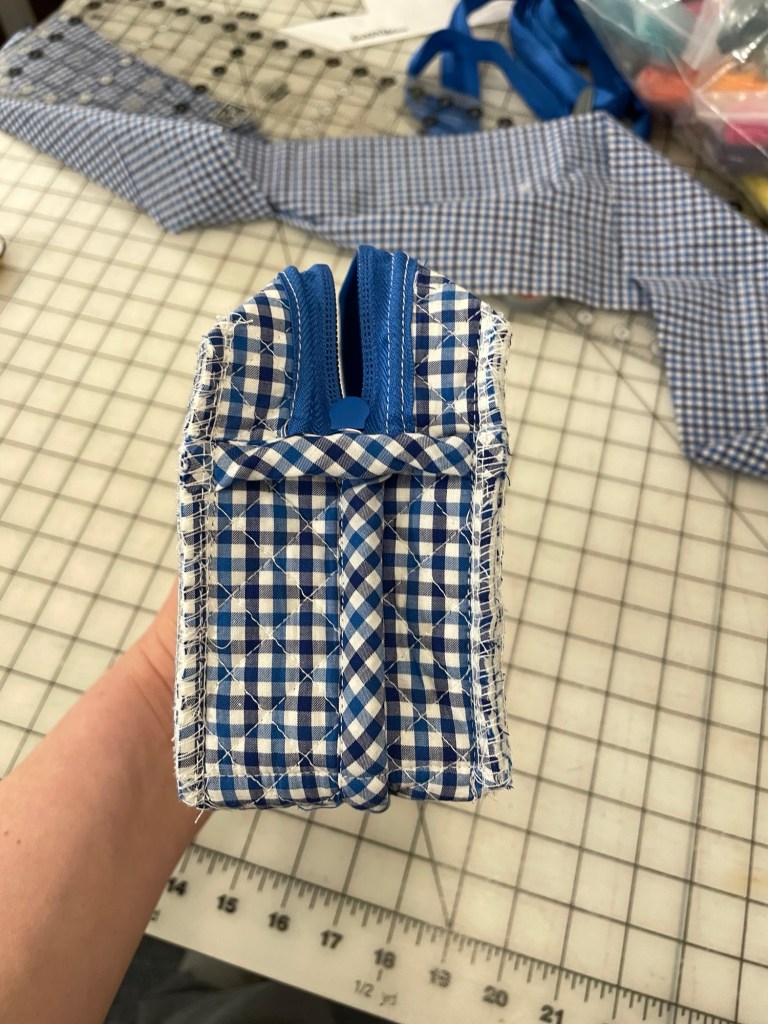
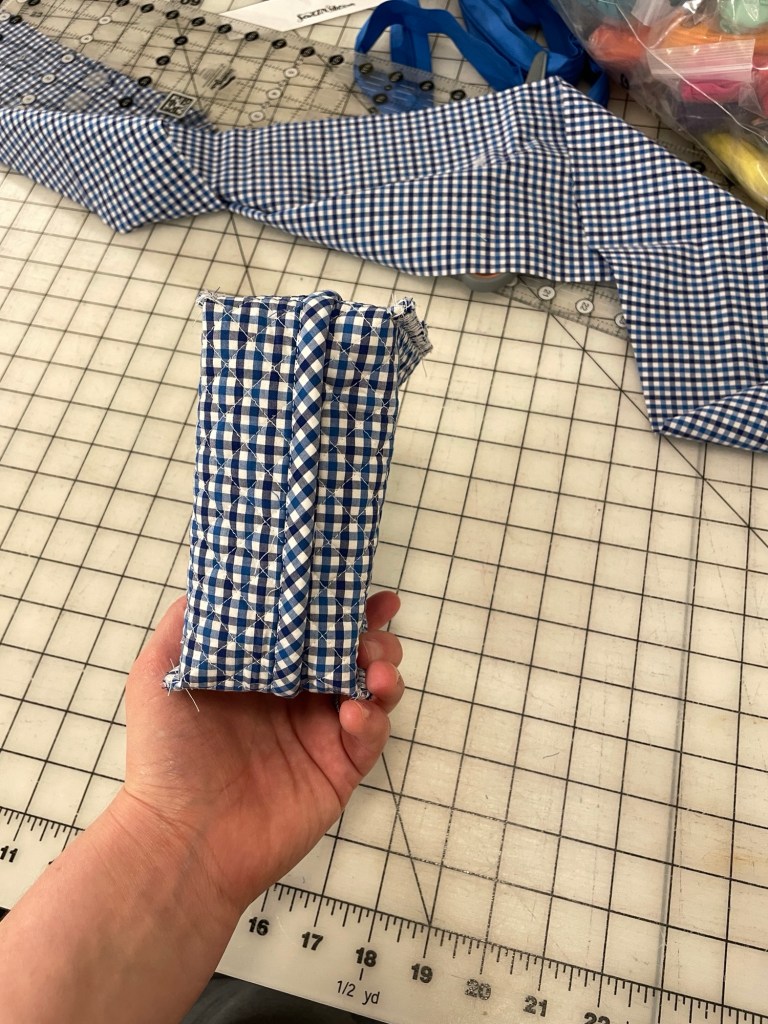
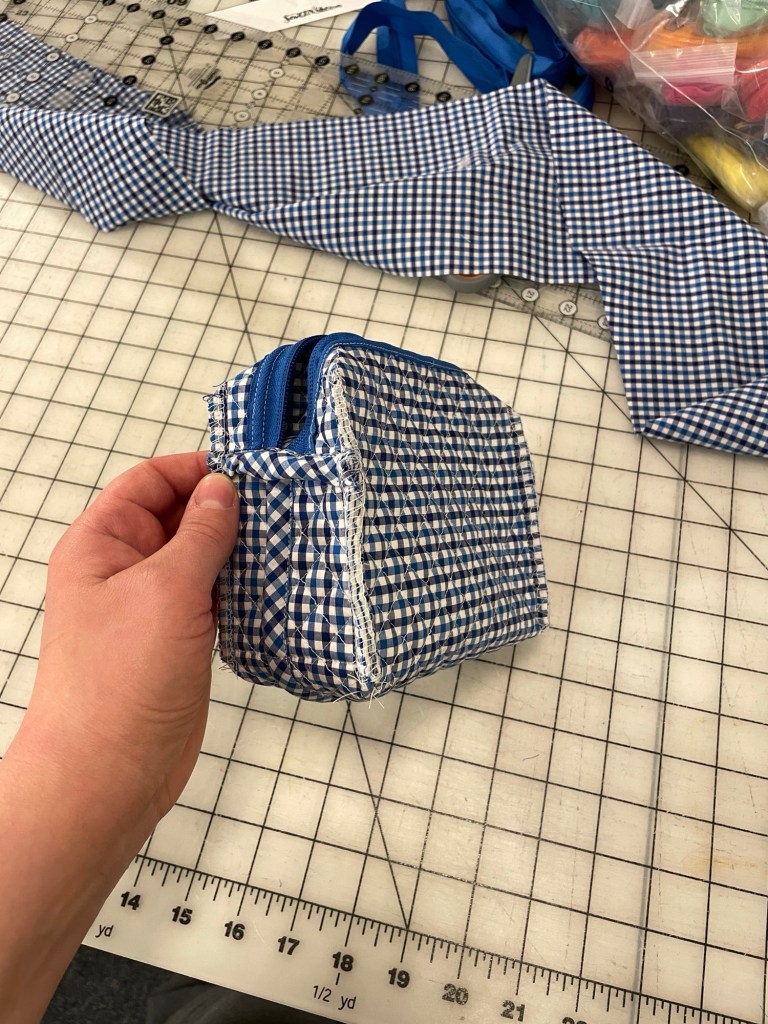
The Boxy Zipper Pouch, available for free from Sew Can She, is a small zippered structured pouch with optional side tabs and side pockets. All but the side seams are finished with self fabric binding. Approximate finished dimensions are 6” x 4.5” x 3”.
Materials
Suggested fabric for the exterior and interior is quilting cotton. I used a 100% cotton shirting from Fabric Mart which was left over from making my son a shirt a few weeks ago.
Suggested materials for the interfacing are foam stabilizer, quilt batting, or fusible fleece. I used Bosal In-R-Foam Plus single sided foam stabilizer from WAWAK.
The zipper was part of a #4.5 handbag zipper assortment from Amazon.
Construction
I never quilted anything before and felt like this was a low risk project to start with. I started off by fusing my foam to the lining, and then sprayed the other side of the foam with quilt basting spray and laid the fabric on top of it. Then I quilted it on my Juki TL-2010Q, choosing to do a 1/2″ diamond pattern.
Sew Can She has a pattern piece available for download, but also gives guidance on how to draw the pattern directly onto your fabric using a ruler. I chose to take her advice and drew lines directly onto the fabric after quilting it. I’m not sure if the binding was supposed to be on the bias or not, but I always cut my binding on the bias so that’s what I did here too. Rather than cut to the lengths specified I just cut strips and then trimmed them down to the correct length after stitching.
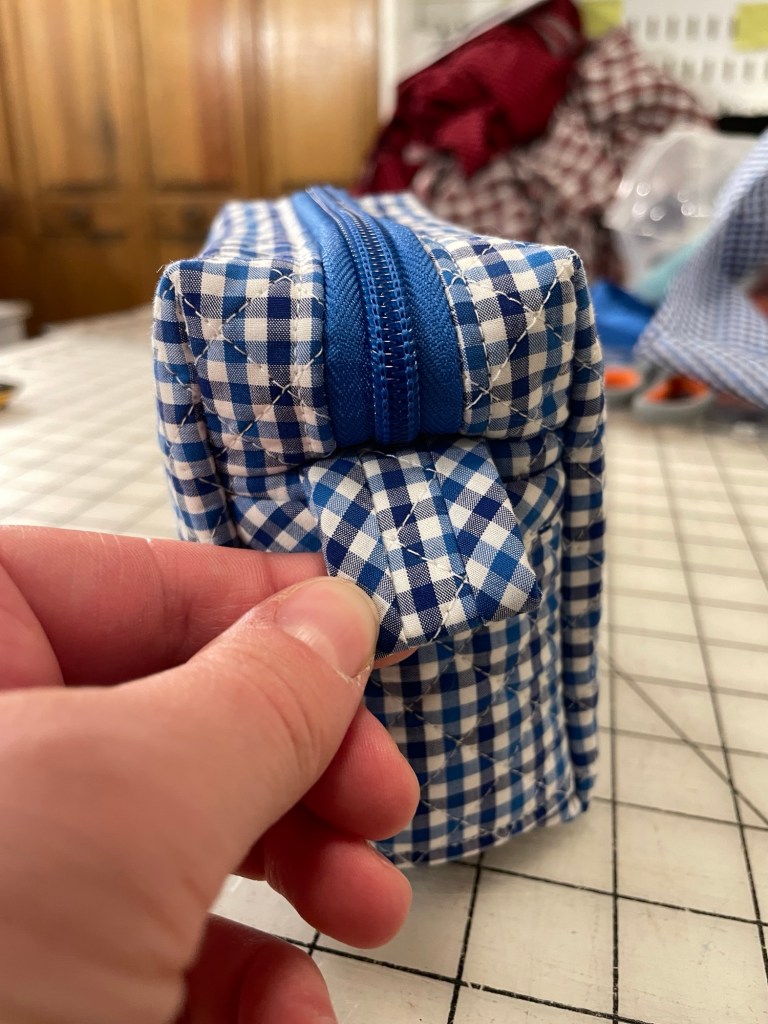
While you have to scroll through a zillion ads, the pattern is free and there’s plenty of photos showing step by step how to construct this pouch. By the time you’re done you get a nice little bag with a clean finish inside. However when it came to adding the binding by the zipper and tab my Juki started to struggle with all the layers where the zipper tape and teeth were, and I had to slow way, way down and baby it through this part. If your machine isn’t the most powerful I would recommend skipping the side tabs to reduce bulk in this area.
Sew Can She recommends either zigzagging the raw edges after sewing the side seams or binding them. I had just run out of bobbin thread so instead of doing binding I finished them on my serger.
After I was done, I found I had to fold the bag by the corners and give it a little press with my iron to help guide it into a true box shape.
Conclusion
While I find the tabs handy for zipping and unzipping, I don’t find the side pockets terribly useful. However they are cut from the scraps of the main bag, so it is no big deal to cut them out and add them on.
My intention for this bag is to make several of them to contain things like sewing machine needles, clips, etc. As a result, I really like the structure the foam adds to the bag. It gives such a sturdy, solid feel while still staying lightweight. I do think in the future I will stick to sew-in foam though. The fusible is convenient but I find it just doesn’t give as nice of a look as the non-fusible side.
I recommend checking out the Sew She Can website if you have any interest in making bags, quilts, home organization items, crafts, etc. There’s a ton of free patterns with good tutorials there for all sorts of stuff.

