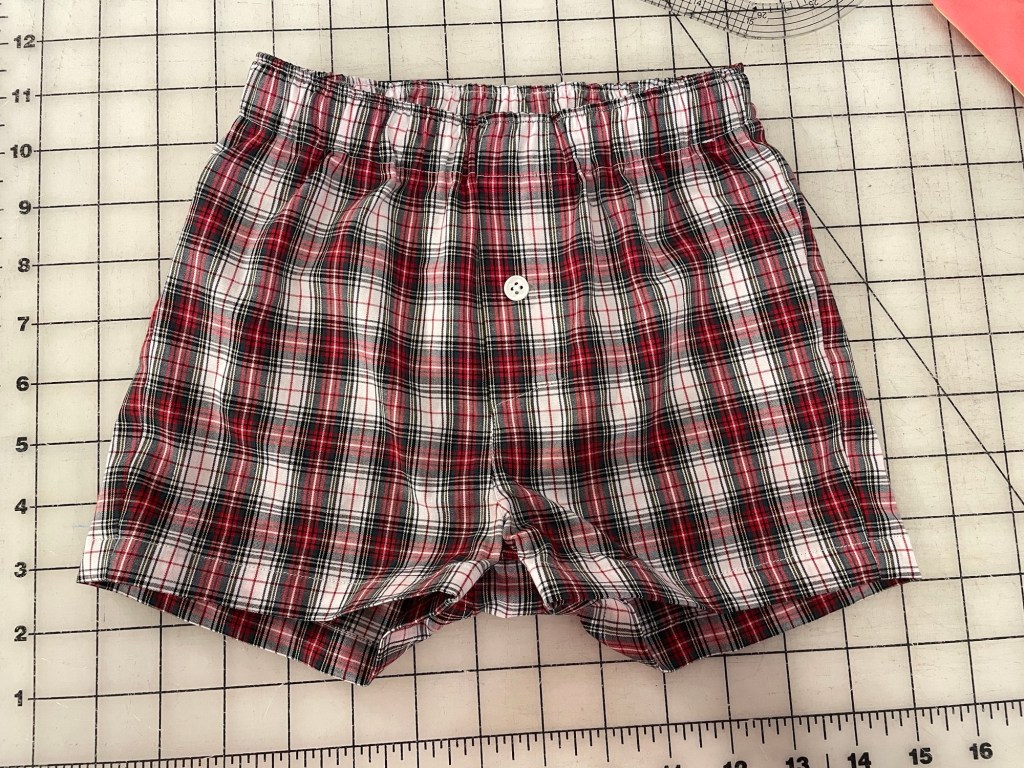
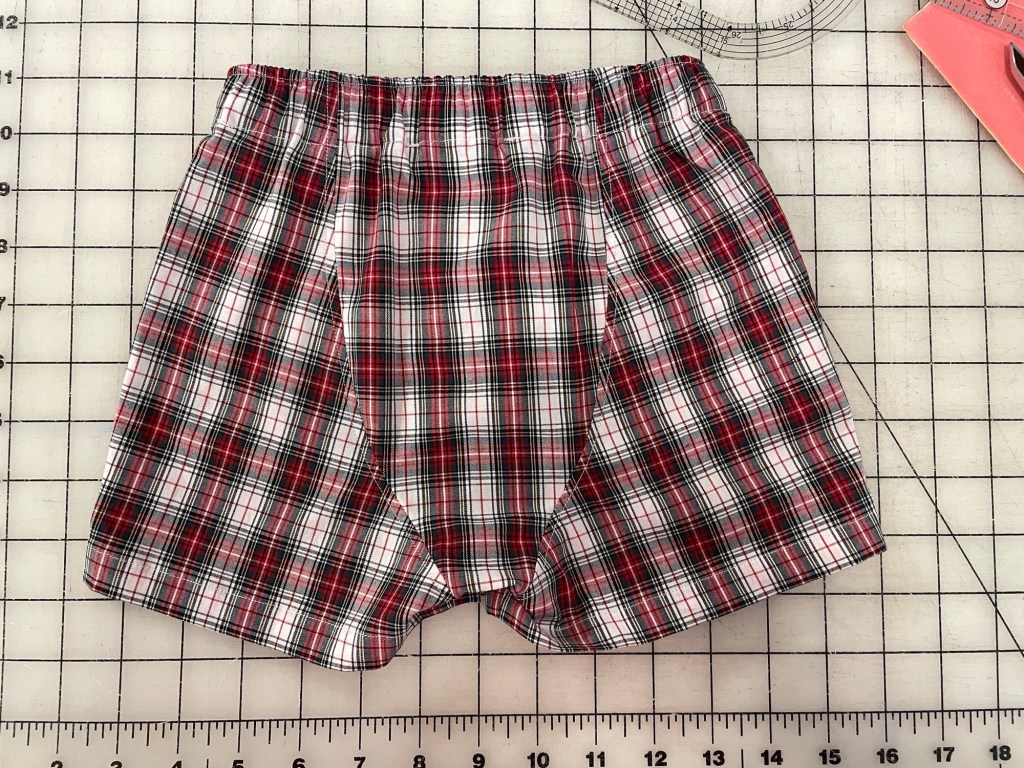
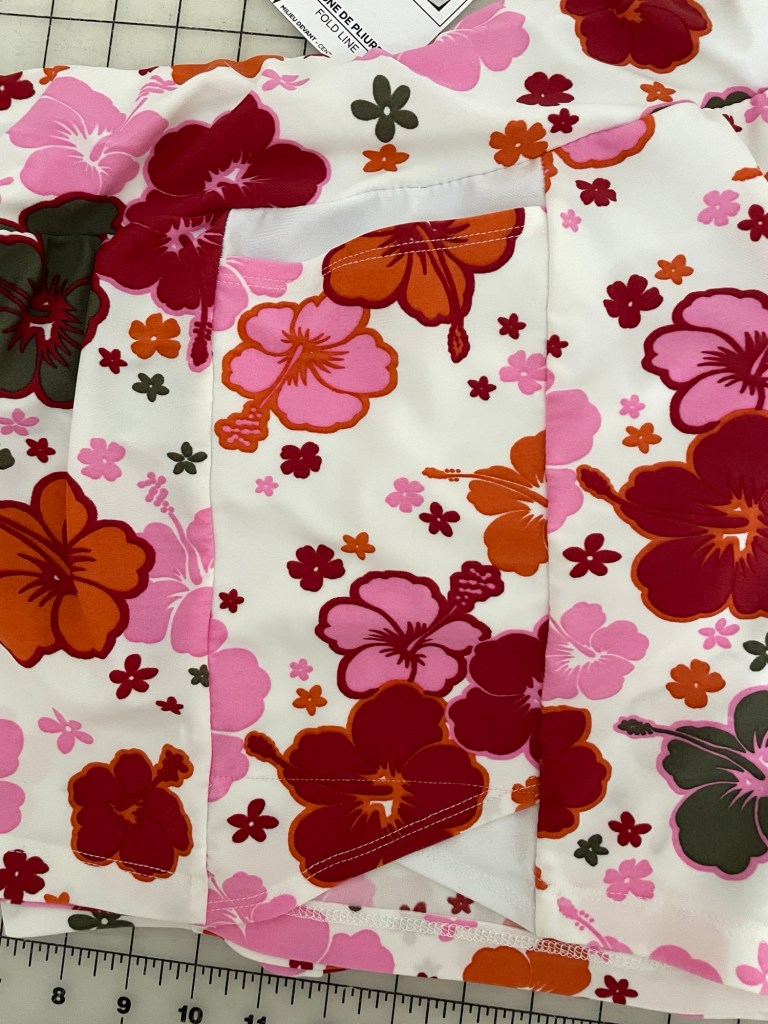
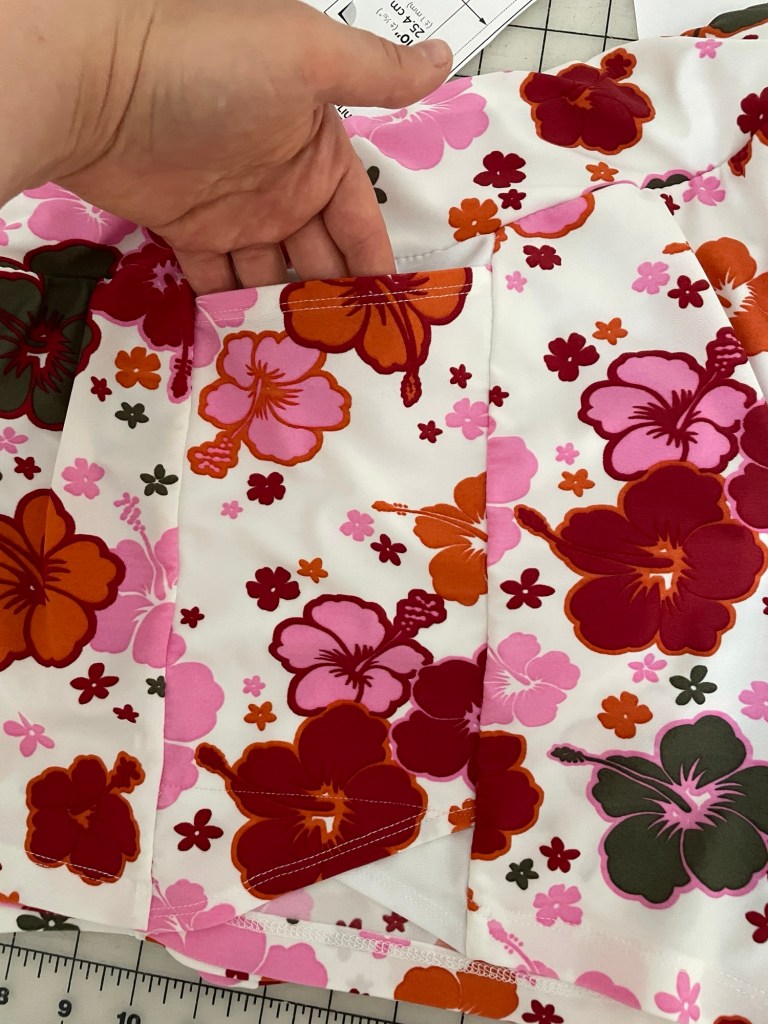
The Jalie Martin pattern is for men’s loungewear pants and boxer shorts. It is drafted for wovens and features a faux fly with an optional decorative button, elastic waist, and a back panel instead of a center back seam. There’s also an optional back patch pocket.
Size and Alterations
The size range goes from 2T all the way to 2X. If you pay a little bit extra you can get up to a 5X for the PDF version.
I cut a size F, which is equivalent to a 2T. The only alteration I made was adding 1/2” height to the center back. It turns out it wasn’t necessary.
The fit ended up being very similar to that shown on the Jalie models.
Fabric and Materials
I used a very lightweight 100% Robert Kaufman shirting purchased from Fabric Matt a few months ago. The elastic was from Mandala Crafts on Amazon. The button
Construction
The instructions are pretty good. This really does go together quickly and easily. I think it would be a nice project for someone who wants to try something more complex than your average pull on pants, without having to deal with zippers or pockets (aside from the optional back pocket.
I did find that I needed to snug up the waist elastic another inch.
Conclusion
I made these for my son, who is turning three years old in a few weeks. We’ve been working on potty training the past year. He’s pretty flawless when commando but struggles when he’s wearing briefs (probably because they feel too much like a diaper). These allow him to wear actual underwear without feeling snug, and as a result he’s much better at letting me know when he needs to go. He has also started trying to dress/undress himself. As a result I consider this pattern a worthy investment, especially since it seems like regular cotton woven boxer shorts for toddlers aren’t easy to find. I have no idea what his preferences will be when he’s older, but for now he seems pretty happy with these!
He’s worn these under the Jalie 3243 pull-on shorts and Jalie Henri shorts, and they fit fine under them, with no peeking out at the hem.
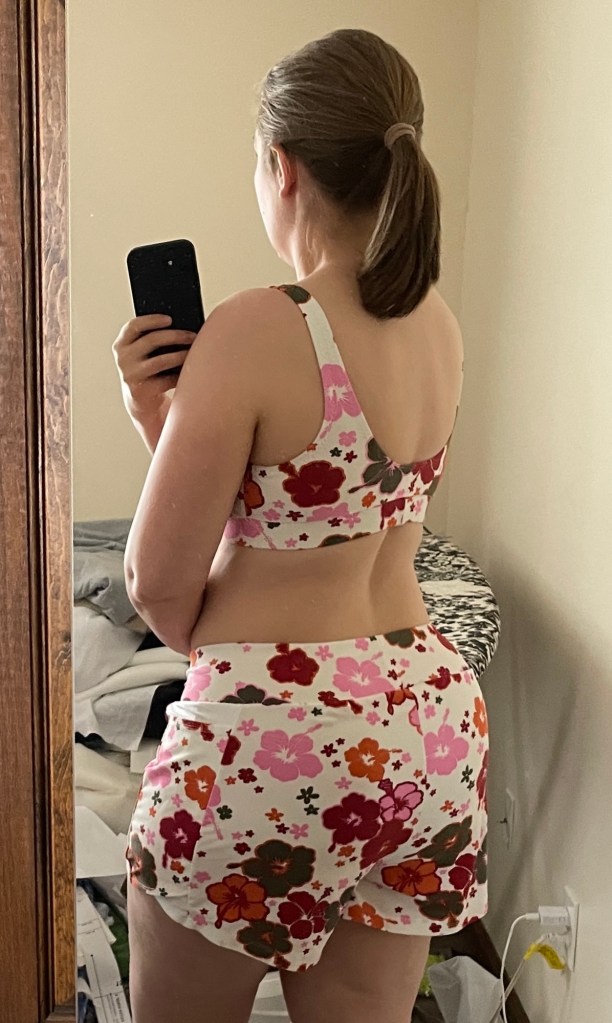
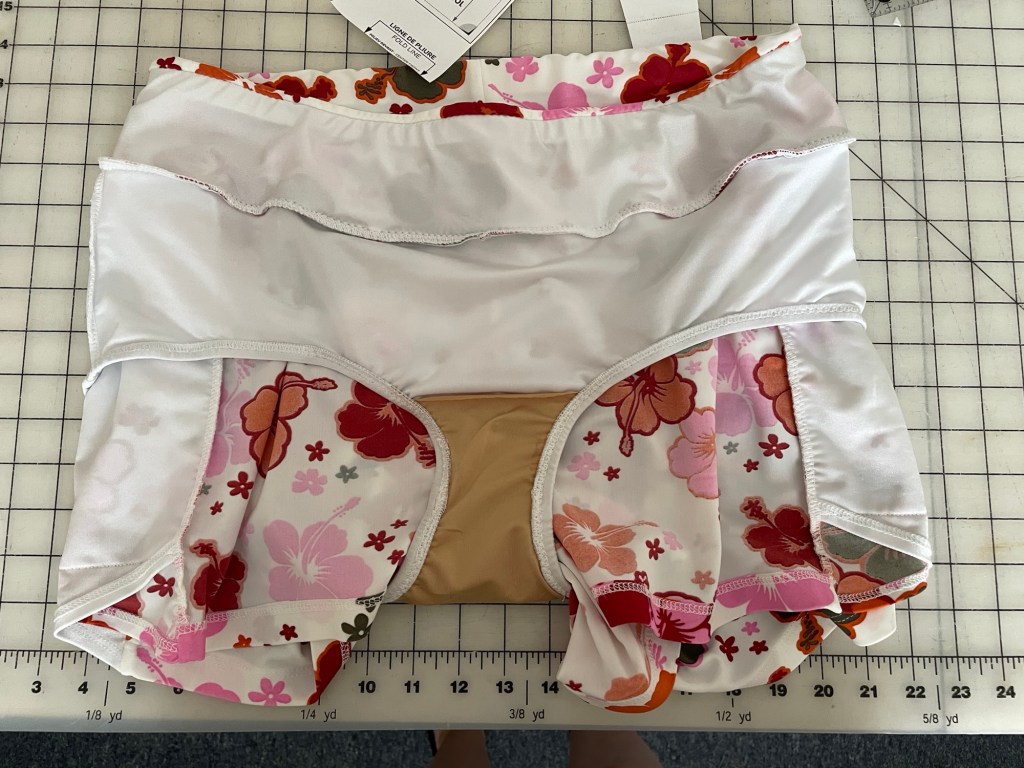
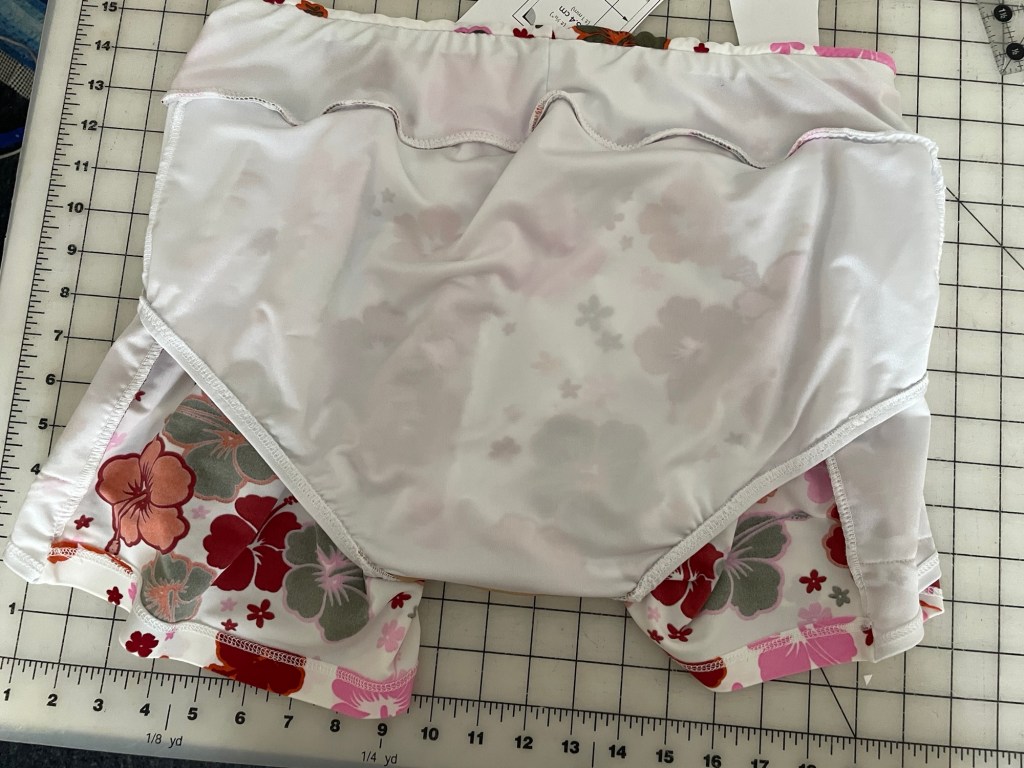
This pattern can be used for either running or swim shorts. It has a wide waistband, side panel pockets, and built in briefs.
Per Jalie, the waistband hits around the navel for kids, a few inches below the navel for teen and smaller adult sizes, and got up around the navel again for the larger adult sizes.
The size range goes from F (2T) all the way to FF (women’s size 22/ euro 52).
This pattern is out of print now so it is only available as a PDF.
Jalie 4136
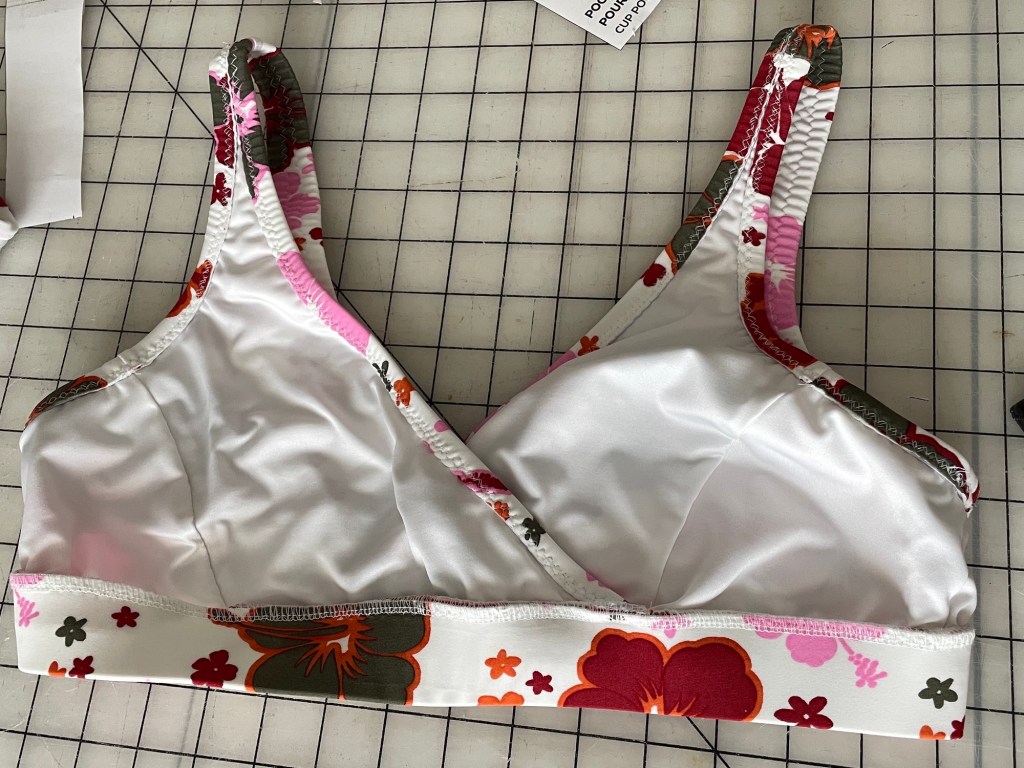
This fully lined bikini pattern has both a scoop neck and crossover versions for the top. The bikini bottoms include both a lower rise version and higher waisted versions, one of which has a self fabric tie detail.
Size range goes from 2T to 2X. Like with a lot of the newer Jalie pattern releases there’s also a PDF only version that goes from 2T to 5X, and a plus size version for 1X-5X.
Fit and Alterations
Jalie 3351 Shorts
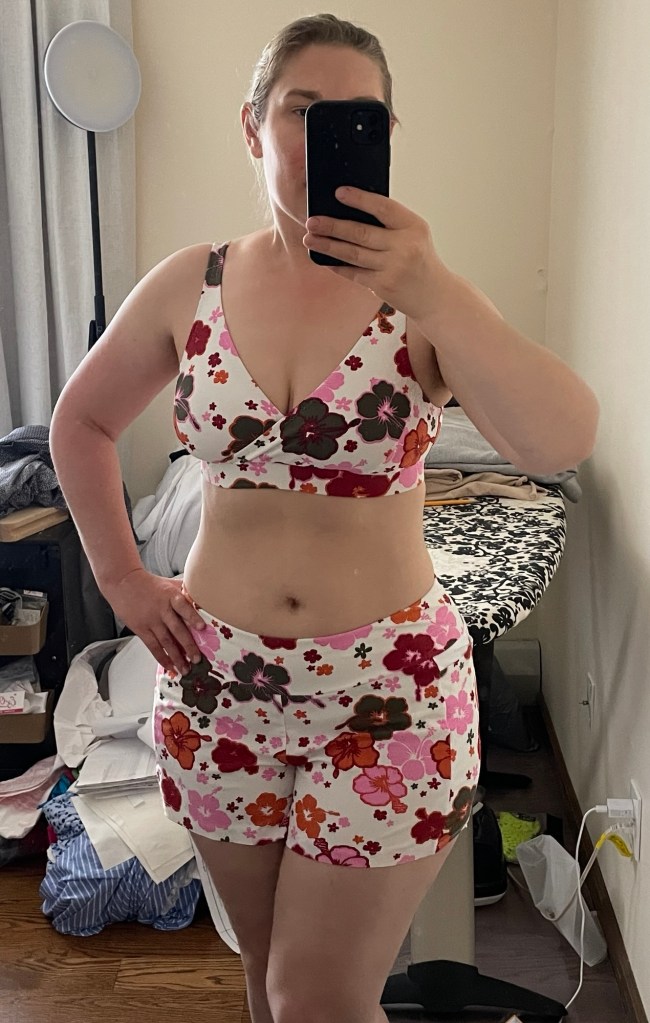
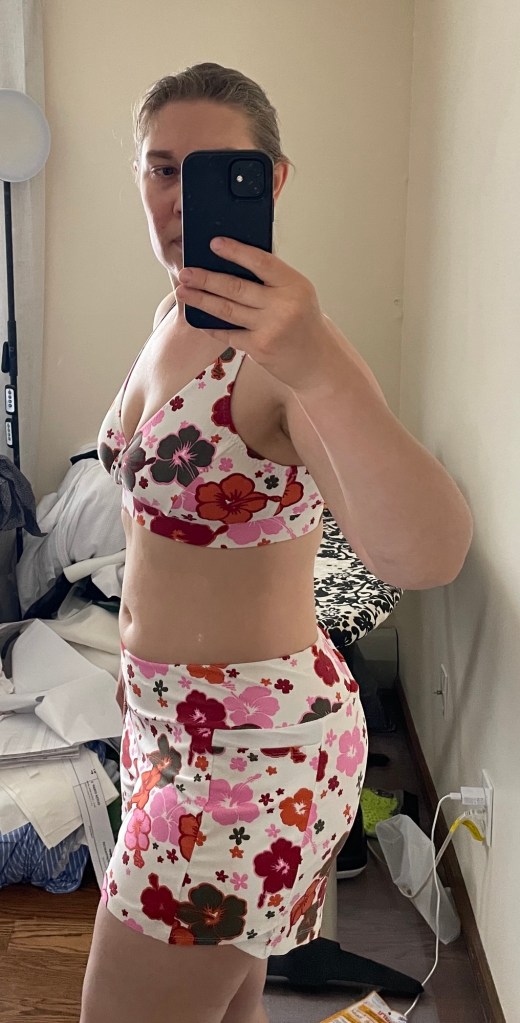
Per my hip measurement I made a size CC. The ease was perfect.
I added 2.5” of height to the center back seam, tapering to nothing at the center front. I also added 3/8” width to the front inseam for my fuller thighs. When I was adding the elastic I sized down a couple of sizes per the elastic cutting length chart. They feel snug and secure without digging in.
After making a test version I lowered the rise 1”. They sat at the navel and just seemed too big and matronly when worn with a bikini top. They would have been fine if worn with a rashguard top or tshirt.
Jalie 4136 Bikini Top
I made a size Y. I sized down to a W for the band. I compared my underbust measurement to the size chart and W was the closest matching measurement, so that’s what I cut.
Fabric and Materials
I used a Lycra purchase from the Elingeria sometime back in 2012 (yes it has been sitting in my stash all this time). I didn’t have quite enough (these were scraps from another project from long ago) so I cut the side panel, waistband facing, and brief from a white swimwear fabric I found on Amazon. I should have read the description better because it’s kind of shimmery and I prefer matte fabrics for swimwear, but so little of it peeks out that it doesn’t really matter.
The lining for the crotch was a swimwear lining recently purchased on sale from Emma One Sock.
The 3/8” braided elastic was from the Amazon seller Mandala Crafts.
For the bikini top I used a swimwear lining fabric from Payless Fabrics on Amazon.
Construction
Jalie 3351 Shorts
The instructions are excellent and I had no issues. I really like how the waistband is constructed. The facing is cut shorter than the outside waistband, which causes the seam where the elastic, outer waistband, and waistband facing meet to be folded entirely to the inside. This completely eliminates bulk at the upper edge of the waistband, and if you’re using a different fabric for the waistband facing it won’t show through at all.
I will say that my life was made significantly easier when turning up those hems for the pockets and hems by using Design One fusible stay tape. This tape is exactly 3/8” wide so if you apply it directly along the edge you get a nice guide for folding the hem before removing the paper. I just doubled it up to make it 3/4” wide for the front and back shorts hem. It not only made turning up the hem far easier on this slippery synthetic fabric, but also made cover stitching way easier. The final result still maintained its stretch. 10/10 recommend!
Jalie 4136 Bikini Top
Like with the shorts, the instructions were excellent. I particularly liked the band construction. You zigzag the elastic to one edge, fold the other edge of the fabric up around the elastic snugly, zigzag again, trim, and then sew it directly to the rest of the top. Very neat and completely eliminates the elastic rolling inside during wear or laundering.
Conclusion
I’m extremely happy with the shorts. They fit and feel great! I wanted something I could confidently wear to the beach while playing with my little boy and these are perfect for that. Unlike with a skirt they won’t ride up in the water, and you get plenty of coverage if you’re self conscious about your lower half (which I definitely am post baby). The brief is full coverage and stays in place really well.
The bikini top feels secure and comfortable to wear. I think I am a 36C now (not sure since I haven’t worn a proper underwired bra in years now) and I feel like it gives good support. I have plans to make it as a bra top as well, because my toddler still nurses on occasion and the crossover styling makes that very convenient. (Jalie actually has a post on converting this pattern to an unlined bra top, though I would likely do a lined version for extra support.)
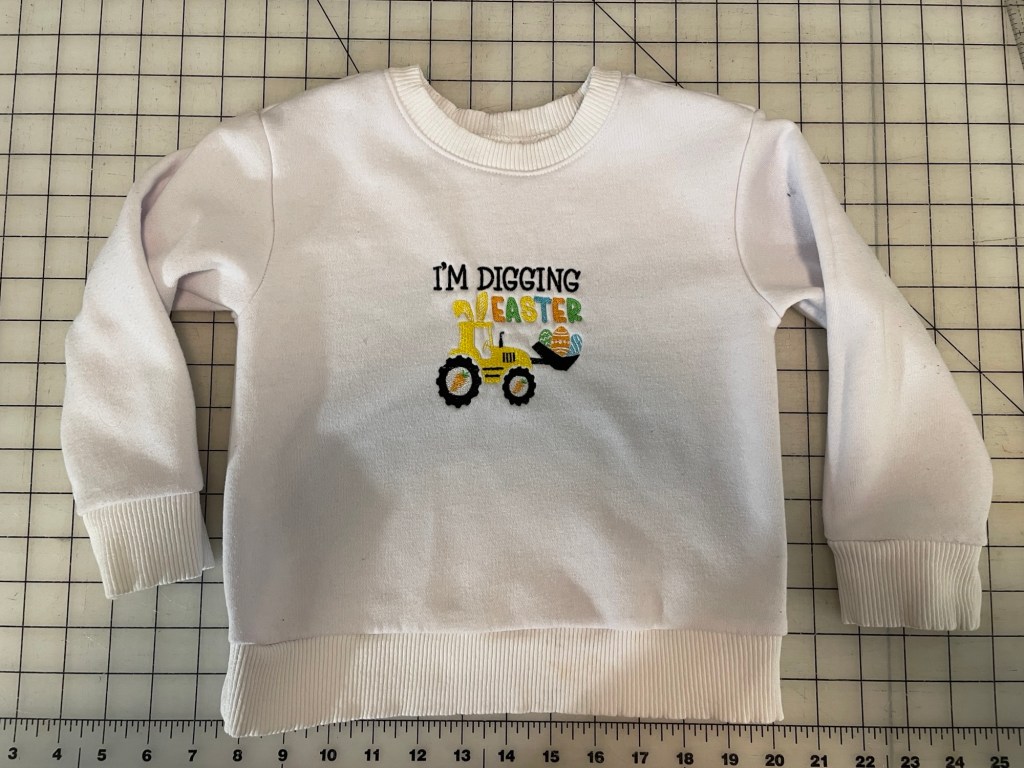
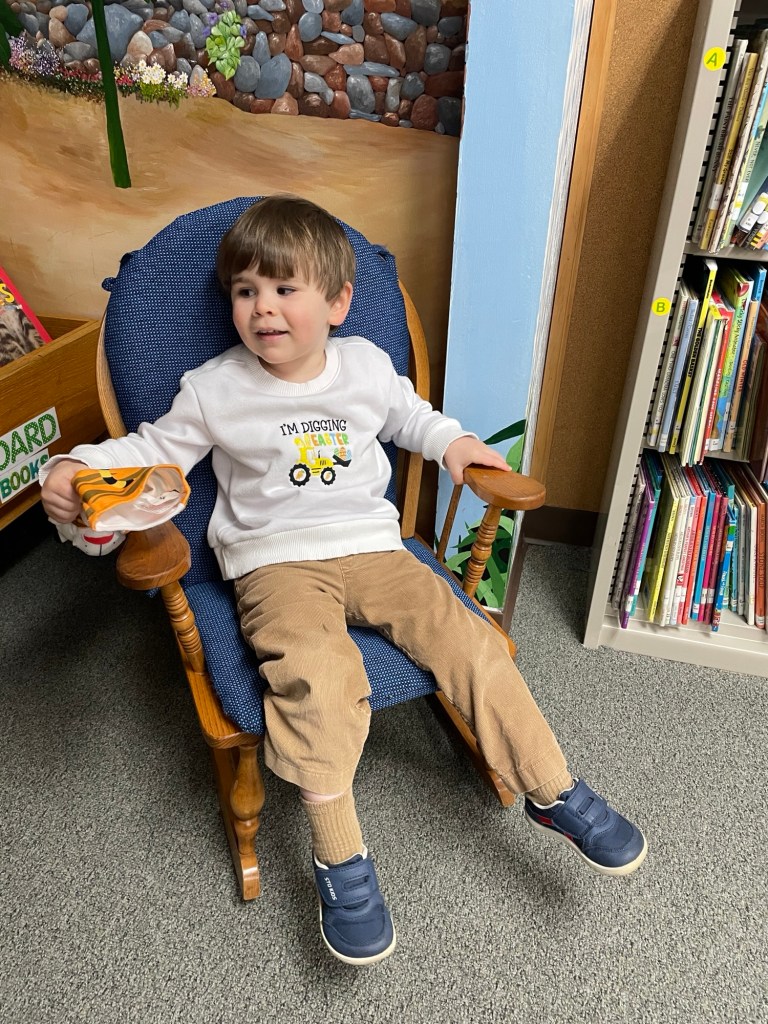
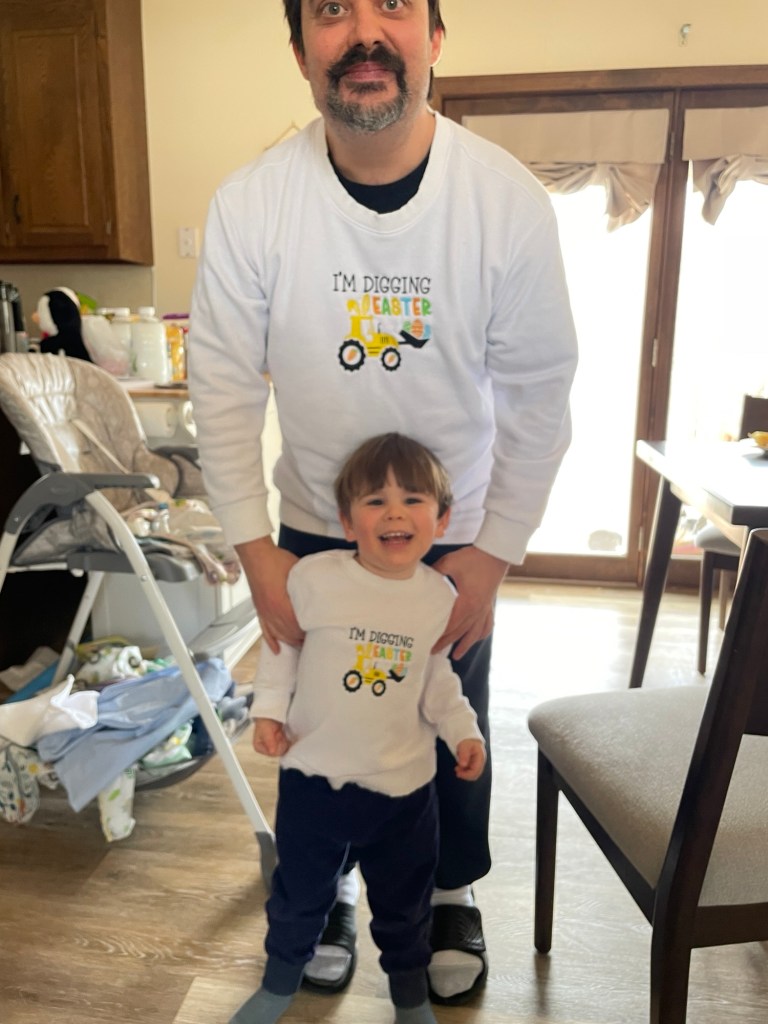
I made this several times so far for both my husband and son. The latest version, which is shown in the photos, were matching Easter sweatshirts. I embroidered both of them on the ancient Janome 300e my mom gave me last fall (another new obsession of mine). The machine is ancient and was sitting in a closet completely untouched for about 20 years. I oiled the bobbin and needle bar and have been using it ever since. I had to hunt on Amazon for memory cards that would actually work and designs often require me to do some rotation and size adjustment in Ink/Stitch, but I’m making it work.
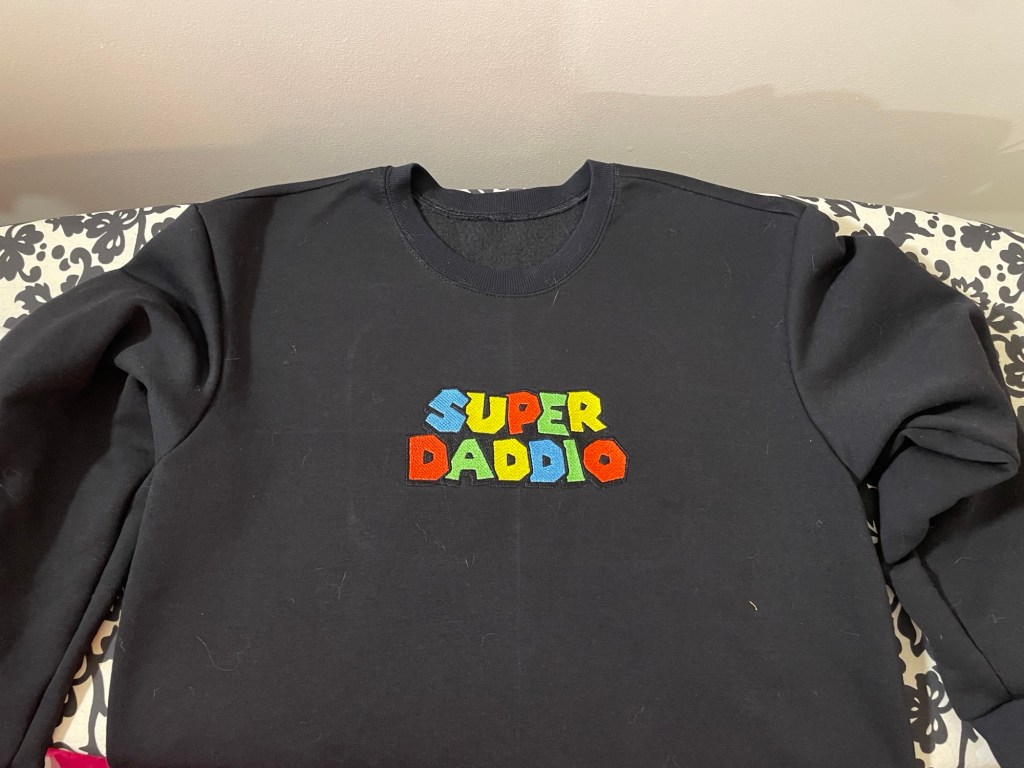
Another one I made for my husband, freshly embroidered! You can see how much nicer the neck looks.
Pattern Background
This pattern is for crewneck and hoodie sweatshirts as well as a tshirt. The size range goes from size 2T to 2X. Th suggested fabric is sweatshirt fleece with a minimum of 10% stretch and ribbing for the neck, cuffs, and waistband. You can also use self fabric if your fabric has at least 30% stretch.
Materials
I used a cotton/polyester sweatshirt fleece I found on Amazon. It is not great quality but for something like this which is worn only a few weeks it is fine.
The ribbing is a cotton/lycra rib knit from Nature’s Fabrics. I’m not really happy with it. It seems like the recovery isn’t great (which caused some gaping at the neckline) and the hand suggests there’s some polyester content hidden in it.
Fit and Alterations
For my husband I used size Y, which is on the larger side of Medium.
I found the collar ribbing rather wide and removed 3/8” from the width, bringing down the finished width to 3/4”.
He also found the collar was too tight. I added another couple of inches to the length.
My husband is 5’4” so I shortened the sleeves 3”. For the first version I shortened the length 3” but he found it too short, so I reverted back to the originally drafted length.
For my son, I just added a couple of inches around the hips because he still uses cloth diapers when out and about. I may have to take it in next year because he keeps getting taller and slimmer!
Construction
This is a super easy make. You can do it almost entirely on a serger. I did cut out the fronts and embroidered them before sewing it up because it’s just easier to hoop that way.
Conclusion
I use this all the time for sweatshirts for my “boys.” It is a classic style and one of the few knit Jalie patterns that doesn’t require a lot of stretch. Highly recommend!
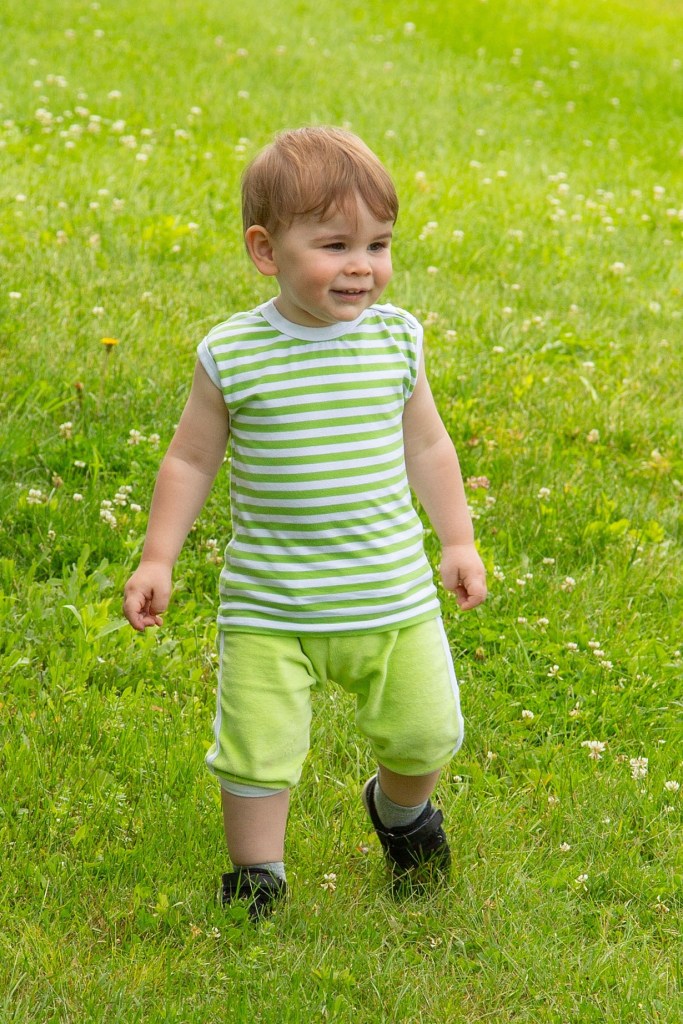
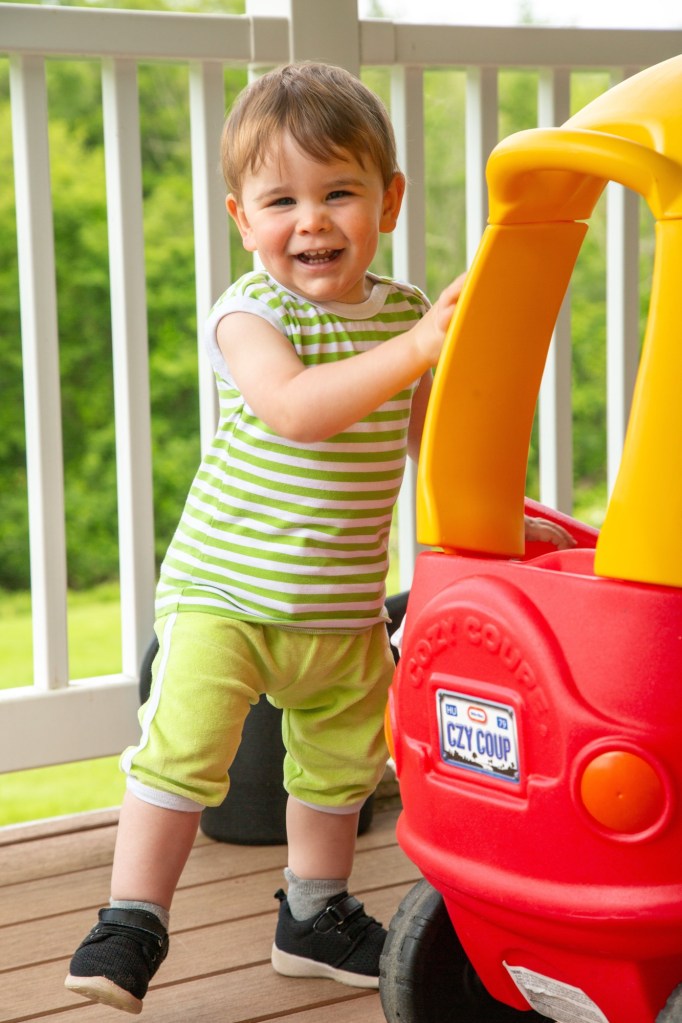
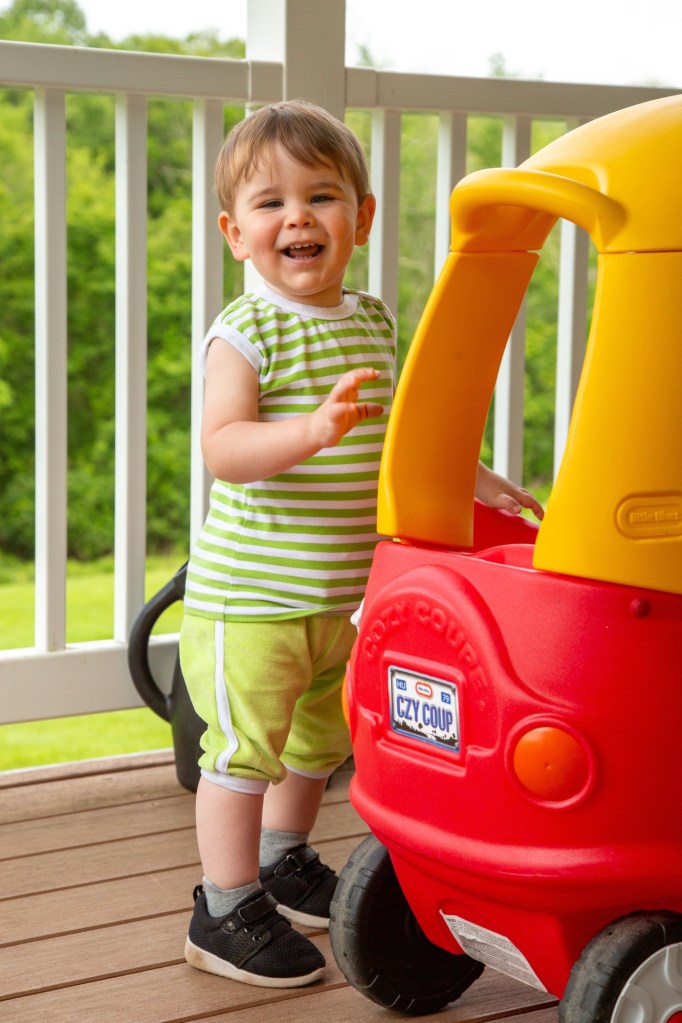
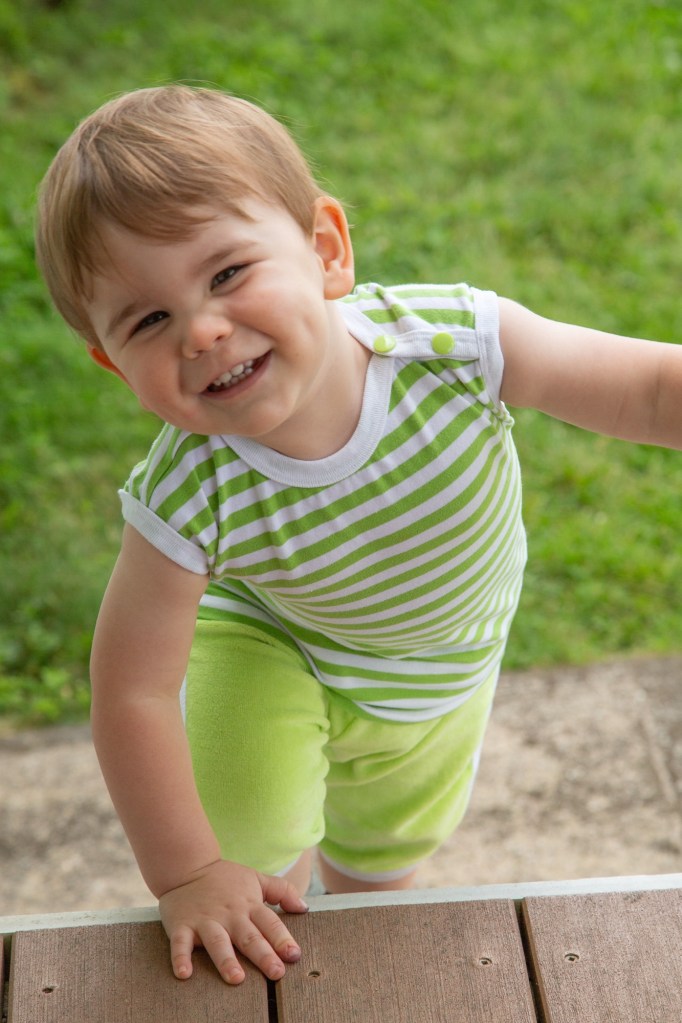
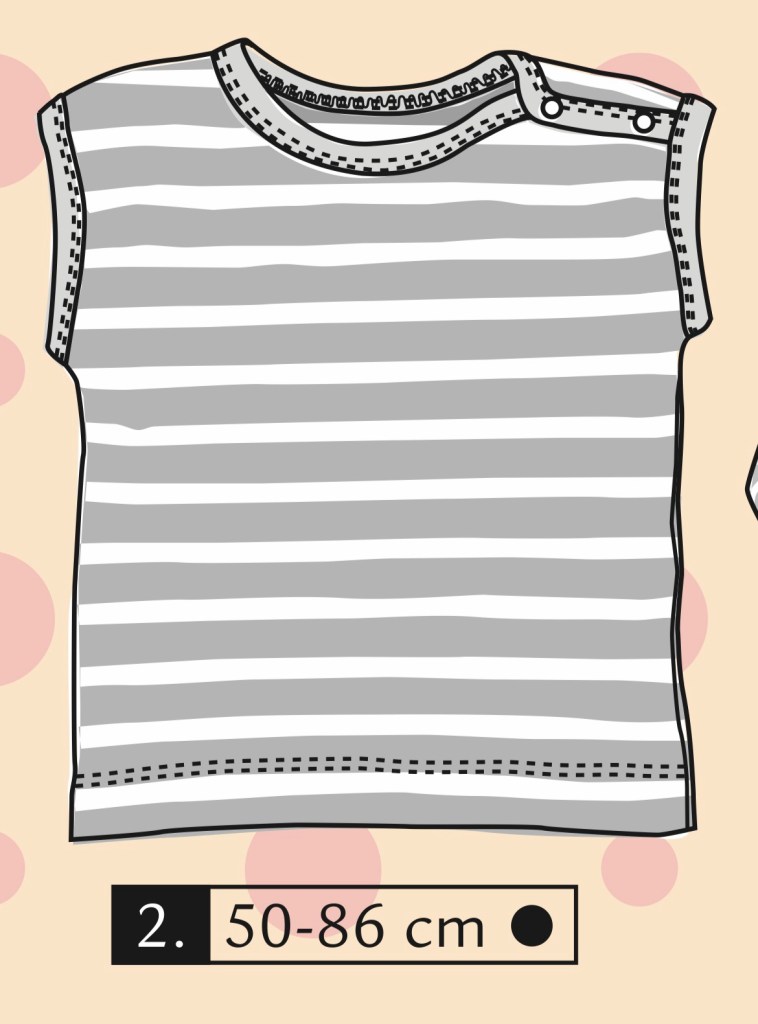
Ottobre 3/2012 #2 is a sleeveless knit shirt with a neckline and armholes finished with rib knit. Two snaps at the left shoulder help with dressing. It is drafted for sizes 50-86.
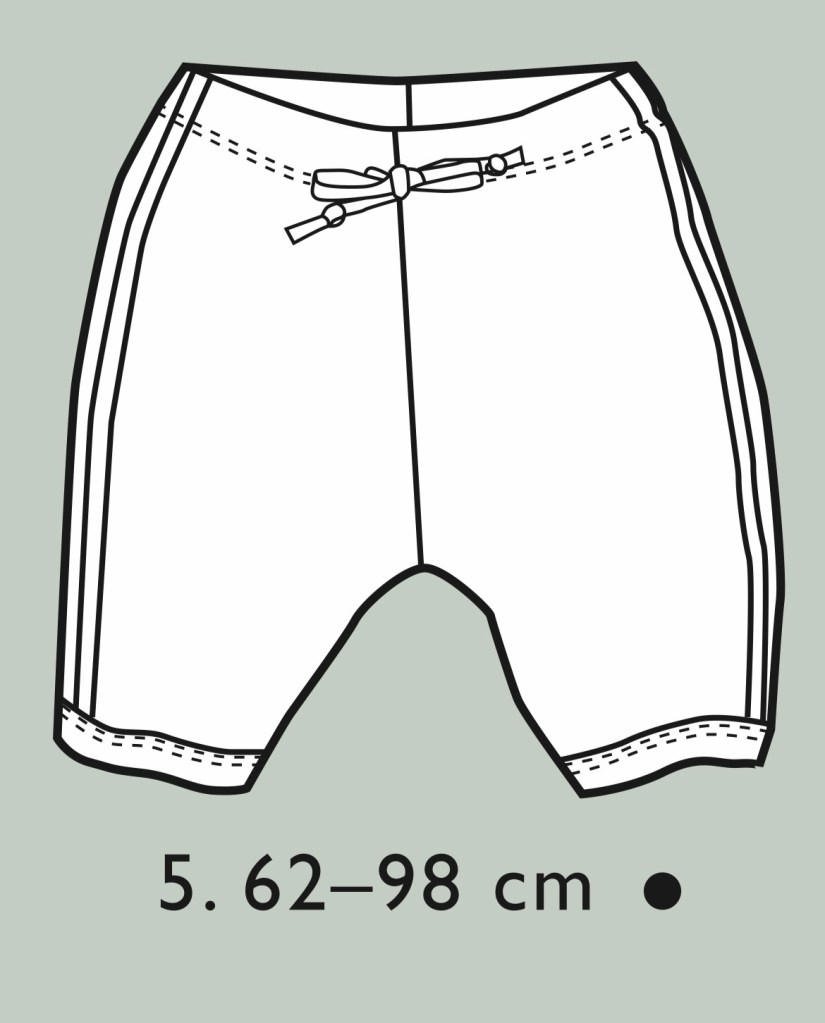
Ottobre 3/2023 #5 knit shorts are hemmed just below the knee, with a hem finished with rib knit. The side seam has a decorative stripe made out of rib knit. The waist is elastic, with a decorative drawstring at the center front. It is drafted for sizes 62-98.
Materials
For the top I used a cotton/lycra jersey from Nature’s Fabrics. I had it leftover from another project and it was just enough to squeeze this shirt out of it.
The shorts were made out of a cotton velour, also from Nature’s Fabrics. I really liked using this fabric for his shorts. It is durable, soft, and washes well.
The snaps are from KAM Snaps. The rib knit is from Fabric Mart. The grommets for the drawstring (not shown) are #00 metal grommets from WAWAK. The 3/8” wide cotton drawstring tape is from Amazon. The 1” elastic for the shorts waist is also from Amazon.
Fit
I used a size 86 for both shirt and pants.
For the shirt I added about 2” width to the hem at the hip. My son wears cloth diapers and I find that adding some width helps it not ride up as much over the bulk.
For the shorts I added 1/2” height to the center back seam.
Construction
I found I needed to mark where the binding went at the bottom of the armholes of the shirt, because otherwise it is hard to see exactly where the bottom of the armhole is when you’re binding it and you may end up halfway down the side seam! Otherwise it was a straightforward process constructing the shirt.
For the shorts, a Clover bias tape maker to make the binding for the side seams made the process go much easier. No having to manually turn under the edges, just run it through the tape maker and then sew it onto the front before stitching the side seams together.
For both projects I used a 5/8” finished width single fold binder for my cover stitch machine to attach the ribbing to the fabric. I found the velour was too fussy when it came time to stitch the elastic casing for the waist with my cover stitch machine (so many skipped stitches) so I ended up using a zigzag stitch on my regular sewing machine for that.
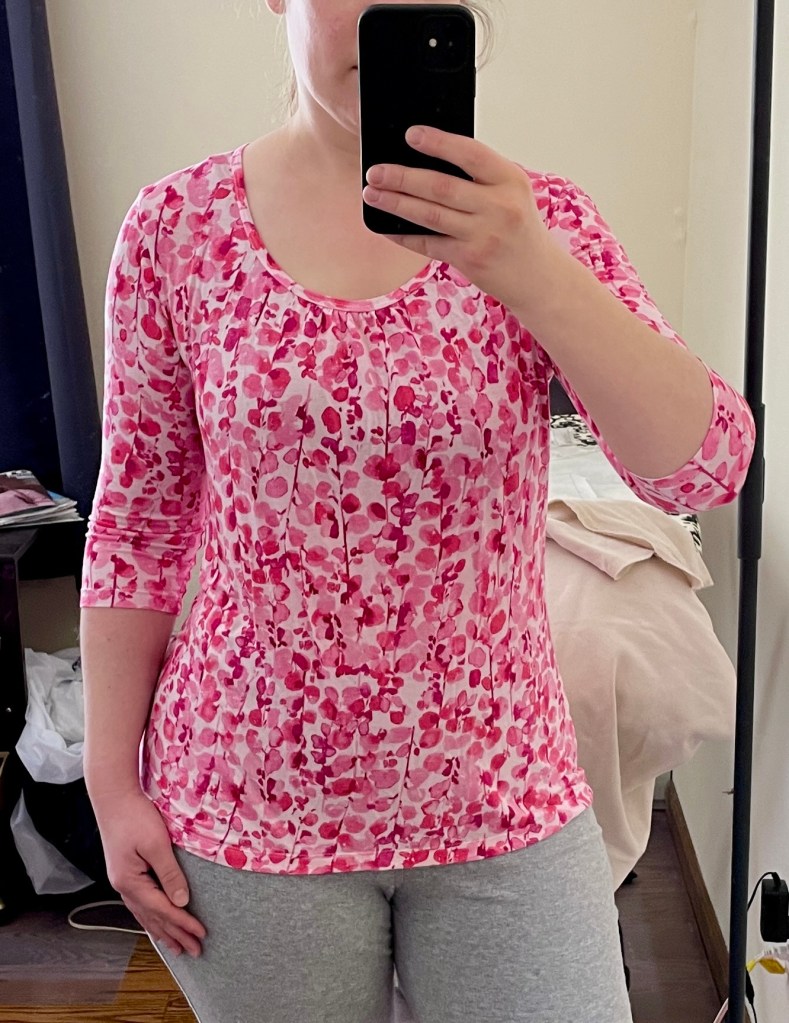
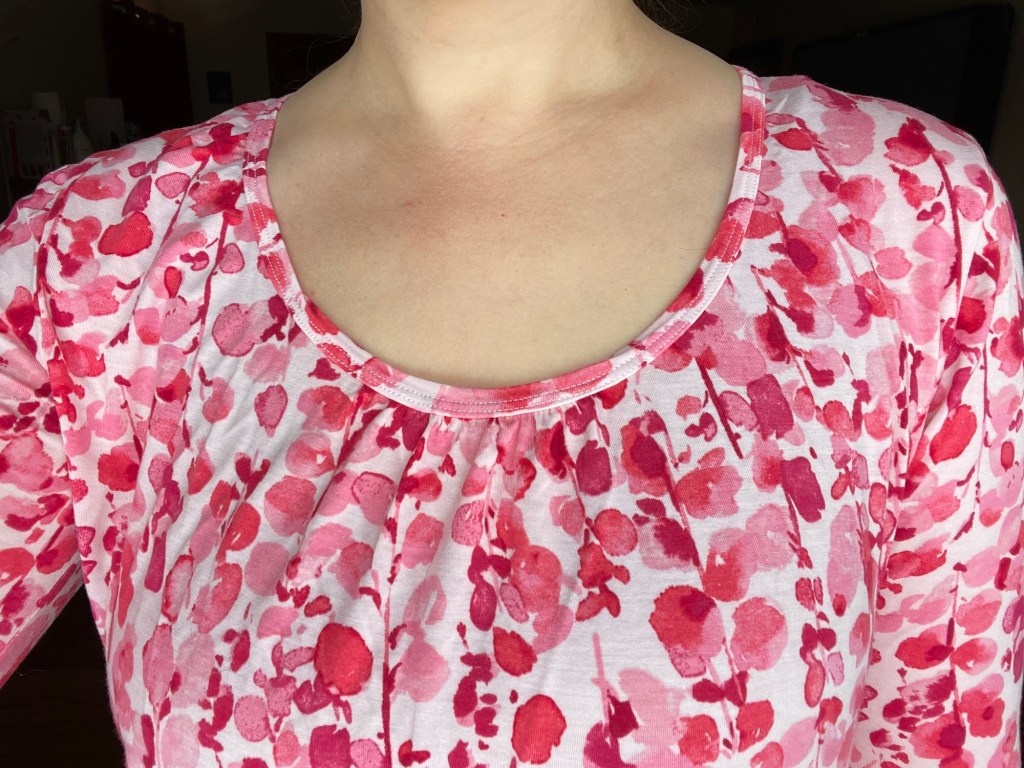
This fitted women’s t-shirt from Ottobre features a gathered scoop neckline and long sleeves. The fit is slightly looser than the other two t-shirt tops in this issue due to the front gathering adding extra ease. It comes in sizes 34-52.
Materials
I used a lightweight, stretchy rayon/lycra jersey purchased a few years ago from Gorgeous Fabrics.
For the neckline gathering I used 1/4” clear elastic I found in my stash.
Fit
I cut a size 44. This was the first of the trio I made. I added about 4” to the hips. After making it I discovered the front upper chest was rather wide, so I narrowed it on subsequent versions.
I also found the length of both the body and sleeves really long. The sleeves were very tight around the elbows. When I went to hem the sleeves I accidentally hemmed the same sleeve twice, which is why I ended up with three quarter length sleeves!
Construction
To gather the neckline you use clear elastic. I actually hate using clear elastic; the ultra thin 1/4” width elastic stretches into a skinny rope that’s almost impossible to stitch and the texture is sticky. I do have a heavier and wider elastic but it was packed away somewhere and I couldn’t find it at the time. (STILL haven’t finished unpacking after over a year!) once you gather the neckline though the rest of the shirt goes together quickly.
The neckline binding length is left up to you; I cut it 85% the length of the measured neckline and that seemed to work well for keeping it stable and snug.
Conclusion
Not sure if I would make this one again. I prefer the snugger fit of the other two tops in this issue. I do think it would make a nice shell for under a blazer though (if I ever wear one again!)