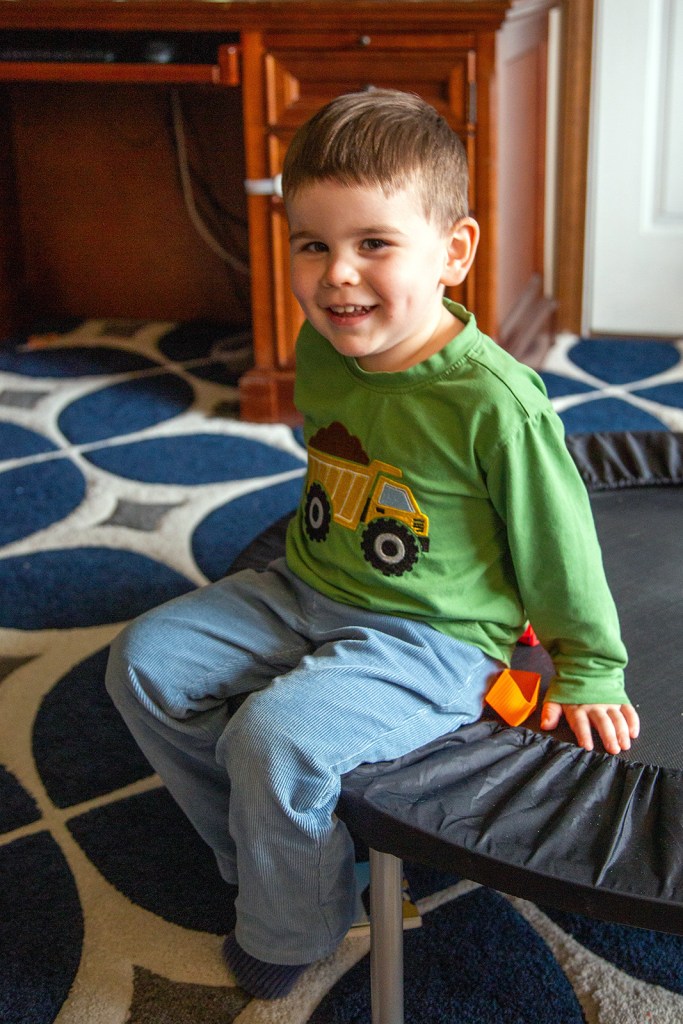
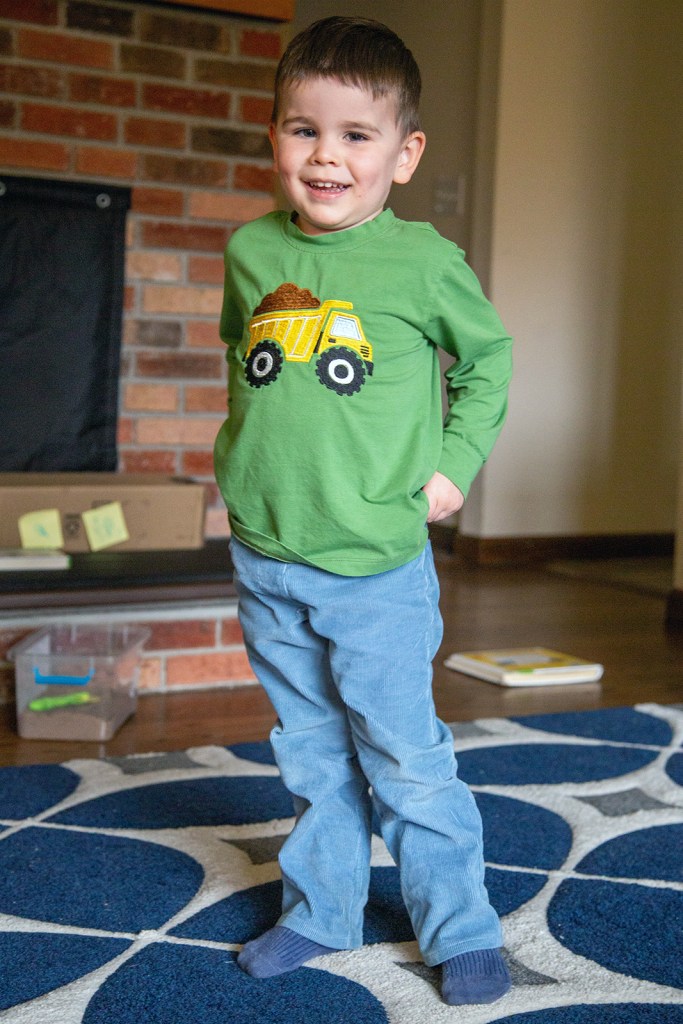
Styled here with a Jalie Laurent t-shirt, which I embroidered with this design.
Pattern Background
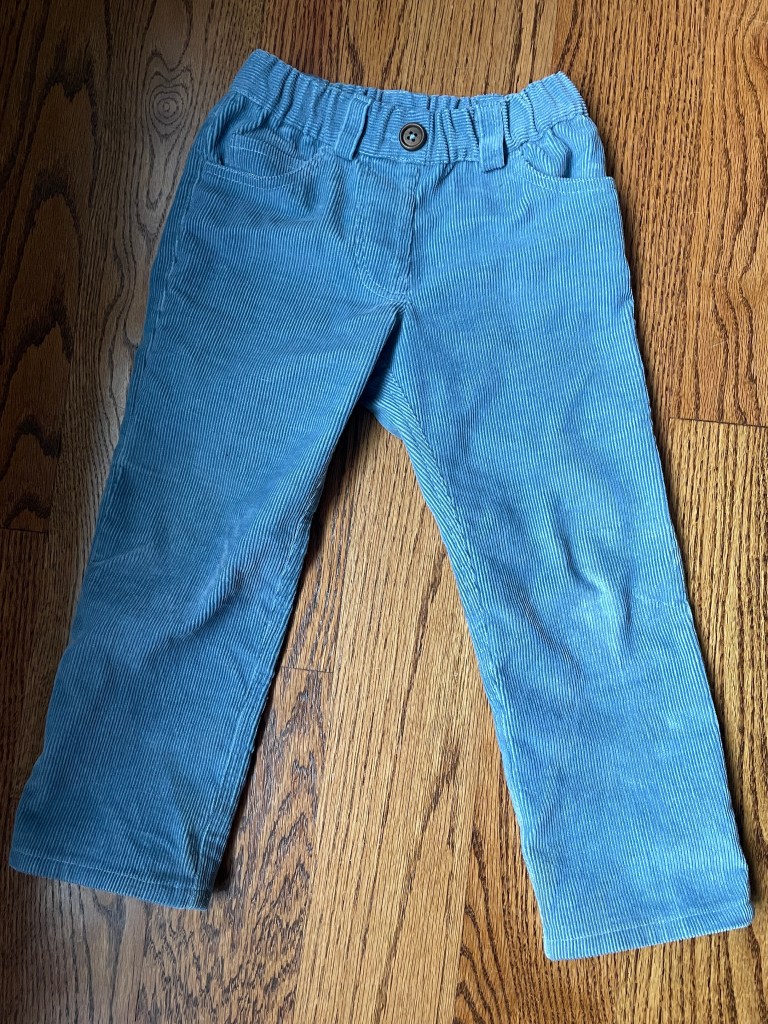
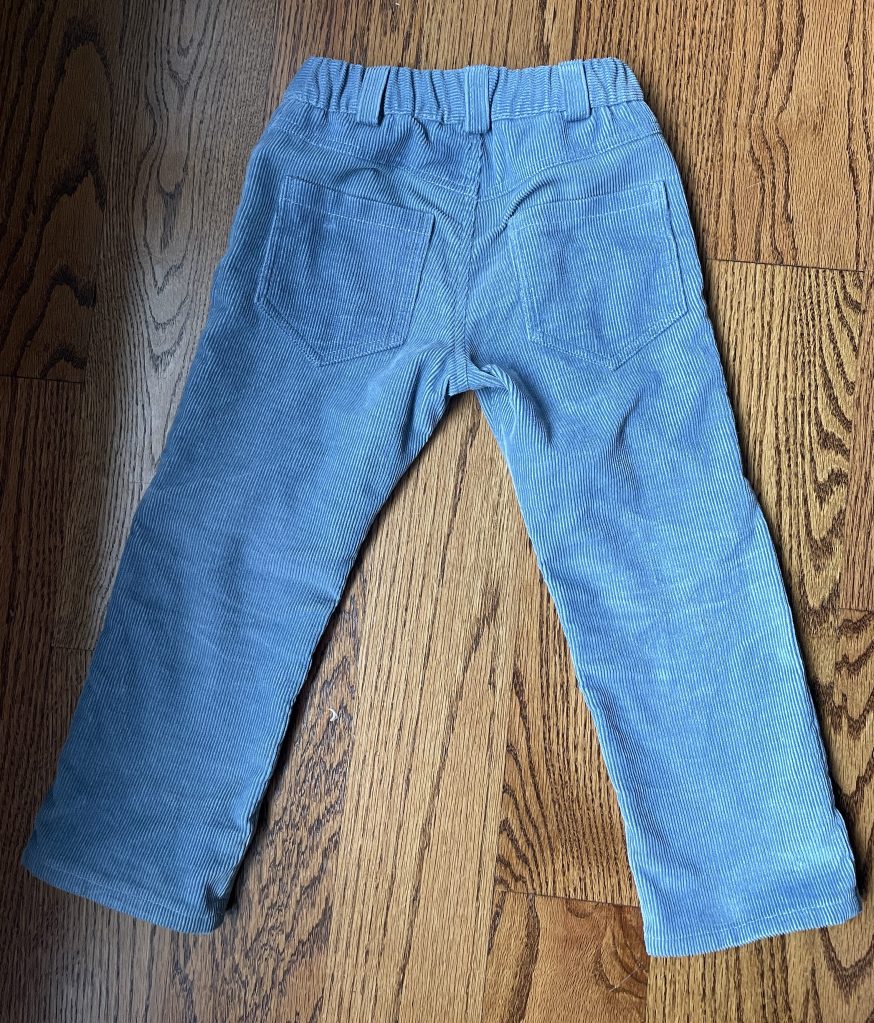
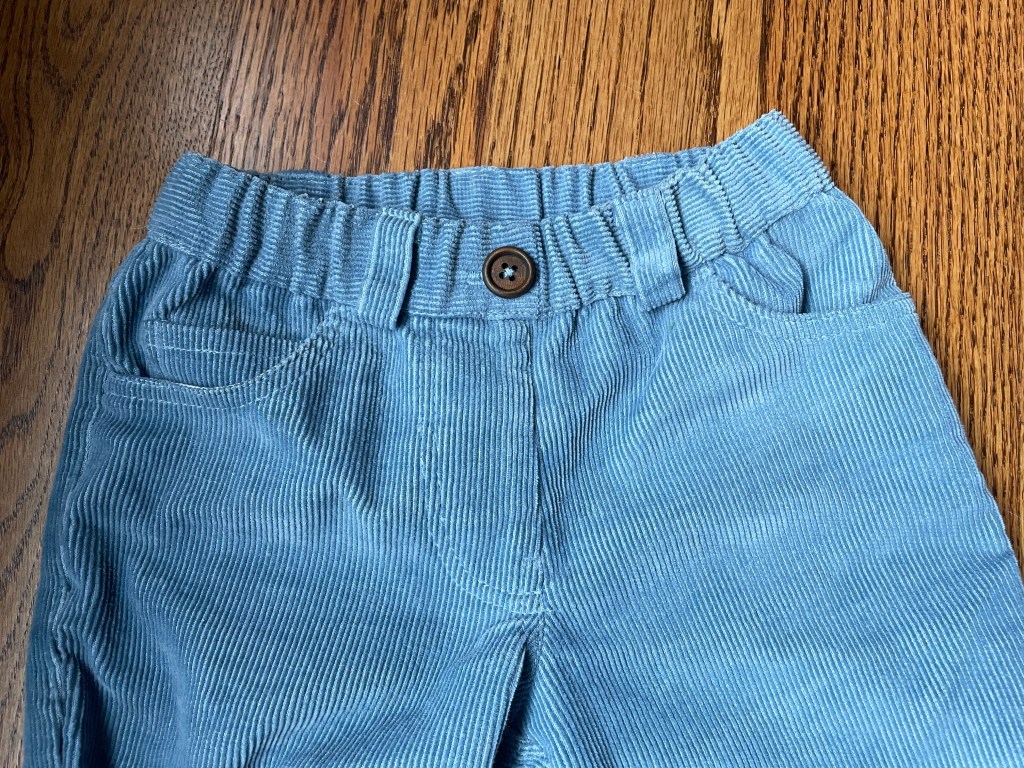
Classic straight leg jeans pattern for kids size 2-8. It can be made either as a pull-on pant or with a front fly.
Fit and Sizing
I made a size 3. My son measures closer to a 2 in width, but his height is a 3 right now. I figured since I was doing a pull-on style, using a non-stretch fabric, and want him to get some wear out of it that it was better to go bigger than smaller.
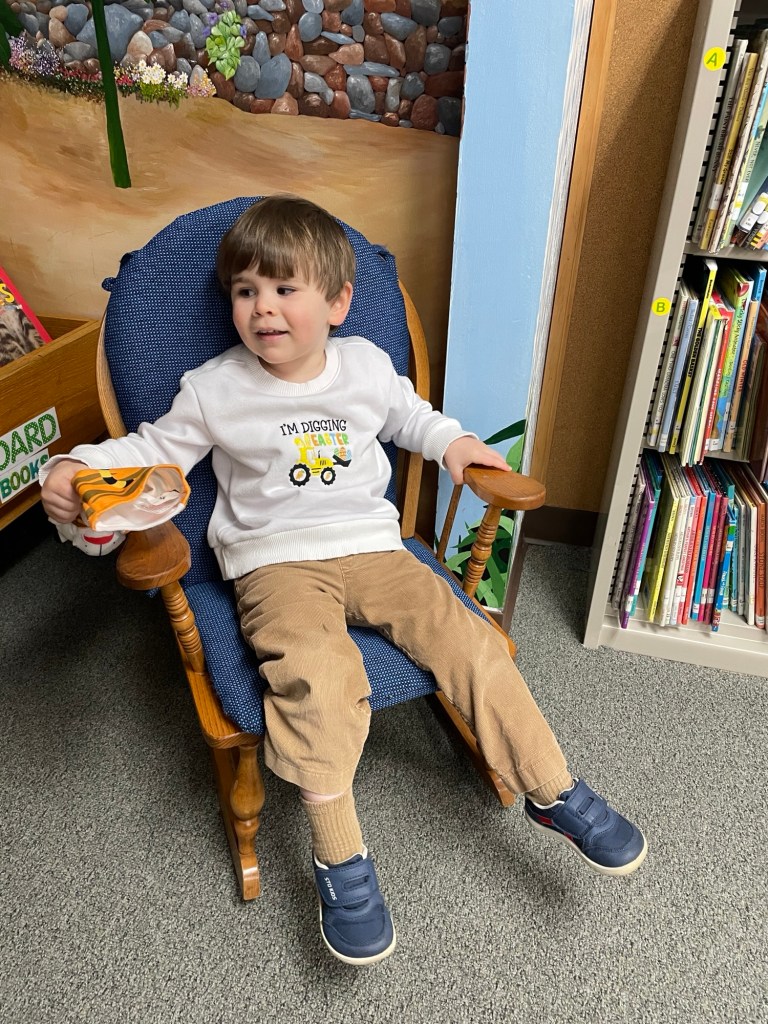
The only alteration I made was lengthening the legs 1/2″ to allow a little bit more room for growth. You can see when he’s sitting that they sit at a good height and don’t ride up too much.
Materials and Notions
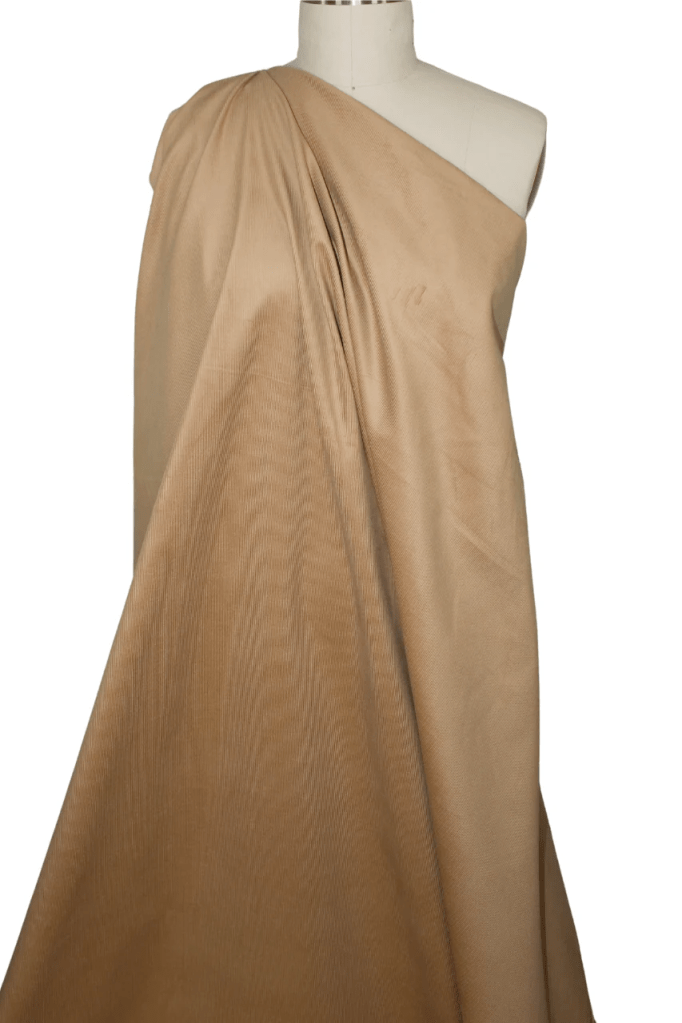
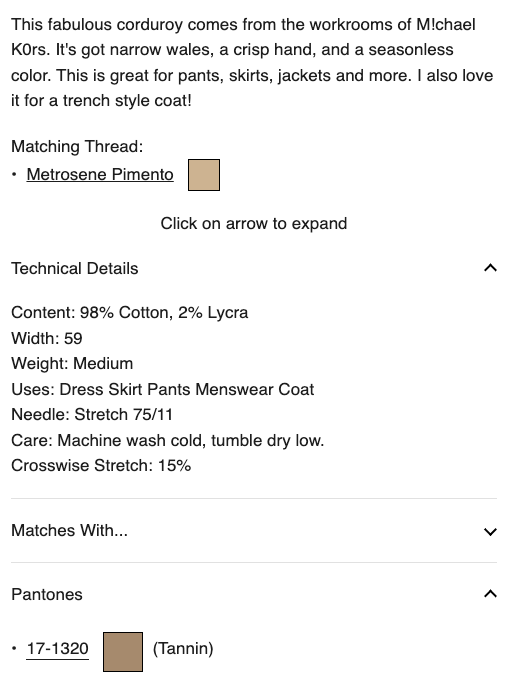
The fabric I used was a 100% corduroy my mom gifted me from her stash, purchased many years ago.
Instead of self fabric I used pants pocket lining from Wawak for the pocket.
I didn’t use buttonhole elastic, instead I encased 1 1/4″ elastic inside the entire waistband.
I used Gutermann Mara 100 thread for all of the stitching.
Construction
I constructed these entirely on my Juki TL-2010Q, including the faux buttonhole (which was done with my Singer vintage buttonholer).
I did notice that certain pieces with this pattern (like the front fly piece) were cut the wrong side up if you were following a mens style pant with the fly facing the left instead of the right. Just something to think about when you’re cutting this out. I also noticed the pocket facing was 3/8″ too wide and needed to be trimmed at the side seam when sewing it to the pocket lining.
I chose to do a pull-on style. Just makes things easier for a newly potty trained three year old! When I sewed the two front pieces together at the center front I also enclosed the front fly piece inside, which acted as both a stabilizer and guide when topstitching the faux front fly detail.
Instead of the buttonhole elastic I chose to encase 1 1/4″ inside the entire waistband. It feels really secure. When I attached the waistband I did it Jalie 3243 style. After sewing the faux buttonhole in the front I pressed up the outer waistband, stitched the inside first (right side of the waistband to the wrong side of the pants), then flipped the outer waistband over and stitched it in place. While I stitched the outer waistband in place I carefully encased the elastic. (I tried doing a casing and then pulling the elastic through, but the stiff fabric was causing it to roll.) Before attaching the waistband I basted the belt loops in place to the upper edge of the pants so they ended up being sewn in place at the bottom while stitching the inner waistband in place. Once the outer part of the waistband was sewn in place I stitched the belt loops at the upper edge of the waistband. This helped keep the elastic tacked in place in a subtle way.
Conclusion
This is a great, versatile kids jeans pattern that can be remade over and over as they grow. The leg is a nice cut, neither slim nor wide, and you can easily customize the waist based on the child’s preference and/or developmental stage. He’s got enough pants for now but I will definitely will be making it again for him in the future!
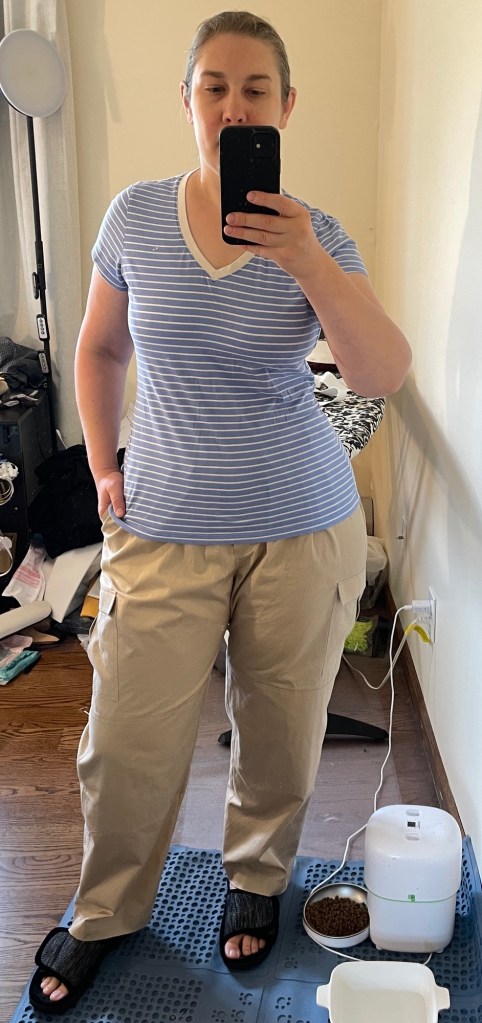
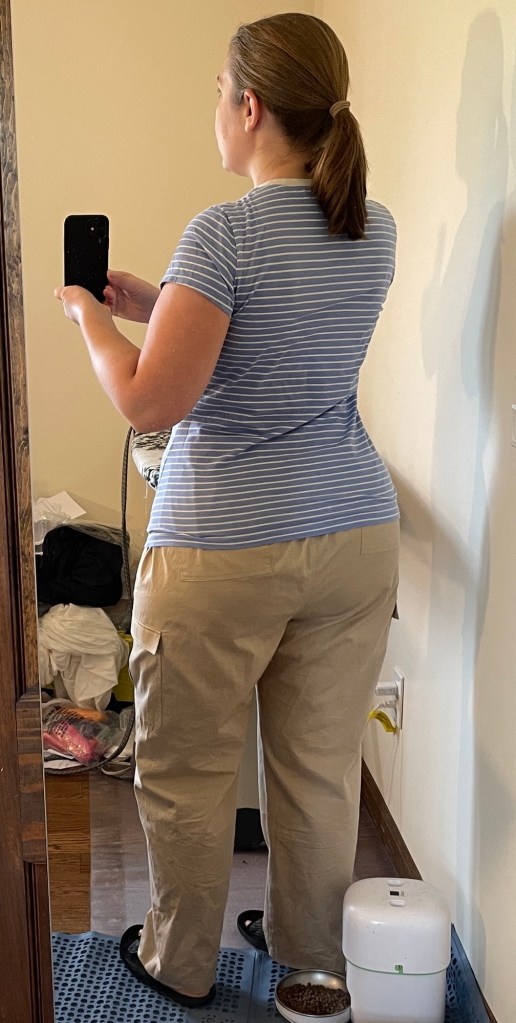
I made these pants with the intention of them being lightweight outdoor work pants. I help out a lot with yard work at my parents’ house now and weed whacking is a perilous task with shorts. So I wanted something full length that would be lightweight, breathable, and comfortable to wear in the heat. The Delta provide plenty of range of motion despite the non stretch fabric so I’m pretty happy with them.
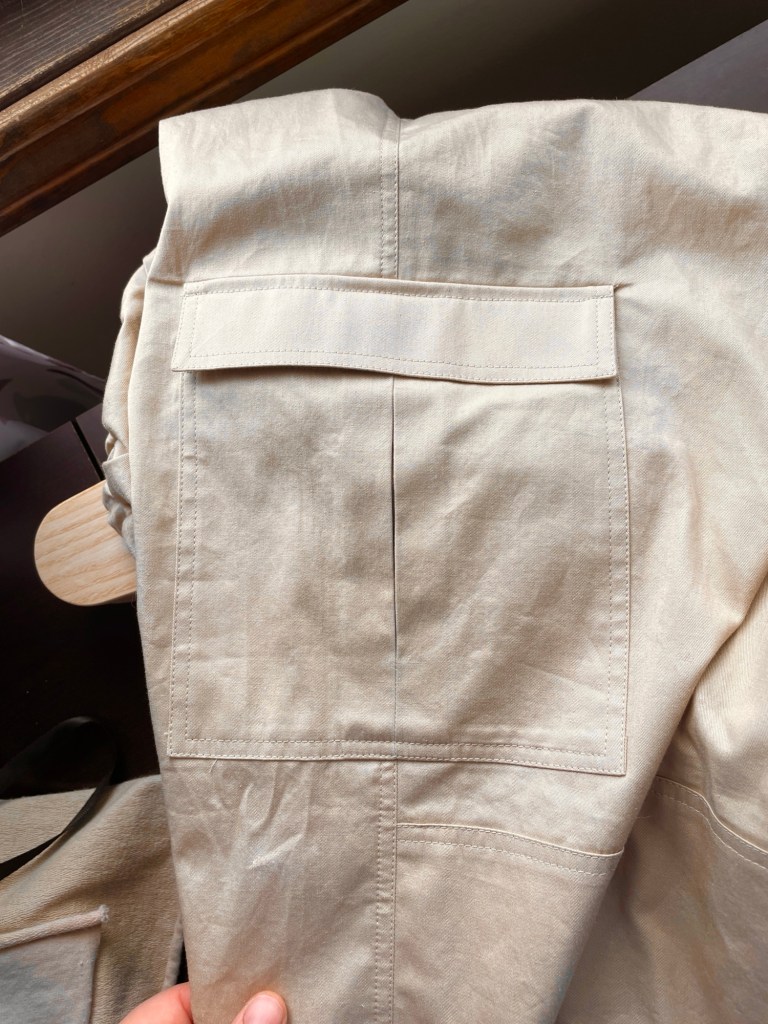
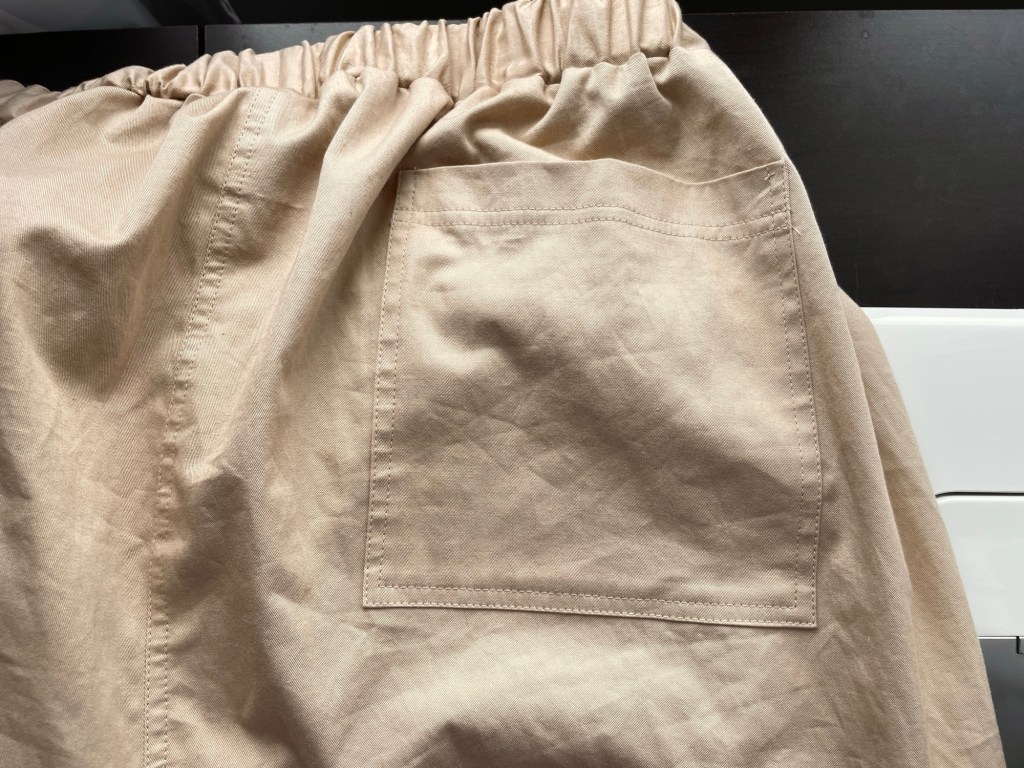
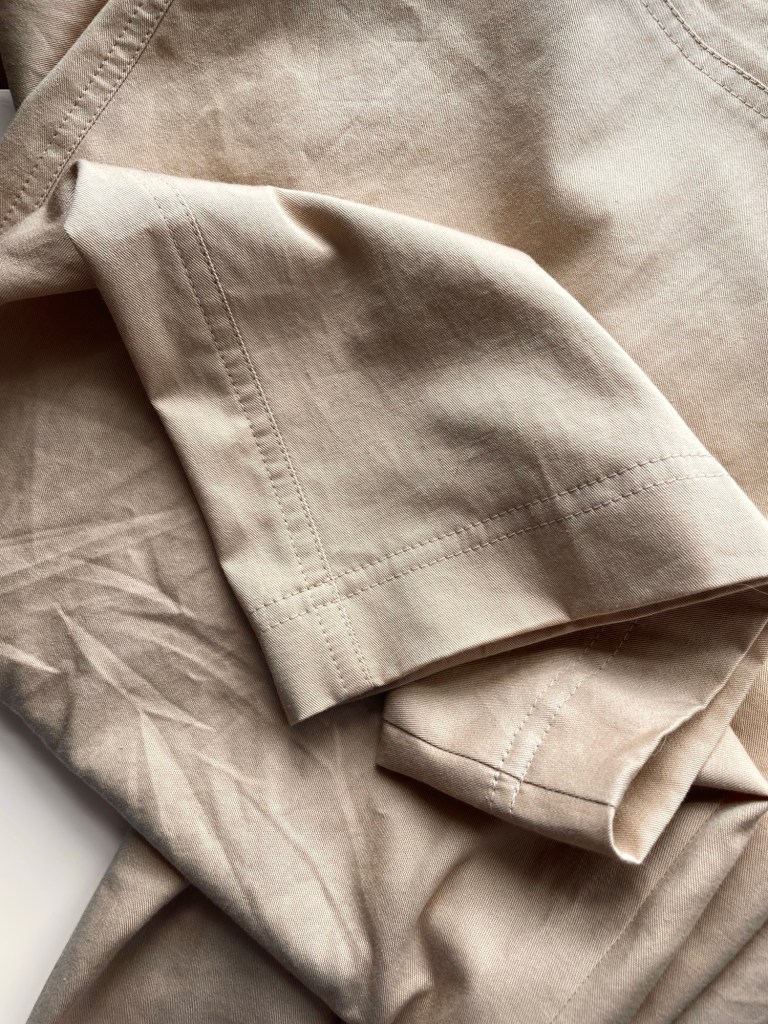
Shown with one of the several Jalie Tina t-shirts I’ve made recently. Faux front fly with elasticized waistSide cargo pocket with flapMy knee patchBack patch pocketPants hem. Lots of double row topstitching throughout these pants.
Pattern Background
The Style Arc Delta is a relaxed fit cargo pants pattern. There’s back patch pockets, faux front fly, and slash side pockets along with side cargo pockets with flaps. The elasticized waist is cut to be just slightly larger than the body hip measurement, which allows you to get them on while eliminating bulk at the waist as much as possible.
As you can see from the back leg piece, the leg is slightly tapered at the hem rather than being a true wide leg from knee to hem. I actually prefer this as it makes for a more controlled silhouette, and you don’t have to worry about your hem dragging the ground or getting soaked when it rains.
Size and Alterations
I made a size 20, with the following alterations:
Lengthened the legs 1”
Added 2.5” height to the back crotch curve, tapering to 1” at the side seam and then to nothing at the center front
My finished measurement for the waist elastic ended up being 34.25”, which is between size 16 and 18.
Since I made these to be summer outdoor work pants and the fabric is fairly thing for pants fabric, I added another layer of fabric to the knee area for more durability.
Fabric and Materials
I used the same 100% cotton Robert Kaufman fineline twill fabric from Fabric Mart that I used for my Jalie Denyse shorts.
Note: even though Style Arc only gives the yardage estimate for 58” fabric, I was able to use 44” wide fabric. My size 20 with a few length alterations and doubled up knee fabric took 3.25 yards.
For the waistband elastic I used some 1.5” non-roll Stretch-Rite elastic I had in my stash. It comes in a small retail package so I must have gotten it from Joann’s at some point.
The thread is Gutermann Mara 100 from Wawak.
The interfacing for the pocket flaps is Pellon Shape-Flex from Wawak.
Construction
I constructed these entirely on my Jukie TL-2010Q. The standard foot on it is fantastic for a project like this with the double row of topstitching because you can use the very inner edge of the foot as a guide for the first row of stitching so it is 1/16” away from the edge, and then switch to using the scant 1/4” outside as a guide against the first row of stitching. Eyeballing it works great, no need to switch out for guide feet.
When I did the waistband I wasn’t sure what my finished elastic measurement would need to be since this non-roll elastic is stiffer than my usual knit elastic. To better manage this I used the same method as my Jalie shorts where you sew the center back seam for the waistband but leave a 1” opening inside, then use that to thread the elastic through and trial it before trimming and sewing it. Then I hand stitched the opening closed.
Comparison to the Jalie Denyse
These two patterns seem similar, with similar finished measurements, but the drafting is actually quite different. I would say that in general the Delta is a trouser style draft and the Denyse is more of a slacks style draft. An explanation of trouser vs slack vs jeans crotch curves can be found in this old Pattern Review post. Just for reference, the Jalie Denyse is size CC and the Style Arc Delta is a size 20. These are the corresponding sizes for a 48.5” hip.
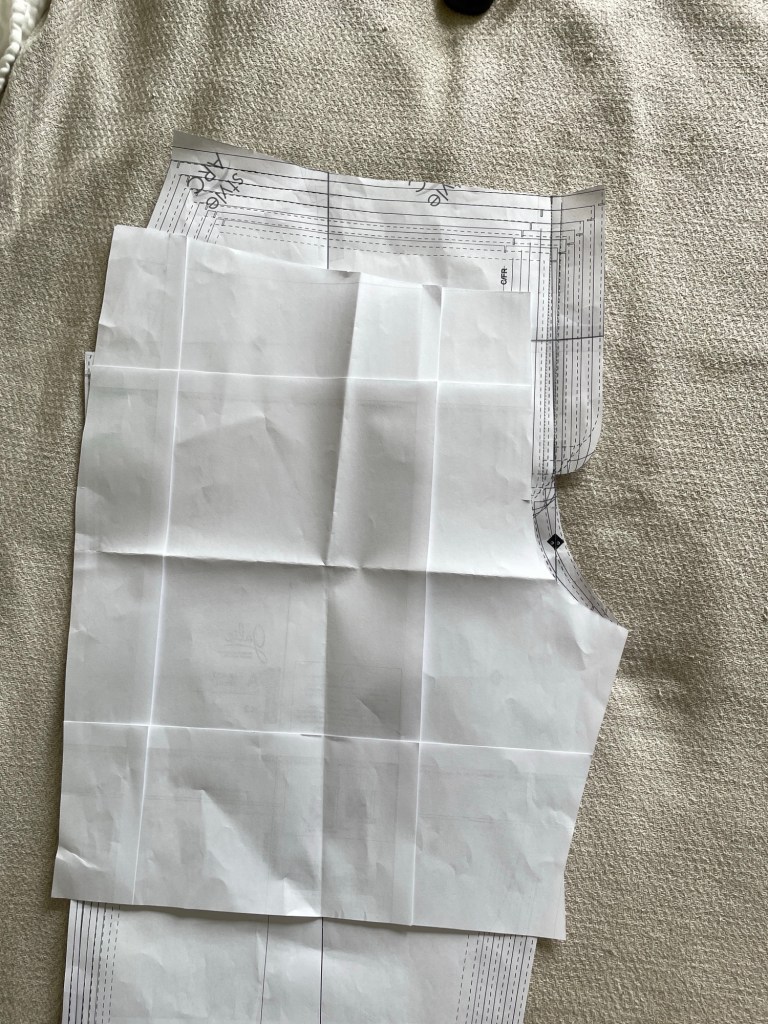
Overall the Style Arc Delta has a much higher rise than the Denyse: about 1.5” in the back and 2.5” in the front. The back crotch curve of the Delta is also straighter, with a more scooped out back crotch curve. The Denyse is definitely more angled, with a shallower crotch curve. In the photo below I’ve overlaid the Denyse on top of the Delta. They are actually really similar measurements from hip to center back seam, but the Denyse has it shifted more towards the side so the back crotch curve ends more angled.
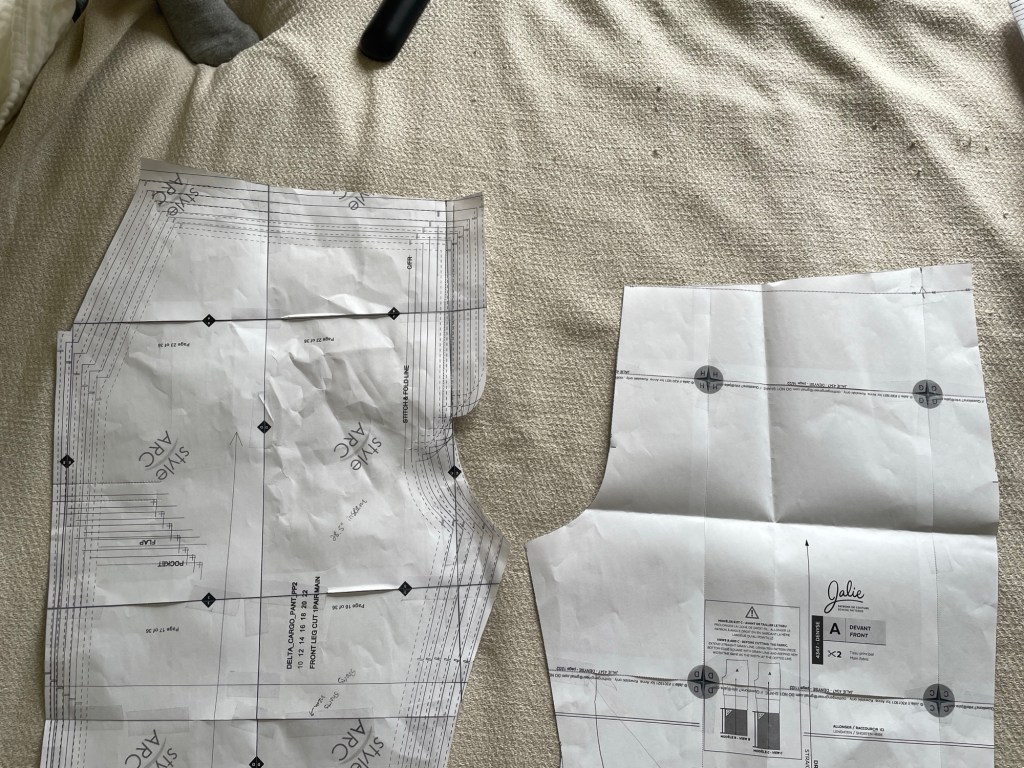
Here’s a comparison with the Delta on the left and the Denyse on the right.
Now for the front crotch curve comparison.
The Denyse rise is 2.5” lower in the front than the Delta.
Unfortunately the Delta crotch curve paper got a little crumpled but you can see how the Delta is much shallower and taller compared to the shorter, more scooped out curve of the Demyse.
Here they are overlaid, with the Denyse on top of the Delta. (Note that the Jalie Denyse has inseam pockets and the Delta has front slash pockets, so that’s why the top of the Delta is a lot smaller than the Denyse.) As with the back piece the distribution of the pants is so the fabric is shifted to the side seam, so you get the same amount of width across the hip despite it appearing smaller in the photo below.
Now heres the front view of the Denyse and Delta respectively. Keep in mind they’re the exact same fabric.
Jalie DenyseStyle Arc Delta
So despite appearing to have similar style and ease, the drafts for these patterns are actually quite different. The Jalie Denyse feels and looks a bit slimmer than the Delta. To me neither one is better or worse. It depends on your body type and what look you are going for. For me, the Delta flows over my hips better. You can see how there’s no diagonal lines from the elastic to the my hips. But it also has a bit more excess fabric around the center front, which does correspond more to a trouser style crotch curve/fit. With the Denyse I definitely have more under butt wrinkles than the Delta, but again this corresponds to the Denyse having more of a slacks draft. (This is why you need to think carefully about the intended draft of a pants pattern before trying to remove every single wrinkle under your butt.)
In general I would say that Jalie is drafted more for straight hips and Style Arc is more for curvier hips. You can even see this in their size chart where the Jalie waist measurement is two centimeters (about 3/4”) larger and the hip one centimeter (3/8”) smaller than the same size would be for Style Arc. That doesn’t necessarily mean you should avoid one or the other, just be aware of it and alter accordingly.
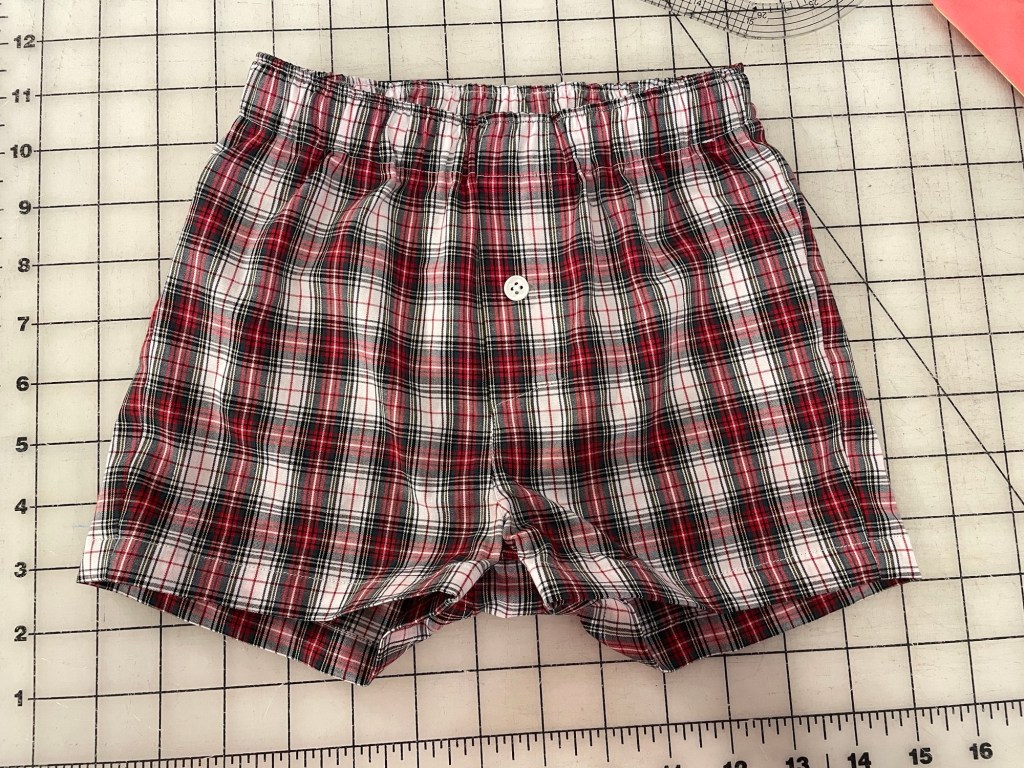
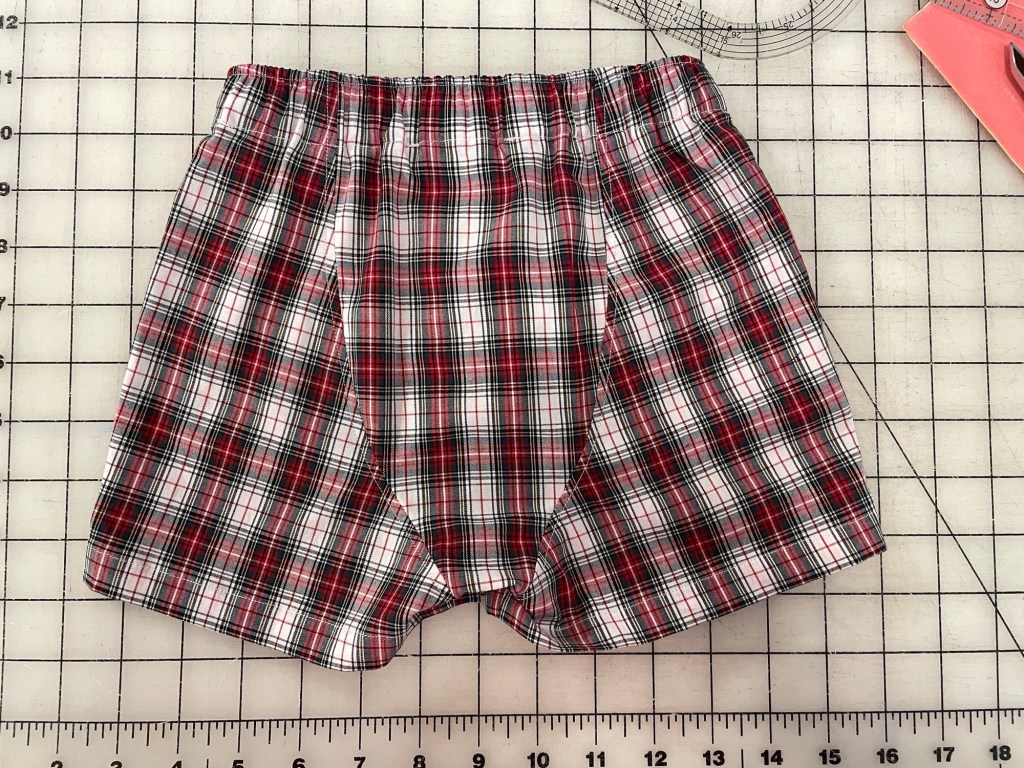
The Jalie Martin pattern is for men’s loungewear pants and boxer shorts. It is drafted for wovens and features a faux fly with an optional decorative button, elastic waist, and a back panel instead of a center back seam. There’s also an optional back patch pocket.
Size and Alterations
The size range goes from 2T all the way to 2X. If you pay a little bit extra you can get up to a 5X for the PDF version.
I cut a size F, which is equivalent to a 2T. The only alteration I made was adding 1/2” height to the center back. It turns out it wasn’t necessary.
The fit ended up being very similar to that shown on the Jalie models.
Fabric and Materials
I used a very lightweight 100% Robert Kaufman shirting purchased from Fabric Matt a few months ago. The elastic was from Mandala Crafts on Amazon. The button
Construction
The instructions are pretty good. This really does go together quickly and easily. I think it would be a nice project for someone who wants to try something more complex than your average pull on pants, without having to deal with zippers or pockets (aside from the optional back pocket.
I did find that I needed to snug up the waist elastic another inch.
Conclusion
I made these for my son, who is turning three years old in a few weeks. We’ve been working on potty training the past year. He’s pretty flawless when commando but struggles when he’s wearing briefs (probably because they feel too much like a diaper). These allow him to wear actual underwear without feeling snug, and as a result he’s much better at letting me know when he needs to go. He has also started trying to dress/undress himself. As a result I consider this pattern a worthy investment, especially since it seems like regular cotton woven boxer shorts for toddlers aren’t easy to find. I have no idea what his preferences will be when he’s older, but for now he seems pretty happy with these!
He’s worn these under the Jalie 3243 pull-on shorts and Jalie Henri shorts, and they fit fine under them, with no peeking out at the hem.
Another winner from the Ottobre 1/2024 issue. He’s been wearing them all fall, winter, and spring!
Pattern Background
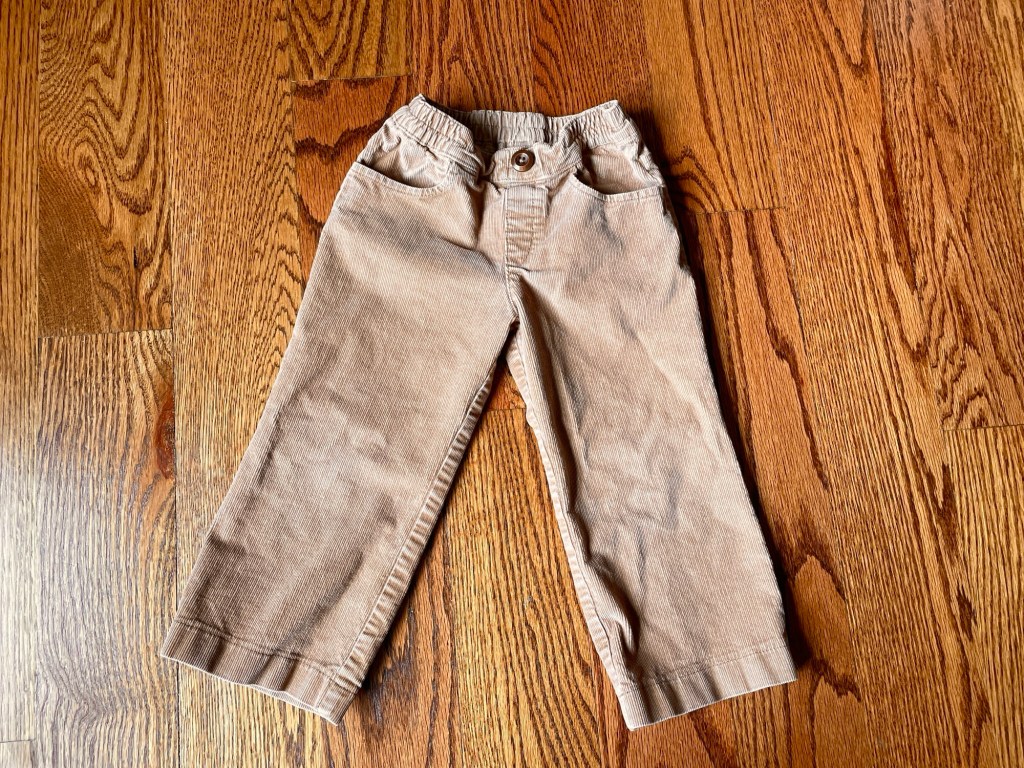
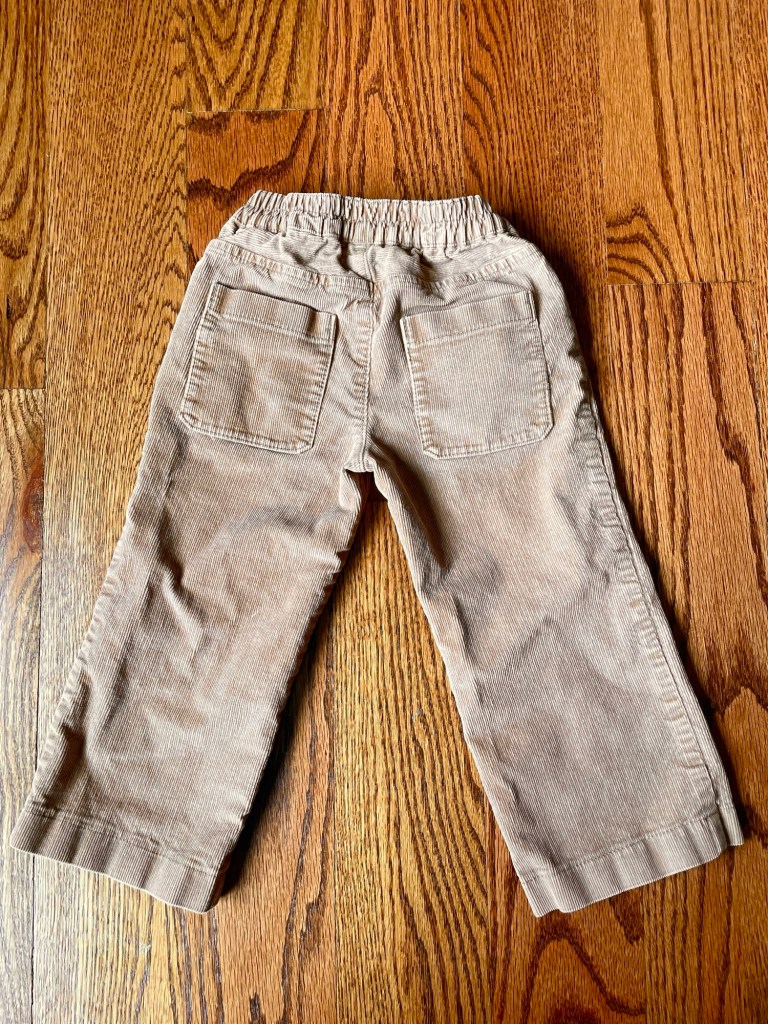
This is a wide leg pants pattern with back and front pockets, faux front fly, and a partially elasticized waistband. It has a wide range of sizes. #17 is European 92-122, and #22 is 128-170.
As I mentioned above, these pants start at 92 and go all the way to 170. I made a size 92. I do find the waist is a bit on the low side with these pants, especially since he wears cloth diapers, so in the future I may extend the rise a bit to help with coverage. I did my usual adding 1/2″ length to the top of the center back seam to help with coverage and and honestly it could have been more.
Fit/Sizing
When I first made these they were a bit too long and needed to be cuffed, but not long after he had a growth spurt and now they’re totally fine as long as he’s wearing shoes with them.
Materials
Any sort of woven with a bit of stretch will work for these pants – denim, corduroy, twill, etc.
I used a slightly stretchy fine wale corduroy, purchased from Gorgeous Fabrics last year.
Construction
These pants are fairly straightforward. As I mentioned in the description its a faux front fly, so you just turn back the inside pieces and topstitch and then sew a button onto the front. The waistband is elasticized except for a small section in the front between the pockets.
Conclusion
I’ve made my son a couple of pairs of woven pants for the fall and this is my favorite pattern. He really likes the wide cut (easier for playing). I was unsure at first about how it would look on him since he has a slim, muscular build for a toddler but I really like them on him. They have a modern look and go well with looser fitting sweatshirts as well as slimmer fitting t-shirts.
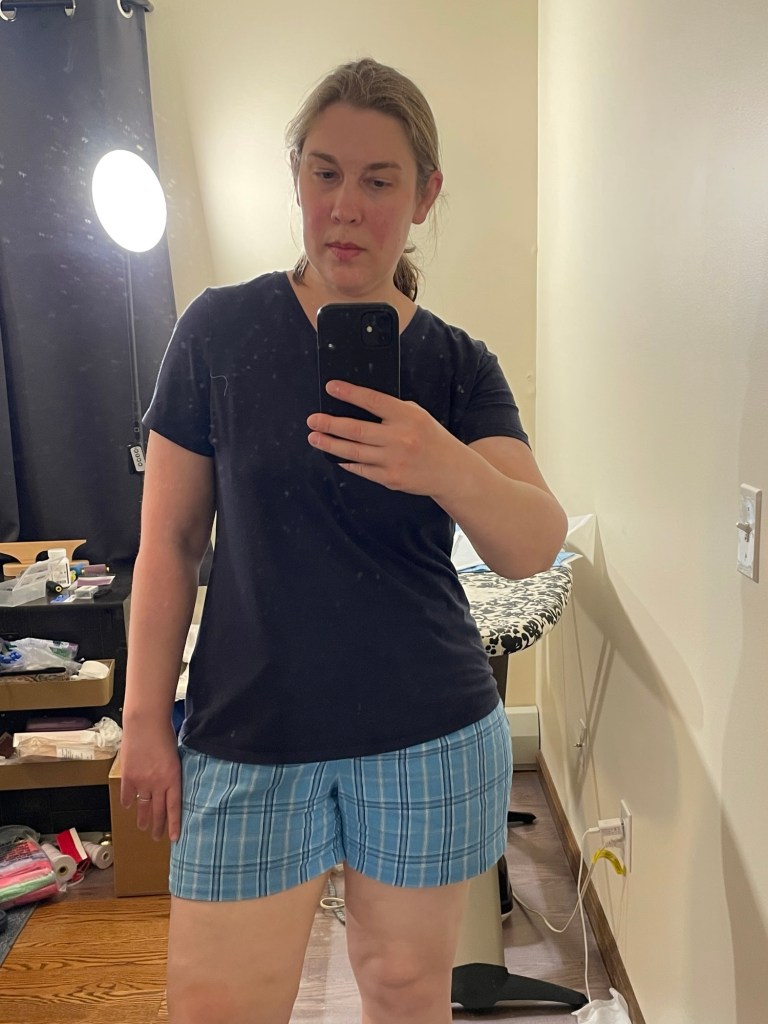
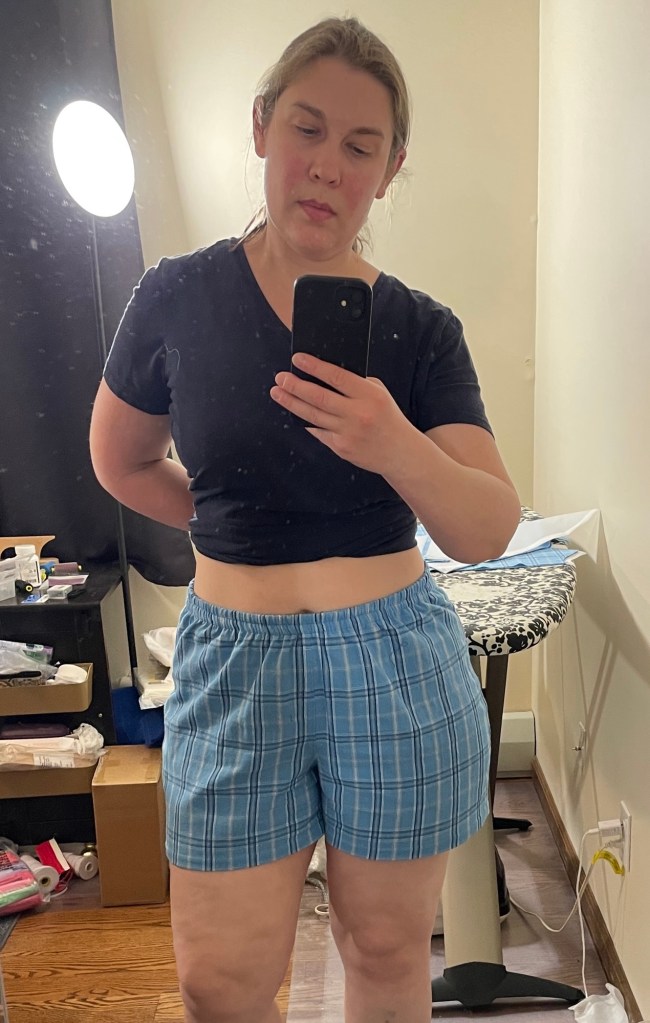
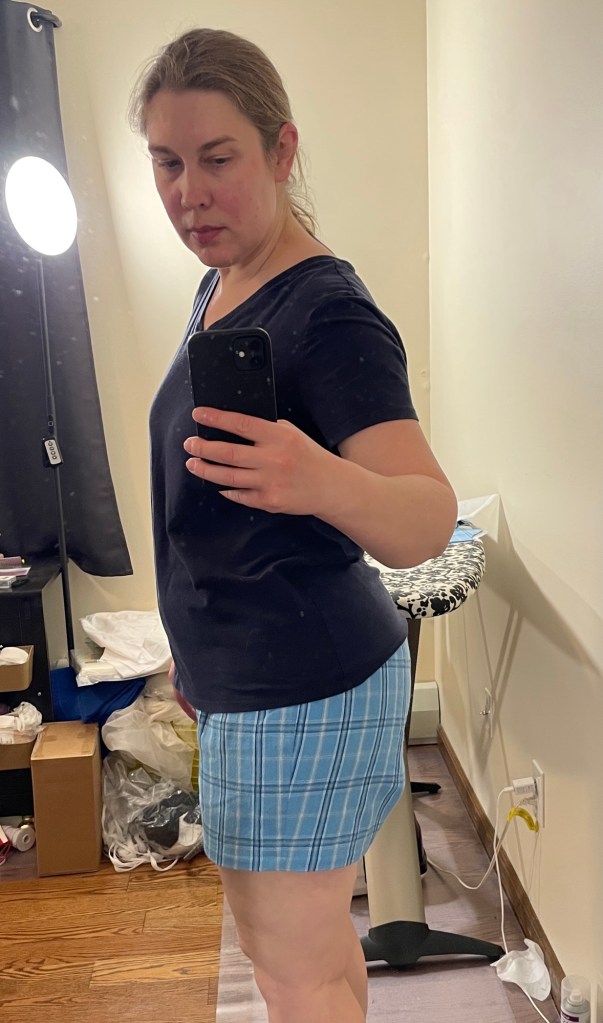
This was a very quick and easy Friday night project. I’ve been trying to get ahead of a summer wardrobe and needed some lightweight pajama shorts.
Pattern Background
Jalie 3243 pull-on pants and shorts have front patch hip pockets, an elastic waistband, and the option of having either the waistband facing showing on the front (nice if you want to do a contrasting color) or hidden inside. This pattern is drafted for wovens.
Sizes go from 2T all the way up to women’s size 22. As is often the case with Jalie, I chose this pattern because the wide size range and classic styling mean I can use it for my toddler son as he grows as well as for myself and my husband.
Materials
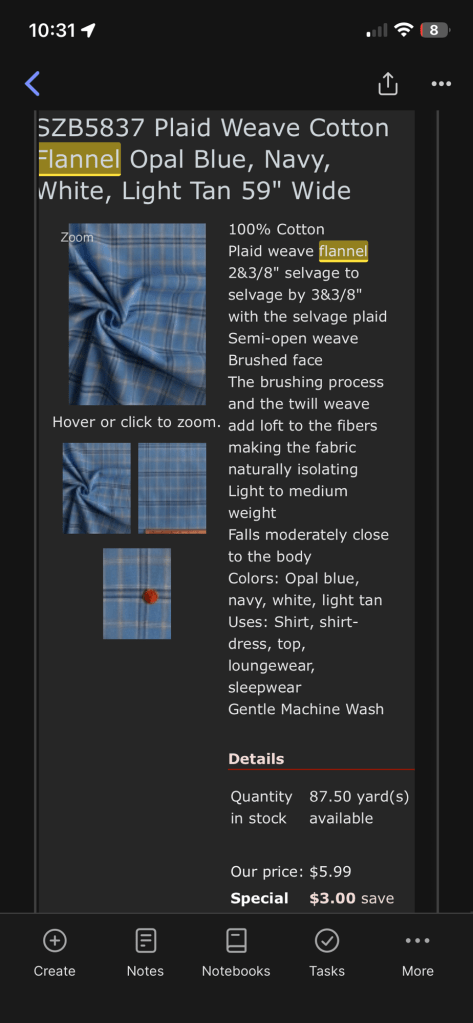
You can use both regular and stretch wovens. I used a lightweight plaid flannel I bought back in 2012 from Fabric Mart. It isn’t the best quality flannel but since I wanted these for summer pajama shorts the light weight and minimal nap worked in my favor. (And yes I really paid only $3 a yard! How I miss the times before rampant inflation and tariffs.)
Size and Alterations
I cut a size CC based on my hip measurement. For alterations I added 2.5” to the center back seam height, tapering to nothing at the center front. I also added 1/4” width to the front inseam. I left the pockets off because these are for pajamas and I just didn’t want to deal with trying to pattern match that.
My first pair wasn’t uncomfortable but they just seemed too snug for my taste. Jalie does note on their website that if you want a looser fit in the hip you should go up a size or use a stretch fabrics.
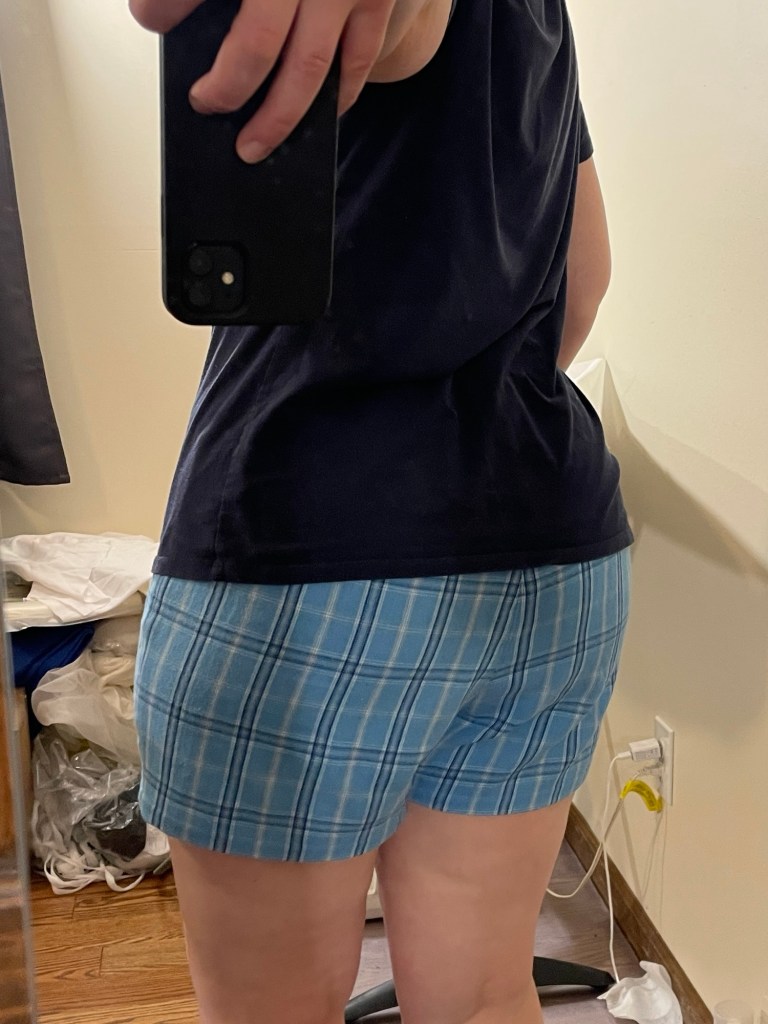
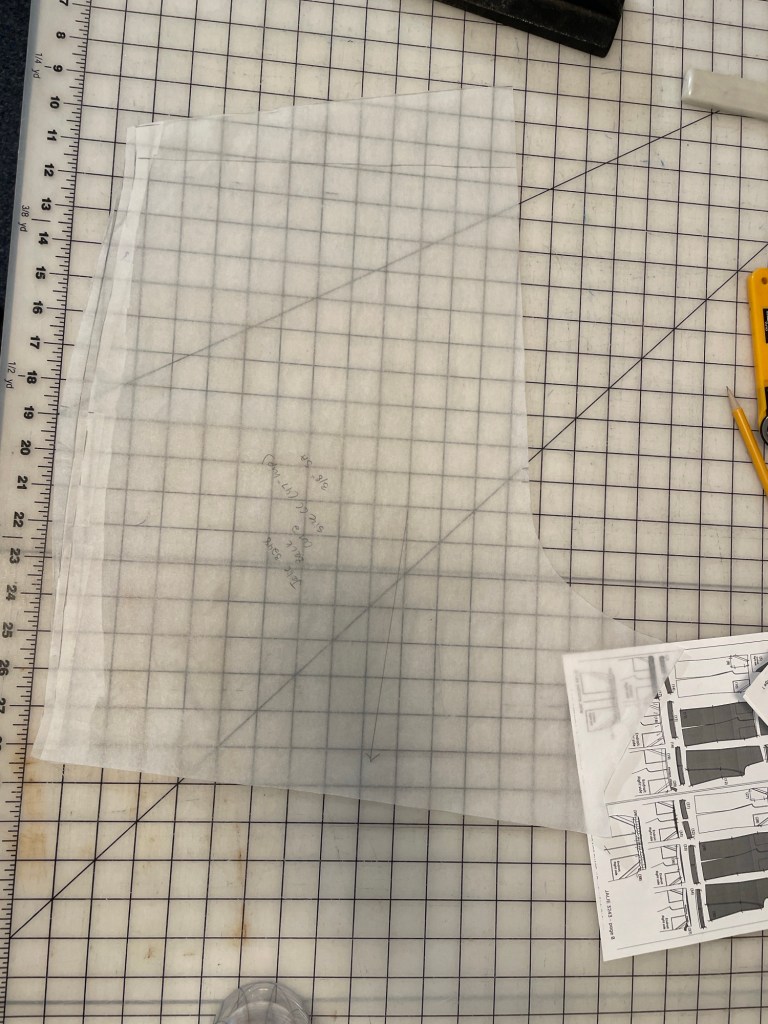
I also noticed they were too tight in the butt and the side seam wasn’t hanging straight. So for my second version I added 1/4” to all side seams, thus giving myself another 1” of ease, and added another 1/2” width to the back side seam at the hip. Here’s what the back piece looked like after I was done:
These alterations made my second pair much better.
Construction
These pants are very quick to make. I sewed them on my Juki TL-2010Q (always a pleasure to sew on for light to medium weight fabrics) and finished the inside seams on my serger. I did a couple things slightly different from the instructions though.
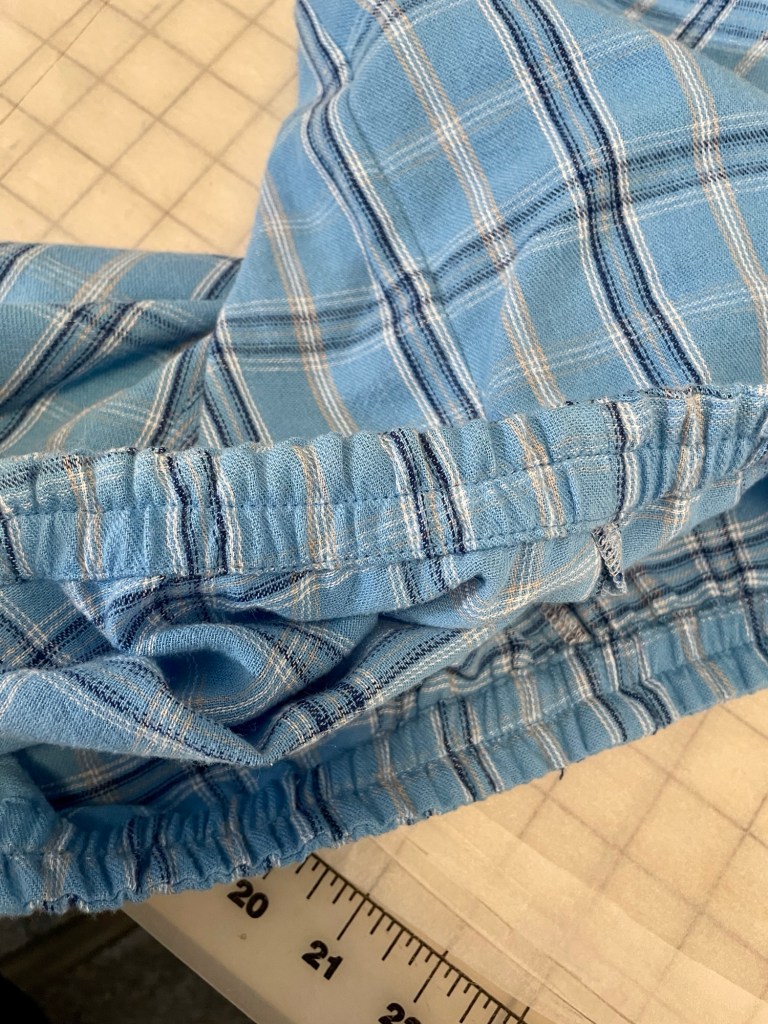
Rather than creating a casing and then pulling the waistband elastic through, I sewed the seam allowance of the waistband facing piece directly on top of the elastic, overlapping the edge of the seam allowance about 1/4” from the left edge of the elastic and using a 4mm length stitch so I wouldn’t overwork the elastic and stretch it out of shape. Then after I rolled the elastic to the inside of the shorts I stitched very close to the lower edge of the elastic. Once it was done the elastic was completely encased and then I topstitched in the middle. No need to make a casing and then pull the elastic through.
Of course it isn’t as adjustable after the fact so probably not good for kids clothes or your first version, but good for situations where you have confidence that you won’t need to alter it after the fact.
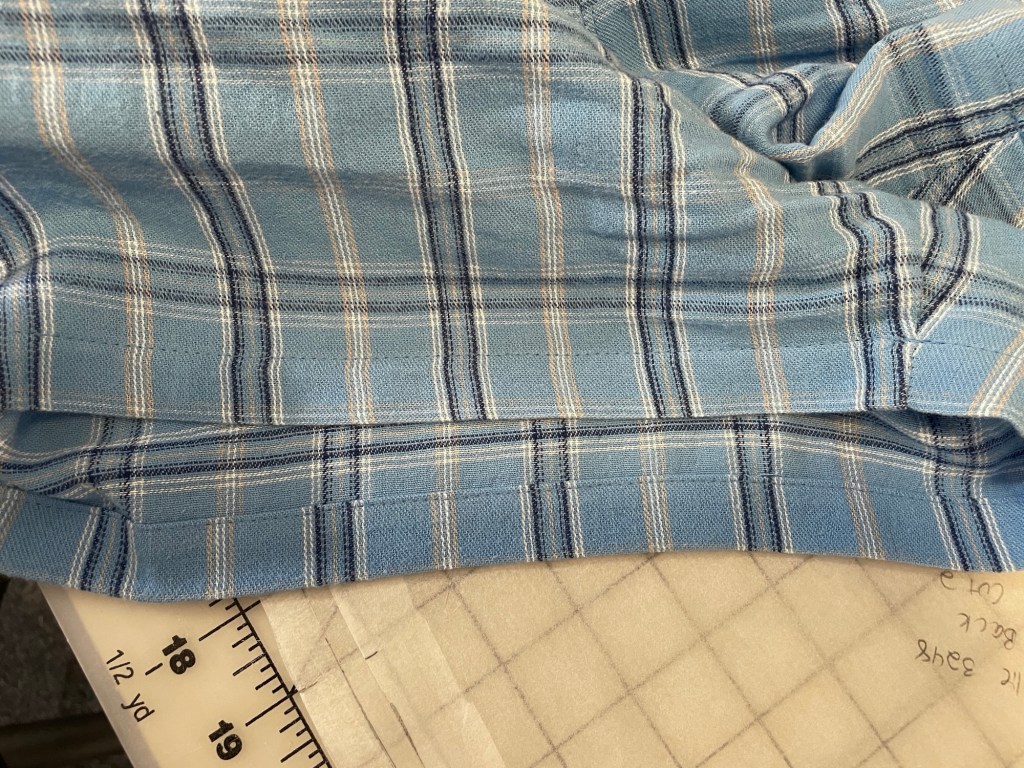
When I did the hem I first turned it up only 1/4”, then turned it up again another 3/4” and stitched very close to the edge. Very similar to how I did the waistband. This made for a very neat hem finish:
In the past I used to serge then fold to the inside and then topstitch over the serged edge, but I find myself preferring to try new things and do finishes like this lately. Helps distract from some recent sadness like my father’s health struggles and losing my beloved cat recently. (My dad actually improved enough that he was able to go home to my mom a couple of weeks ago, but I’m still doing a significant amount of caregiving duties. And while my cat had some health struggles the past six months, I wasn’t anticipating losing him quite so soon and miss him terribly.)
Conclusion
This is a really nice pull on pants pattern for all ages. The waistband facing eliminates having to measure and turn up a waistband casing, and the fit is actually quite tailored for this style of pants. I do recommend going up a size though if you use a non-stretch woven.