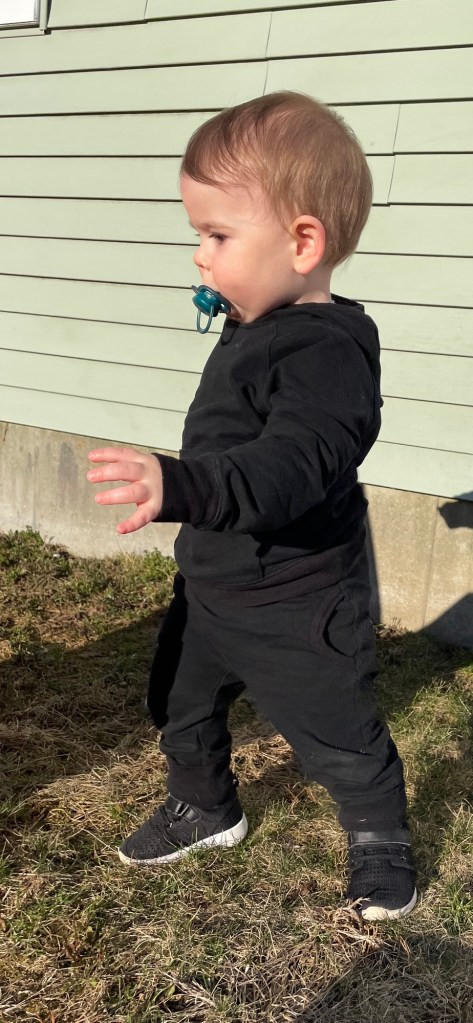
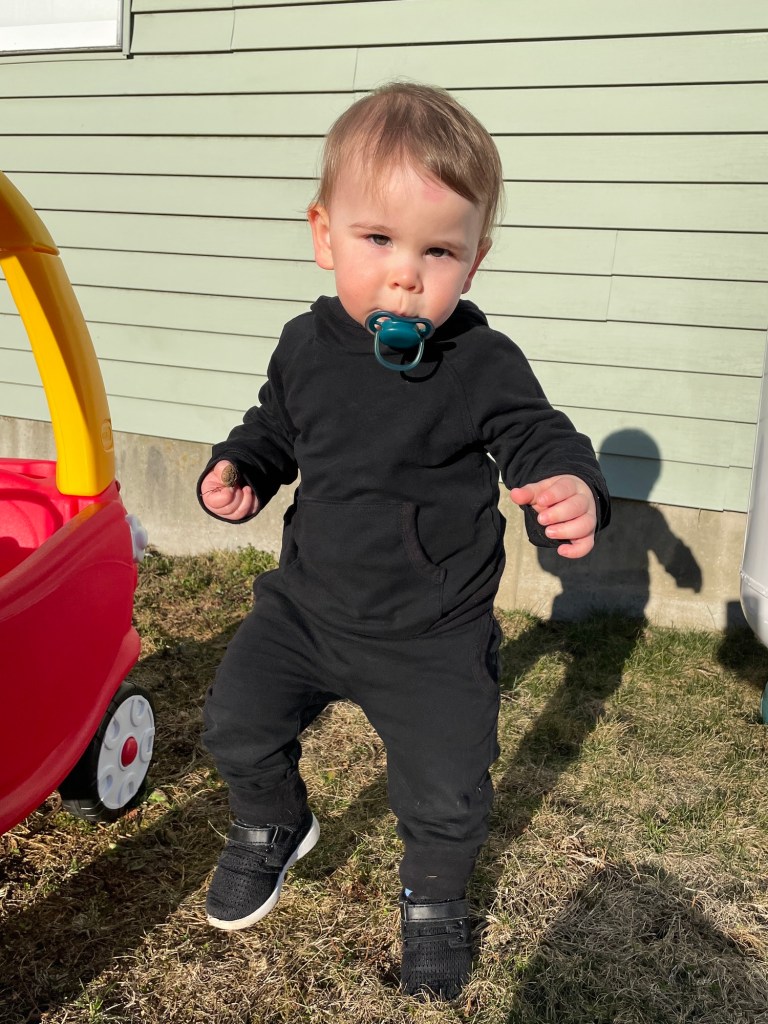
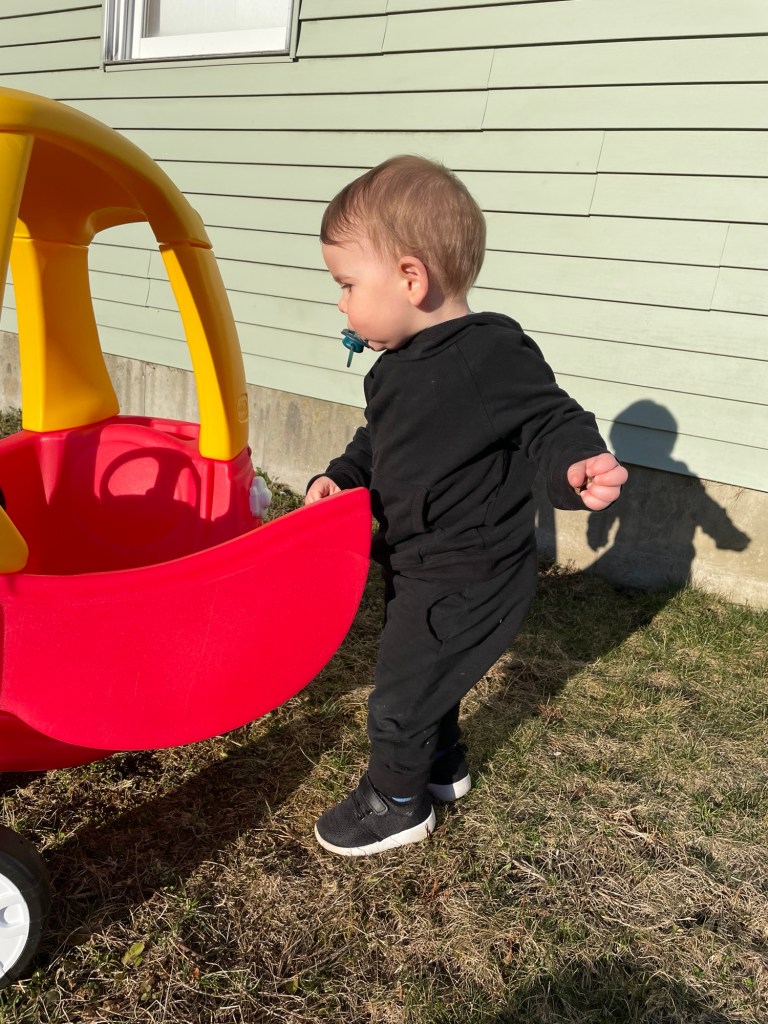
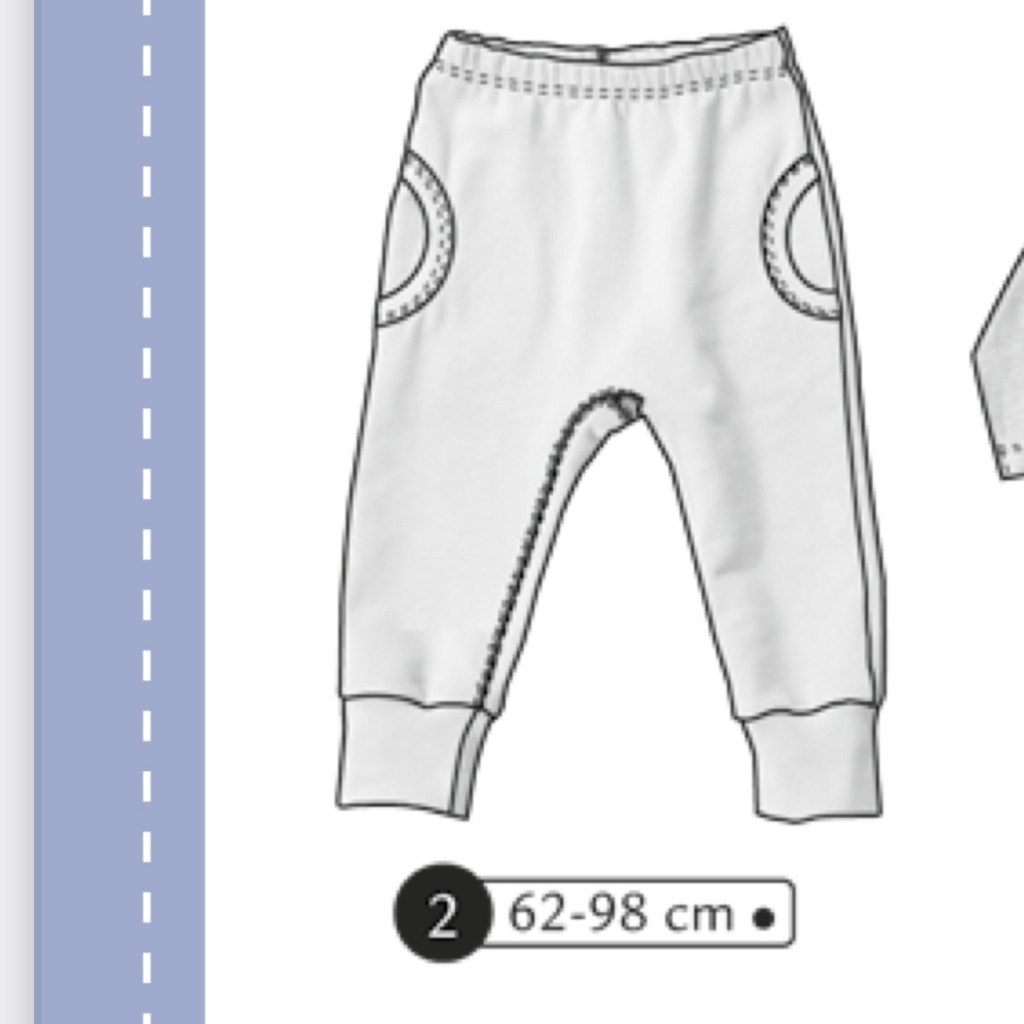
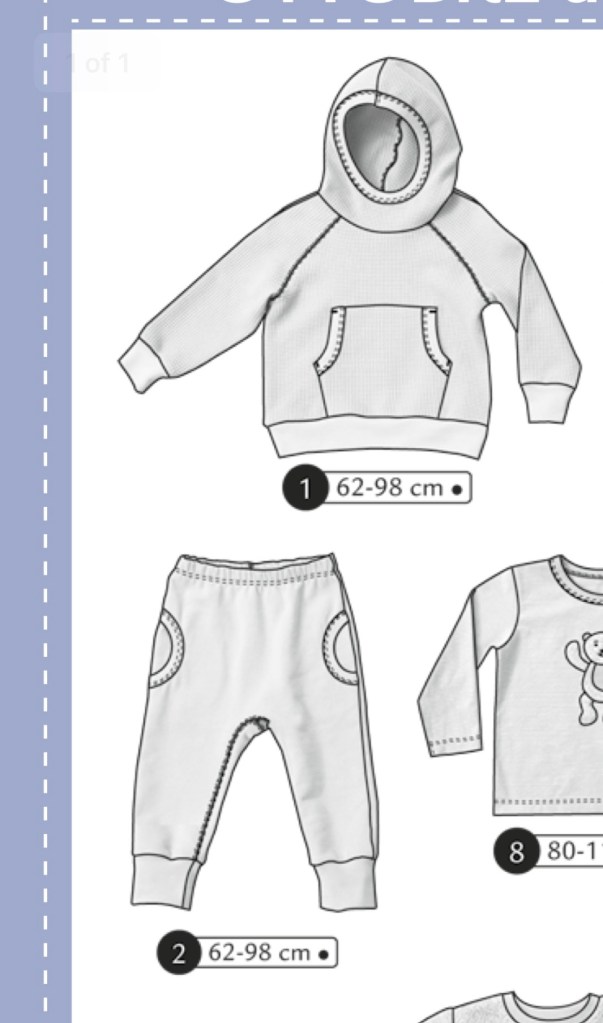
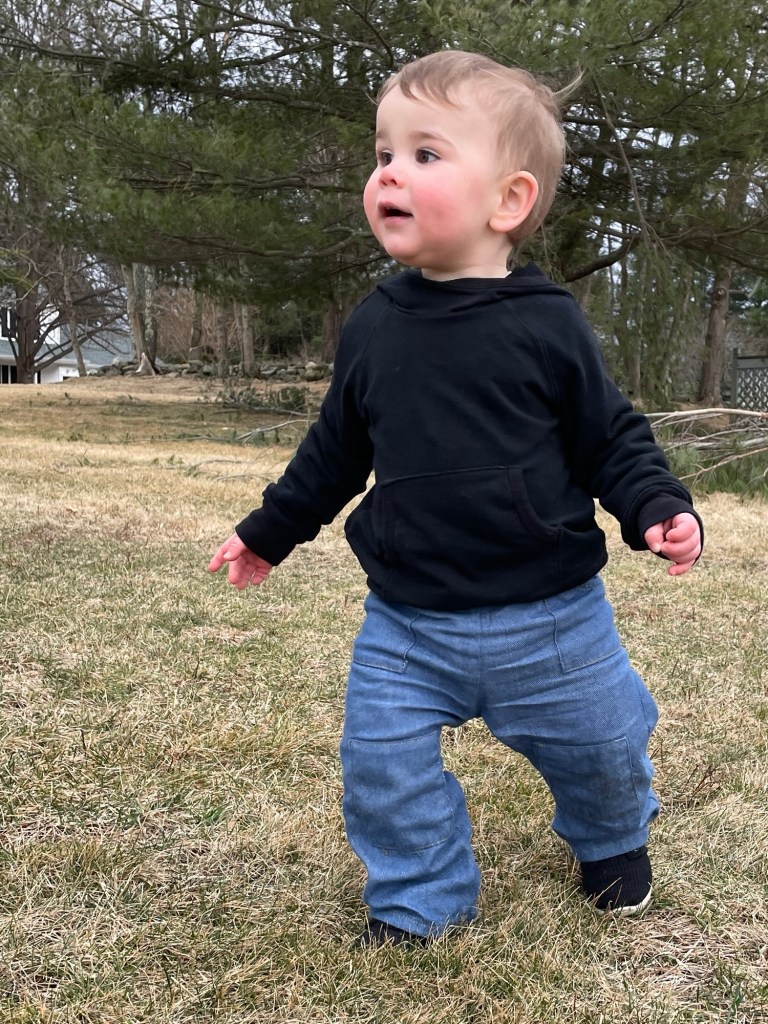
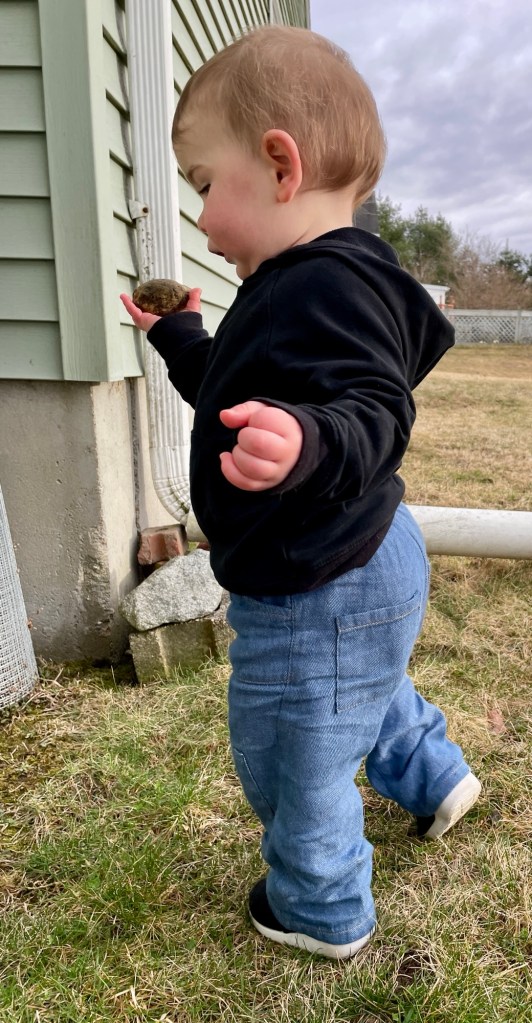
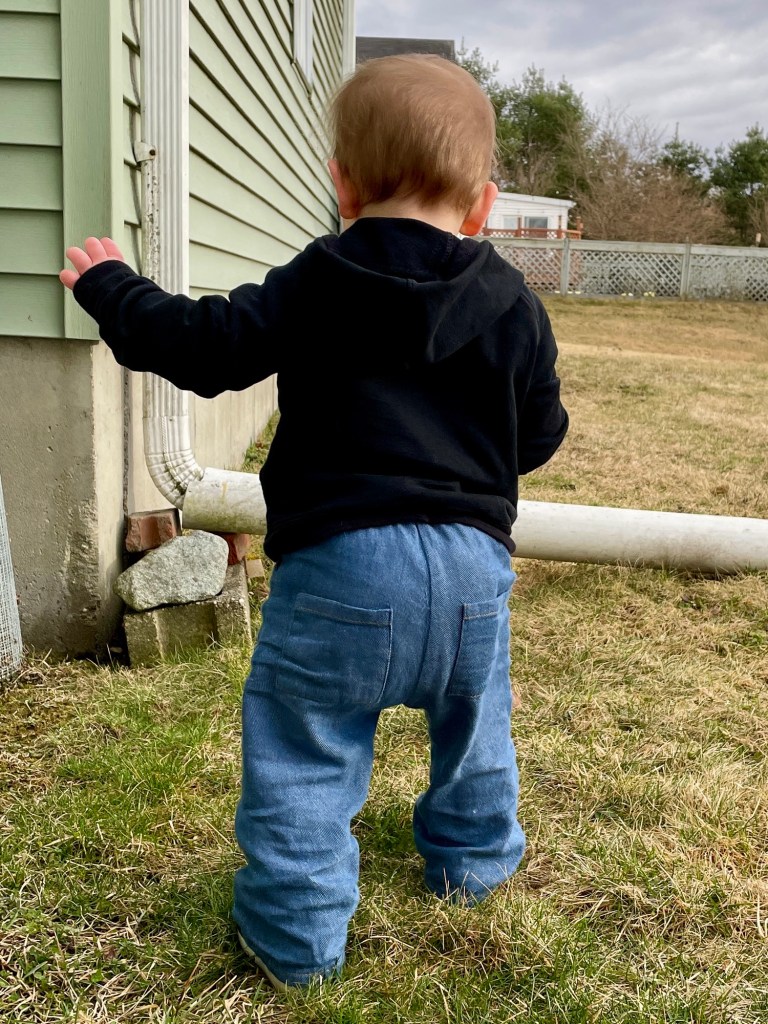
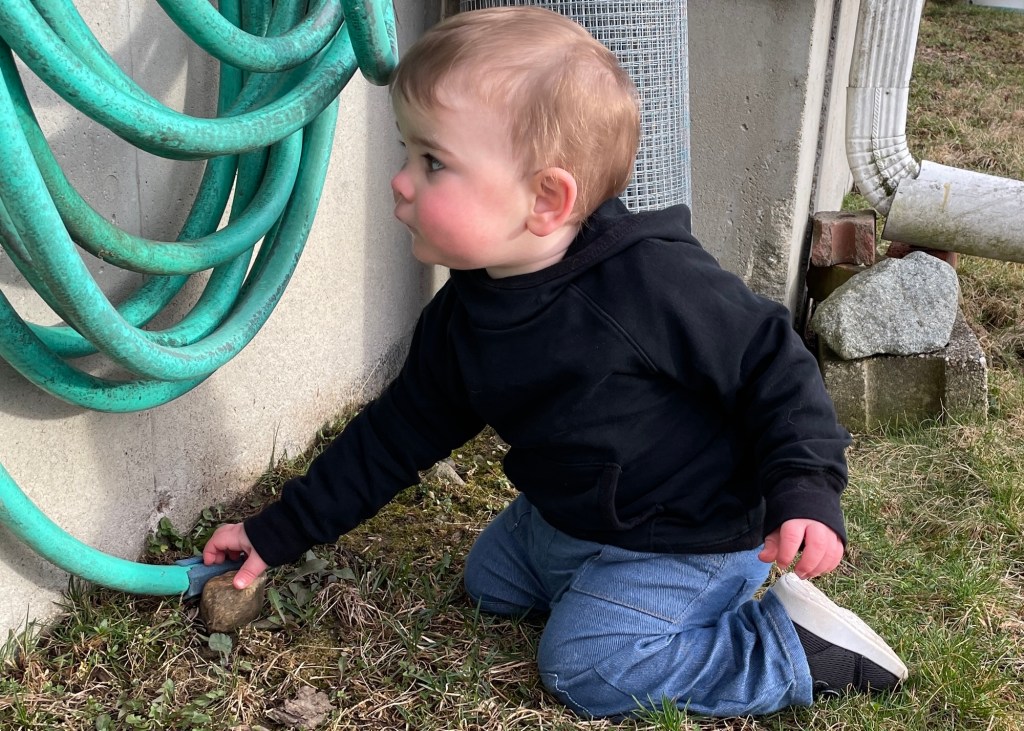
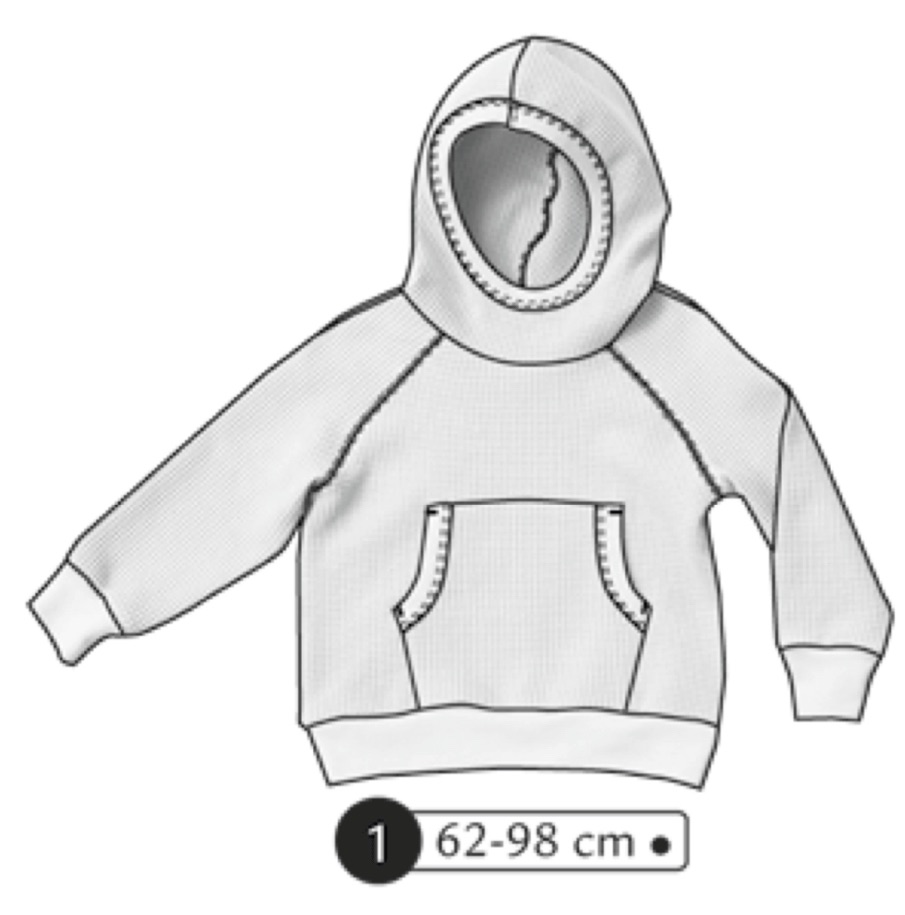
Ottobre 4/2022 #1 is a hoodie with raglan sleeves with darts, a front kangaroo pocket, and a close fitting hood with darts. The edge of the hood is finished with ribbing. Ribbing is also used for the cuffs and hem band.
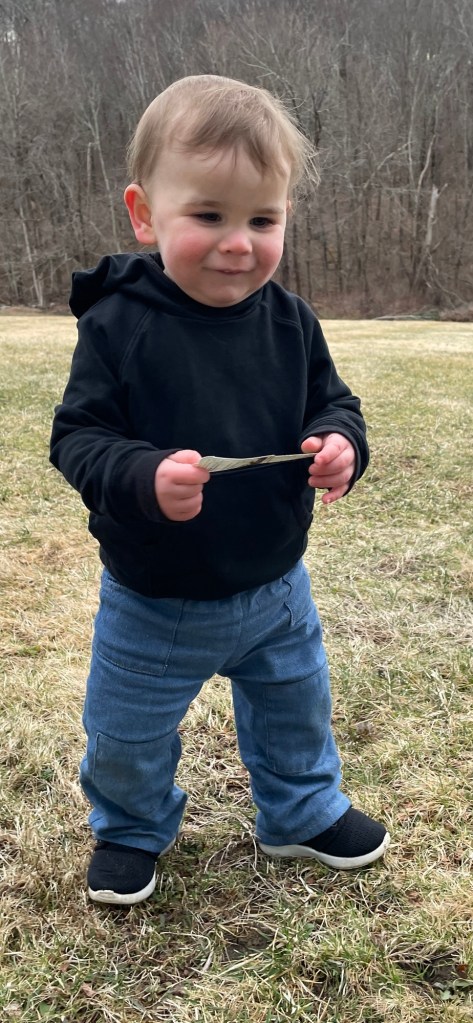
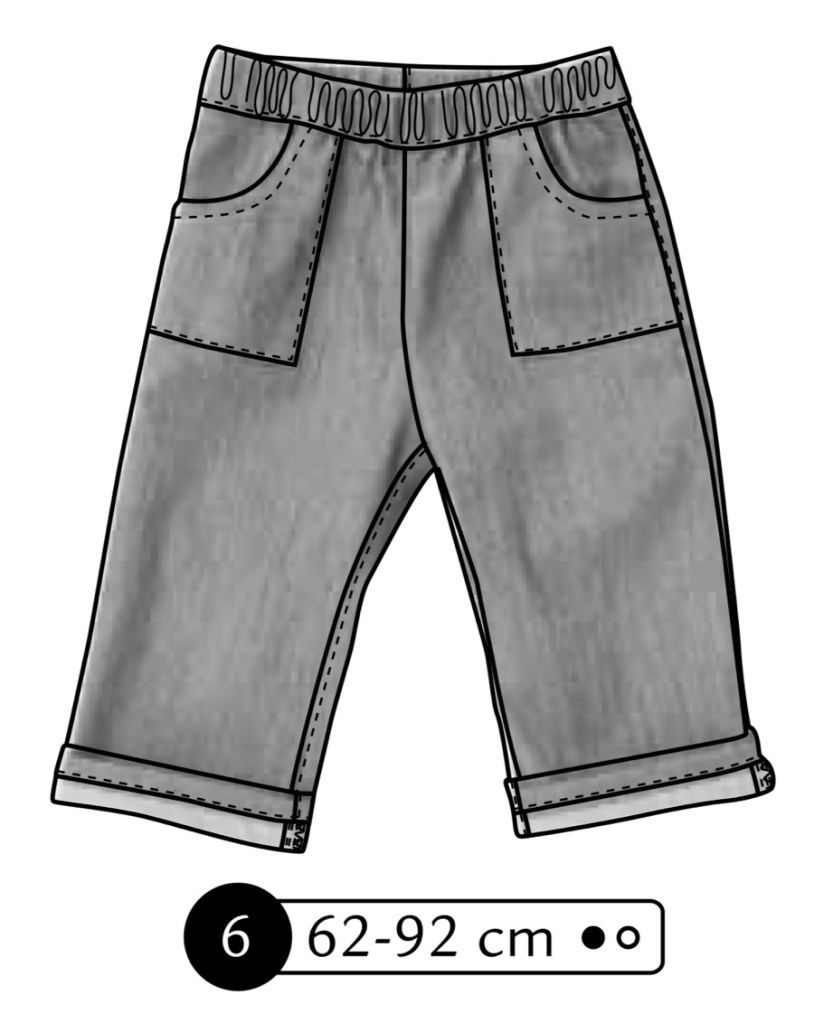
Ottobre 1/2020 #6 is a baby jeans pattern. The edges of the front patch pockets are finished with self fabric bias binding. The waist is encased elastic, so these just pull on.
Fit and Alterations
I made both of these in size 86. When I measured him last month he was 32” tall and 25 pounds. Size 80 is perfect on him right now, but since I’m hoping to use them again in the fall I decided to size up.
I kept the hoodie as is; for the jeans I added knee patches. Up until recently he was a knee walker (and he would ONLY walk on his knees) and as a result half of the pants I made him last fall have holes in the knees now. Now he walks great (on his feet!) but he still does some knee walking and is often on his knees when playing outside, so I’m hoping the patches will help prolong the life of these jeans.
Materials
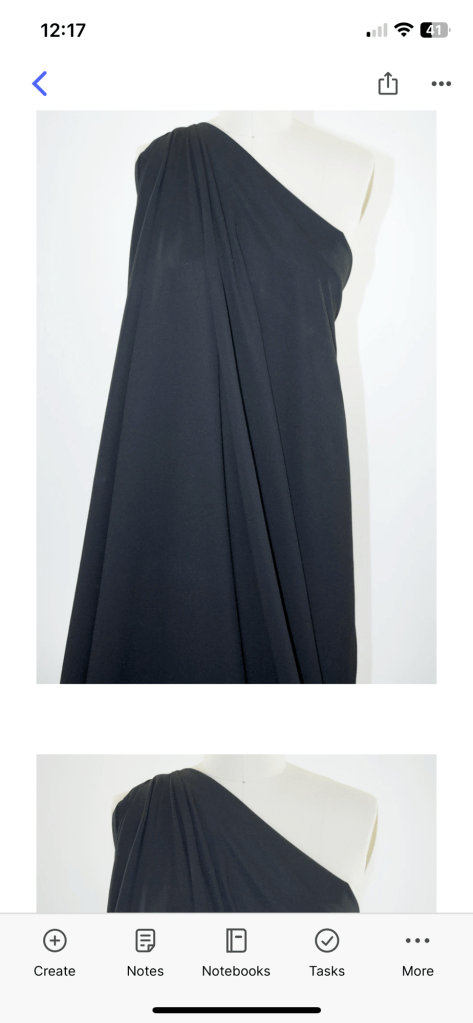
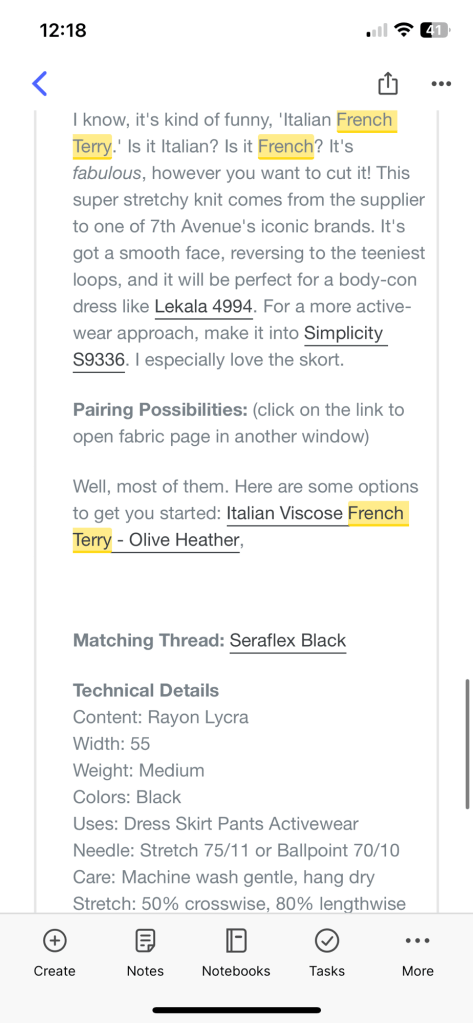
For the hoodie I used a rayon/lycra French terry purchased years ago from Gorgeous Fabrics. I had originally used this for my first version of my Jalie yoga pants, but unfortunately they haven’t held up well. The fabric is coming apart at some of the seams. I am not sure what’s wrong with it, maybe it’s just old and can’t handle the stress of tightly fitted yoga pants! But it’s perfect for this hoodie since it is so soft and won’t be stretched all the time.
For the hood binding, cuffs, and hem band I used a cotton rib knit from Nature’s Fabrics.
For the jeans I used a lightweight denim from my stash. I have no idea where or when I acquired it. It has a soft, lightweight drape (actually would make a great shirt fabric). The only downside is that the fabric is too soft to hold a rolled up cuff.
Construction
Both of these were pretty straightforward and went together quickly. I will say that for the jeans they have you sew the waistband to the inside first, run the elastic through, then fold the seam allowances over and topstitch in place from the outside. It sounds simple but the elastic makes it fiddly and it was by far the most consuming part of the jeans construction. I would consider just attaching it to the outside first, then topstitch in place from the outside, without folding under the inside seam allowances.
Conclusion
This is a great play outfit for active toddlers!
I use the hoodie all the time now for when we are going out and it’s too warm for his coat but he still needs an additional layer. It fits well over a shirt. I do plan on making him a regular zip hoodie soon but for now this works.
The jeans are working out well too. They’re more durable than his usual sweatpants for playing outside on the ground and being jeans, they go with any shirt in his wardrobe. I would absolutely make the jeans again, but in a stiffer fabric so the rolled up cuff holds better.
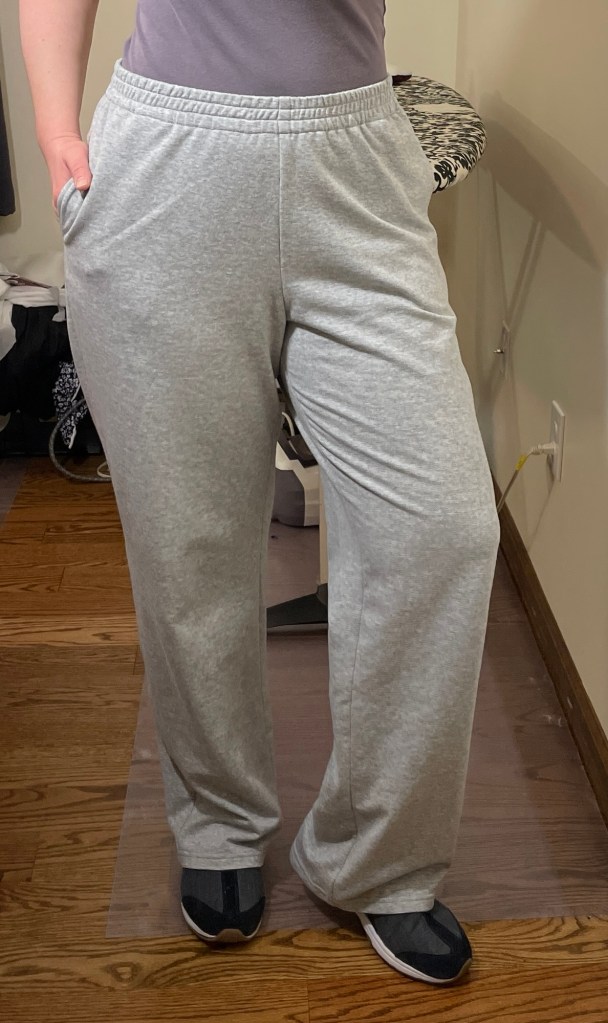
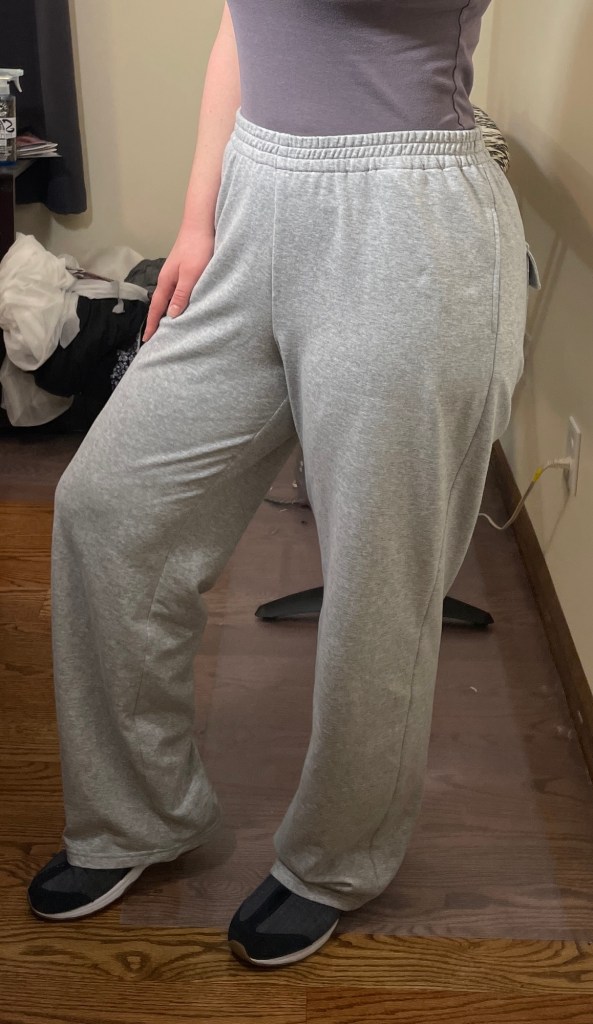
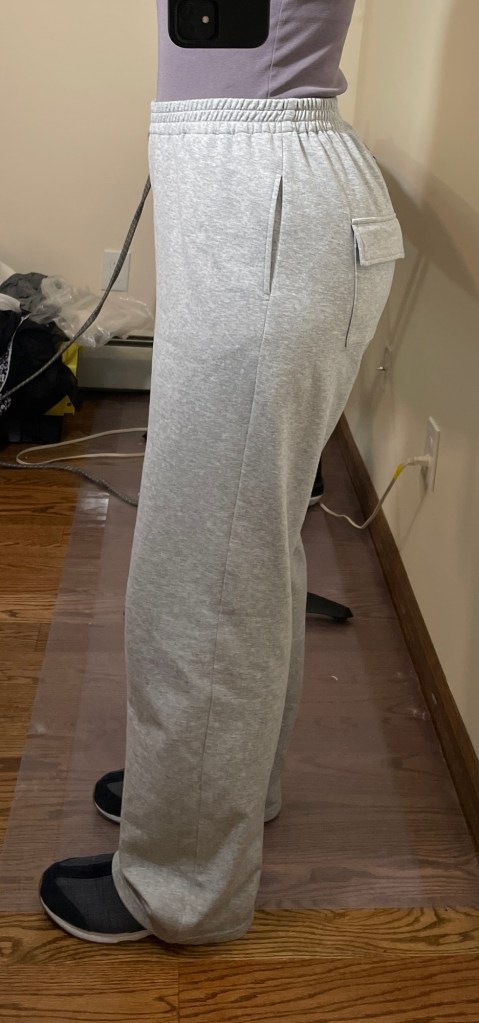
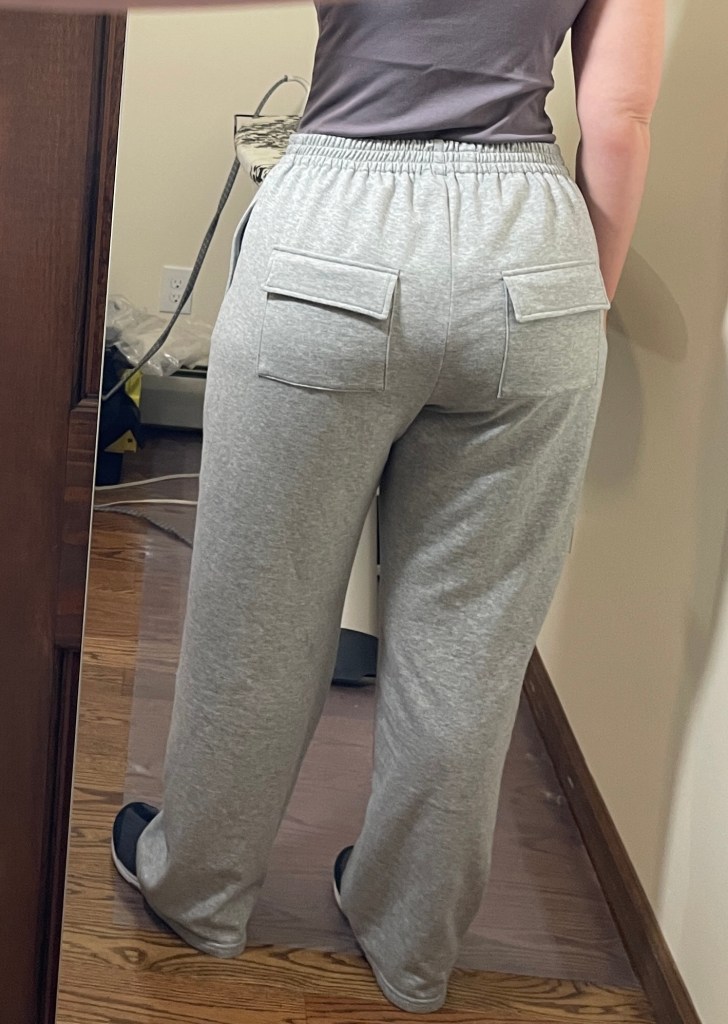
Jalie 4457 is a pattern for sweatpants and shorts that includes side cargo pockets, side inseam pockets, and back patch pockets with flaps. The pants have a wider straight leg. The waist is finished with elastic that is topstitched in place with one or two rows of stitching (this will vary based on the size you make).
The side seam pockets can be made from one piece of jersey with the facing pocket piece self fabric to help reduce bulk. They hang from where the waistband is stitched, thus reducing bunching.
There’s the normal range of Jalie sizes, from 2T to women’s plus size 2X. I think they have an extended size pattern also available on their website that has more plus sizes. You can make these for men too though, especially if you are willing to shorten the back crotch curve for their typically flatter butts.
Materials
Jalie suggests sweatshirt fleece, French terry, and heavier jersey with at least 20% stretch across the grain.
I used a mid weight French terry with a brushed, fleecy back from Fabric Mart with 20% stretch widthwise and 40% stretch along the length. It is sooo soft and has great drape – perfect for the wider legs of this pattern!
Fit and Alterations
Based on my hip size I made a AA. I cut a size Z for the waistband elastic.
I left off the side cargo pockets. Maybe I will add them to summer shorts. I mostly bought this for the cut, not the cargo detail.
For alterations I lengthened the legs 1.25”. I probably only need an inch but I like to allow a little bit of extra fabric for new pants as I have noticed no matter how much I preshrink, as time goes on the length tends to contract. I also added 3” at the center back seam, tapering to nothing at the center front.
The 3” seems like such a dramatic amount of height to add, but a couple of years ago I got some pajama pants from Lands End that fit really well (balanced at the waist, no pulling down in the back when sitting) and when I measured them I discovered it was because the back crotch curve was so much longer/taller than the front. I use these measurements as a guide now for altering pants.
Construction
Jalie has great instructions for this pattern, perhaps even better than some of their old patterns. The pattern sheet is also color coded for the lines rather than the old style pattern sheets which are all black and white, which makes it very easy to trace your size.
The entire pants pattern uses 3/8” seam allowances, not 1/4”. You sew on a regular sewing machine then finish the edges on a serger as you go along. When it comes time to do the waistband casing you finish the edge with a serger then fold it over and stitch in place. This makes for a lot less bulk than folding the edge under. Also, when you make the front side seam pockets you baste them 3.25” (for my size) from the upper waistband raw edge, then trim close to the stitching. This way when you make the waistband casing the raw edges are caught in the seam, but you don’t have any extra bulk.
When I added the back pockets and flaps I used Design Plus fusible web tape to hold everything in place. Highly recommend over pins!
I recommend that after you sew the waistband casing in place and pull through the elastic that you try them on and adjust the gathering before topstitching the elastic in place. The first time I just went ahead after evenly gathering all around and the pockets were gaping with a lot of diagonal pulling towards the front. When I unpicked the topstitching (needed something to do after I couldn’t fall asleep after my son woke up) I adjust the gathers so there was almost none at the front and they were mostly in the back. Much better! The side seams were straight, the pockets flat, and the front was much flatter and more flattering.
Conclusion
Great comfortable sweatpants and shorts pattern for the slightly stretchier heavier knits out there.
These yoga pants have a bootcut leg, optional topstitched seams, and and upper and lower waistband which can be used with a contrast fabric. The waistband is secured with 3/8” elastic at the upper edge. The back is split into two pieces, which is great if you’re like me and always dealing with gaping at the center back!
As usual with Jalie, the enormous size range goes from child size 2 to adult women’s 22 (so hip sizes 22”-53”)
Materials
Jalie recommends fabrics with 50% minimum stretch in both the width and length.
For my first version (not shown as it is in the laundry!) I used light-to-medium weight cotton/lycra French terry with around 50% stretch in both directions from Fabric Mart.
For my second version (which is shown in the photos above) I used an Italian viscose/lycra French terry from Gorgeous Fabrics.
Fit
I made size AA based on my hip measurement, and did the following alterations:
Added 3” to height of center back seam. I am unsure if for future versions I would keep this much height. On one hand I love how when I bend over it is super secure. On the other hand, after being worn for a while it seems like it was a bit too much as when the day goes on the fabric relaxes and I end up feeling like 2-2.5”may have been enough. For the two versions I made the extra height isn’t a deal breaker.
Added 1” length to the inseam.
Took in the waist slightly, using a size Z and snugging in the elastic to a size Y. I took in the waist entirely at the back leg seams.
Both of the pants fit really well, and are SUPER comfortable. They avoid the RTW fit issues of feeling too tight in the legs while being too loose in the waist, and the fabrics are simply heavenly. This is my go-to pattern for stretchy knit pants now.
Construction
These are a simple sew. I only used my sewing machine for stitching the waistband elastic ends together and then zig-zagging the elastic to the upper waistband edge. It was otherwise constructed entirely on my serger and cover stitch machines. Jalie provides good instructions with both text and illustrations.
For the first version I used a heathered powder blue cotton French terry from Fabric Mart for the main fabric, and a baby rib knit from Nature’s Fabrics for the ribbing.
I really disliked working with this French terry. It was stiff and bulky and tightly woven, and at some point during the project my Janome 1100D serger got knocked out of time and required a trip to the dealer. Fortunately I have an old Janome MyLock 204D serger my parents gave to me way back when I was still in college and just learning to sew. I hadn’t used it in years, but after giving it a thorough cleaning, a couple of squirts of WD-40 in some strategic areas, and then more cleaning and a good oiling it was up and running. Even though it’s more difficult to thread and more work getting the tension correct, it did a better job handling this fabric than the 1100D.
Despite my dislike for working with this fabric my son has no issues wearing it! I can tell it will wear like iron too. He’s still not walking yet and the drier fall air is making the skin on his knees more sensitive, so I like him to wear pants out of sturdy fabrics.
For my second version I used a much softer and flexible rayon/poly/lycra sweatshirt fleece from Fabric Mart for the main fabric. For the rib trim I used a cotton rib knit purchased years ago, likely from Fabric Mart. Since the stretch was greater along the selvage I cut it cross grain. I used the reverse side for the cat appliqué.
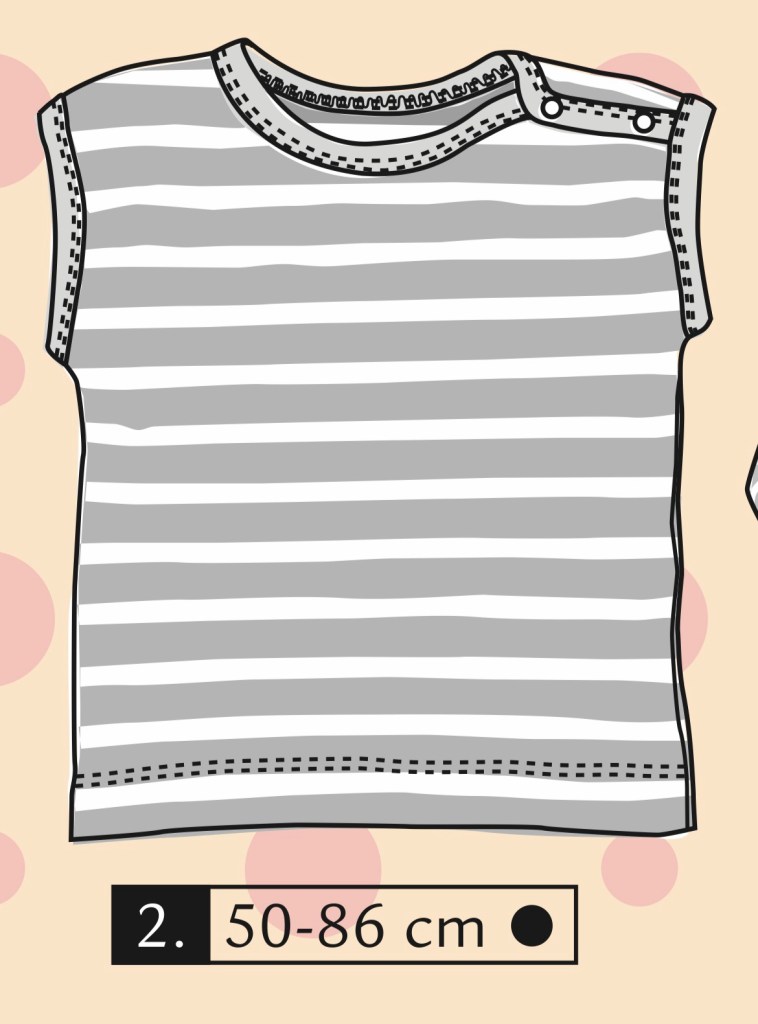
#4: Sweatshirt
This pattern is a simple crewneck sweatshirt pattern, with set-in sleeves and ribbing finishing off the cuffs and bottom band as well as the neckline. the pattern has placement markings for if you want to add a ribbon trim going down the sleeve.
I didn’t make any alterations. I was able to construct this entirely on the serger aside from cover stitching the neck band in place and securing the end of the ribbing once the right shoulder seam had been sewn. Ottobre has you usually attach bindings flat vs in the round and I much prefer it this way. I can adjust on the fly vs trying to guess how long the binding strip should be before attaching it. Once you sew the other shoulder seam you tack the binding/seam allowance in place with a small straight stitch.
After attaching the neckline ribbing to the gray version I felt like it would be nice to do something extra, so I decided to do my first ever appliqué. I chose a cat because my son likes cats and the design was simple. I first copied the cat from Kwik Sew’s Sewing for Baby book. I then cut out the piece of paper, traced it onto a scrap piece of fabric interfaced with Pro-Sheer Elegance with a Frixon marker, then traced the outline of the pattern again onto Sulky Solvy. I didn’t have any fusible web so I attached it to the fabric with a glue stick. Then I put another piece of Solvy on top of the one I glued in place to prevent it from sticking to my presser foot. I used some Magnifico thread from Superior Threads I had in my stash for the outline. For most of the appliqué I used a 4mm wide and 0.75 length zigzag stitch. For the smaller details, like the tip of ear, eyes, and mouth I changed to a 1.5mm width. The nose was tricky, I ended up starting with a 4mm width stitch and kept decreasing as I went further down towards the mouth. The workmanship isn’t as fine as I would have liked and I should have used a dark gray or black for the eyes and mouth, but I do think it helps add more visual appeal without requiring an embroidery machine.
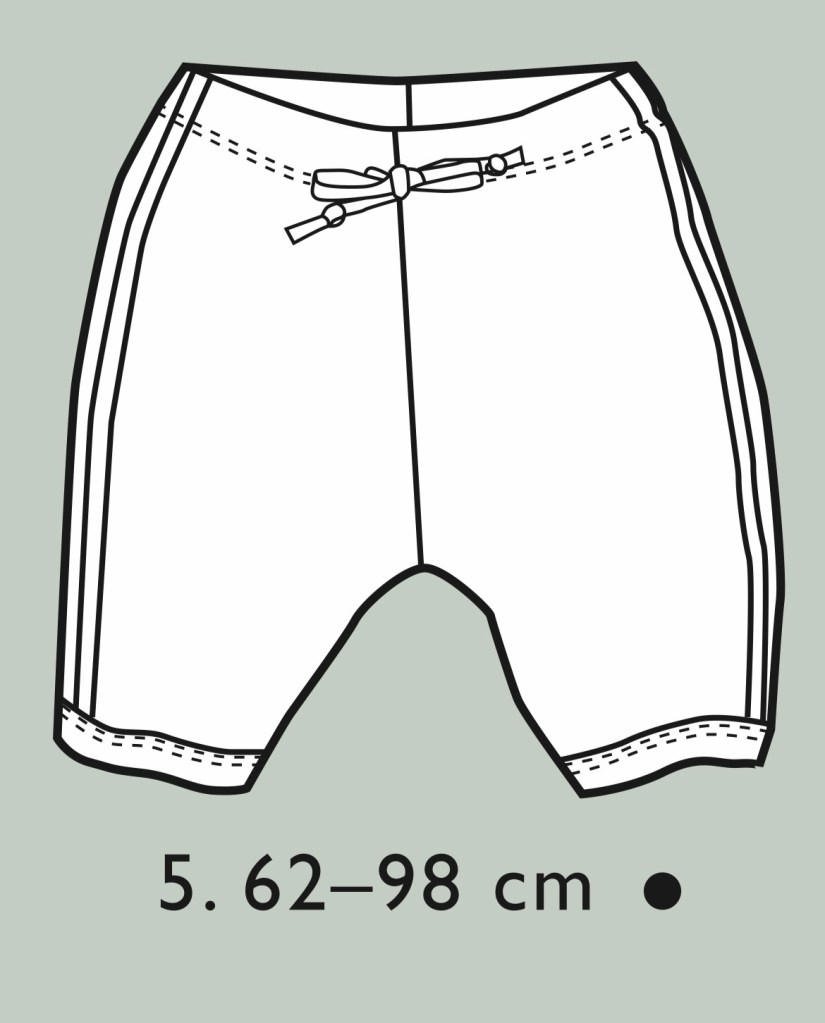
#5: Sweatpants
The sweatpants pattern has a two panel back with a horizontal seam and a drawstring at the elastic waist. There’s no crotch seam, instead all the shaping is done using that back horizontal seam. The back horizontal seam and the side seams are topstitched with a double sided cover stitch.
I chose to omit the drawstring because it was more materials to procure with little benefit, IMO.
For fit I did my usual alteration of adding 3/8” height at the center back. I find it makes pants fit better when he’s wearing cloth diapers.
For my first version I topstitched the center back seam with an ordinary straight stitch close to the edge. For my second version I skipped on topstitching the horizontal back seam entirely. I own the Janome Coverpro 2000CPX, which just does normal two and three thread cover stitches, not the double-sided cover stitch Ottobre recommends. I tried experimenting with the honeycomb stitch on my Janome 6500P and wasn’t impressed with the look, so I chose to just press it in place. It seems fine this way. Same for the side seams.
After making the Green Bean Baby pants and now these, I much prefer the Ottobre version. The back horizontal seam gives a lot of shaping over the butt area and the fact that the elastic is sewn in directly to the pants then folded over and topstitched instead of being inserted into a casing makes it much more secure (no rolling!) and easier to construct. The back seam also makes it more husband-friendly, as he struggles knowing the back from the front in home sewn clothes. The Green Bean Baby required more effort to fit and even so I feel like it still doesn’t fit as well as the Ottobre one does. The Green Bean Baby pattern seems short in the torso, long in the legs, and, if you’re making the full length pajamas, also seemed to run large in the neck. It often falls down over my son’s shoulder when he’s crawling around on the rug. Meanwhile the Ottobre patterns seemed to fit more consistently all over. I know Ottobre has a clothing industry background and even designed their own children’s collection at one point, so maybe that’s part of why the drafting seems to be better quality than the Green Bean Baby.
Yup…I’m pregnant! My husband and I are expecting a little boy, due two days before our first wedding anniversary in August! Since I’m tall, long in the waist, and its my first pregnancy I don’t have much of a bump at this point (my doctor said not to expect much of one until around 23-26 weeks), but my waist has thickened quite a bit (3-4″ larger than before I got pregnant) and while they are still big on me, maternity pants feel far more comfortable right now.
Faux front fly detail and stretchy waistband panelTopstitched back yoke and outer side seams Adjustable waist, with buttonhole elastic
Background
The Style Arc Andy is a slim leg maternity pants pattern…basically the maternity version of the Style Arc Elle. They are the type of maternity pants that go over the belly and have a stretchy waistband panel. Almost like a built-in belly band.
I struggled a lot during my first trimester, and all I could do was focus on basic survival. I spent sooo much time in bed feeling awful. If I didn’t know I was pregnant I would be convinced that I was terminally ill. Some women seem to love pregnancy and just breeze right through it. I am not one of those women. You could not pay me enough to be a surrogate. Unisom + B6 helped a lot with the motion sickness and nausea, but I still felt terrible. I have no idea how some women successfully hide it from everyone for months, because I looked and felt like such a wreck I had to disclose to a few people at my job very early on. Of course numerous older women in my life would take one look at me and accurately guess right away what was going on!
Due to the hormones, inactivity from feeling so exhausted/weak/dizzy, and eating way too many carbs every 2-3 hours because of food aversions and nausea, I gained 10-15 pounds during my first trimester. (I never realized just how active I was before!) Very little of my original wardrobe was suitable at this point. I have never had an easy time buying RTW pants but I was so exhausted and bloated and needed something to wear to work and out in public. I ended up buying and then returning a ton of RTW because most of what I bought fit really badly, making me feel even more frumpy and awkward. It seems that 99% of pregnancy-friendly “pants” are just leggings and sweatpants, and I really wanted pants that looked like regular pants. Once I was in my second trimester and starting having some almost-normal days again I started working on getting back my strength and making plans for sewing again! I still haven’t gotten that second trimester “burst of energy” they talk about, but life is definitely starting to feel a bit easier and more “normal” again. I feel fortunate that I was able to easily conceive and everything looks good so far (despite being considered high risk due to “advanced maternal age” and “elderly primigravida”). He’s bouncing around in there like a happy little puppy, completely oblivious to all the chaos he’s causing!
Materials
The fabric I used for the pants was a navy viscose double knit/ponte from Gorgeous Fabrics that’s been sitting in my stash since 2016. The pattern description says it is for stretch wovens, but ponte is structured enough to work as well. In my opinion the slight vertical stretch makes it work even better.
For the waistband I used a nylon/lycra activewear knit from Fabric Mart, purchased way back in 2015.
These pants are extremely wash and wear friendly. One of the best things about making your own clothing is you can treat the fabric thoroughly before sewing with it. I washed on warm and dried on high to get rid of as much shrinkage as possible, and the fabric is no worse for the wear. SO much of my RTW ends up shrinking despite carefully following the care instructions…one pair of pants from Amazon seemed to fit ok, then shrunk 2-3″ in the length after being washed on cold! I’ve found this problem has gotten significantly worse since the pandemic. Maybe manufacturers are taking more shortcuts now.
For the waistband elastic I used a 5/8″ wide black buttonhole elastic from Cleaner’s Supply, along with a 3/8″ navy button.
My husband noticed that the fabrics don’t match in color (the waistband is lighter than the pants) but this seems very common in RTW maternity pants. These maternity pants are over $200 and they have a very different color waistband. My shirts will cover it anyway. I’m just thrilled to have something that is machine washable, long enough, good quality, and will still fit in a couple of months…and they cost me only $26 to make. The only $30 and under maternity pants I’ve found online are either polyester or leggings, and none of them come in tall sizes either.
Fit
Fitting adjustments were as follows:
I used a size 14 for the waist/back yoke, then tapered out to a size 16 at the hip/thigh/leg
Removed 3/8″ length from the upper part of the front crotch curve
Added 1/2″ to the upper back crotch curve
Added 2″ width to the leg opening, making these more of a slim straight leg rather than a true slim leg
Added 1.5″ to the length. Due to the vertical as well as horizontal stretch of my fabric, I ended up removing 1.25″ after hemming and left them a tiny bit on the long side just in case if there’s any future shrinkage. Yet when I compared them to the paper pants pattern after sewing, they were still a bit longer. I think the fabric relaxed a bit during construction.
You probably noticed from the photos that waistband is rather loose at this point, and the back waist is definitely a bit baggy, but I’m reluctant to mess with it as I am sure I will be filling it out in the not so distant future.
Construction
I made this entirely on my sewing machine, and then hemmed them using my coverstitch machine.
I chose to go with the buttonhole elastic option for the waistband. I am not entirely happy with it as it is soft so it tends to roll when taking the pants on and off, but at the same time I like how it is going to allow for plenty of adjustment as my body continues to grow. When I sewed the buttonholes in the inner back waistband I used a lightweight cut-away stabilizer on the wrong side of the fabric and trimmed it away afterward. It worked out great! When making the waistband elastic casing I traced a line 5/8″ away from the folded edge of the fabric with chalk, then used a 3.5mm length and 2.5mm width zigzag stitch to create the casing, making sure the edge of the zigzag stitch just hit the chalk marking. I went with a zigzag instead of a cover stitch because despite my waist getting much thicker I’m still pear shaped and wanted the extra stretch for getting over my hips and thighs. A cover stitch stretches, but a zigzag gives more durability and stretchiness.
I found there’s one mistake with this pattern. The front crotch curve has only a 1/4″ seam allowance, but every other seam allowance on this pattern is 3/8″. Not a big deal to fix, but just something to be aware of.
This pattern has a faux fly. I did a double line of topstitching for the fly, and then a single line of topstitching 1/8″ away from the edge for the front and back crotch curve. I topstitched 1/4″ away from the edge for both the upper edge of the yoke and the outer side seams. (I pushed the seam allowance towards the front when I topstitched the outer side seams, instead of to the back. This helped with some of the bulk created by the back yoke). The topstitching at the outer side seam helped make sure those side seams stay very flat and in place.
When I attached the waistband to the pants I used a 4.0mm length and 2.5mm width zigzag stitch. I pushed the seam allowance up towards the lycra and topstitched in place fairly close to the seam line, again using a 4.0mm length and 2.5mm width zigzag stitch. Then I trimmed the seam allowance after stitching.
Conclusion
I LOVE THESE PANTS. I’ve got two more pairs in black ponte cut out and ready to sew. They’re a cinch to make and I feel so much better having them to wear. They’re slim without being tight and pair well with looser fitting untucked dress shirts (my go-to work style right now). There’s so few modern maternity pants patterns on the market, and I am so grateful to Style Arc for offering this pattern. Highly recommend it to the other pregnant ladies out there!