Finally managed to take some photos for this post while my husband was giving our toddler his bath tonight…
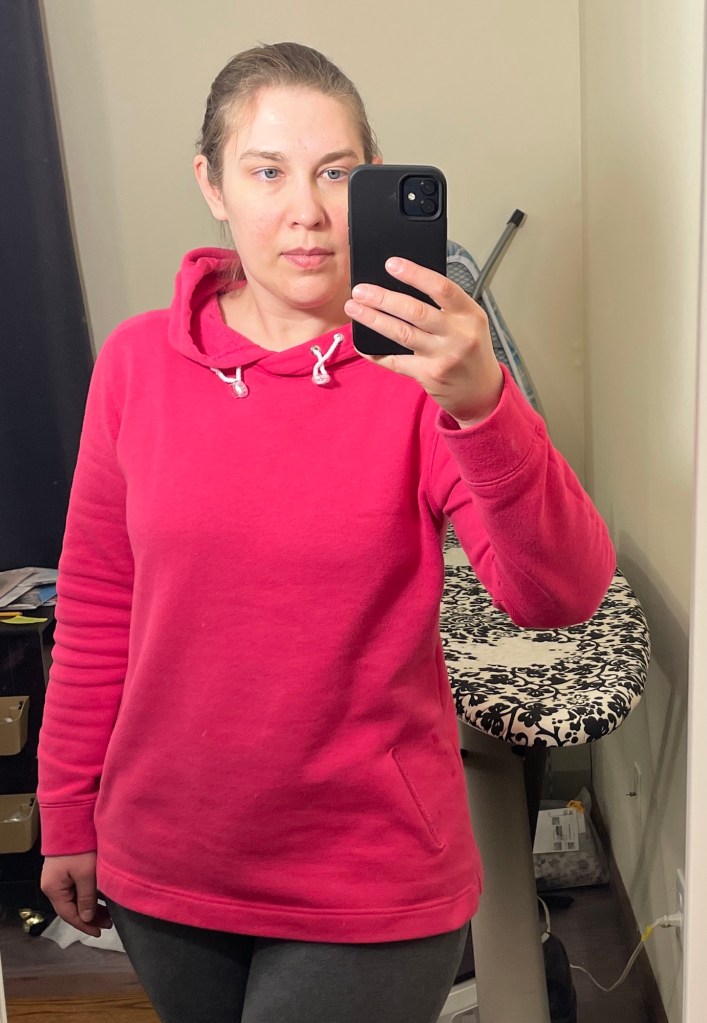
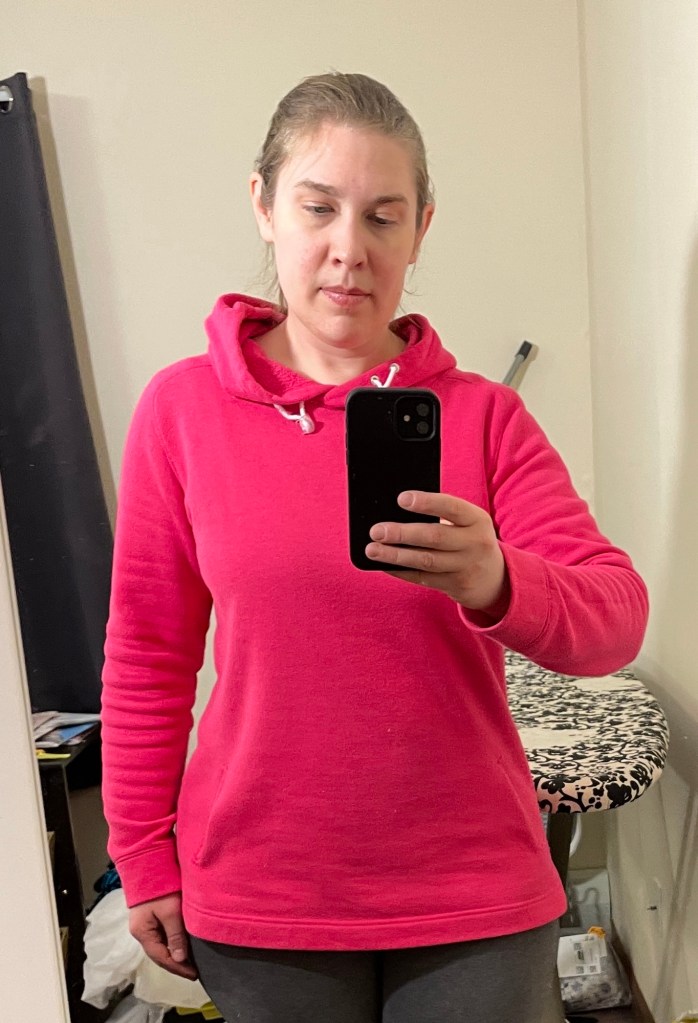
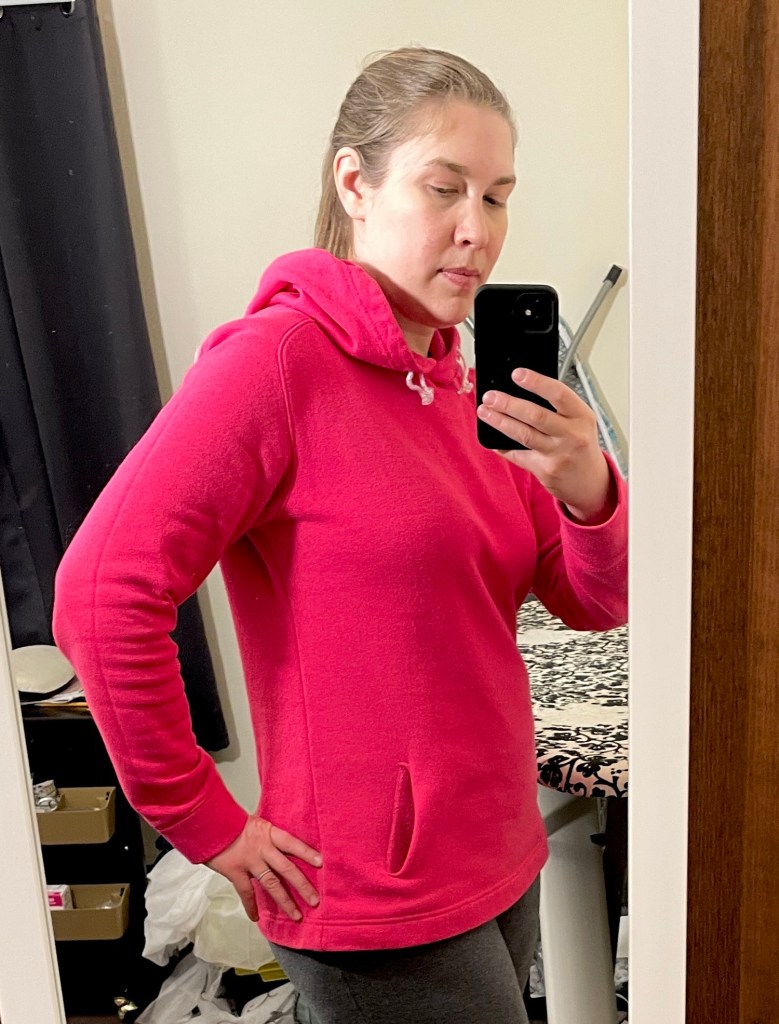
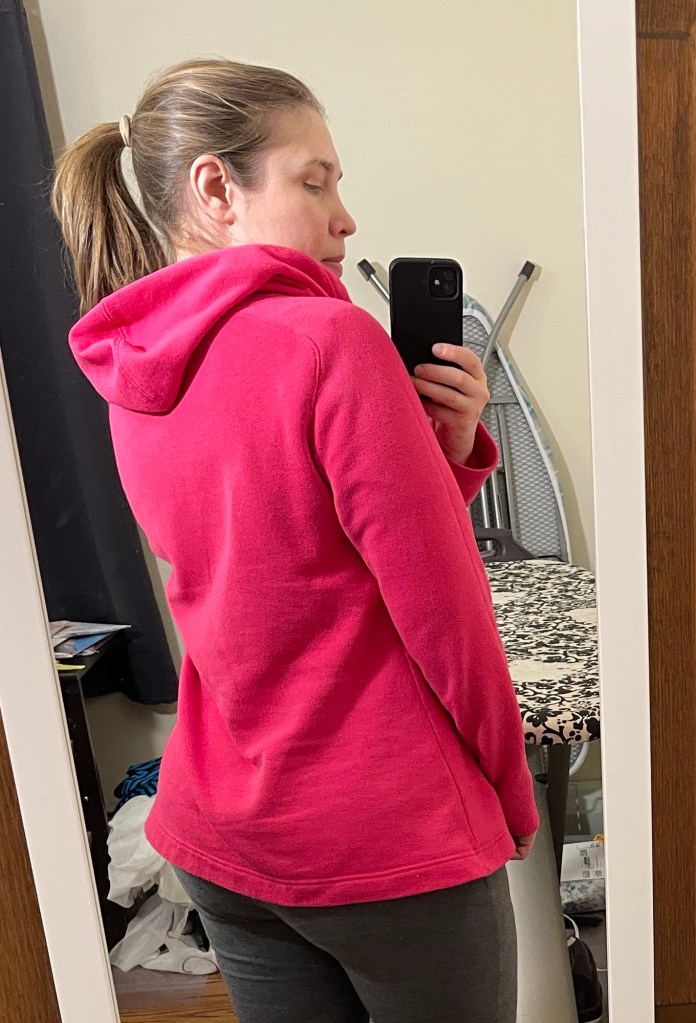
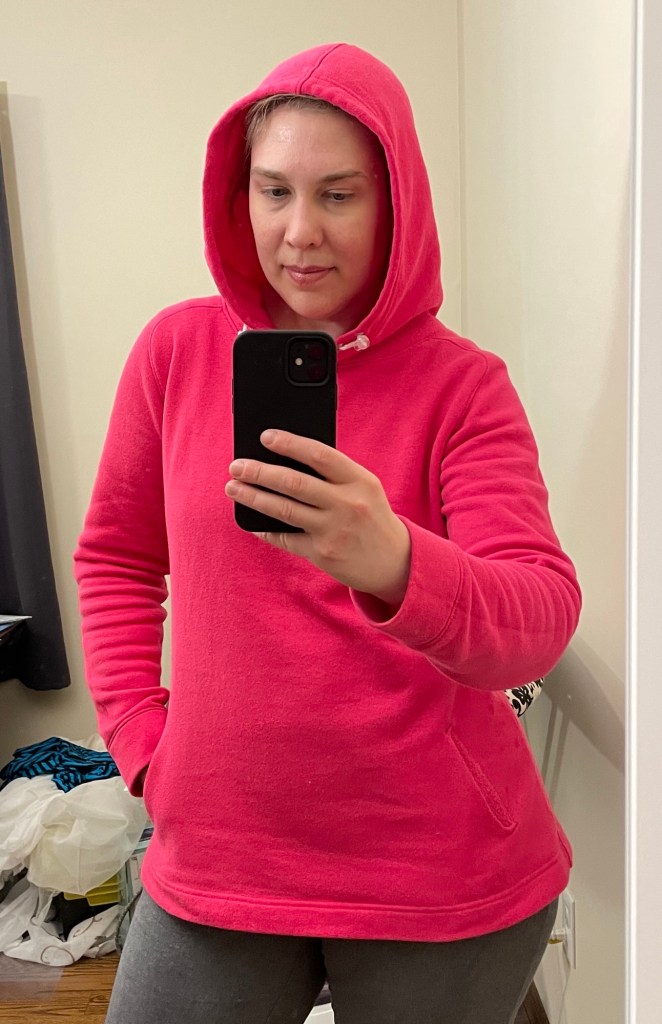
Version 1: hot pink cotton/polyester sweatshirt fleece
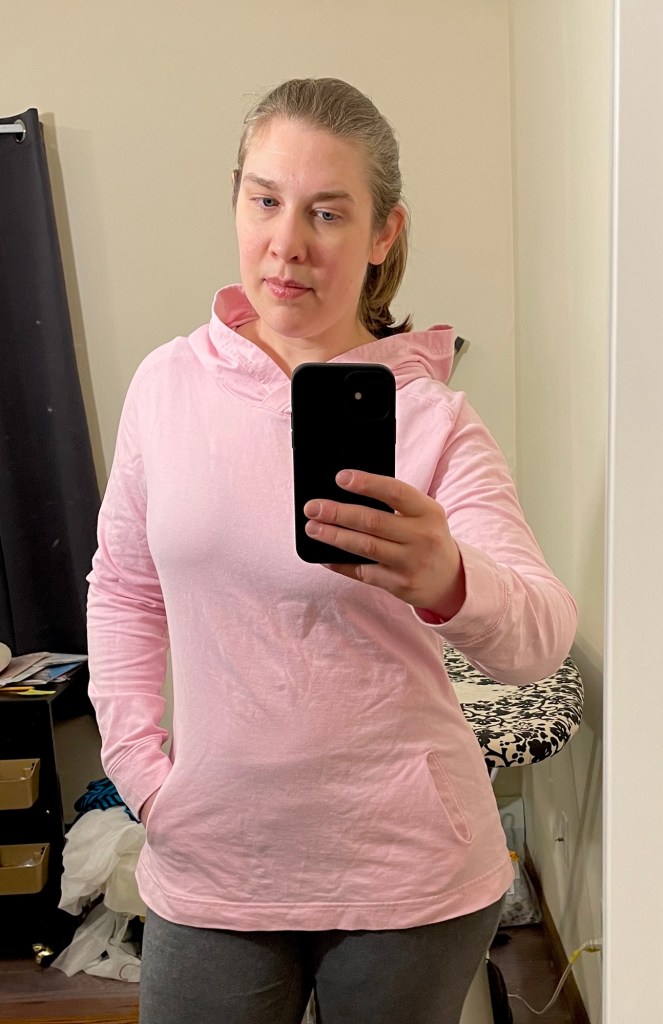
Version 2: lightweight baby pink cotton/lycra French terry
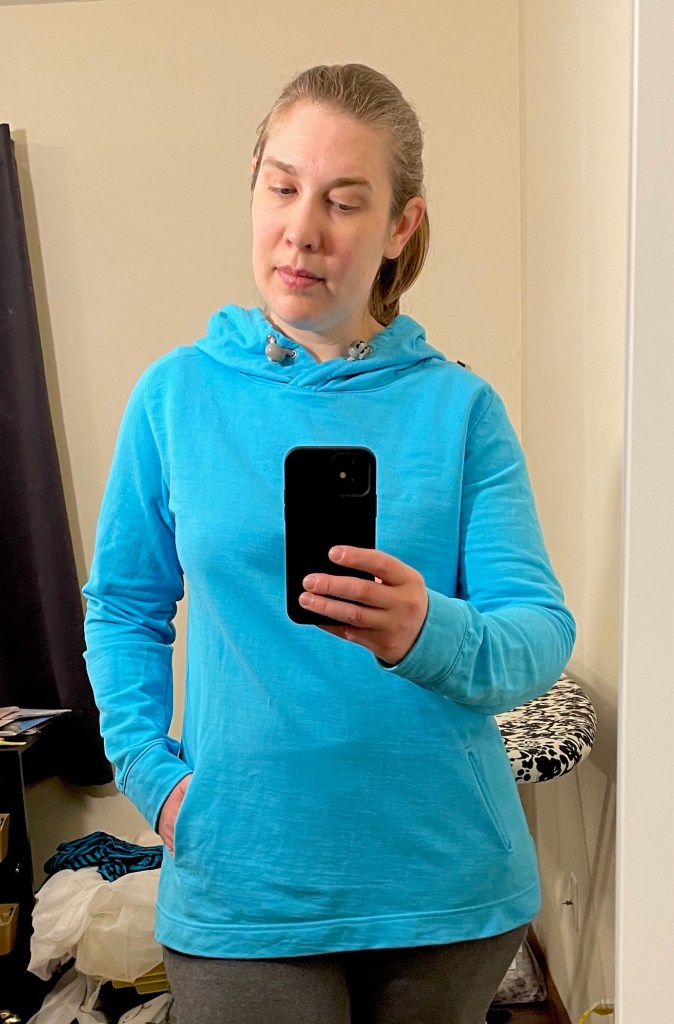
Version 3: Bright cerulean blue cotton/polyester French terry. Heavier and less stretchy than the first two.
Background
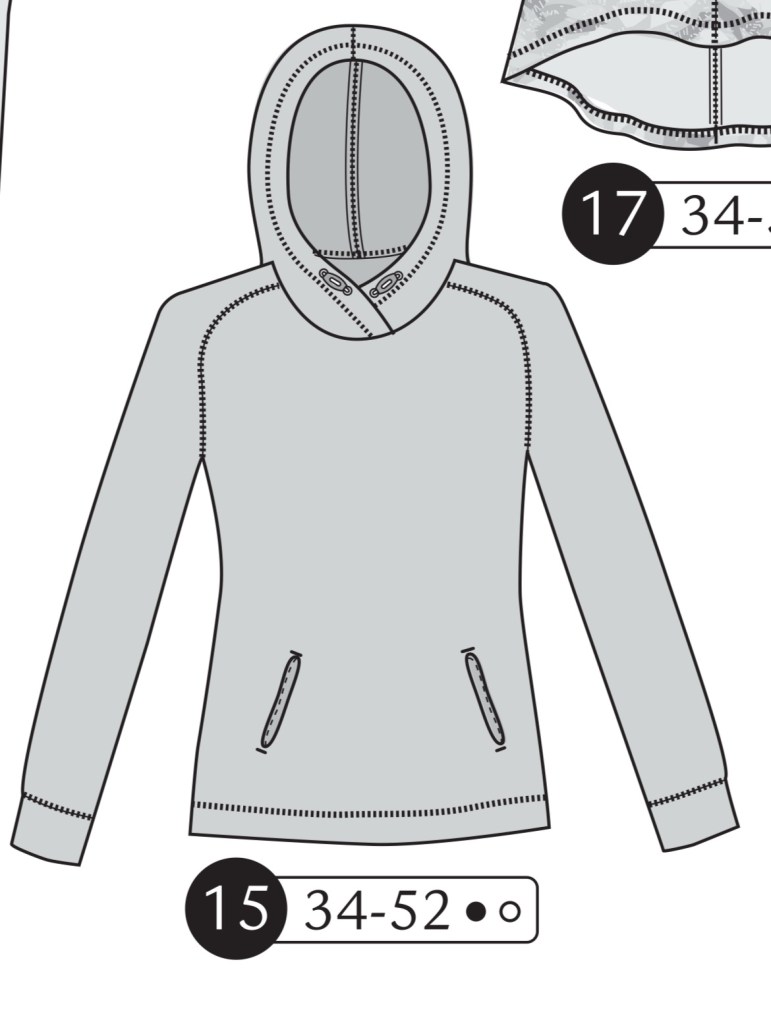
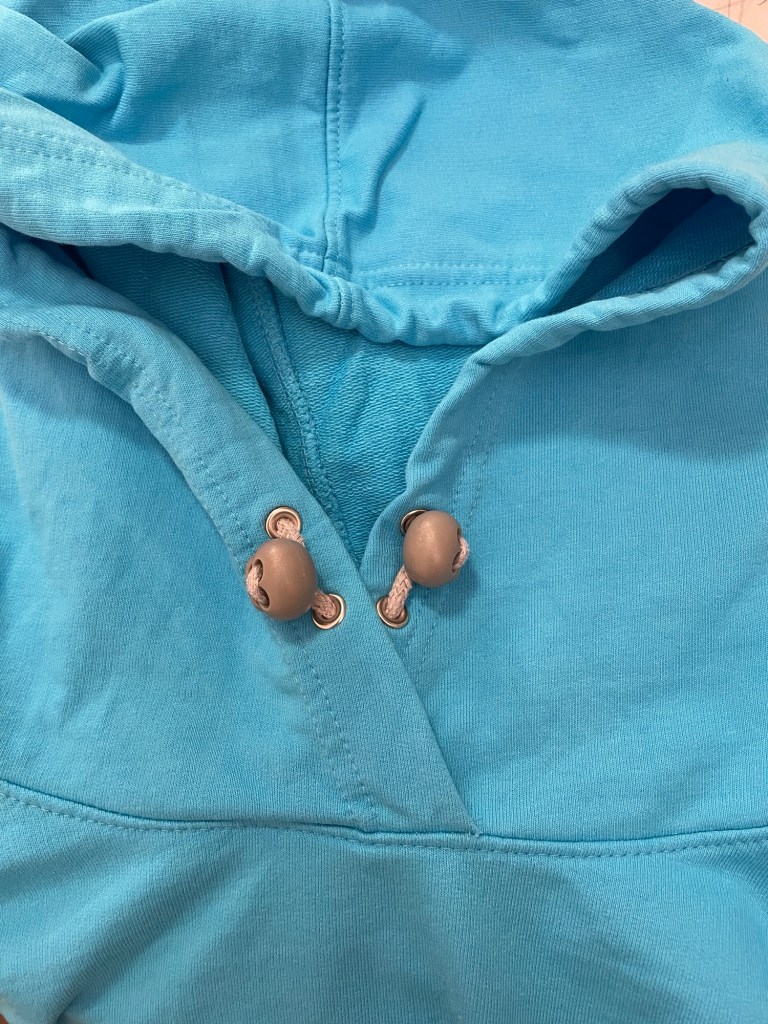
This women’s hoodie pattern features front slash pockets, saddle sleeves, and a hood with a mostly concealed drawstring and cord locks/stops. It is slightly fitted and drafted for heavier knits with about 15% stretch. The pattern includes sizes 34-52.
What I like about this pattern is there’s no need to find a coordinating ribbing for the cuffs or bottom band, as the sleeve cuffs are self fabric and the bottom is just a simple turned up hem. (I’m sewing a lot of sweatshirts, sweatpants, and various other knit items for my son and husband as well as myself now, and finding coordinating ribbing is always a challenge.)
I also like the front pockets. Since there’s no closure I wouldn’t trust them to securely hold something for extended amount of time when I’m out and about, but they’re very convenient for warming my hands or stashing my keys/phone when I need my hands free for a moment.
Another thing I like is the hood is DEEP. My son loves to play with my my hair way too much so these days I usually have my hair in a ponytail. Most hoodies, either RTW or home sewing patterns, are drafted for wearing hair down. I was pleasantly surprised to see that this hood fits perfectly when I am wearing my hair up, which makes sense as they suggest using this pattern as activewear and most women with longer hair will be wearing it up while exercising. The drawstring helps with making sure everything stays in place when the hood is worn. Ottobre doesn’t produce the sexiest patterns out there (for that you need to look at Marfy or Burda) but they do excel at offering comfortable, thoughtful, well designed basics for everyday life in a wide range of sizes.
Materials
For my first version I used a paradise pink cotton/polyester sweatshirt fleece I purchased last year from Fabric Mart. I would call it a mid weight fleece.
For my second version I used a light to medium weight baby pink cotton/lycra french terry I purchased ten years ago from Fabric Mart.
For my third version I used a heavier weight cotton/polyester French terry purchased recently from Fabric Mart. It has just a little mechanical stretch and while it is comfortable to wear, it is not as easy as the other two to get on and off.
For the drawstring for my first version I used cotton cording from Wawak. The grommets are also from Wawak.
The clear cord locks/stops were purchased on Amazon. I originally planned on picking them up from JoAnns but when I got there the price was $5 for two cord locks, and they only had navy in stock! Meanwhile I got a package of 30 on Amazon for only $7.19. They are not the strongest cord locks/stops but they are ok for this particular project.
For the blue version I used drawstring cord and cord stopper locks from Amazon. The drawstring cord is way nicer quality than the cording I used for my first version, and while bulkier the cord stopper locks are far more robust.
Alterations
Part of why I kept putting off sewing for myself is because I’m starting from scratch with sizing and alterations. I am about 25 pounds heavier than I was before having my son nearly 1.5 years ago. Based on my current measurements I picked size 44 and made the following alterations:
- Added 1/2” to the body length. I also deepened the hem, making it 1.5” wide instead of the originally drafted 1/2”.
- Removed 1/2” in width from the back waist
- Added 2” to the hips. For my second version I added another 2”, to make it a total of 4”. This does correspond more closely to what my hip measurement is now.
I actually feel like I had to do less in the way of alterations than when I was size 38 or 40. The sleeves are a great length out of the envelope, the body felt like a good length, and I didn’t feel like the sleeves were too tight either around the bicep. The shoulders and neck seemed to fit fine too. I can comfortably layer a lightweight tshirt or tank top under it.
Construction
Pocket Tutorial
For the pocket opening Ottobre recommends making a template to help with stitching the pocket opening. I ended up using Sulky iron-on tear-away stabilizer on the side of the pocket piece with the opening. It made life so much easier, as it prevented stretching when being sewn and I had a precise pencil line to follow instead of a fuzzy chalk line.
When I made the pockets for my first version I decided I wanted the fleece side of my fabric to face my hands and not the inside of the shirt, as it is so soft and cozy. So when I constructed the pockets I made sure to have the fleece side against the right side of the front, and ironed the stabilizer to the smooth side. For my baby pink French terry version I ironed the stabilizer to the looped side (wrong side), and had the smooth side against the right side of the front.
You want to interface the wrong side of the front pocket slash. I used Design Plus superfine straight fusible stay tape, letting it extend about 3/8” beyond the dot of the slash marking.
One you have your stabilized pocket, position it so the templated side faces towards the center front, lining up the pocket template with the slash line of the front.
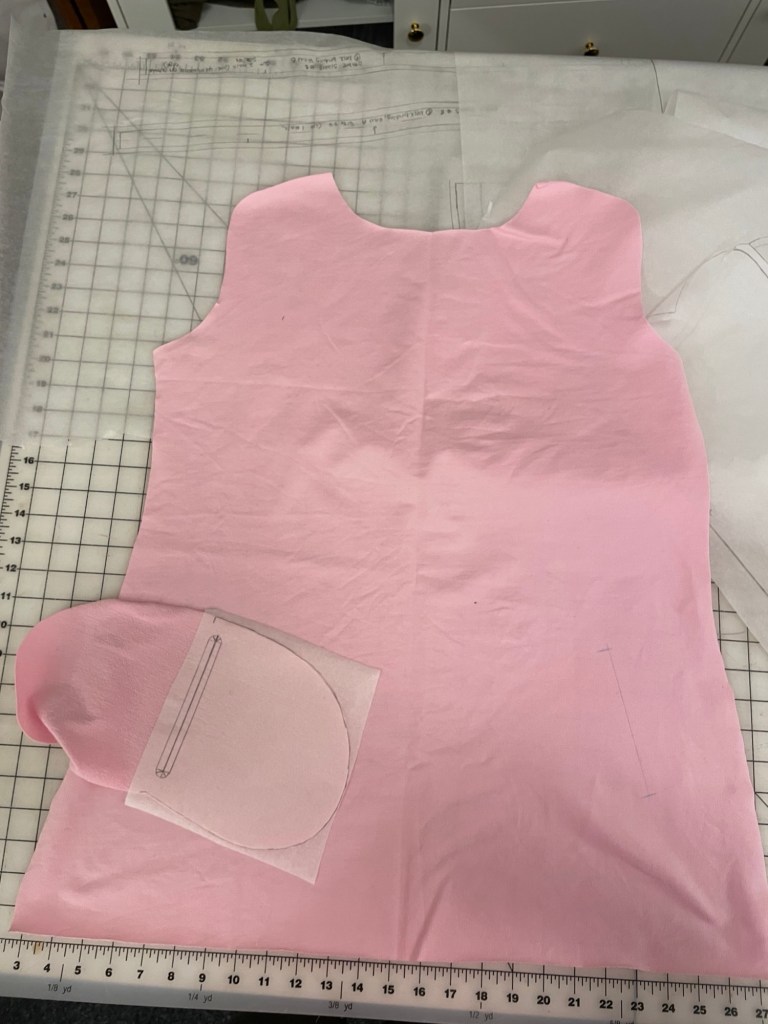
Carefully sew along the pocket opening marking. I turned the wheel by hand when it came time to making my way around the curved ends. precision is key here!
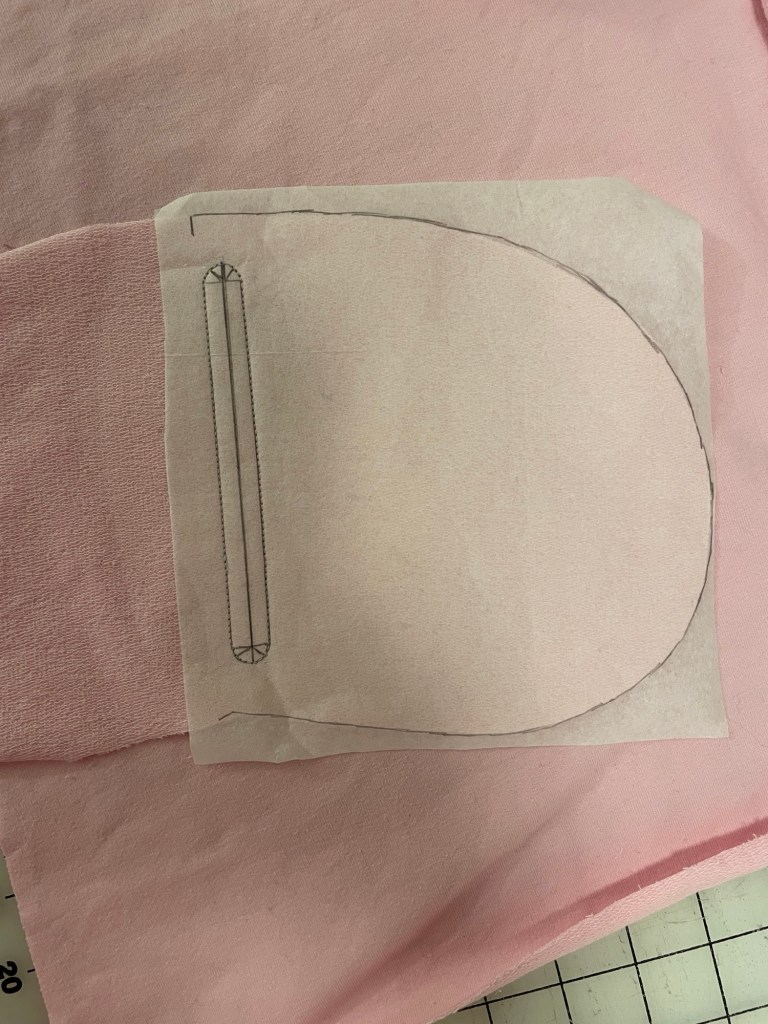
Now slash open the pocket, making sure to clip the markings at the curved ends. You want to get very close to the stitching (about 1mm away).
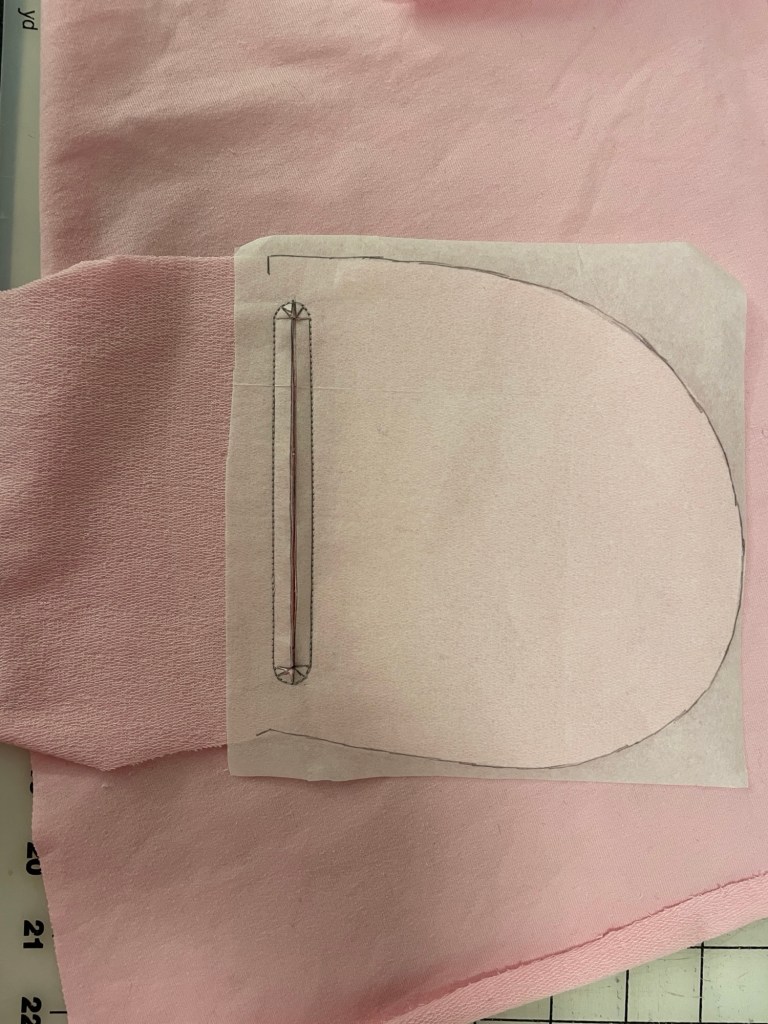
Now gently tear away the stabilizer.
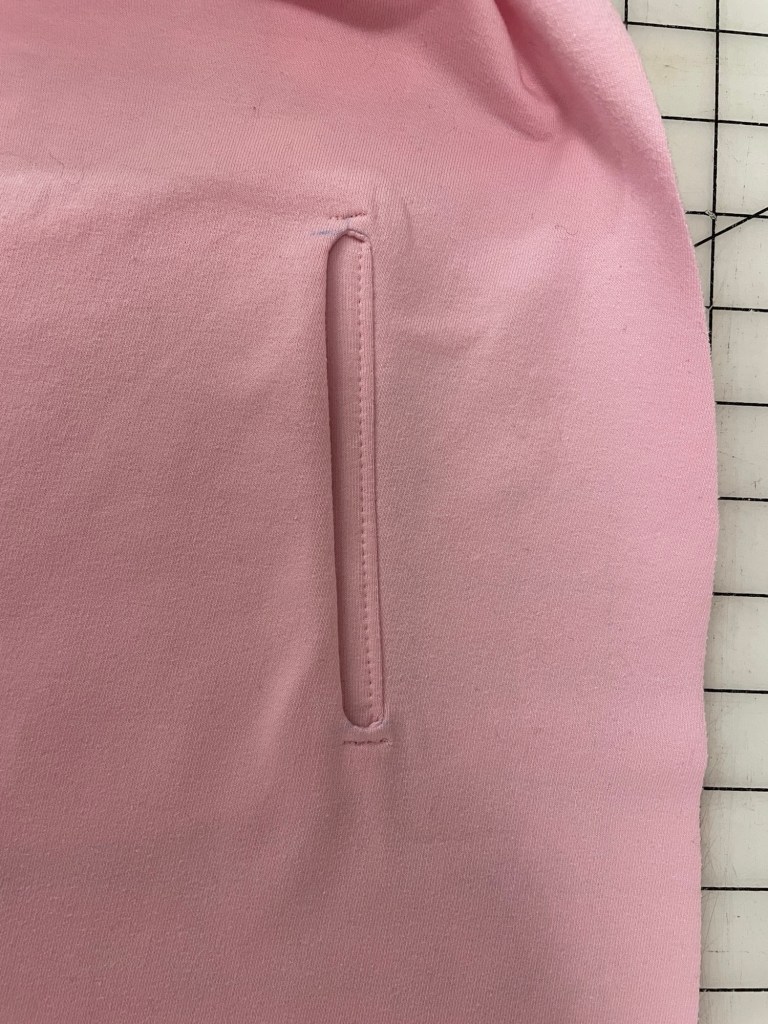
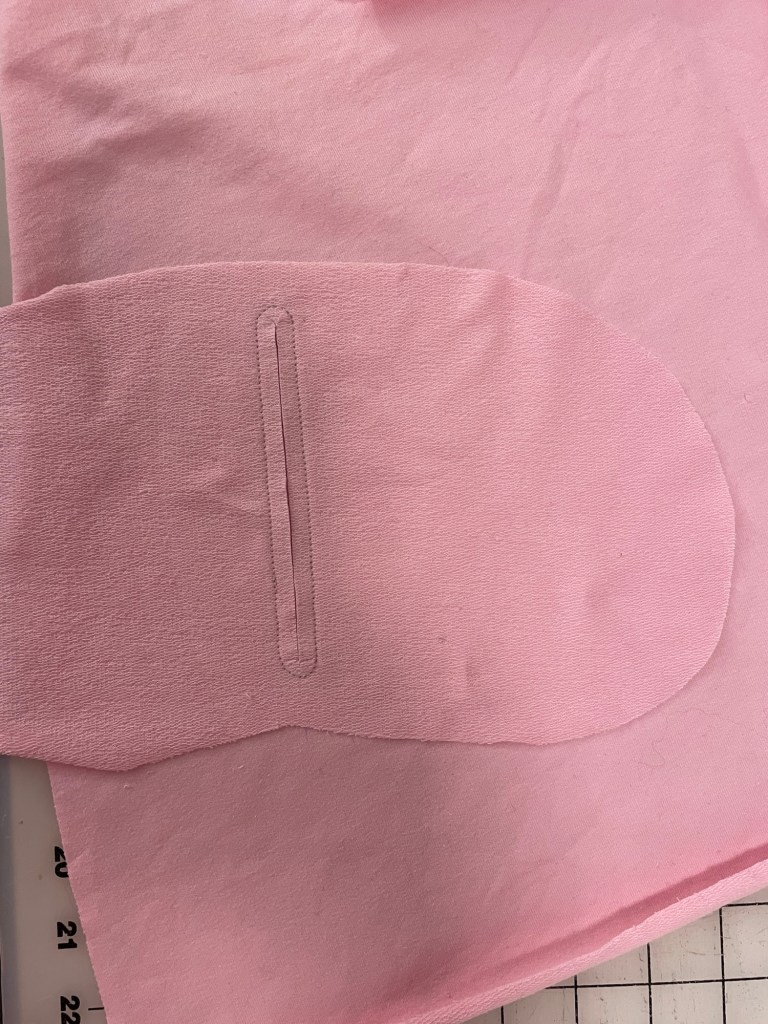
Pull the pocket bag to the wrong side.
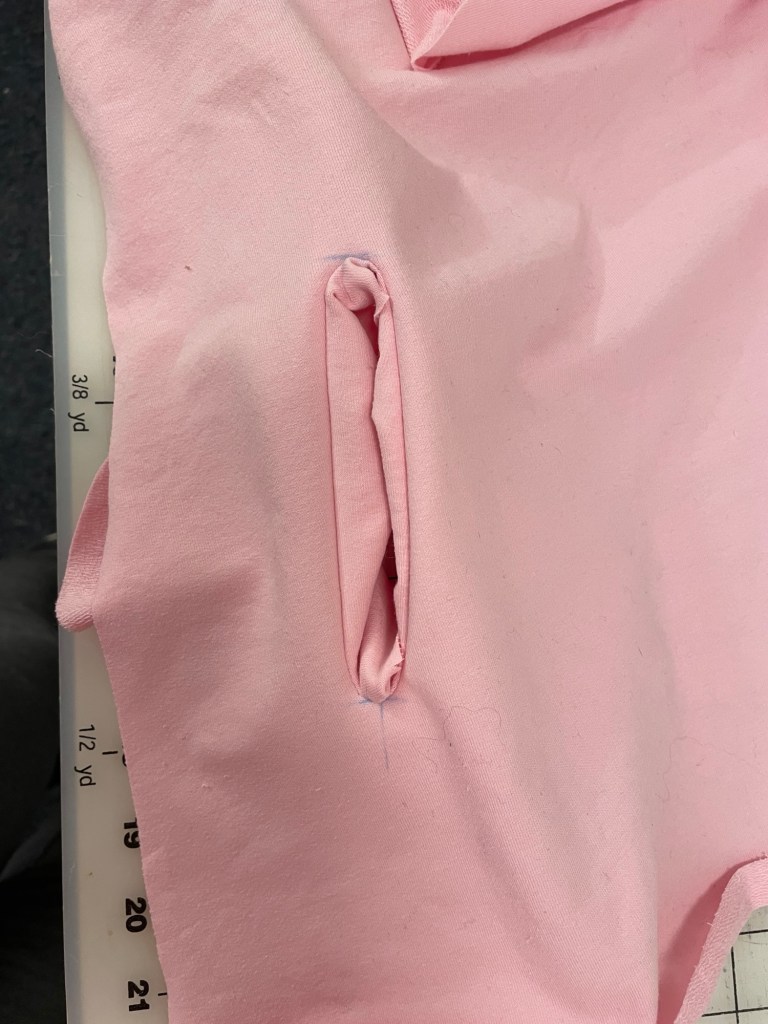
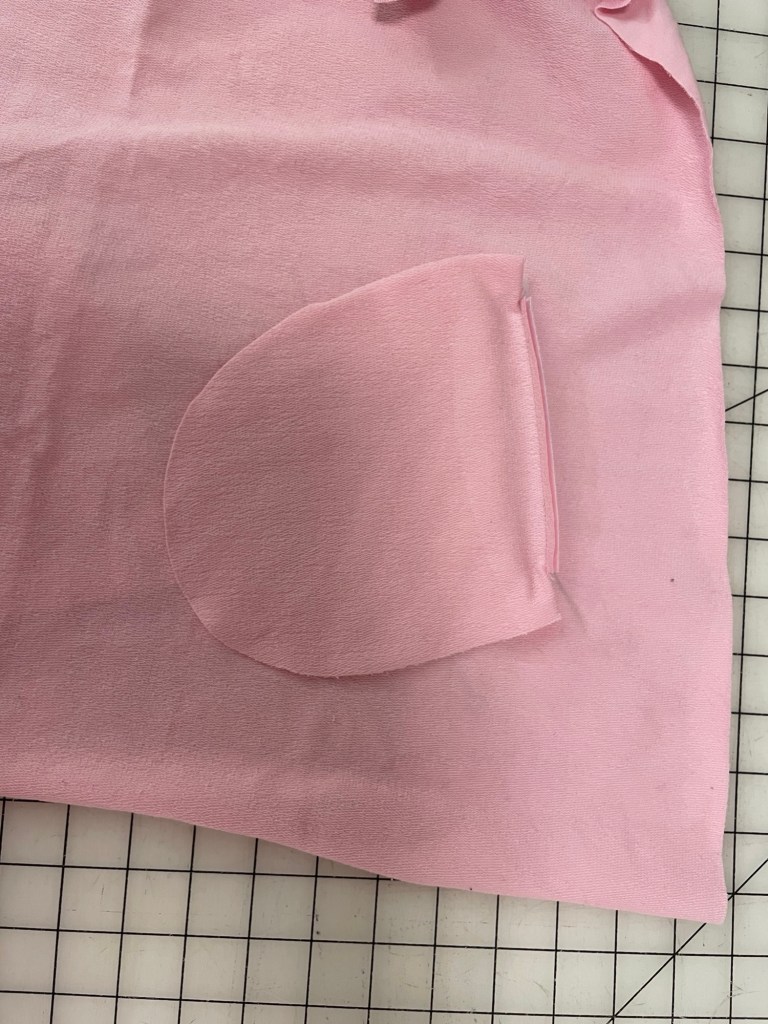
Serge/sew the pocket bag edges together.
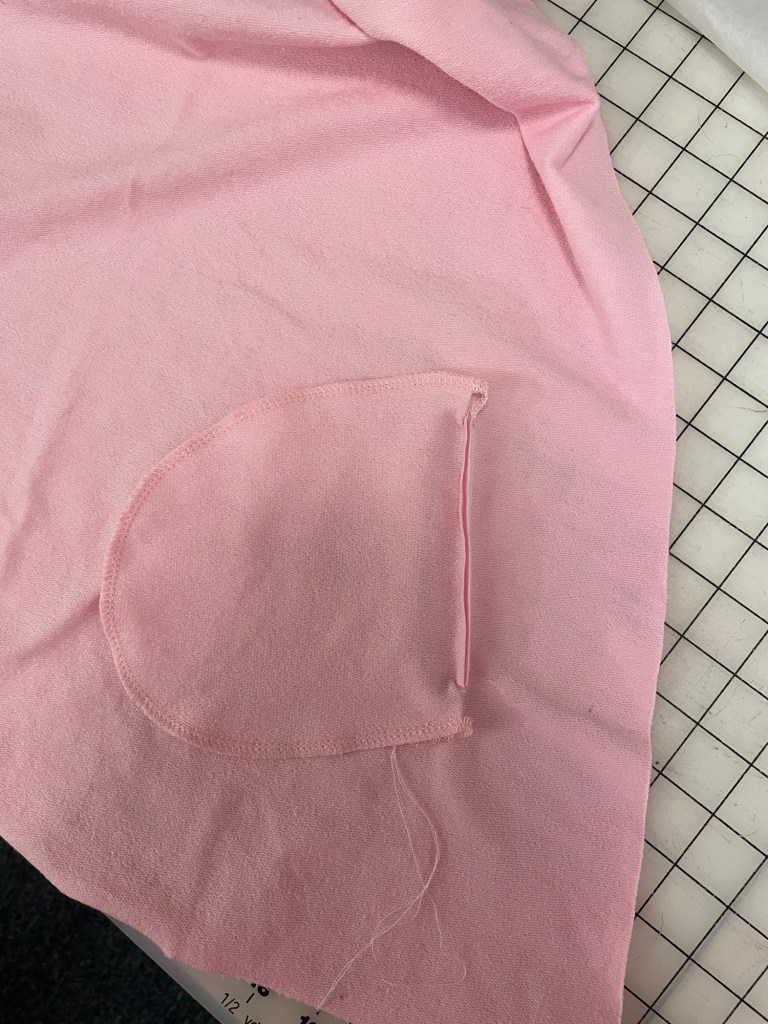
Now go back to your sewing machine and understitch the seam allowances to the pocket bag. For my pink version I chose to stitch about 1/8” away from the edge with a 4mm stitch.
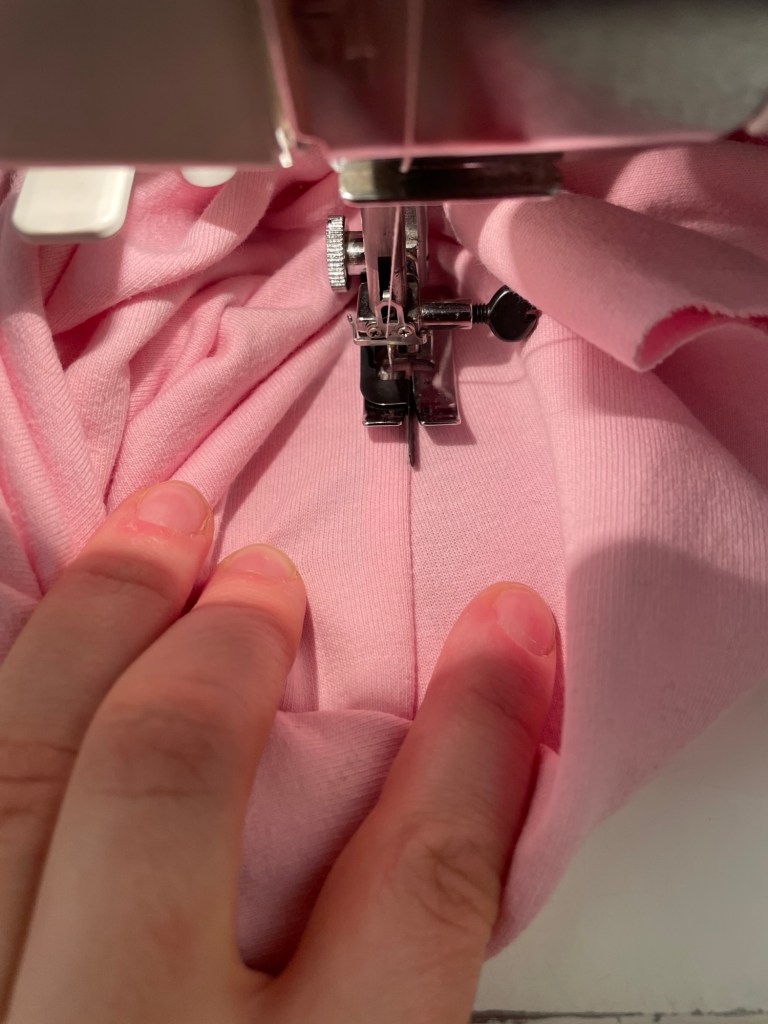
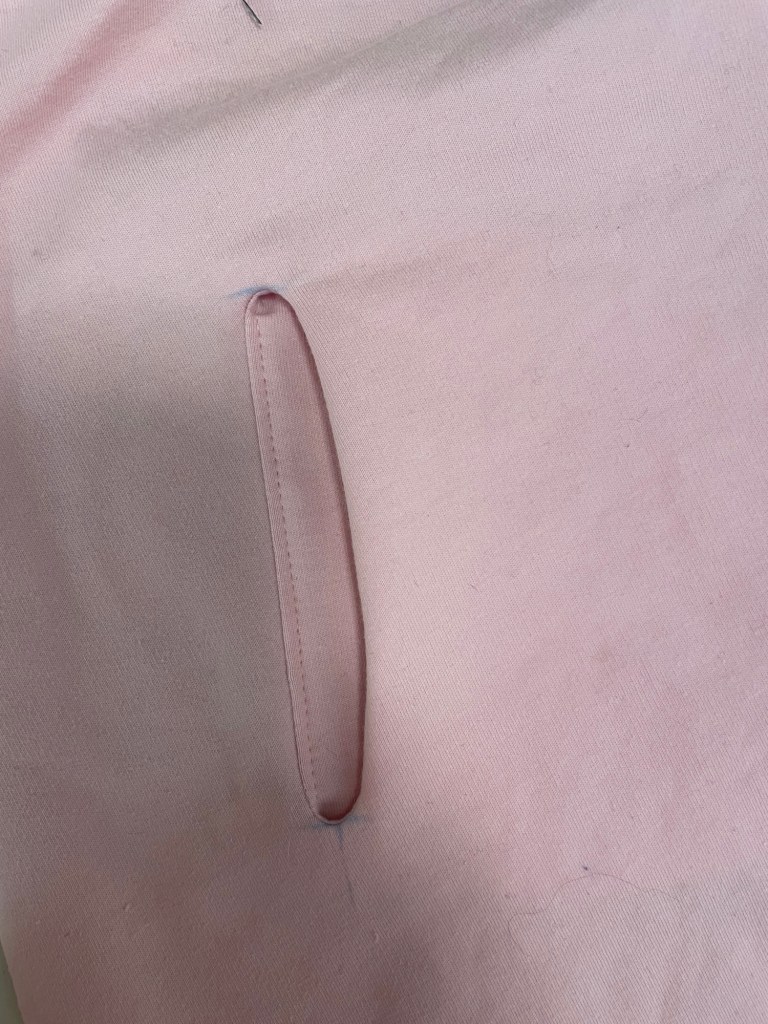
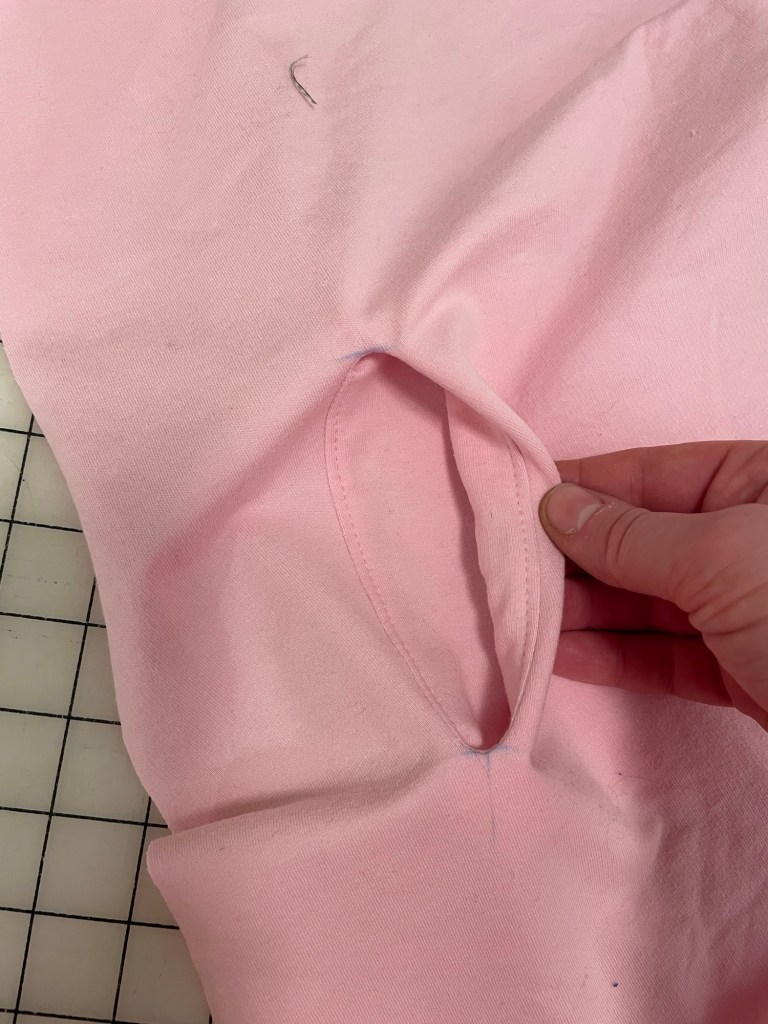
Now give it a good press. Sew a straight stitch just below the curved edge, making sure to go over the section a couple of times. This helps reinforce the curved ends and also helps keep the pocket bag in place.
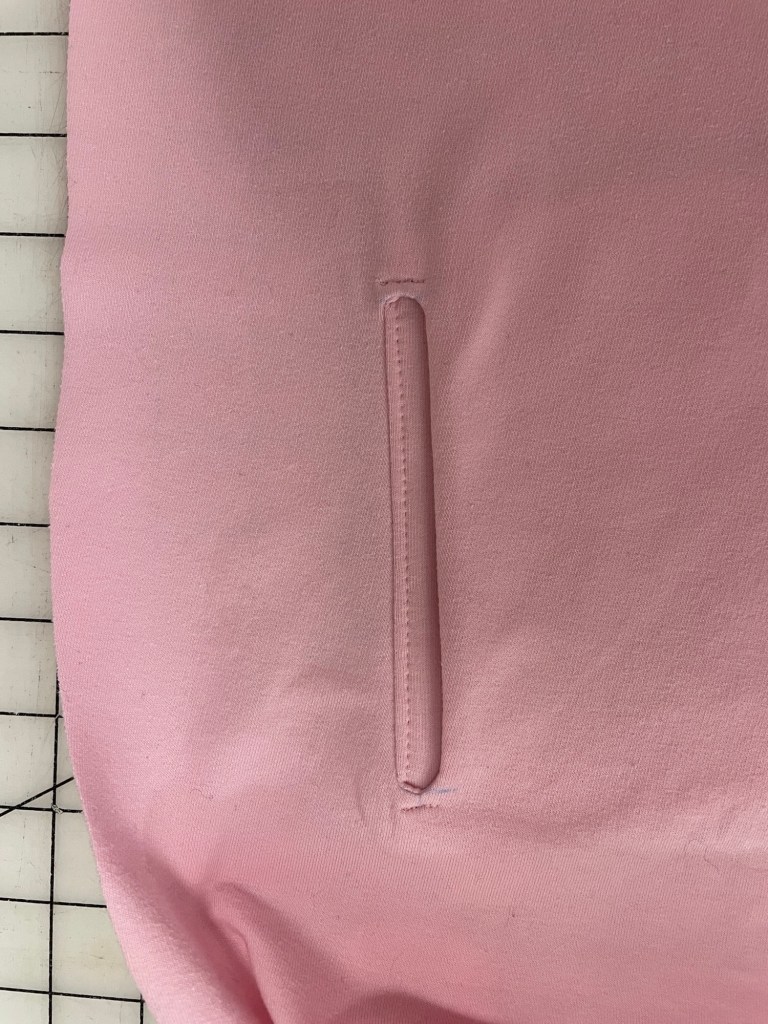
And you’re done!
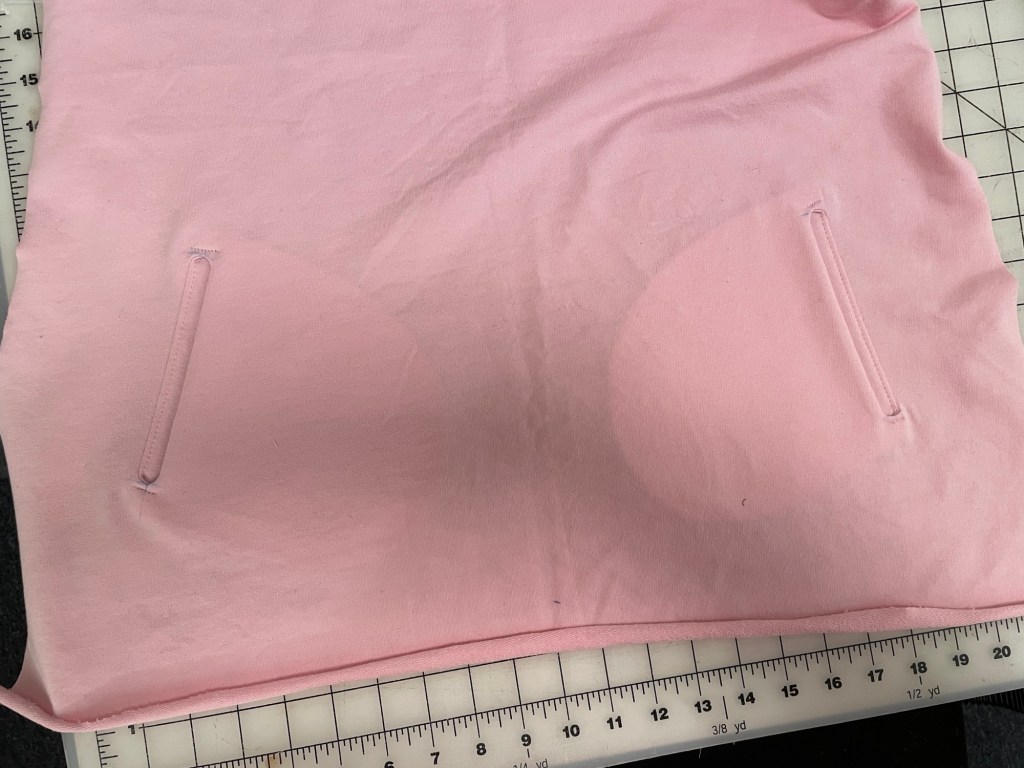
Other Construction Notes
I don’t have a coverstitch machine that can do the five thread double sided coverstitch that Ottobre recommends, so instead I topstitched all serged seams with the help of my stitch in a ditch foot, using a 4mm length straight stitch with the needle moved all the way over to the left. I’ve seen this finish done with plenty of RTW. It looks clean and helps manage the bulk of the seam.
The hardest part of this hoodie is sewing the pockets. Once that’s done it is pretty straightforward construction.
 Clothing Engineer
I was impressed with the pockets before I read the details – now I’m even more impressed!
LikeLike
It is the most challenging part of the pattern, but once you get through that the rest goes together so easily!
LikeLike
Great to hear from you again. That’s a great tutorial for the pockets and it’s one of my favourite patterns in Ottobre so that will make it easy when I make it in winter. I love the pink one. Ottobre are so good.
LikeLike
Isn’t it a great pattern? Part of why I included the tutorial is so I have something to reference myself when I make it again!
LikeLike
I love seeing what you sew. You continue to amaze me and your detailed review is absolutely great. It gives confidence to someone wanting to sew the pattern. So happy to see you back sewing and posting! Enjoy this time with your son!
LikeLike
Thanks! I wish I had better quality photos and done some pressing before taking the finished garment photos, but my alone time is very limited now so it was this or nothing at all…
LikeLike